
← Chapter 9: QingA Brief History of Chinese Architecture
Chapter 10: Late Qing and Republic
1840s–1949
Until the mid-Qing, Western architecture was only an ornament in China: the European palaces of the Yuanmingyuan were designed by missionaries in the Qianlong reign, and churches were built by missions in many places. From the late Qing on, public and private builders turned to Western styles. Liang Sicheng observes that most foreigners contracting for buildings in China at the time were tradesmen with little architectural training, so what first arrived was not the best of Western architecture; only later, when trained architects practised in the Shanghai concessions, did good works appear. He regards the Supreme Court built in Beijing in the Xuantong reign, in Renaissance style, as the start of modern building by the Chinese government. In the early Republic the barbican of the Zhengyangmen was demolished and new gateways opened on either side while the arrow tower was kept, a project led by the interior minister Zhu Qiqian and a new departure in city planning.
The treaty ports and concessions left whole districts of Western buildings. The Bund in Shanghai lines the Huangpu with banks, trading houses and hotels, from neoclassical to Art Deco; the German buildings of Qingdao, with red tiles and yellow walls, climb the hills above the sea; Harbin, the hub of the Chinese Eastern Railway, has early twentieth-century European buildings along Central Street and the Byzantine St. Sophia Cathedral; the villas of Gulangyu in Xiamen blend Western and southern Fujian practice. Tianjin, Hankou and Shamian in Guangzhou also keep whole quarters of concession buildings.
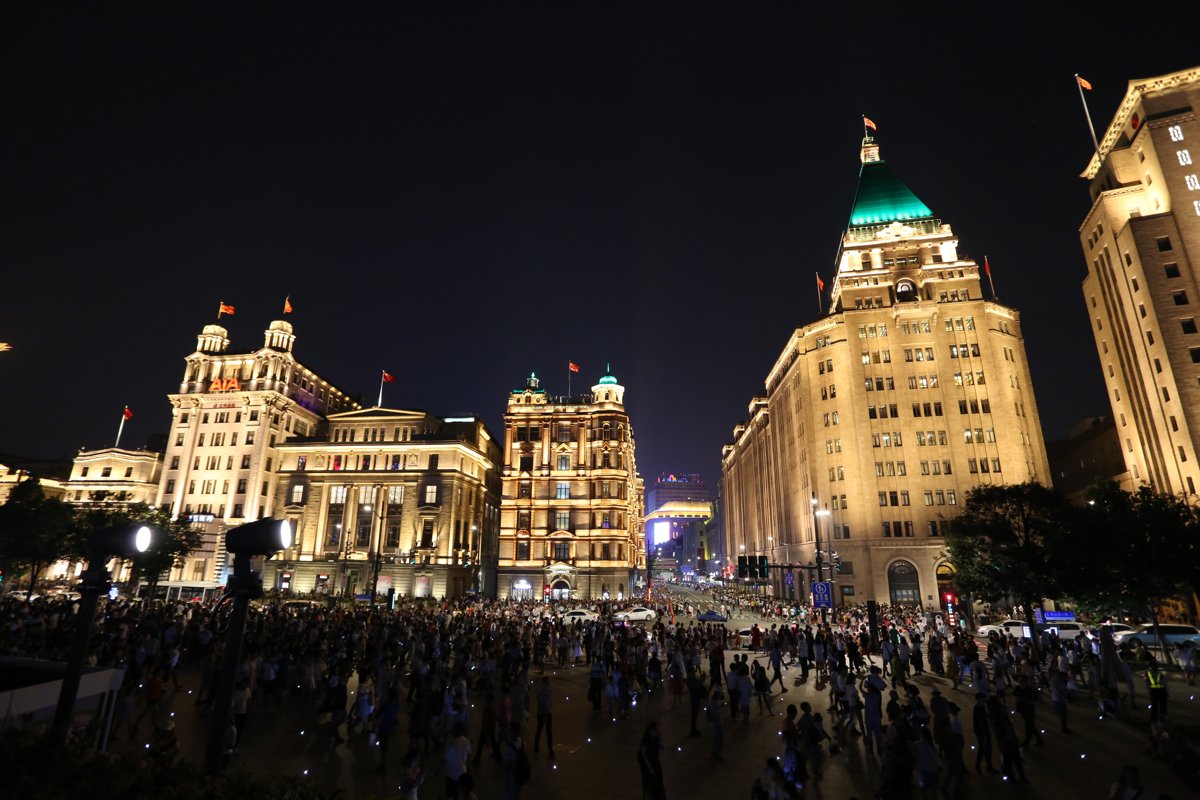
The Bund on the Huangpu at night, Shanghai

Harbin; a Byzantine-style church
N509FZ, CC BY-SA 4.0, Wikimedia Commons
Among Chinese who studied architecture abroad, Liang names Bei Shoutong as the pioneer; later Guan Songsheng founded the Kwan, Chu and Yang firm, and the number of trained architects grew. At the same time Western architects in China began applying parts of Chinese architecture to new buildings, as at the Peking Union Medical College, Yenching University, the University of Nanking and West China Union University in Chengdu. Liang judges that the Union Medical College and West China University are merely Western buildings with Chinese roofs, while Henry Murphy at Yenching captured the character of Chinese architecture well, a feat he finds commendable in a foreigner.
The Sun Yat-sen Mausoleum on Purple Mountain in Nanjing was chosen by open competition; its designer was Lü Yanzhi. Stone stairs lead up the slope in stages; the sacrificial hall has stone piers at its four corners and a Chinese roof and doorway, while the tomb chamber behind it is covered by a dome, a purely Western feature. Liang says that although the Western element is strong, it was "the first attempt by modern Chinese designers to apply ancient forms to a new building." The Sun Yat-sen Memorial Hall in Guangzhou is also by Lü Yanzhi.
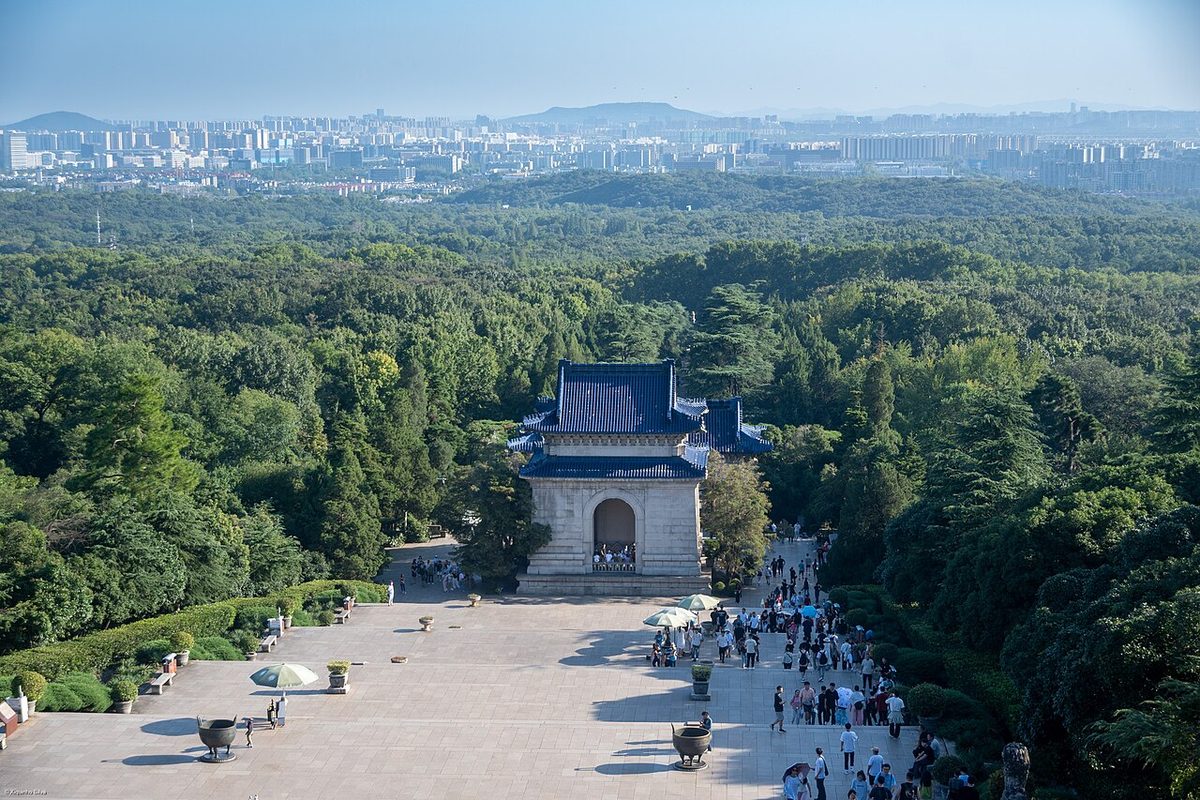
Purple Mountain, Nanjing; the stele pavilion seen from the sacrificial hall
xiquinhosilva, CC BY 2.0, Wikimedia Commons
Many new buildings followed in Nanjing. Liang singles out a few: Yang Tingbao's Central Hospital and Zhao Shen's Ministry of Foreign Affairs, which give Western bodies decoration in a Chinese spirit, harmonious and practical; and Xu Jingzhi and Li Huibo's Central Museum (today's Nanjing Museum), which sets Liao and Song forms on a modern structure, simple and rational. Another line was the unornamented modern style, such as Tong Jun's Grand Theatre in Shanghai and the Bank of China branches designed by Lu Qianshou, relying on mass and proportion. He also regrets that Nanjing's complete capital plan was never carried out, so each ministry built on its own and the city lacked coherence, whereas the Shanghai Civic Center, built step by step to one plan by Dong Dayou, looked grand despite its smaller scale.
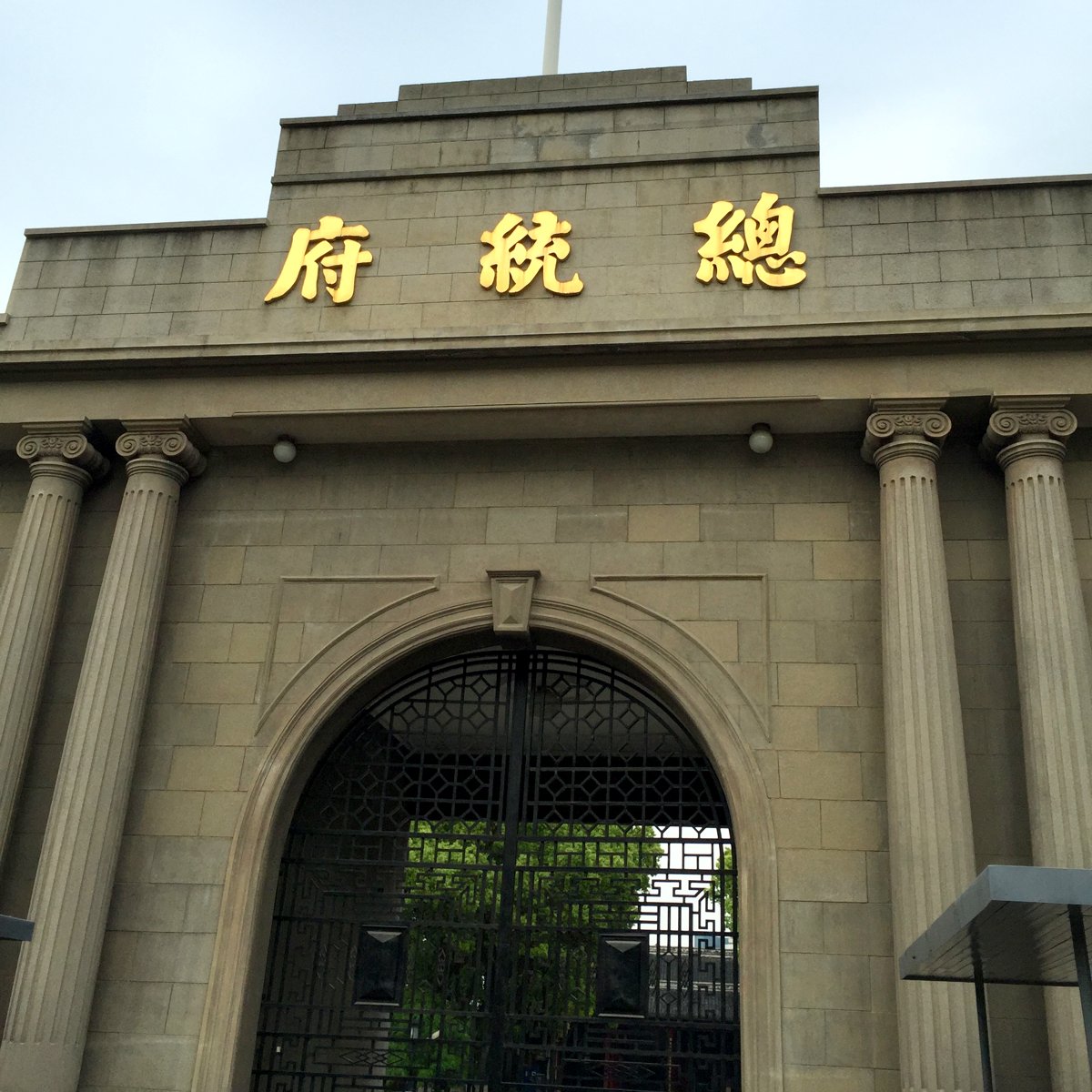
Nanjing; a gateway with Western classical columns
The repair and study of old buildings also began in this period. Liu Dunzhen and Lu Shusen restored the śarīra pagoda of the Qixia Temple in Nanjing, which Liang calls a new era in the repair of China's old buildings; in Beiping the Temple of Heaven, the Imperial Academy, the Five-Pagoda Temple and others were repaired to designs by Yang Tingbao and by Liu Dunzhen, Liang Sicheng and others of the Society for Research in Chinese Architecture. That society, founded by Zhu Qiqian, carried out the surveys and research on which this book rests. Liang and Mo Zongjiang also drew a reconstruction of the Pavilion of Prince Teng in Nanchang based on its presumed ancient form, and today's pavilion was rebuilt from these drawings.
| Sun Yat-sen Mausoleum↑: By Lü Yanzhi, combining Chinese roofs with a Western dome. |
| Presidential Palace and Nanjing Museum↑: Republican government offices and the former Central Museum. |
| The Bund, Shanghai↑: Banks and trading houses along the Huangpu. |
| Central Street, Harbin↑: An early twentieth-century European quarter, near St. Sophia Cathedral. |
| Qingdao: German buildings and the Badaguan villa district. | |
| Gulangyu: Villas blending Chinese and Western styles; a World Heritage site. | |
| Sun Yat-sen Memorial Hall, Guangzhou: Lü Yanzhi's octagonal assembly hall. | |
| Pavilion of Prince Teng: Rebuilt from the reconstruction drawings by Liang Sicheng and Mo Zongjiang. |