
Chapter 12: Modern Times
In the early twentieth century Western painting and modern art schools came to China. Chinese painters either introduced Western methods to reform Chinese painting or sought change from within the tradition. The most influential on the latter path were Huang Binhong, Qi Baishi and Zhang Daqian.
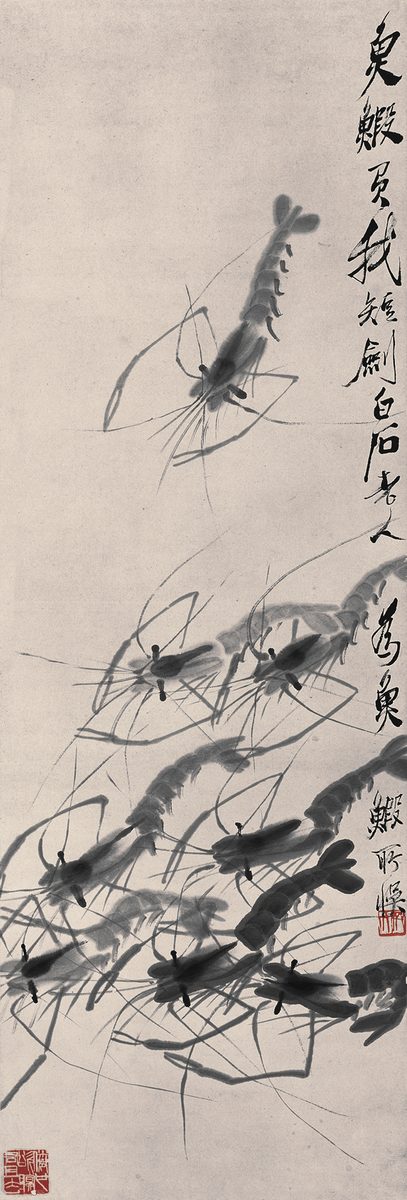
Ink shrimp; Qi Baishi
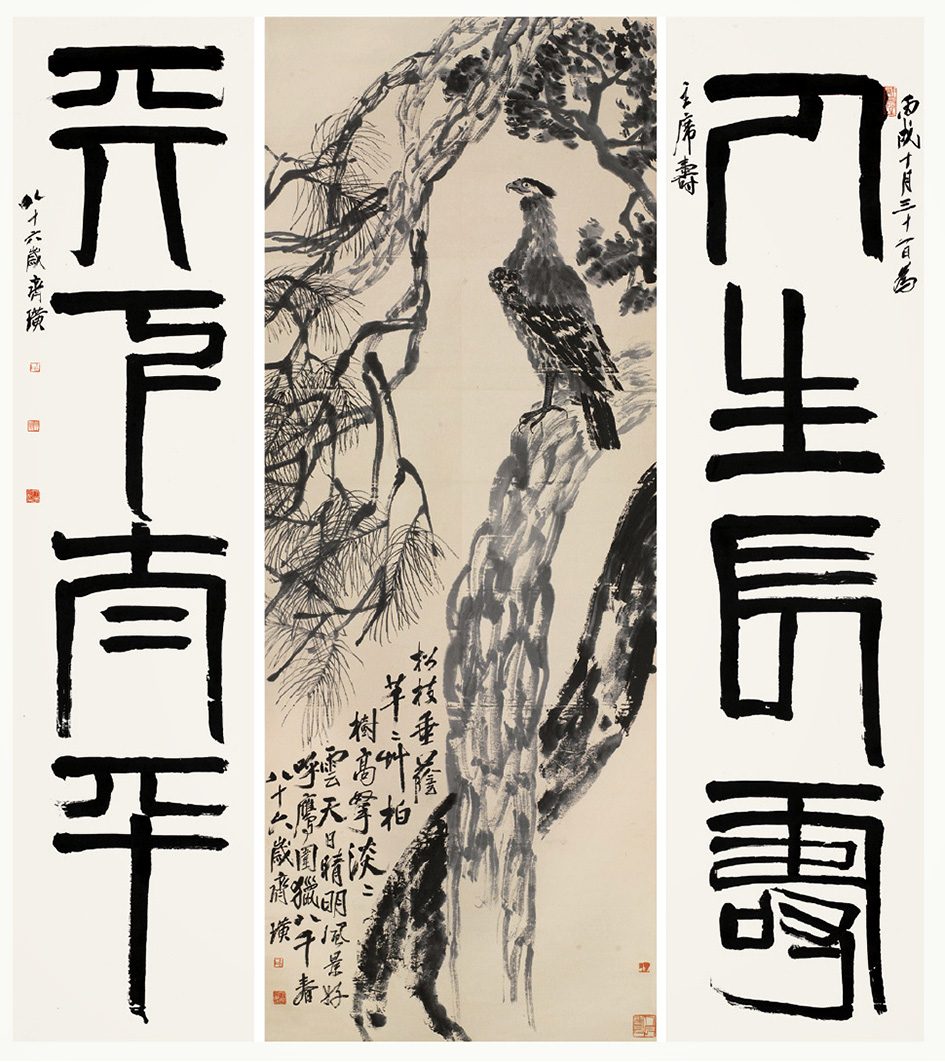
Eagle; Qi Baishi
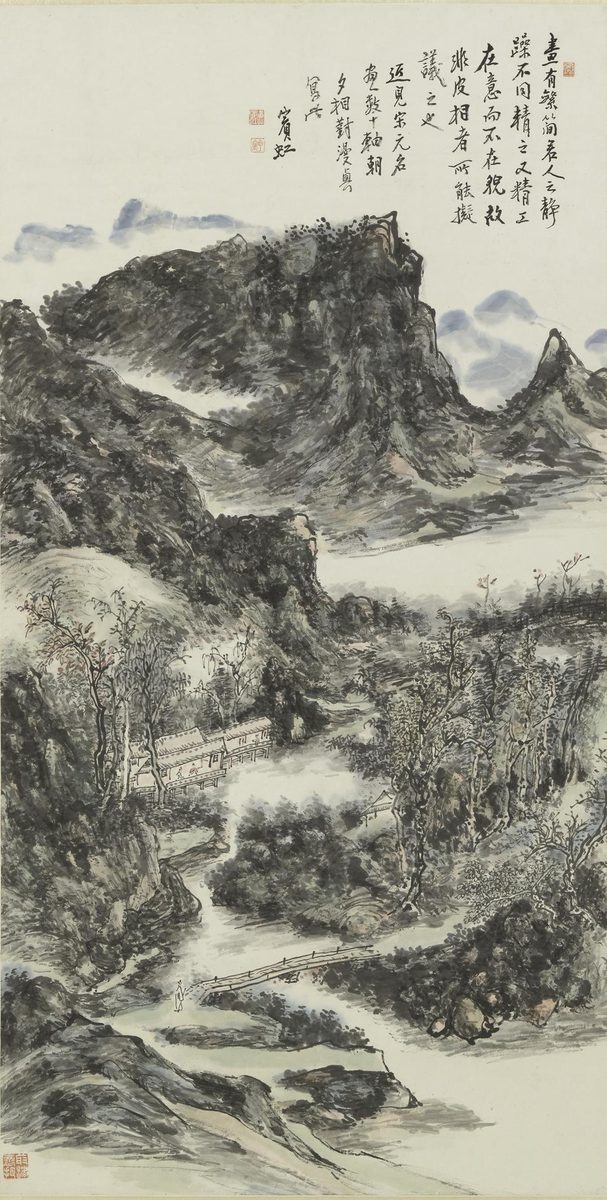
Huang Binhong (1865–1955), whose family came from Shexian, Anhui, worked for many years in Shanghai as an editor and publisher and as a historian of painting. He traveled to famous mountains throughout his life and sketched at Huangshan many times. He summed up brushwork in five words, "level, restrained, round, weighty, varied", and named seven methods of ink: dense, pale, broken, splashed, accumulated, scorched and overnight. In his late landscapes ink is built up layer upon layer, dark, dense and heavy, yet light shines through it, what he called "rich, deep, splendid and moist". He had few admirers in his lifetime and was recognized only after his death.
Qi Baishi (1864–1957), from Xiangtan, Hunan, was a carpenter who carved decorative woodwork in his youth, and only in his twenties began studying poetry and painting under teachers. He later settled in Beijing, living by painting and seal carving. At first he followed Bada Shanren in a cool, detached style that found few buyers; around the age of sixty, on Chen Shizeng's advice, he changed his manner, learning from Wu Changshuo and creating his own style of red flowers and ink leaves, known as his "transformation in old age". He mostly painted everyday things: shrimp, crabs, chicks, frogs, cabbages and farm tools. He often painted insects in meticulous detail beside flowers and leaves in bold freehand, a sharp contrast of the precise and the free. His shrimp, with transparent bodies in pale ink, a dot of dark ink for the head and a few fine lines for feelers and legs, were the result of years of observation. He said: "The wonder of painting lies between likeness and unlikeness. Too much likeness panders to vulgar taste; no likeness deceives the world."
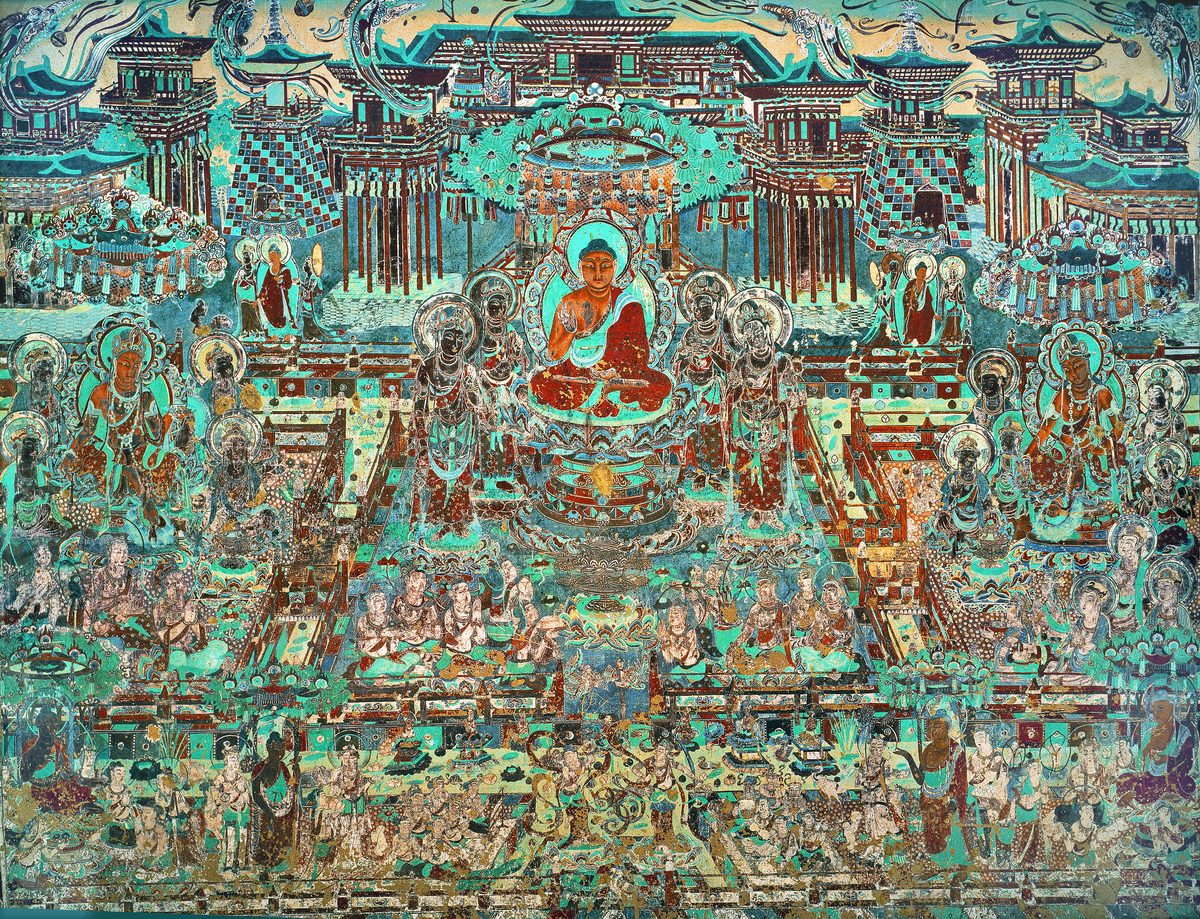
Zhang Daqian (1899–1983), from Neijiang, Sichuan, studied calligraphy and painting in Shanghai as a young man, and his imitations of Shitao could pass for originals. From 1941 he spent more than two years with his students copying murals at Dunhuang, and his style turned toward the rich color and full forms of the Tang; exhibitions of his copies also made the art of the Mogao Caves widely known. Some say that in order to see earlier murals underneath, he damaged parts of the surface murals; accounts differ. In his later years he lived abroad, and as eye disease made fine brushwork difficult, he developed "splashed ink and splashed color": pouring ink, azurite and malachite onto paper or silk, letting them flow and spread, then adding a few lines. For his last large work, Mount Lu, he had never been to Mount Lu and painted its mountains in clouds and mist from imagination.
In the same period, Xu Beihong and Lin Fengmian reformed Chinese painting with Western methods, and Pan Tianshou, Fu Baoshi, Li Keran and others each created a style of their own; they are not discussed further here.
Representative works
| Work | Period | Type | Collection | Notes | |
|---|---|---|---|---|---|
| Late Landscapes | Modern | Ink on paper, Huang Binhong | Zhejiang Provincial Museum and others | His family donated a large body of his work to the Zhejiang Provincial Museum. | |
| Ink Shrimp | Modern | Ink on paper, Qi Baishi | Qi Baishi painted shrimp many times. | ||
| Frogs Croaking for Ten Li along a Mountain Spring | Modern | Hanging scroll, ink on paper, Qi Baishi | National Museum of Modern Chinese Literature | Painted on a theme set by Lao She; it shows tadpoles, not frogs. | |
| Insects and Flowers | Modern | Album, ink and color on paper, Qi Baishi | Meticulous insects with freehand flowers. | ||
| Copies of Dunhuang Murals↑ | Modern | Ink and color on paper or cloth, Zhang Daqian | Sichuan Museum and others | Copies of murals at the Mogao and Yulin caves. |
| Mount Lu | Modern | Splashed ink and color on silk, Zhang Daqian | National Palace Museum, Taipei | A large late work, unfinished. |