
← Chapter 8: Three Kingdoms, Jin and Northern and Southern DynastiesA Brief History of ChinaChapter 10: Five Dynasties and Song →
Chapter 9: Sui and Tang
581–907
Sui (581–618) In 581 Yang Jian founded the Sui dynasty; in 589 he destroyed the Chen and unified north and south, ending nearly three hundred years of division. The Sui created the imperial examinations (keju) to select officials by examination; Emperor Yang dug the Grand Canal to link north and south. But Emperor Yang overworked the people and launched three campaigns against Goguryeo; revolts broke out everywhere, and in 618 he was killed by his own officers at Jiangdu. The Sui fell after only two emperors.
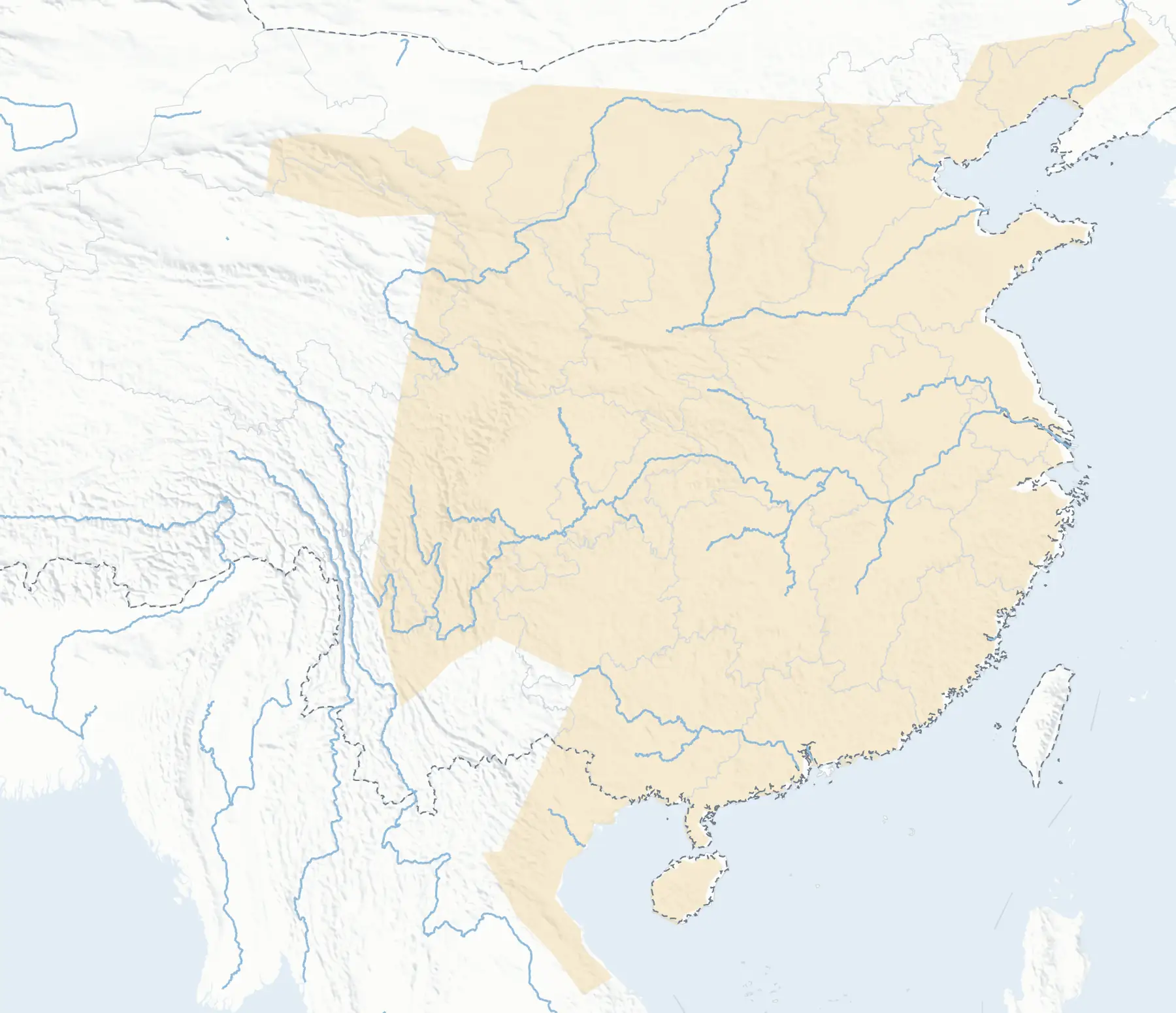
Tang (618–907) In 618 Li Yuan founded the Tang dynasty. Emperor Taizong, Li Shimin, listened humbly to criticism, and his reign is known as the “Rule of Zhenguan”; Wu Zetian, empress of Emperor Gaozong, later took the throne herself and renamed the dynasty Zhou – the only woman in Chinese history to reign as emperor – and was buried with Gaozong at the Qianling Mausoleum; in the early reign of Emperor Xuanzong the dynasty reached its peak, the “Kaiyuan Golden Age.” The capital, Chang’an, was then the largest city in the world, thronged with envoys, merchants and monks from many lands. Princess Wencheng went to Tibet, Xuanzang traveled west in search of Buddhist scriptures, and Jianzhen (Ganjin) sailed east to Japan; the Big Wild Goose Pagoda was built to house the scriptures Xuanzang brought back. Tang poetry was the era’s most brilliant achievement, and the poems of Li Bai, Du Fu and Bai Juyi are still recited today.
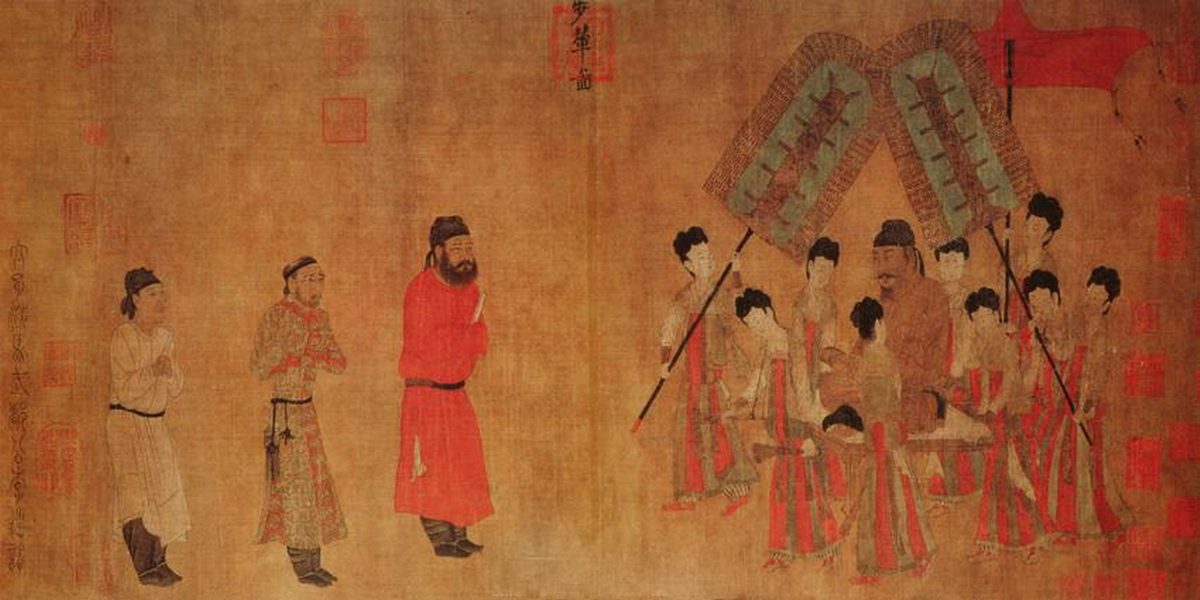
In 755 An Lushan and Shi Siming rebelled. The “An–Shi Rebellion” lasted eight years and turned the Tang from prosperity to decline.
After the rebellion, regional military governors (jiedushi) kept their own armies and ruled their regions as they pleased; at court, eunuchs held power and even put emperors on the throne. From 875 the Huang Chao rebellion swept across the country and took Chang’an. The Tang never recovered, and in 907 the military governor Zhu Wen usurped the throne, ending the Tang dynasty.
← Chapter 8: Three Kingdoms, Jin and Northern and Southern DynastiesContentsChapter 10: Five Dynasties and Song →