 Park of China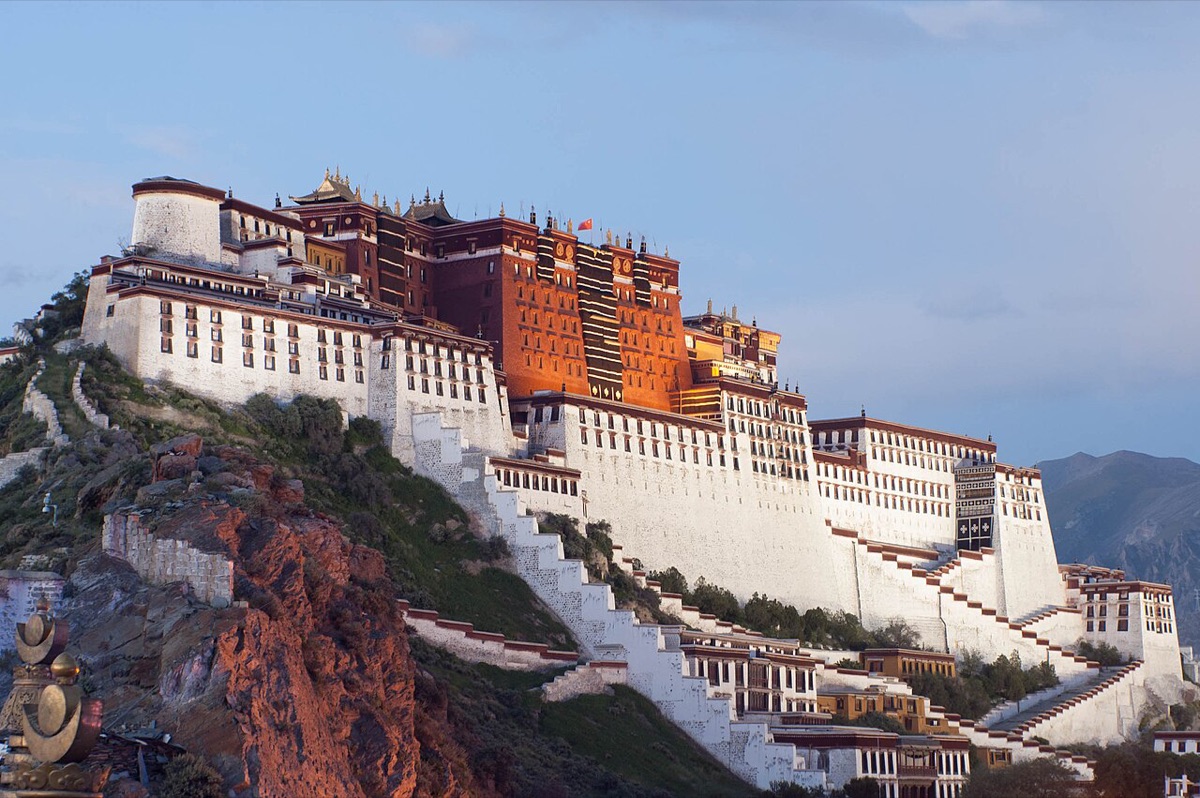
Overview
| Province | Tibet |
| Location | Tibet |
| Latitude, longitude | 29.6, 91.1 Google Maps |
| Nearby sites | Yarlung River 58km, Yamdrok Lake 88km, Namtso and the Nyainqêntanglha Mountains 126km Search nearby |
| Highlights | Holy city of the plateau |
| Top sights | Potala Palace |
| Elevation | 3,658 m |
| Nearby cities | Shigatse, Nyingchi |
| Themes | Highland, City, Museum, Snow Mountain, Temple, Buddha, River, Stamp, Banknote, Tibetan Buddhism, Ethnic cultures |
About
Lhasa, capital of the Tibet Autonomous Region, lies in the valley of the Lhasa River, a tributary of the Yarlung Tsangpo, at 3,658 m: the holy city of Tibetan Buddhism and one of the first historic cities named by the State Council. The Potala Palace stands in the city centre.
North of the Himalaya and under sinking air, Lhasa is sunny most of the year with little rain, no bitter winter and no hot summer: a semi-arid plateau monsoon climate, maximum 29 °C, minimum −16.5 °C, mean 7.4 °C, about 500 mm of rain concentrated in July–September, and over 3,000 hours of sun a year, the “City of Sunlight”.
Travel tips
Getting there: Lhasa Gonggar Airport is south-west of the city, some 80 to 97 km away in Gongkar County, Shannan, and is linked to the city by expressway and airport bus. The Qinghai-Tibet Railway opened in 2006 and runs to Lhasa from Xining and Golmud; railways also run from Lhasa to Shigatse (2014) and Nyingchi (2021).
Permits: Foreign visitors need a Tibet Travel Permit and usually must book a tour through an agency. Domestic visitors need their ID card.
Altitude: Lhasa stands at 3,658 m. Take it easy for the first two days, avoid alcohol and long hot baths, and people with heart or lung conditions should consult a doctor first.
In the city: The Potala Palace, Jokhang Temple, the Barkhor and Ramoche Temple are all in the old town and can be reached on foot. Places for the Potala are limited and must be reserved under real name.

Monasteries: Drepung and Sera lie to the north-west and north of the city and are reached by bus or taxi. Debate at Sera is held on weekday afternoons. Photography rules differ in each monastery, so watch the signs before entering a hall.
Out of town: Yamdrok Lake, Namtso, Yangbajing, Ganden Monastery and Nyemo can be reached on day trips, most easily by hired car. Shigatse and Nyingchi need separate itineraries.
Time: Three days is comfortable for the city; four to five with the lakes near Lhasa; a week or more with Shigatse or Nyingchi.
Season: May to October is the best period, with most rain falling in summer. In winter the sun is strong but nights are very cold, and some high roads may close under snow. The Shoton Festival is held in August; book lodging early around it and around Tibetan New Year.
Where to stay: The old town around the Jokhang has guesthouses and hotels of all kinds within walking distance of the sights.
City sights
Potala Palace: the landmark of Lhasa, World Heritage
Jokhang Temple: the holiest temple of Tibetan Buddhism, World Heritage
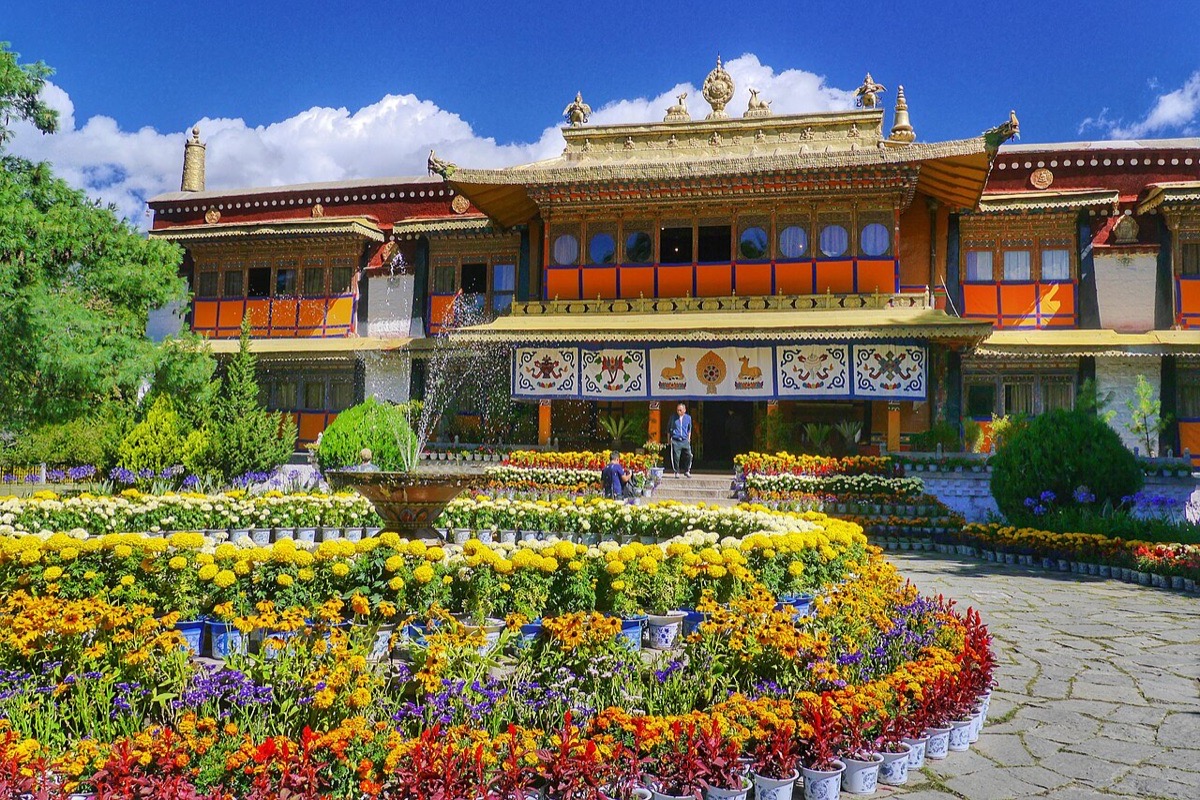
Norbulingka: summer palace of the Dalai Lamas, World Heritage
Ramoche Temple
Drepung Monastery
Sera Monastery: monks’ debates, weekday afternoons
Barkhor: the street round the Jokhang
Tibet Museum
Suburban sights
Yamdrok Lake: south-west of the city, one of the sacred lakes of Tibet.
Yarlung Tsangpo river
Further afield
Yarlung River: second-batch National Park of China
Namtso: a large salt lake at very high altitude; one of the sacred lakes of Tibet.
Yangbajain: geothermal field
Festivals
Shoton: the yoghurt festival, also the Tibetan opera festival or Buddha-unveiling festival, with grand opera performances and the unveiling of giant thangkas, now the largest popular festival and trade fair of the region.
Transport
Air: Lhasa Gonggar airport has flights to major Chinese cities and to Kathmandu.
Road: the Qinghai–Tibet, Sichuan–Tibet, Yunnan–Tibet and Xinjiang–Tibet highways radiate from Lhasa, and the China–Nepal highway runs to Nepal.
Rail: the 1,956 km Qinghai–Tibet railway was completed in October 2005 and opened on 1 July 2006.
Specialities
Cordyceps: a prized medicinal fungus
Stamps and banknotes
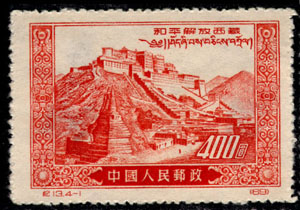
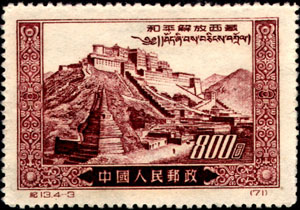
On 15 March 1952 China Post issued C13 “Peaceful Liberation of Tibet”, four stamps;
On 1 July 2006 the set 2006-15 “Opening of the Qinghai–Tibet Railway”, three stamps: crossing Hoh Xil, over the Tanggula and Lhasa station.
The back of the 50-yuan note of the fifth series of renminbi shows the Potala.

Photo credits: Norbulingka: travel oriented (CC BY-SA 2.0, Wikimedia Commons); Potala Palace: Coolmanjackey (CC BY-SA 3.0, Wikimedia Commons)
Nearby
| World Heritage | The Potala Palace, Lhasa 3km |
| National parks | Yarlung River 55km, Namtso and the Nyainqêntanglha Mountains 128km |
| Detailed guides | Yamdrok Lake 90km |
| AAAAA attractions | Jokhang Temple 1km |
| AAAA attractions | Tibet Natural Science Museum 4km, Tibet Museum 4km, Drepung Monastery 10km, Samye Monastery 50km |
| Historical sites | Bangdacang <1km, Xide Monastery 2km, Chalaluput Grottoes 3km, Lalu Podrang 4km, Monument to the Sichuan-Tibet and Qinghai-Tibet Highways 4km, Sera Monastery 6km |
| National geoparks | Yangbajing National Geopark 77km |
| Nature reserves | Lhalu Wetland National Nature Reserve 6km |
| Historic towns | Jiedexiu Town 41km |