← Chapter 7: HanA Brief History of ChinaChapter 9: Sui and Tang →
Chapter 8: Three Kingdoms, Jin and Northern and Southern Dynasties
220–589
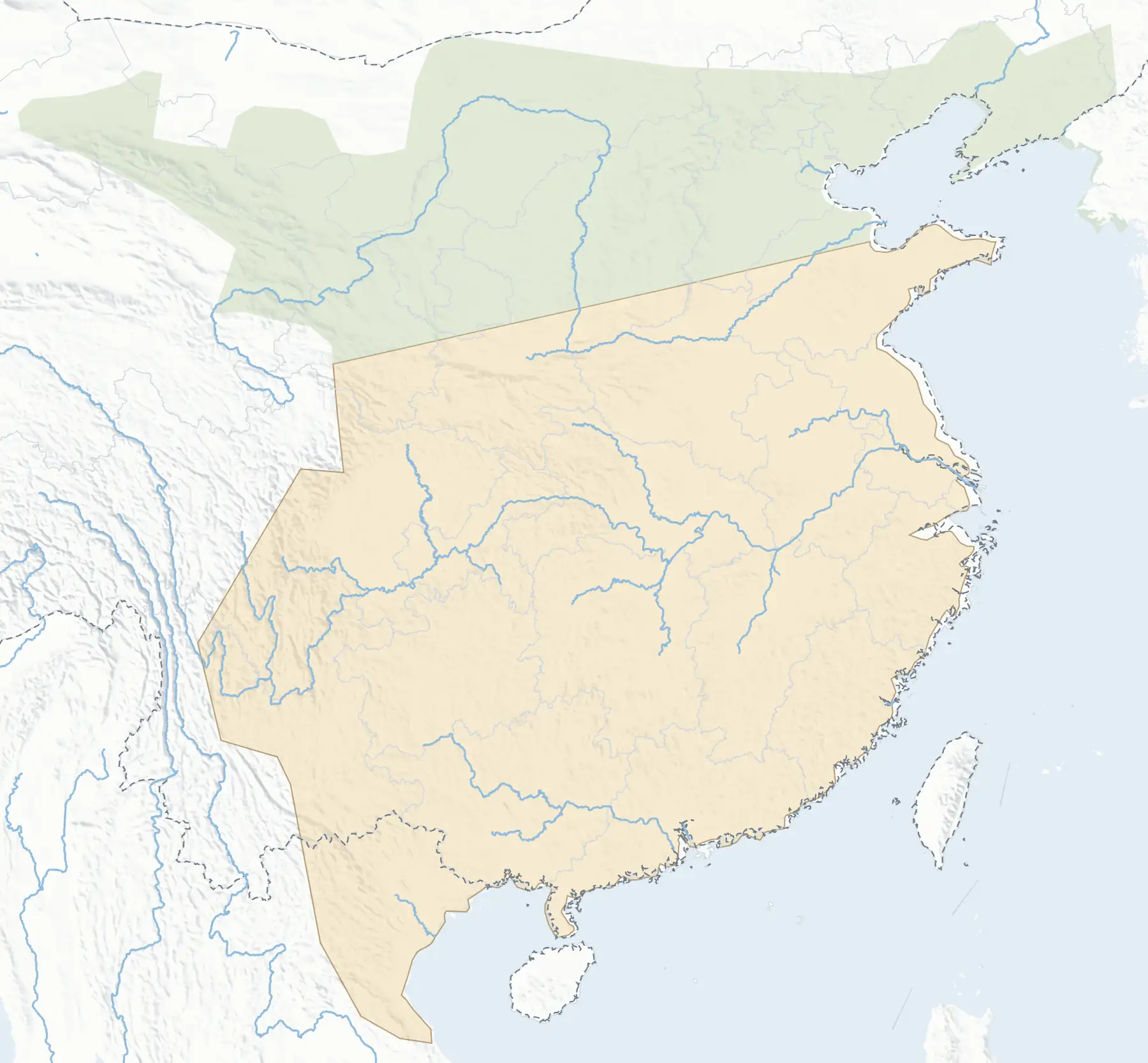
At the end of the Eastern Han, Cao Cao defeated the larger army of Yuan Shao at the Battle of Guandu in 200 and unified the north, but in 208 he was defeated at Red Cliffs (Chibi) by the allied forces of Sun Quan and Liu Bei (the Battle of Red Cliffs; the battlefield is in today’s Chibi, Hubei). In 220 Cao Pi replaced the Han, and the Three Kingdoms of Wei, Shu and Wu stood in rivalry. The Sima family supplanted Cao Wei and founded the Western Jin, which unified the country in 280 but soon declined in the “War of the Eight Princes”; in 316 the Xiongnu took Chang’an and the Western Jin fell. Peoples of the north founded states of their own, known as the “Sixteen Kingdoms.” The Jin court fled south and founded the Eastern Jin (317) at Jiankang (today’s Nanjing); in 420 the general Liu Yu took the throne and the Eastern Jin ended.
In 383 the Former Qin marched south in force, and the outnumbered Eastern Jin won the Battle of Fei River, settling the division between north and south. North and south then faced each other for nearly three hundred years. The south passed through four dynasties, Song, Qi, Liang and Chen; the north was unified by the Northern Wei of the Xianbei people, which later split into Eastern and Western Wei, replaced in turn by Northern Qi and Northern Zhou. In 494 Emperor Xiaowen of the Northern Wei moved the capital to Luoyang and had his people adopt Han dress, the Han language and Han surnames, furthering the blending of peoples. Large numbers of northerners moved south, and the lands south of the Yangtze were opened up.
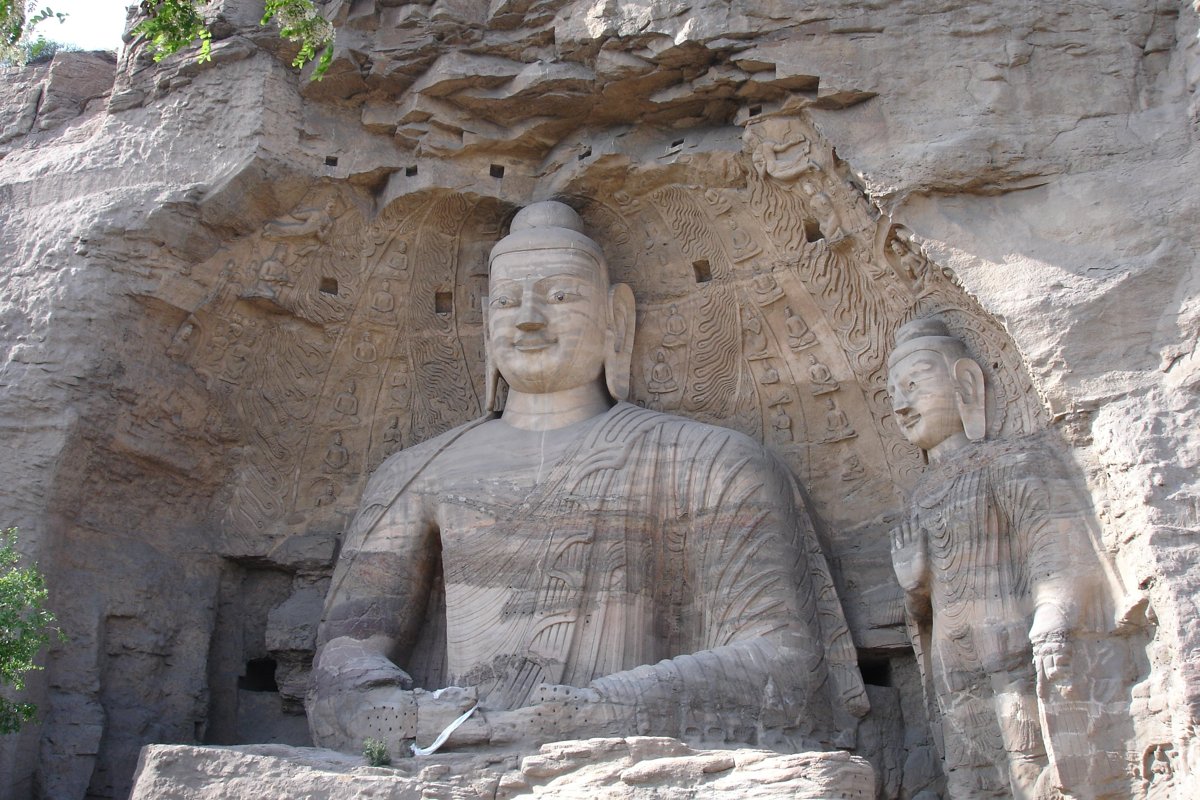
It was a turbulent age but a brilliant one for culture. Buddhism spread widely, and cave temples were carved at Yungang, Longmen and Mogao; the calligraphy of Wang Xizhi, the painting of Gu Kaizhi, the pastoral poetry of Tao Yuanming and the value of pi calculated by Zu Chongzhi all date from this period.
In 581 Yang Jian, a relative of the Northern Zhou emperors by marriage, seized the throne and founded the Sui; in 589 Sui armies crossed the Yangtze and destroyed the Chen, ending the Northern and Southern Dynasties.