
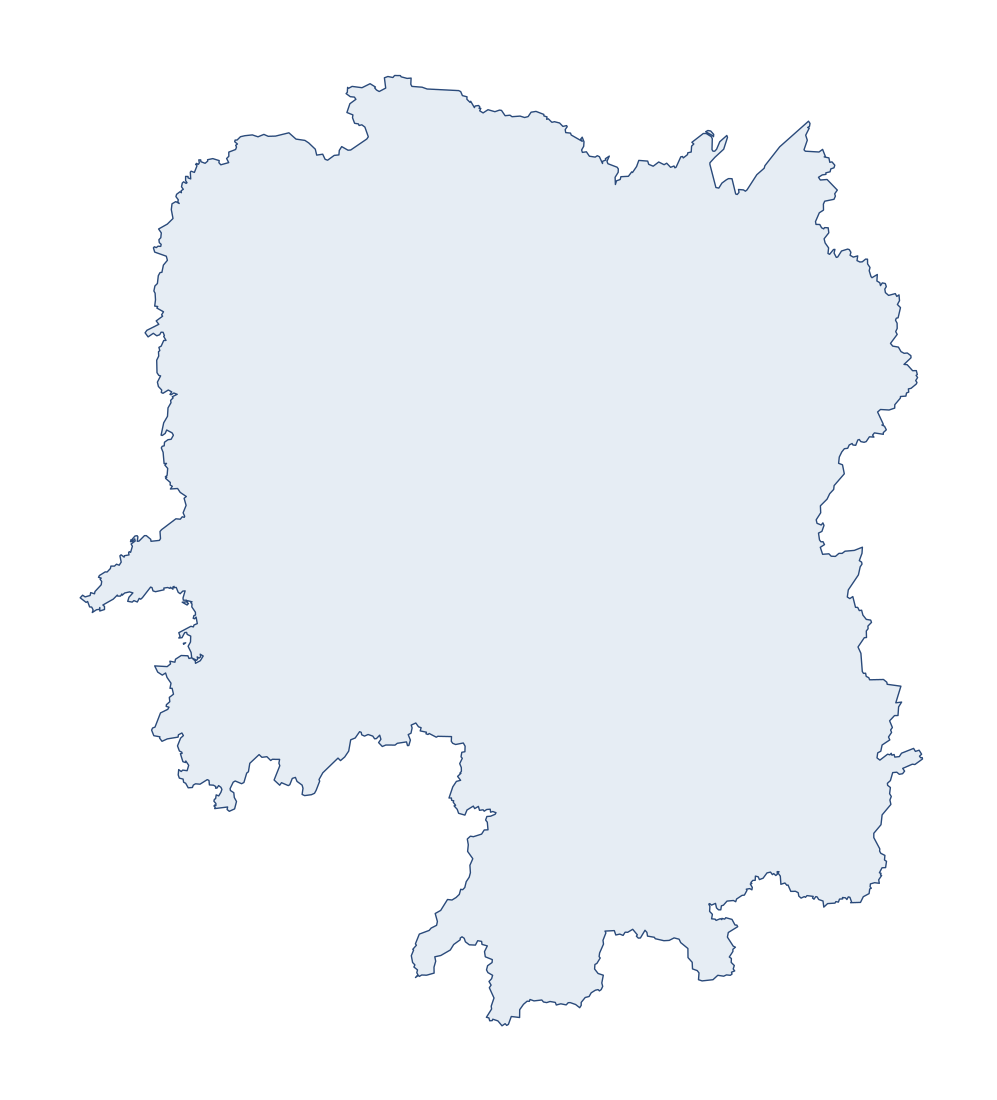
227 Major Historical and Cultural Sites Protected at the National Level in Hunan (batches 1–8, named by the State Council 1961–2019). Dots are coloured by category. See also Hunan and all provinces.
Série :



Changde (33)
- Pilier à dharani en fer de Changde 常德铁幢Temples rupestres et sculptures sur pierre · 2e série (1982)Northern Song iron dharani pillar originally beside Qianming Temple and moved to Binhu Park in 1979; the shaft is hollow and 4.34 meters tall, with reliefs and inscriptions.
- Site de Chengtoushan 城头山遗址Sites anciens · 4e série (1996)Prehistoric site from the Daxi to the Shijiahe culture periods, named one of China's top ten archaeological discoveries of 2002.
- Site de Pengtoushan 彭头山遗址Sites anciens · 5e série (2001)Site néolithique dans le district de Li.
- Site de Bashidan 八十垱遗址Sites anciens · 5e série (2001)A Neolithic site in Mengxi Town, Li County, excavated in 1993 and 1994.
- Ensemble architectural ancien de Taohuayuan 桃花源古建筑群Édifices anciens · 6e série (2006)Ensemble d’édifices anciens des Ming et des Qing.
- Portique de la famille Yu 余家牌坊Édifices anciens · 6e série (2006)Portique en pierre des Qing.
- Site de Huzhuashan 虎爪山遗址Sites anciens · 7e série (2013)Site de l’âge de la pierre.
- Site de Jigongdang 鸡公垱遗址Sites anciens · 7e série (2013)Site paléolithique.
- Site de Shilingang 十里岗遗址Sites anciens · 7e série (2013)Site paléolithique.
- Site de Tangjiagang 汤家岗遗址Sites anciens · 7e série (2013)Neolithic site, discovered in 1978 and excavated a second time in 1990.
- Site de Sanyuangong 三元宫遗址Sites anciens · 7e série (2013)Neolithic site covering more than 20,000 square meters, discovered in 1966 during water conservancy work.
- Site de Sunjiagang 孙家岗遗址Sites anciens · 7e série (2013)A site of the end of the Neolithic in the Dongting Lake area, revealing a public cemetery about 4,000 years old, belonging to the Xiaojiawuji Culture.
- Site de Jijiaocheng 鸡叫城遗址Sites anciens · 7e série (2013)Neolithic site in the middle of the Liyang Plain, about 15 km from the Chengtoushan Site; discovered in 1978.
- Site de Dingjiagang 丁家岗遗址Sites anciens · 7e série (2013)Neolithic site in the heart of the Liyang Plain, with a total area of about 66,000 square meters.
- Site de Huachenggang 划城岗遗址Sites anciens · 7e série (2013)Neolithic site on a terrace in the Dongting Lake plain, about 9 km from Anxiang County seat.
- Site de Zaoshi 皂市遗址Sites anciens · 7e série (2013)Site from the Neolithic to the Shang and Zhou periods, on the first terrace across the Xie River; discovered in 1960.
- Site de Shenmingcheng 申鸣城遗址Sites anciens · 7e série (2013)Site de ville des Zhou de l’Est.
- Site de Cailingcheng 采菱城遗址Sites anciens · 7e série (2013)Site de ville des Royaumes combattants aux Han.
- Site de la ville des Han de Suoxian 索县汉代城址Sites anciens · 7e série (2013)Site de ville des Han.
- Tombes des Chu de Jiuli 九里楚墓群Tombes anciennes · 7e série (2013)Ensemble de tombes de Chu des Royaumes combattants.
- Tombes rupestres de Qingshanya 青山崖墓群Tombes anciennes · 7e série (2013)Ensemble de tombes rupestres des Han et des Jin.
- Tombes des Jin de Nanchanwan 南禅湾晋墓群Tombes anciennes · 7e série (2013)Western Jin tomb group in Huangshantou National Forest Park, with the protected area centered on the tomb of Liu Hong.
- Pagode du temple Huawa 花瓦寺塔Édifices anciens · 7e série (2013)Also called the Baota Temple Pagoda, an early Northern Song Tibetan-style Buddhist pagoda.
- Temple Jiashan 夹山寺Édifices anciens · 7e série (2013)A Han Chinese Chan Buddhist temple in Jiashan National Forest Park; apart from Guanyin Hall, the existing halls were rebuilt in 1992.
- Temple de Confucius de Lizhou 澧州文庙Édifices anciens · 7e série (2013)Originally the Lizhou Academy, begun in the Song and moved to its present site in the early Ming; the existing buildings were rebuilt in the Daoguang reign of the Qing.
- Ancienne muraille de Lizhou 澧州古城墙Édifices anciens · 7e série (2013)The south wall of the Lizhou ancient city wall survives, about 2,000 meters long.
- Ensemble architectural historique du palais Xingzi 星子宫古建筑群Édifices anciens · 7e série (2013)Ensemble de bâtiments d’un temple taoïste des Qing.
- Ancienne résidence de Lin Boqu 林伯渠故居Sites historiques modernes · 7e série (2013)The former residence where the revolutionary Lin Boqu was born in 1886.
- Site de Shanlonggang 杉龙岗遗址Sites anciens · 8e série (2019)A Neolithic site of the middle and late Pengtoushan culture, between the Lishui and Danshui rivers, dating to about 6000-5300 BC.
- Site de Youzhougang 优周岗遗址Sites anciens · 8e série (2019)Site néolithique.
- Site de Malanzui 马栏嘴遗址Sites anciens · 8e série (2019)Site du Néolithique, des Shang et des Zhou.
- Temple de Confucius de Shimen 石门文庙Édifices anciens · 8e série (2019)A Qing-dynasty Confucian temple, on the north bank of the middle reaches of the Lishui River.
- Pont Duo’an de Lixian 澧县多安桥Édifices anciens · 8e série (2019)Also called the Lijiang Bridge and Xiushui Bridge; outside the east gate of the ancient city, first built in the 51st year of Qianlong of the Qing (1786).
Yongzhou (33)
- Inscriptions rupestres de Wuxi 浯溪摩崖石刻Temples rupestres et sculptures sur pierre · 3e série (1988)Group of cliff inscriptions on the west bank of the Xiang River with 486 poems, essays, calligraphy and paintings, left by hundreds of notable figures since the Tang including Yuan Jie, Yan Zhenqing and Huang Tingjian.
- Temple de Confucius de Ningyuan 宁远文庙Édifices anciens · 4e série (1996)Also called the Xuegong, one of the Confucian temples with the earliest surviving founding date and best preservation, and the largest and best-preserved in the six provinces and regions of Central-South China.
- Site de Yuchanyan 玉蟾岩遗址Sites anciens · 5e série (2001)A Neolithic limestone cave site, commonly called "Hama Cave", excavated in 1993 and 1995.
- Temple Liuzi 柳子庙Édifices anciens · 5e série (2001)A temple commemorating Liu Zongyuan of the Tang, on the west bank of the Xiao River; Liu Zongyuan lived here for ten years while demoted to Yongzhou, and a shrine to him was built in the Northern Song.
- Site du temple de Shundi 舜帝庙遗址Sites anciens · 6e série (2006)The site of a mausoleum temple where Emperor Shun was worshipped in the Tang and Song, dating back to the Qin and Han, the earliest known temple of Emperor Shun.
- Ensemble architectural ancien du village de Shanggantang 上甘棠村古建筑群Édifices anciens · 6e série (2006)A kinship settlement mainly of the Zhou family with Ming and Qing buildings such as Buying Bridge, Wenchang Pavilion and Zhonghou Shrine; Buying Bridge was begun in the 1st year of Jingkang of the Northern Song (1126).
- Inscriptions rupestres de Yanghuayan 阳华岩摩崖Temples rupestres et sculptures sur pierre · 6e série (2006)Inscriptions rupestres des Tang aux Qing.
- Villa de Shude 树德山庄Sites historiques modernes · 6e série (2006)Also called Tang Shengzhi's Former Residence, a mixed Chinese-Western manor-style building built in 1927.
- Site de la ville du marquis de Chongling 舂陵侯城遗址Sites anciens · 7e série (2013)Site de ville des Qin aux Han.
- Site de la ville ancienne de Lingdao 泠道故城遗址Sites anciens · 7e série (2013)Site de ville ancienne des Han de l’Ouest.
- Site de fours ancien de Yunshan Yujing 允山玉井古窑址Sites anciens · 7e série (2013)Site de fours anciens des Song.
- Site de Guizailing 鬼崽岭遗址Sites anciens · 7e série (2013)Site des Song aux Qing.
- Section de Yongzhou de l’ancienne route de Xiang-Gui 湘桂古道永州段Édifices anciens · 7e série (2013)Remains of an ancient road from the Warring States to the Republic of China, distributed across Daoxian, Jianghua and Jiangyong.
- Pagode Huilong 廻龙塔Édifices anciens · 7e série (2013)Pagode des Ming.
- Portique Yunlong et Xutang de la famille Wang 云龙坊与王氏虚堂Édifices anciens · 7e série (2013)Portique et résidence des Ming.
- Demeure de la famille Li à Longxi 龙溪李家大院Édifices anciens · 7e série (2013)A compound-style historic building of the Ming and Qing periods.
- Ensemble résidentiel de la famille Zhou à Jianyantou 涧岩头周家大院古建筑群Édifices anciens · 7e série (2013)Ensemble architectural historique des Ming et des Qing.
- Ensemble architectural historique du pays natal de Lianxi 濂溪故里古建筑群Édifices anciens · 7e série (2013)Ensemble architectural historique des Ming et des Qing.
- Demeure de la famille Long 龙家大院Édifices anciens · 7e série (2013)A compound-style historic building of the Ming to Republican periods.
- Ensemble architectural historique de la tour Suiyuan 岁圆楼古建筑群Édifices anciens · 7e série (2013)Ensemble architectural historique des Qing.
- Temples jumeaus de Lingling Wen-Wu 零陵文武双庙Édifices anciens · 7e série (2013)Temple de Confucius et temple militaire des Qing.
- Pont Guangli 广利桥Édifices anciens · 7e série (2013)Pont des Qing.
- Temple ancestral de Jiu’anbei Hanlin 久安背翰林祠Édifices anciens · 7e série (2013)Temple ancestral des Qing.
- Inscriptions rupestres de Chaoyang 朝阳岩石刻Temples rupestres et sculptures sur pierre · 7e série (2013)Inscriptions sur pierre des Tang à la République de Chine.
- Inscriptions rupestres de Dan 淡岩石刻Temples rupestres et sculptures sur pierre · 7e série (2013)Inscriptions sur pierre des Song à la République de Chine.
- Ancienne résidence de Li Da 李达故居Sites historiques modernes · 7e série (2013)The former residence where the revolutionary Li Da was born in 1890.
- Résidence du général à Xujiaqiao 许家桥将军府Édifices anciens · 8e série (2019)An official-style compound first built in the late Yuan or early Ming, facing west, with four rows in two side-by-side columns, covering 2,533 square meters.
- Village yao de Goulan 勾蓝瑶寨Édifices anciens · 8e série (2019)A traditional Yao village first built in the Ming, covering about 6 square kilometers, with a defensive system of stone village walls, night-watch houses and gatehouses, and 30 buildings including ancestral halls, an academy and a wind-and-rain bridge.
- Demeure de la famille Hu à Shanmuqiao 杉木桥胡家大院Édifices anciens · 8e série (2019)First built in the early Qing, it consists of a public hall and 40 side houses on either side, with a total floor area of 4,782 square meters.
- Temple ancestral de la famille Li à Shenxia 神下李氏宗祠Édifices anciens · 8e série (2019)An ancestral hall first built in the 18th year of Qianlong of the Qing (1753), covering 1,250.4 square meters.
- Temple ancestral de la famille Huang à Huxi 虎溪黄氏宗祠Édifices anciens · 8e série (2019)Temple ancestral des Qing.
- Demeure de la famille He à Baojing 宝镜何家大院Édifices anciens · 8e série (2019)A compound first built in the early Qing by He Yingqi, made up of a splayed gatehouse, new house and galleried raised houses, with a total floor area of about 11,000 square meters and the He ancestral hall on the north side.
- Temple Hanlin de Dong’antou 东安头翰林祠Édifices anciens · 8e série (2019)An ancestral hall first built in the 1st year of Qianlong of the Qing (1736) to commemorate Li Fu, a jinshi of the Ming, covering about 6,700 square meters.
Changsha (28)
- Site du rassemblement des troupes du soulèvement de la Moisson d’automne à Wenjiashi 秋收起义文家市会师旧址Sites historiques modernes · 1re série (1961)Site where the Autumn Harvest Uprising troops assembled in 1927, formerly the Republican-era Liren School, covering over 5,000 square meters.
- Ancienne résidence et tombe de Huang Xing 黄兴故居、墓Sites historiques modernes · 3e série (1988)Former residence and tomb of Huang Xing, a leader of the Revolution of 1911. The residence is a typical Qing-dynasty Hunan dwelling, first built in the Tongzhi years, with 12 rooms surviving.
- Ancienne résidence de Liu Shaoqi 刘少奇故居Sites historiques modernes · 3e série (1988)Birthplace of Liu Shaoqi at Huaminglou Town, now a memorial hall and an important part of the Huaminglou scenic area.
- Académie Yuelu 岳麓书院Édifices anciens · 3e série (1988)One of the four great academies of ancient China, first built in the ninth year of the Kaibao reign of the Northern Song (976), later converted into the Hunan Higher Academy and now part of Hunan University.
- Site de fours de Tongguan à Changsha 长沙铜官窑遗址Sites anciens · 3e série (1988)Site of southern popular kilns of the Tang and Five Dynasties, mainly making celadon with a variety of decorative techniques; also called the Changsha kiln or Tongguan kiln.
- Ancienne résidence de Tan Sitong 谭嗣同故居Sites historiques modernes · 4e série (1996)Place where Tan Sitong, one of the Six Gentlemen of the 1898 Reform, grew up, called the Daifudi official residence, on Beizheng Street in the urban area of Liuyang.
- Site de Tanheli 炭河里遗址Sites anciens · 6e série (2006)A find-spot of Shang to Western Zhou bronzes and a Western Zhou city site, on a terrace beside the Wei River, a well-known Shang and Zhou site south of the Yangtze.
- Site de la Première École normale du Hunan 湖南省立第一师范学校旧址Sites historiques modernes · 6e série (2006)The school where Mao Zedong studied, descended from the Chengnan Academy, where Zeng Guofan, Huang Xing, Xu Teli and others studied or taught; also called the Mao Zedong and First Normal School Memorial Hall.
- Site du comité régional du PCC du Hunan 中共湘区委员会旧址Sites historiques modernes · 6e série (2006)A site at Qingshuitang, originally the residence of a merchant surnamed Tao in southern residential style, the only related revolutionary building to survive the Changsha fire.
- Tombes des Han de Mawangdui 马王堆汉墓Tombes anciennes · 7e série (2013)Tombs of Li Cang, chancellor of the Western Han Changsha Kingdom, his wife Xin Zhui and their son; excavated from 1971, yielding a great number of artifacts.
- Tombes des princes de Changsha des Han 汉代长沙王陵墓群Tombes anciennes · 7e série (2013)Tomb group of the Han-dynasty Princes of Changsha and royal family members, spread over hills along the west bank of the Xiang River, covering about 30 square kilometers; 25 tombs have been found.
- Tombe de Zhang Nanxuan (avec la tombe de Zhang Jun) 张南轩墓(含张浚墓)Tombes anciennes · 7e série (2013)Tomb of the Song Neo-Confucian Zhang Shi (Nanxuan), including the tomb of his father Zhang Jun, covering 273.6 square meters.
- Tombe de Zeng Guofan 曾国藩墓Tombes anciennes · 7e série (2013)Joint tomb of Zeng Guofan, leader of the Xiang Army in the late Qing, and his wife, Lady Ouyang.
- Ancienne muraille du pavillon Tianxin 天心阁古城墙Édifices anciens · 7e série (2013)A remnant of the ancient Changsha city wall; after the wall was demolished in 1923-1924 only Tianxin Pavilion and about 251 meters of wall nearby remain.
- Temple de Confucius de Liuyang 浏阳文庙Édifices anciens · 7e série (2013)A palace-style historic complex modeled on the Confucian Temple at Qufu, on the campus of Liuyang No. 1 Middle School and covering over 6,000 square meters; it is called the "foremost Confucian temple south of the Yangtze".
- Stèle du roi Yu 禹王碑Temples rupestres et sculptures sur pierre · 7e série (2013)That is the Goulou Stele, traditionally praising the deeds of Yu the Great; originally carved on Goulou Peak of Mount Heng, the stele now on Yuelu Mountain in Changsha is a Song-dynasty copy made from rubbings.
- Ancienne résidence de He Shuheng 何叔衡故居Sites historiques modernes · 7e série (2013)The former residence of the revolutionary He Shuheng, a typical Qing dynasty southern dwelling covering 2,600 square meters.
- Ancienne résidence de Xie Juezai 谢觉哉故居Sites historiques modernes · 7e série (2013)The former residence of the revolutionary Xie Juezai, covering 640 square meters, later moved to Lanfuchong on Duizishan.
- Ancienne résidence de Xu Teli 徐特立故居Sites historiques modernes · 7e série (2013)The former residence of the educator Xu Teli, begun in the late Qing, with a total area of 1,700 square meters.
- Pavillon Aiwan 爱晚亭Sites historiques modernes · 7e série (2013)A pavilion in Qingfeng Gorge on Mount Yuelu, ranked with Zuiweng Pavilion, Huxin Pavilion and Taoran Pavilion as the "Four Famous Pavilions of China".
- Ancienne résidence de Hu Yaobang 胡耀邦故居Sites historiques modernes · 7e série (2013)The former residence of Hu Yaobang, begun in the Xianfeng reign of the Qing, covering 450 square meters with 19 rooms.
- Site de la Société d’études du peuple nouveau 新民学会旧址Sites historiques modernes · 7e série (2013)The venue of the founding meeting of the New People's Study Society and also the former residence of Cai Hesen.
- Premiers bâtiments de l’université du Hunan 湖南大学早期建筑群Sites historiques modernes · 7e série (2013)Nine buildings completed in succession from the Republican period to the early People's Republic, including the Science Hall, Engineering Hall, Great Auditorium and Old Library.
- Site du gouvernement provincial du soviet du Hunan 湖南省苏维埃政府旧址Sites historiques modernes · 7e série (2013)Originally Jinshou Hall, built by Madame Tu Liu, an estate-style complex combining residence and ancestral hall covering 5,000 square meters, where the Hunan Provincial Soviet Government worked in 1931.
- Résidence de la famille Liu à Taoshuwan 桃树湾刘氏大屋Édifices anciens · 8e série (2019)Also called the Taoshuwan Qing-dynasty Dwelling; a Qing-dynasty residential building.
- Premiers bâtiments de l’hôpital et de l’école de médecine Xiangya 湘雅医院及医学院早期建筑Sites historiques modernes · 8e série (2019)First built in 1914 and designed by Henry Murphy, five buildings including the hospital ward building, office building, small chapel and foreign teachers' building.
- Sites des activités de la 1re armée du front de l’Armée rouge à Liuyang 浏阳红一方面军活动旧址Sites historiques modernes · 8e série (2019)Site of the Red First Front Army's activities in Liuyang in 1930.
- Résidence de Cheng Qian 程潜公馆Sites historiques modernes · 8e série (2019)Residence of Cheng Qian, a first-class general of the Republic of China, while he was chairman of the Hunan provincial government; secret peace talks were reportedly held here during the peaceful liberation of Hunan in 1949; now an exhibition hall.
Huaihua (22)
- Temple Longxing 龙兴寺Édifices anciens · 4e série (1996)Also called Longxing Lecture Temple, preserving architectural styles from the Song to the Qing; the oldest timber building group surviving in Hunan.
- Tour du Tambour de Matian 马田鼓楼Édifices anciens · 4e série (1996)A Dong-style drum tower in Matian Village, Pingyang Township.
- Ancienne résidence de Xiang Jingyu 向警予故居Sites historiques modernes · 4e série (1996)A north-south-facing courtyard dwelling first built in the early Qing, where Xiang Jingyu, an early leader of the women's movement of the Communist Party of China, was born in 1895.
- Ensemble architectural ancien du village dong de Yutou 芋头侗寨古建筑群Édifices anciens · 5e série (2001)A Dong village first built in the Hongwu reign of the Ming and rebuilt after a fire in the Shunzhi reign of the Qing, with four drum towers, three wind-and-rain bridges and seventy-eight stilted houses.
- Site de Gaomiao 高庙遗址Sites anciens · 6e série (2006)A Neolithic site on the northwest edge of the Anjiang Basin in the Yuan River valley, found in 1985 and excavated three times.
- Ensemble architectural ancien du village de Gaoyi 高椅村古建筑群Édifices anciens · 6e série (2006)A Dong village surrounded by mountains on three sides and water on one, mostly of the Yang family, preserving 104 residences built between the Ming Hongwu and Qing Guangxu reigns.
- Ensemble architectural ancien de Hongjiang 洪江古建筑群Édifices anciens · 6e série (2006)A Ming, Qing and Republic-era commercial town complex at the confluence of the Wushui and Yuanjiang rivers, with many surviving temples, banks, shops and inns.
- Ponts du vent et de la pluie de Pingtan 坪坦风雨桥Édifices anciens · 6e série (2006)Nine Dong wind-and-rain bridges on the Pingtan River with distinctive Dong architectural features.
- Site des négociations de la reddition japonaise à Zhijiang 抗日胜利芷江洽降旧址Sites historiques modernes · 6e série (2006)The place where China and Japan negotiated the surrender in August 1945, including the surrender memorial archway, the former site of the China Theater's general surrender and the memorial hall.
- Parc commémoratif de l’école agricole d’Anjiang 安江农校纪念园Sites historiques modernes · 6e série (2006)The site of the Anjiang Agricultural School, rebuilt as a memorial park after the school moved.
- Ensemble architectural historique du village de Jingping 荆坪村古建筑群Édifices anciens · 7e série (2013)Ensemble architectural historique des Ming et des Qing.
- Ensemble architectural historique de Qiancheng 黔城古建筑群Édifices anciens · 7e série (2013)A historic building complex of the Ming to Republican periods.
- Palais Tianhou de Zhijiang 芷江天后宫Édifices anciens · 7e série (2013)Begun in the Kangxi reign of the Qing and expanded into the Fujian Guild Hall by Fujian merchants in the 13th year of the Qianlong reign (1748), the largest surviving Mazu temple complex in the interior.
- Académie de Gongcheng 恭城书院Édifices anciens · 7e série (2013)Originally the Luomeng Academy, begun in the Song in 1105; the existing buildings were rebuilt in the Qing, and it is a relatively well-preserved academy in the Dong area.
- Tour Furong 芙蓉楼Édifices anciens · 7e série (2013)Tour des Qing.
- Pavillon Bingshu et pont Wenxing 兵书阁与文星桥Édifices anciens · 7e série (2013)Pavillon et pont des Qing.
- Temple Baiyi 白衣观Édifices anciens · 7e série (2013)Also called the Qianqiu White Pagoda, a Daoist temple built in the 24th year of the Qianlong reign of the Qing (1759), the only Daoist temple in the Dong area.
- Site de la ville ancienne de Yaotou 窑头古城遗址Sites anciens · 8e série (2019)An ancient city site from the Warring States period to the Han dynasty.
- Temple de Confucius de Zhijiang 芷江文庙Édifices anciens · 8e série (2019)Originally the Confucian temple of Yuanzhou Prefecture, moved to its present site in the 9th year of Xianfeng of the Qing (1859); the date of first construction is unknown.
- Académie de Xupu Chongshi 溆浦崇实书院Édifices anciens · 8e série (2019)An academy founded in the 14th year of Daoguang of the Qing (1834), at first a private school of the Wu family and renamed Chongshi Academy in the 5th year of Xianfeng.
- Site de l’affaire missionnaire de Chenzhou 辰州教案发生地Sites historiques modernes · 8e série (2019)In 1902 an epidemic broke out in Chenzhou Prefecture city, and two British China Inland Mission missionaries were killed after being mistaken for poisoners; the remains are a group of church buildings around Malu Lane in Yuanling.
- Sites de la répression du banditisme dans l’ouest du Hunan 湘西剿匪旧址Sites historiques modernes · 8e série (2019)Made up of the former headquarters of the PLA 47th Army in Yuanling and the Bandit Suppression Victory Memorial Hall in Chenxi, bearing witness to the struggle to suppress bandits in western Hunan in 1949-1952.
Yueyang (21)
- Ancienne résidence de Ren Bishi 任弼时故居Sites historiques modernes · 3e série (1988)Birthplace of Ren Bishi, at Bishi Town in Miluo, where he was born in 1904.
- Site du soulèvement de Pingjiang 平江起义旧址Sites historiques modernes · 3e série (1988)Formerly Tianyue Academy, where Peng Dehuai, Teng Daiyuan and others launched the Pingjiang Uprising in 1928 and founded the Fifth Army of the Chinese Workers' and Peasants' Red Army.
- Tour de Yueyang 岳阳楼Édifices anciens · 3e série (1988)Famous Jiangnan tower on the west gate of the old city overlooking Dongting Lake, renowned for Fan Zhongyan's "Record of Yueyang Tower"; its predecessor is said to be Lu Su's troop-review tower of the Three Kingdoms.
- Temple Quzi 屈子祠Édifices anciens · 5e série (2001)A shrine honoring Qu Yuan, a Chu grand master of the Warring States, first built in the Han; the surviving buildings were rebuilt in the Qianlong reign of the Qing and are the only ancient building on the mainland commemorating Qu Yuan.
- Temple de Confucius de Yueyang 岳阳文庙Édifices anciens · 5e série (2001)Also called Yuezhou Academy, first built in the Northern Song, within Yueyang No. 2 Middle School, converted to a new-style school in the early Republic.
- Ensemble architectural ancien du village de Zhang Guying 张谷英村古建筑群Édifices anciens · 5e série (2001)A fairly complete group of Jiangnan-style ancient dwellings, more than 500 years old, at the junction of Yueyang County, Pingjiang County and Miluo.
- Site de Tonggushan 铜鼓山遗址Sites anciens · 7e série (2013)Site from the early Shang to the early Spring and Autumn period, covering 58,000 square meters; one of the few sites south of the Yangtze preserving Central Plains Shang culture.
- Site de la ville de l’État de Luozi 罗子国城遗址Sites anciens · 7e série (2013)City site of the Luozi state in the Eastern Zhou, on the south bank of the lower Miluo River; considered the earliest site of Chu culture entering Hunan.
- Site de Dajitou 大矶头遗址Sites anciens · 7e série (2013)Artificial spur built in the fifth year of the Guangxu reign of the Qing (1879) on the south bank of the Yangtze; the only surviving artificial spur on the middle and lower Yangtze waterway, used for towing boats and setting navigation markers.
- Tombes à tumulus de pierre de Longjiaoshan 龙窖山堆石墓群Tombes anciennes · 7e série (2013)Large ancient tomb group of the Sui to Ming dynasties with tomb mounds of piled stones, a large-scale stone-built site.
- Pagode Cishi 慈氏塔Édifices anciens · 7e série (2013)Also called the Cishi Temple Pagoda; the existing one was rebuilt under Meng Gong of the Song and is one of the earliest surviving ancient pagodas in Hunan.
- Temple de Confucius de Xiangyin 湘阴文庙Édifices anciens · 7e série (2013)A Qing dynasty Confucian temple, now the home of the Xiangyin County Museum.
- Temple de Zuo Wenxiang 左文襄公祠Sites historiques modernes · 7e série (2013)Also called the Xiangguo Shrine, a special shrine built in memory of Zuo Zongtang's achievements after his death in the 11th year of the Guangxu reign of the Qing (1885).
- Douane de Yuezhou 岳州关Sites historiques modernes · 7e série (2013)A British-style building of the 27th year of the Guangxu reign of the Qing (1901), originally the residence of the assistant at Yuezhou Customs, commonly called the Shangyang Customs, on the hill east of the passenger wharf of Chenglingji Port.
- Écoles missionnaires de Yueyang 岳阳教会学校Sites historiques modernes · 7e série (2013)The beginning of modern education in Yueyang and its earliest institution of higher learning, with buildings on the top and slope of Huangshawan hill, facing Dongting Lake to the west.
- Site du comité du PCC du district de Pingjiang 中共平江县委旧址Sites historiques modernes · 7e série (2013)Also called the Site of the March Attack on the City Command Post, the former residence of the martyr Mao Jianqing, the command center from which the Pingjiang County Committee launched the Pingjiang Uprising.
- Inscription rupestre « Trois batailles, trois victoires » du mont Dayun 大云山三战三捷摩崖石刻Sites historiques modernes · 7e série (2013)A cliff inscription on the rock face west of Longxing Palace on Dayun Mountain, commemorating the War of Resistance against Japan.
- Site de Chegushan 车轱山遗址Sites anciens · 8e série (2019)A Neolithic site, a round platform 3 to 5 meters above the paddy fields, covering about 10,000 square meters; 381 tombs were cleared in trial excavations in 1982 and 1983.
- Site de fours de Yuezhou 岳州窑遗址Sites anciens · 8e série (2019)Also called the Xiangyin Kiln; celadon kiln sites of the Han to Tang periods on the lower Xiang River, named in Lu Yu's Classic of Tea, which reached their peak from the Southern Dynasties to the Sui.
- Tombes de Miluoshan 汨罗山墓群Tombes anciennes · 8e série (2019)A tomb group on the north bank of the Miluo River; the mountain originally had twelve large earth mounds, commonly called the Twelve Suspected Tombs of Qu Yuan, of which eleven survive.
- Site de l’incident de Pingjiang 平江惨案遗址Sites historiques modernes · 8e série (2019)Seat of the New Fourth Army's Pingjiang liaison office in 1938-1939, and the place where the Pingjiang Incident occurred.
Chenzhou (14)
- Ancien quartier général du soulèvement du Nouvel An du Hunan méridional 湘南年关暴动指挥部旧址Sites historiques modernes · 4e série (1996)Headquarters and Workers' and Peasants' Revolutionary Army command post when Zhu De and Chen Yi planned the 1928 Southern Hunan New Year's Uprising, a Qing-dynasty courtyard-style brick-and-wood building in southern Hunan style.
- Tombe de l’empereur Yi 义帝陵Tombes anciennes · 7e série (2013)Tomb of Xiong Xin, Emperor Yi of Chu, enthroned by the anti-Qin rebel forces at the end of the Qin dynasty.
- Portique Xiuyi (dont le temple familial des Fan et le sanctuaire Zhongcheng) 绣衣坊(含范氏家庙和中丞公祠)Édifices anciens · 7e série (2013)A stone archway built in 1519 (Ming Zhengde 14) to honor the censor Fan Lu, the earliest stone archway in Hunan; it also includes the Fan Family Temple and the Zhongcheng Gong Shrine.
- Temples ancestraux anciens de Rucheng 汝城古祠堂群Édifices anciens · 7e série (2013)More than 700 ancient ancestral halls survive; the earliest is the Song Clan Ancestral Hall built in the 4th year of the Shaoding reign of the Southern Song (1231), and they flourished in the Ming and Qing.
- Ensemble d’inscriptions rupestres de Shilangtan 侍郎坦摩崖石刻群Temples rupestres et sculptures sur pierre · 7e série (2013)A group of cliff inscriptions from the Northern and Southern Dynasties to the Qing.
- Ensemble d’inscriptions rupestres de la crête de Suxian 苏仙岭摩崖石刻群Temples rupestres et sculptures sur pierre · 7e série (2013)A group of cliff inscriptions from the Tang to the Republic of China.
- Ancienne résidence de Deng Zhongxia 邓中夏故居Sites historiques modernes · 7e série (2013)The former residence where the revolutionary Deng Zhongxia was born in 1894.
- Site de la ville ancienne de Dutou 渡头古城遗址Sites anciens · 8e série (2019)Site de ville ancienne des Han aux Six Dynasties.
- Site d’extraction et de fonderie de Tongmuling 桐木岭矿冶遗址Sites anciens · 8e série (2019)Site d’extraction et de fonderie des Qing.
- Ensemble architectural ancien du village de Banliang 板梁村古建筑群Édifices anciens · 8e série (2019)A traditional ancient village complex first built in the 18th year of Zhizheng of the Yuan (1358), with 29 ancient buildings surviving, including the Upper Village Ancestral Hall of the 8th year of Zhengtong of the Ming (1443).
- Scènes de théâtre anciennes de Xiangkun 湘昆古戏台Édifices anciens · 8e série (2019)Ensemble de scènes de théâtre anciennes des Qing.
- Site de la réunion élargie du comité du front de la 4e armée rouge 红四军前委扩大会议旧址Sites historiques modernes · 8e série (2019)Site of the enlarged meeting of the Red Fourth Army Front Committee in 1928.
- Ancien poste de commandement de la percée de la troisième ligne de blocus par l’Armée rouge centrale pendant la Longue Marche 中央红军长征突破第三道封锁线指挥部旧址Sites historiques modernes · 8e série (2019)Former command post where the Central Red Army broke through the third blockade line on the Long March in 1934.
- Ancienne mine d’uranium méritante n° 711 de l’industrie nucléaire 核工业711功勋铀矿旧址Sites historiques modernes · 8e série (2019)Former site of the earliest large uranium mine discovered and explored in China.
Hengyang (14)
- Temple des martyrs du Nanyue 南岳忠烈祠Sites historiques modernes · 4e série (1996)Shrine built in 1942 to commemorate soldiers killed in the War of Resistance against Japan, modeled on the Sun Yat-sen Mausoleum in Nanjing, one of the largest War of Resistance memorial sites.
- Temple Nanyue 南岳庙Édifices anciens · 6e série (2006)Also called the Great Temple of Nanyue, the largest ancient temple on Mount Heng and the largest and most complete palace-style temple among the Five Great Mountains.
- Temple de Cai Hou 蔡侯祠Édifices anciens · 6e série (2006)A shrine commemorating Cai Lun of the Eastern Han, formerly his home; after Cai Lun invented papermaking he was enfeoffed Marquis of Longting, and later generations built a shrine to him.
- Four de Hengzhou 衡州窑Sites anciens · 7e série (2013)Ancient porcelain kiln site of the Tang to Song dynasties in the Xiang River basin, named after ancient Hengzhou.
- Four de Yunji 云集窑Sites anciens · 7e série (2013)Kiln site of the Tang to Yuan dynasties, belonging to the Song-Yuan period.
- Site d’extraction et de fonderie de plomb et de zinc de Shuikoushan 水口山铅锌矿冶遗址Sites anciens · 7e série (2013)Lead-zinc mining and smelting site of the Song to Qing dynasties, spread over 120 hectares and containing 19 surface and underground remains.
- Temple ancestral de la famille Wang du village de Dayu 大渔村王氏宗祠Édifices anciens · 7e série (2013)Temple ancestral des Ming aux Qing.
- Ancienne résidence et tombe de Wang Chuanshan 王船山故居及墓Édifices anciens · 7e série (2013)Also called the Xiangxi Thatched Cottage, begun in the 14th year of the Kangxi reign (1675), where the thinker Wang Chuanshan lived in seclusion in his later years; it also includes his tomb.
- Inscriptions rupestres de Nanyue 南岳摩崖石刻Temples rupestres et sculptures sur pierre · 7e série (2013)Inscriptions of the Northern and Southern Dynasties to the Republic of China, scattered across 375 sites on Mount Heng, including calligraphic inscriptions, poems, religious texts and historical records.
- Ancienne résidence de Luo Ronghuan 罗荣桓故居Sites historiques modernes · 7e série (2013)The former residence where Marshal Luo Ronghuan was born in 1914.
- Site de l’union des étudiants du sud du Hunan 湘南学联旧址Sites historiques modernes · 7e série (2013)Site de l’union des étudiants du sud du Hunan en 1919.
- Site de fours de Hengshan 衡山窑遗址Sites anciens · 8e série (2019)A kiln site of the Song and Yuan periods, best known for its white-ground painted porcelain, such as brown-and-green painted wares on a white ground.
- Tombe de Jiangjiashan 蒋家山墓葬Tombes anciennes · 8e série (2019)A large Han-dynasty tomb, presumed to be that of Liu Wang, Marquis of Zhongwu at the end of the Western Han; small brick-chamber tombs around it yielded 88 burial goods.
- Ensemble architectural ancien du village de Zhongtian 中田村古建筑群Édifices anciens · 8e série (2019)A village first established in the 2nd year of Yongle of the Ming (1404), the settlement of descendants of the Li military household of Chaling Garrison, with 28 buildings.
Préfecture autonome tujia et miao de Xiangxi (13)
- Pilier de bronze de Xizhou 溪州铜柱Temples rupestres et sculptures sur pierre · 1re série (1961)Bronze pillar erected in the fifth year of the Tianfu reign of the Later Jin of the Five Dynasties (940), inscribed with the treaty and oath ending hostilities between Ma Xifan, King of Chu, and the local chieftain Peng Shichou; an important object for studying ancient ethnic relations.
- Site de Laosicheng 老司城遗址Sites anciens · 5e série (2001)The seat of the Yongshun Pacification Commission of the Tujia chieftains of the Peng family, first built in the Southern Song and dissolved after the replacement of hereditary chieftains with appointed officials in the Yongzheng reign of the Qing.
- Forteresse ancienne de Fenghuang 凤凰古城堡Édifices anciens · 6e série (2006)Forteresse ancienne des Qing.
- Ancienne résidence de Shen Congwen 沈从文故居Sites historiques modernes · 6e série (2006)The former residence of the writer Shen Congwen, a southern courtyard house on Zhongying Street in Fenghuang Ancient Town.
- Ancienne résidence de He Long 贺龙故居Sites historiques modernes · 6e série (2006)Habitation des Qing, ancienne résidence de He Long.
- Site de Buermen 不二门遗址Sites anciens · 7e série (2013)Site des Shang et des Zhou.
- Site de Sifangcheng 四方城遗址Sites anciens · 7e série (2013)Site de ville des Royaumes combattants aux Han.
- Site de la ville ancienne de Weijiazhai 魏家寨古城遗址Sites anciens · 7e série (2013)Site de ville ancienne des Han.
- Site de Liye Daban et tombes 里耶大板遗址与墓群Sites anciens · 7e série (2013)Site et ensemble de tombes des Han.
- Site de la ville ancienne de Yangfeng 羊峰古城遗址Sites anciens · 7e série (2013)Site de ville ancienne des Song.
- Tombes des Royaumes combattants de Liye Maicha 里耶麦茶战国墓群Tombes anciennes · 7e série (2013)Ensemble de tombes des Royaumes combattants.
- Temple de Confucius de Qianzhou 乾州文庙Édifices anciens · 7e série (2013)Begun in the 7th year of the Yongzheng reign of the Qing (1729), with the regional characteristics of western Hunan ethnic minorities.
- Ensemble architectural ancien du bourg de Pushi 浦市镇古建筑群Édifices anciens · 8e série (2019)A group of ancient town buildings of the Ming and Qing periods.
Zhuzhou (11)
- Mausolée de l’empereur Yan 炎帝陵Tombes anciennes · 4e série (1996)Mausoleum for worshipping Emperor Yan, Shennong, at Luyuan Town, Yanling County, one of four Emperor Yan mausolea in China.
- Four de Liling 醴陵窑Sites anciens · 7e série (2013)Kiln site of the Song dynasty to the Republic of China, part of the porcelain industry remains of the Liling kiln.
- Ancienne muraille de Chaling 茶陵古城墙Sites anciens · 7e série (2013)County city wall first built in the Southern Song, 3,353 m in circumference; two gates, Yingxiang and Yingxun, and four wall sections totaling 1,536 m survive.
- Tombes de Wangling 网岭墓群Tombes anciennes · 7e série (2013)Ensemble de tombes des Zhou de l’Est aux Han et aux Jin.
- Académie de Lujiang 渌江书院Sites historiques modernes · 7e série (2013)An academy begun in the 2nd year of the Chunxi reign of Emperor Guangzong of the Song (1175) and moved to its present site in the 9th year of the Daoguang reign of the Qing (1825).
- Ancienne résidence de Li Lisan 李立三故居Sites historiques modernes · 7e série (2013)Also known as "Yuyuan", the birthplace of Li Lisan and his residence in his youth.
- Pont Lujiang 渌江桥Sites historiques modernes · 7e série (2013)A ten-span stone arch bridge over the Lu River, about 186.7 meters long and 8 meters wide; the present bridge was built in 1925 and is the longest ancient stone arch bridge in Hunan.
- Site de Moshan 磨山遗址Sites anciens · 8e série (2019)Site néolithique.
- Site de la création par Mao Zedong d’une cellule du Parti dans la compagnie de Shuikou 毛泽东水口连队建党旧址Sites historiques modernes · 8e série (2019)In October 1927 Mao Zedong recruited six new Party members in the attic of the Ye Ancestral Hall in Shuikou and set up the Party branch of the first company of the Workers' and Peasants' Revolutionary Army.
- Site de la base révolutionnaire de Hunan-Jiangxi 湘赣革命根据地旧址Sites historiques modernes · 8e série (2019)Former site of the Hunan-Jiangxi Revolutionary Base, 1930-1933.
- Ancienne porcelainerie Qunli de Liling 醴陵群力瓷厂旧址Sites historiques modernes · 8e série (2019)Core production area of the former Liling Qunli Porcelain Factory, first built in 1958 and once listed as a protected site under the name "Red Official Kiln."
Shaoyang (10)
- Ancienne résidence de Wei Yuan 魏源故居Sites historiques modernes · 4e série (1996)Birthplace of the modern thinker Wei Yuan, who was born here in 1794.
- Pagode du Nord de Shaoyang 邵阳北塔Édifices anciens · 5e série (2001)A pagoda on the north bank where the Zi River meets the Shao River, facing the East Pagoda across the river.
- Site de l’académie de guerre de Tangtian 塘田战时讲学院旧址Sites historiques modernes · 6e série (2006)The villa of Xi Baotian in the late Qing, where Lü Zhenyu founded the Tangtian Wartime Lecture Academy in 1938, closed the following year.
- Ancienne muraille de la préfecture de Baoqing 宝庆府古城墙Édifices anciens · 7e série (2013)The Qingfeng Gate and Linjin Gate and 1,300 meters of the north wall survive, one of the better-preserved city walls in Hunan.
- Muraille de Wugang 武冈城墙Édifices anciens · 7e série (2013)5,874 meters long in all; four sections totalling 1,450 meters survive, two each of the inner and outer city.
- Ensemble des temples ancestraux de Dongkou 洞口宗祠建筑群Édifices anciens · 7e série (2013)A complex of temples and halls made up of ten clan ancestral halls and the Marshal Zhong Temple.
- Salle Yinjia 荫家堂Édifices anciens · 7e série (2013)A large, deep residence built in the 3rd year of the Daoguang reign of the Qing (1823) by the rice merchant brothers Shen Chengshu, with 108 main rooms.
- Ancien poste de commandement de la 7e armée de l’Armée rouge des ouvriers et paysans chinois 中国工农红军第七军指挥所旧址Sites historiques modernes · 7e série (2013)Also called the Site of Deng Xiaoping's Command Post for the Suining Campaign, originally the Long Clan Ancestral Hall, where Deng Xiaoping planned the Red Seventh Army's attack on the city.
- Ancienne 2e école annexe de l’Académie militaire de Huangpu 黄埔军校第二分校旧址Sites historiques modernes · 7e série (2013)Made up of three sites, Zhongshan Hall, Faxiang Rock and the former residence of General Li Minghao, the campus of the Second Branch of the Whampoa Military Academy after it moved to Wugang in autumn 1938.
- Inscriptions sur pierre en écriture miao de Dankou 丹口苗文石刻群Temples rupestres et sculptures sur pierre · 8e série (2019)A group of stone inscriptions bearing Miao script, found in the 2011 cultural relics survey around Xian'e Village, Dankou Town; experts confirmed it as Miao script in 2016.
Yiyang (10)
- Site de Tujiatai 涂家台遗址Sites anciens · 7e série (2013)Neolithic site in the middle of the Dongting Lake plain; listed as a national key cultural relics protection unit in 2013.
- Site de fours ancien de Yangwuling 羊舞岭古窑址Sites anciens · 7e série (2013)Site de fours anciens des Song aux Qing.
- Tombes des Printemps et Automnes de Yaozilun 腰子仑春秋墓群Tombes anciennes · 7e série (2013)Ensemble de tombes des Zhou de l’Est.
- Tombe de Tao Zhu 陶澍墓Tombes anciennes · 7e série (2013)Tombe du haut fonctionnaire Tao Zhu, des Qing.
- Ponts du vent et de la pluie d’Anhua 安化风雨桥Édifices anciens · 7e série (2013)Twenty-nine wind and rain bridges in seventeen townships of Anhua County, of which Yongxi Bridge, Sixian Bridge and others are well preserved.
- Ensemble architectural de l’école missionnaire de Xinyi 信义校会建筑群Sites historiques modernes · 7e série (2013)A complex of modern mission school buildings completed in stages from 1904 to 1924.
- Site du massacre de Changjiao 厂窖惨案遗址Sites historiques modernes · 7e série (2013)Site du massacre de Changjiao de 1943.
- Site de la vieille ville de Yiyang 益阳故城遗址Sites anciens · 8e série (2019)An ancient city site from the Eastern Zhou to the Song dynasty.
- Ensemble architectural ancien des temples civil et martial de Meicheng 梅城文武庙古建筑群Édifices anciens · 8e série (2019)A complex of Confucian and martial temples of the Qing to the Republic of China period.
- Jardins du thé de Qujiang 渠江茶园Autres · 8e série (2019)One of the important production areas of Anhua dark tea, with tea gardens spread across the Da'an and Huangcha areas, covering over 500 mu.
Xiangtan (5)
- Ancienne résidence du président Mao à Shaoshanchong 韶山冲毛主席旧居Sites historiques modernes · 1re série (1961)Farmhouse where Mao Zedong was born in 1893 and spent his youth, restored to its original appearance in 1950.
- Ancienne résidence de Peng Dehuai 彭德怀故居Sites historiques modernes · 5e série (2001)The birthplace of Peng Dehuai; the surviving buildings were first built in 1925, of brick and wood with 17 rooms.
- Ancienne résidence de Qi Baishi 齐白石故居Sites historiques modernes · 6e série (2006)The birthplace and early home of the painter Qi Baishi, begun in the Xianfeng era of the Qing as a traditional central Hunan farmhouse, where he lived for 36 years.
- Site de l’académie de Dongshan 东山书院旧址Sites historiques modernes · 6e série (2006)Architectural remains of Dongshan Academy, now part of Dongshan School.
- Salle des Cinq Provinces du Nord 北五省会馆Édifices anciens · 7e série (2013)Also called the Xiangtan Guansheng Hall, built in the early Kangxi reign of the Qing for merchants and residents from five northern provinces in Xiangtan to worship Guan Yu.
Zhangjiajie (5)
- Tombes anciennes de Qilonggang 骑龙岗古墓群Tombes anciennes · 7e série (2013)Tomb group of the Warring States period to the Han dynasty, with over a thousand tombs; pottery, bronzes, lacquered wood items and over 4,000 bamboo slips have been unearthed.
- Ensemble architectural historique du temple chan Puguang 普光禅寺古建筑群Édifices anciens · 7e série (2013)A temple built in the 11th year of the Yongle reign of the Ming (1413), with historic buildings nearby including Songliang Academy, the City God Temple, the Confucian Temple and the Wu Temple.
- Demeure de la famille Tian 田家大院Édifices anciens · 7e série (2013)Also called the Old Courtyard, begun in the Yongzheng reign of the Qing and built by Tian Qiyuan, a typical Tujia dwelling that originally had 160 rooms.
- Ensemble architectural historique de Shiyanping 石堰坪古建筑群Édifices anciens · 7e série (2013)A historic building complex of the Qing to Republican periods.
- Site du point de départ de la Longue Marche des 2e et 6e corps d’armée de l’Armée rouge 红二、六军团长征出发地旧址Sites historiques modernes · 7e série (2013)The site from which the Red Second and Sixth Army Corps set off on the Long March in 1935.
Loudi (4)
- Salle Fuhou 富厚堂Sites historiques modernes · 6e série (2006)The mansion of the family of the Qing statesman Zeng Guofan, in Heye Town, Shuangfeng County, formerly part of Xiangxiang County.
- Pagode du Nord de Xinhua 新化北塔Édifices anciens · 7e série (2013)A pagoda begun in the 14th year of the Daoguang reign of the Qing (1834), on the west bank of the Zi River.
- Ancienne résidence de Cai Hesen et de Cai Chang 蔡和森、蔡畅故居Sites historiques modernes · 7e série (2013)Named Guangjia Hall, the residence of the siblings Cai Hesen and Cai Chang in their youth.
- Ancien quartier général du 2e corps d’armée de l’Armée rouge pendant la Longue Marche 红二军团长征司令部旧址Sites historiques modernes · 7e série (2013)The site of the Long March headquarters of the Red Second Army Corps in 1935.
Sur plusieurs villes (4)
- Ancienne résidence, demeure et tombe de Cai E 蔡锷故居、公馆和墓Sites historiques modernes · 6e série (2006)The former residence, mansion and tomb of Cai E, in Daxiang District and Dongkou County in Shaoyang and on Yuelu Mountain in Changsha; the former residence is where Cai E was born in 1882 and spent his childhood.
- Sites de la base révolutionnaire Hunan-Hubei-Sichuan-Guizhou 湘鄂川黔革命根据地旧址Sites historiques modernes · 6e série (2006)A group of sites of the base, distributed in Yongding District of Zhangjiajie, Yongshun County and Longshan County, reflecting the struggle of the Red Third Army in the Hunan-Hubei border area in the 1930s.
- Sites du soulèvement du sud du Hunan 湘南起义旧址群Sites historiques modernes · 7e série (2013)A group of buildings related to the Southern Hunan Uprising, distributed across Chenzhou, Hengyang and Zhuzhou.
- Sites de la guerre de résistance du mont Xuefeng dans l’ouest du Hunan 湘西雪峰山抗战旧址Sites historiques modernes · 8e série (2019)Battlefield sites of the Xuefeng Mountain Campaign (also called the West Hunan Campaign) of 1945, spread across Xupu, Chenxi and Dongkou counties.