 Park of China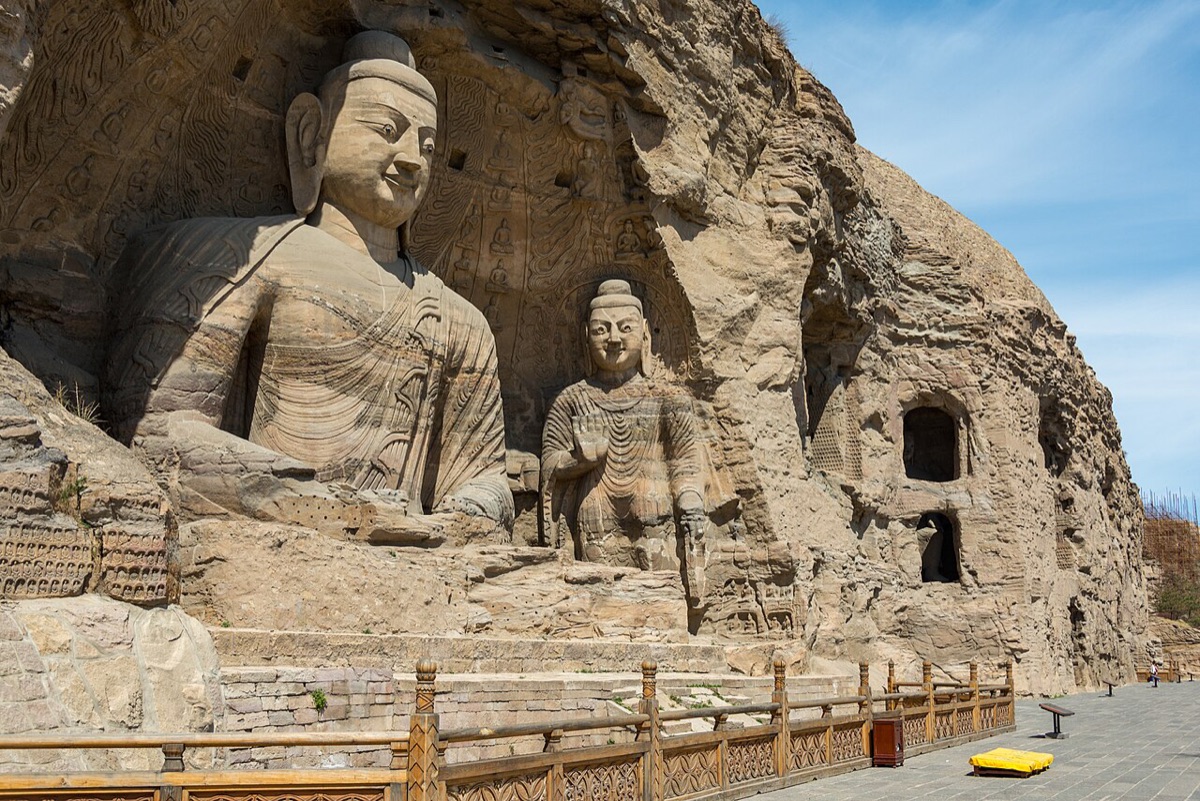
Overview
| Designation | UNESCO World Heritage (cultural, 2001) AAAAA tourist attraction |
| Province | Shanxi |
| Location | West of Datong, Shanxi |
| Latitude, longitude | 40.1, 113.1 Google Maps |
| Highlights | Northern Wei Buddhist sculpture |
| Nearby cities | Datong |
| Nearby sites | Mount Heng (Northern Sacred Mountain) 88km, Mount Wutai 130km, Yesanpo 186km Search nearby |
| Themes | Grotto, Statue, Buddha, Stamp, Culture |
About
The Yungang Grottoes are cut into Wuzhou Mountain about 16 km west of Datong, Shanxi, and are one of China’s three great grotto complexes. Begun under the Northern Wei in the fifth century, they comprise 252 caves and about 51,000 figures.
The Yungang Grottoes are cut into the sandstone cliff on the south side of Wuzhou Hill and stretch about 1 km from east to west. While the Northern Wei had its capital at Pingcheng (today’s Datong), the monk Tanyao, head of the Buddhist clergy, began the first five great caves, the Tanyao Caves, in the Heping era of Emperor Wencheng (from 460). After the court moved to Luoyang in 494, large-scale work stopped, though small caves were cut until the Zhengguang era (520–525). Early figures show Gandharan and Central Asian influence; later ones increasingly wear Chinese dress.
It was inscribed on the UNESCO World Heritage List in 2001, as a cultural site.
Travel tips
Getting there: Datong South station has high-speed trains to Beijing, Taiyuan and elsewhere. The grottoes are about 16 km west of the city, half an hour by bus or taxi.
Booking: visits must be booked online in advance under your real name for a time slot; there is no ticket window on site, and same-day booking is not available.
Visiting: from the entrance there is a walk through landscaped grounds before you reach the caves. The caves run east to west along the south face of Wuzhou Hill; most people start at the east end.
Main caves: Caves 5 and 6 have large Buddhas and walls covered with reliefs; Caves 9 to 13, the Five Splendid Caves, keep much of their paint; Caves 16 to 20, the Tanyao Caves, are the earliest, and the open-air Buddha of Cave 20 is the best-known image of Yungang.
Note: some caves are closed for conservation or repair, and photography is not allowed in some of them.
Time: about half a day for the caves and the museum.
Season: Datong is cold in winter; summer and autumn are more comfortable. Holidays are crowded.
Nearby: in Datong's old city are Huayan Temple, Shanhua Temple, the Nine Dragon Screen and the city wall. The Hanging Temple and the Yingxian Wooden Pagoda can each take a day from Datong, or be combined into one.
Stamps
The first stamp of the 1988 definitive set R24 “Chinese Grotto Art” shows the great Northern Wei Buddha at Yungang.

On 13 April 2006 China Post issued 2006-8 “Yungang Grottoes”, four stamps and a souvenir sheet, all Northern Wei: Shakyamuni, two offering bodhisattvas, an attendant bodhisattva, and Shakyamuni.
More photos
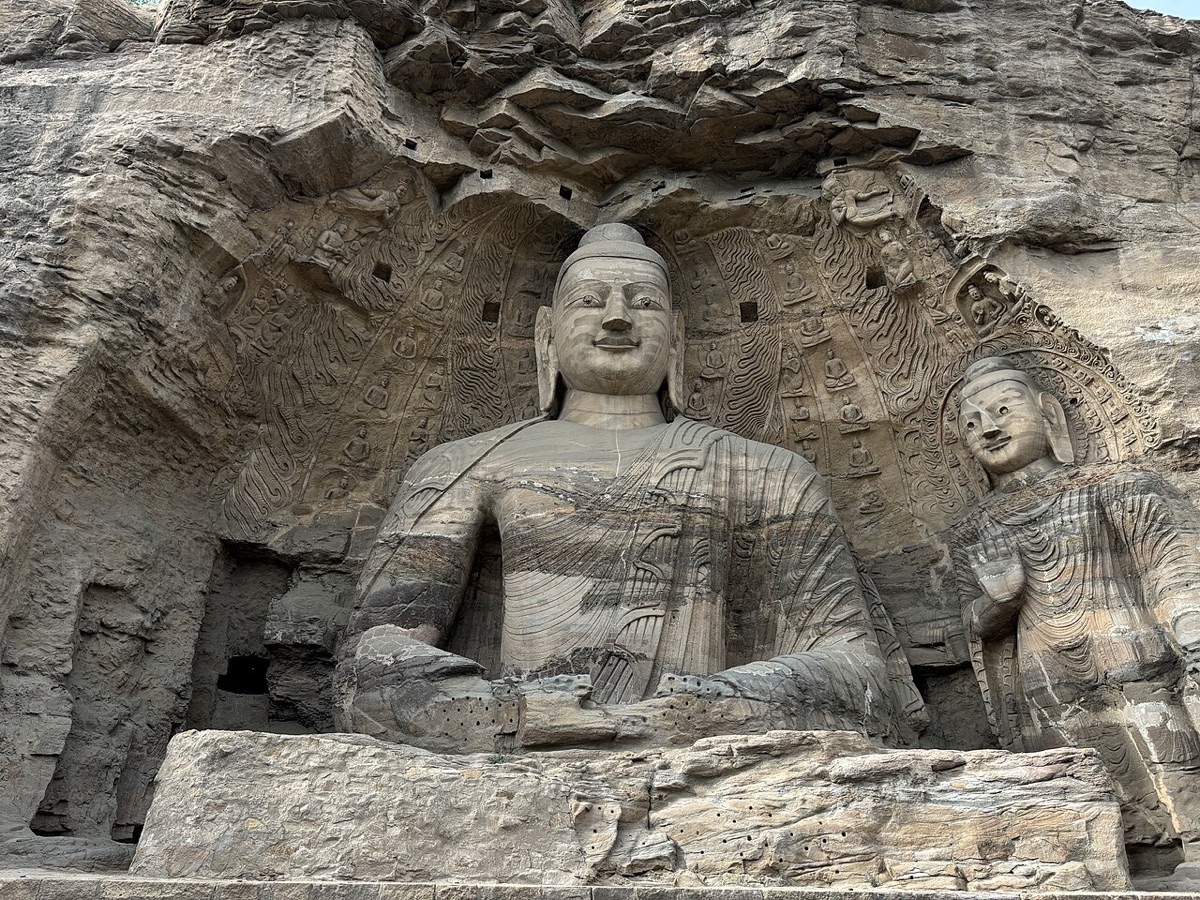
Photo credits: Yungang Grottoes: xiquinhosilva (CC BY 2.0, Wikimedia Commons); Yungang Grottoes: Thebrainchamber1 (CC BY-SA 4.0, Wikimedia Commons)
Nearby
| World Heritage | Mount Wutai 130km, Western Qing Tombs 207km, Badaling Great Wall 248km, Peking Man Site at Zhoukoudian 252km |
| National parks | Mount Heng (Northern Sacred Mountain) 88km, Yesanpo 186km, Xibaipo–Mount Tiangui Scenic Area 212km, Stone Flower Cave 244km |
| AAAAA attractions | Yanmenguan Pass Scenic Area 105km, Laoniuwan Yellow River Grand Canyon Tourist Area 149km, Baishishan Scenic Area 168km |
| AAAA attractions | Pingcheng Huayan Temple Scenic Area 14km, Pingcheng Shanhua Temple Scenic Area 15km, Pingcheng Weidu Water World Scenic Area 17km, Pingcheng Datong Fantawild Joyland Scenic Area 21km |
| Cities | Datong 15km, Hohhot 150km |
| Historical sites | Datong Guanyin Hall 7km, Site of Shanxi Provincial No. 3 Middle School 9km, Datong Coal Mine Pit of Ten Thousand Corpses 9km, Huayan Temple 14km |
| National geoparks | Datong Volcano Cluster National Geopark 56km, Qingshuihe Laoniuwan National Geopark 147km |
| Nature reserves | Nihewan National Nature Reserve 134km |
| Historic villages | Deshengbu Village 33km |