
← Chapter 9: YuanContentsChapter 11: Qing →
Chapter 10: Ming
Court painting was revived in the early Ming; painters were mostly given military ranks in the Embroidered Uniform Guard, and there was no academy in name. Court landscape followed Ma Yuan and Xia Gui of the Southern Song, while bird-and-flower painting used both meticulous and freehand ink manners. From the middle Ming the center of painting moved to Suzhou, rich in commerce and culture, where the Wu School, led by Shen Zhou and Wen Zhengming, carried on the Four Masters of the Yuan, and literati painting became the mainstream again. In the late Ming, Dong Qichang's theory of the Northern and Southern Schools dominated painting for the next three hundred years.
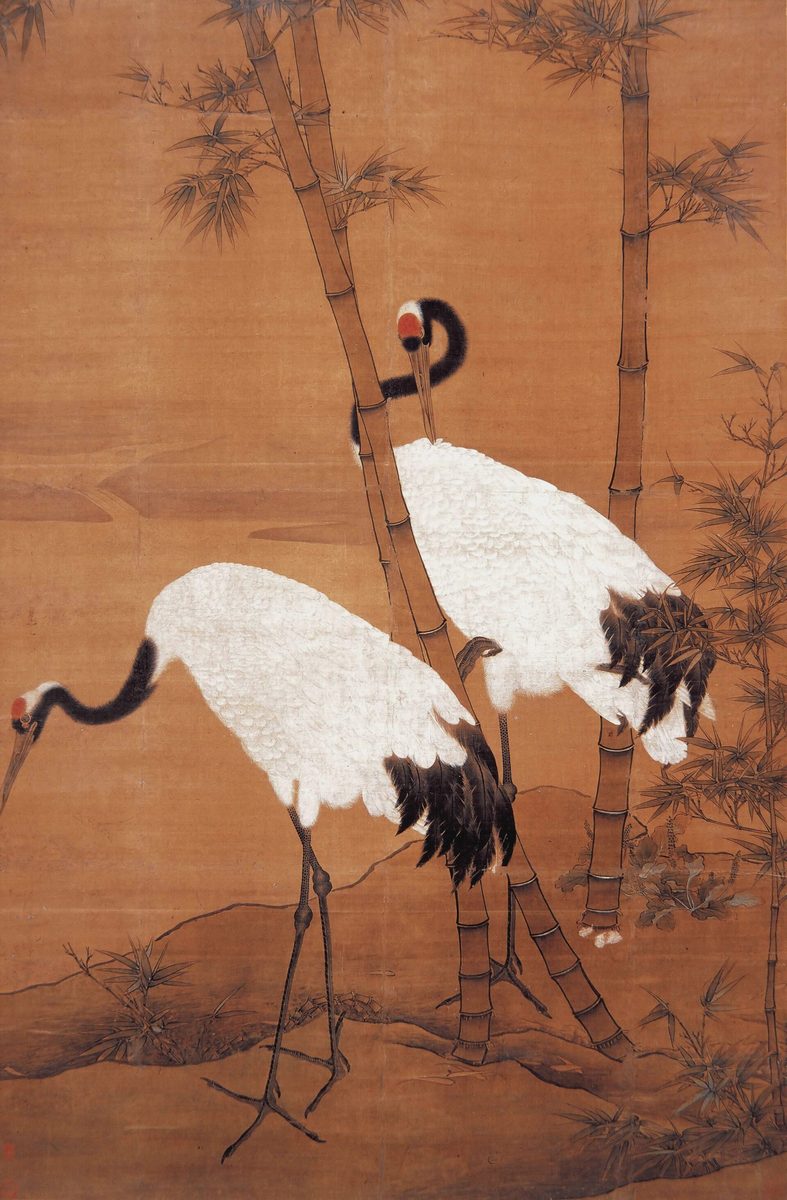
Bamboo and Cranes; Palace Museum, Beijing
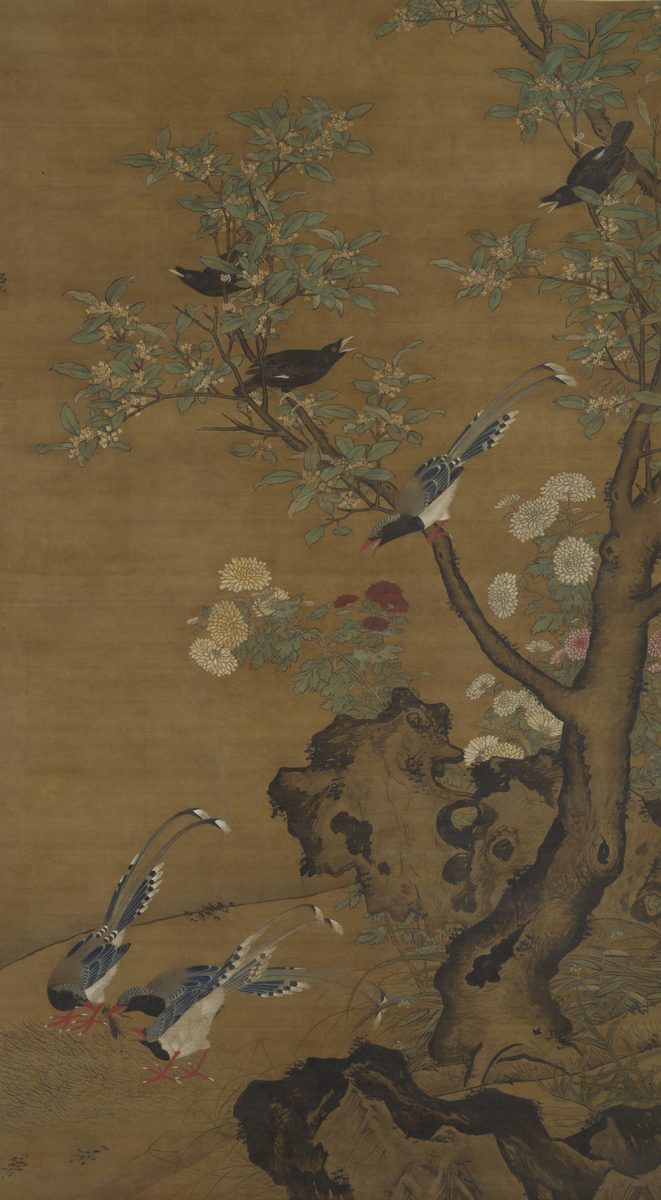
Osmanthus, Chrysanthemums and Mountain Birds; Palace Museum, Beijing
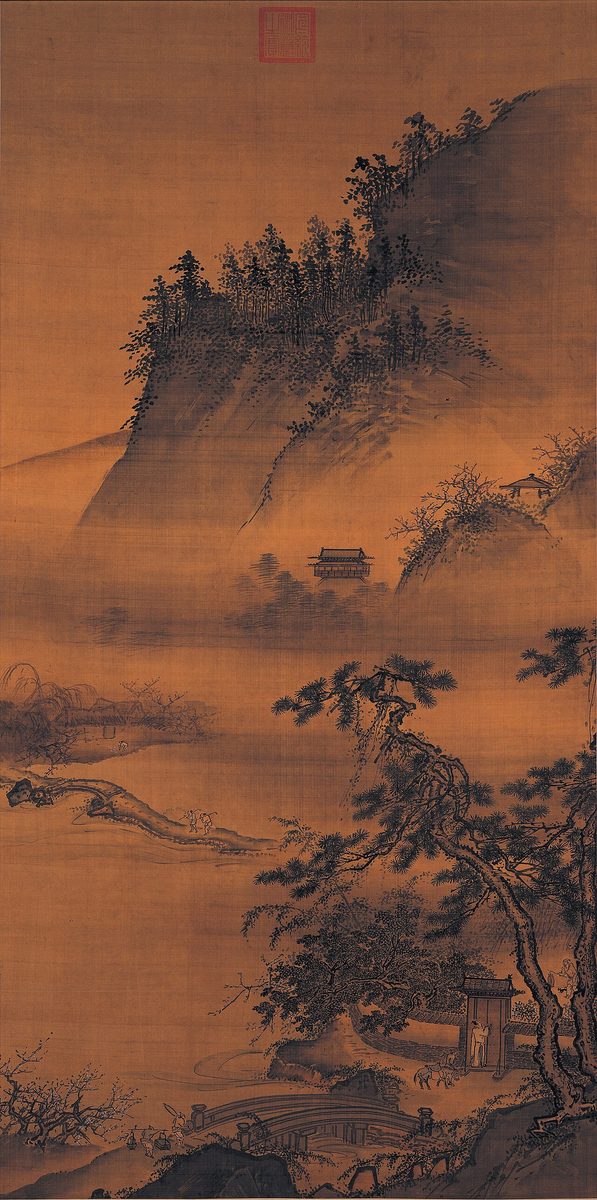
Returning Late from a Spring Outing; National Palace Museum, Taipei
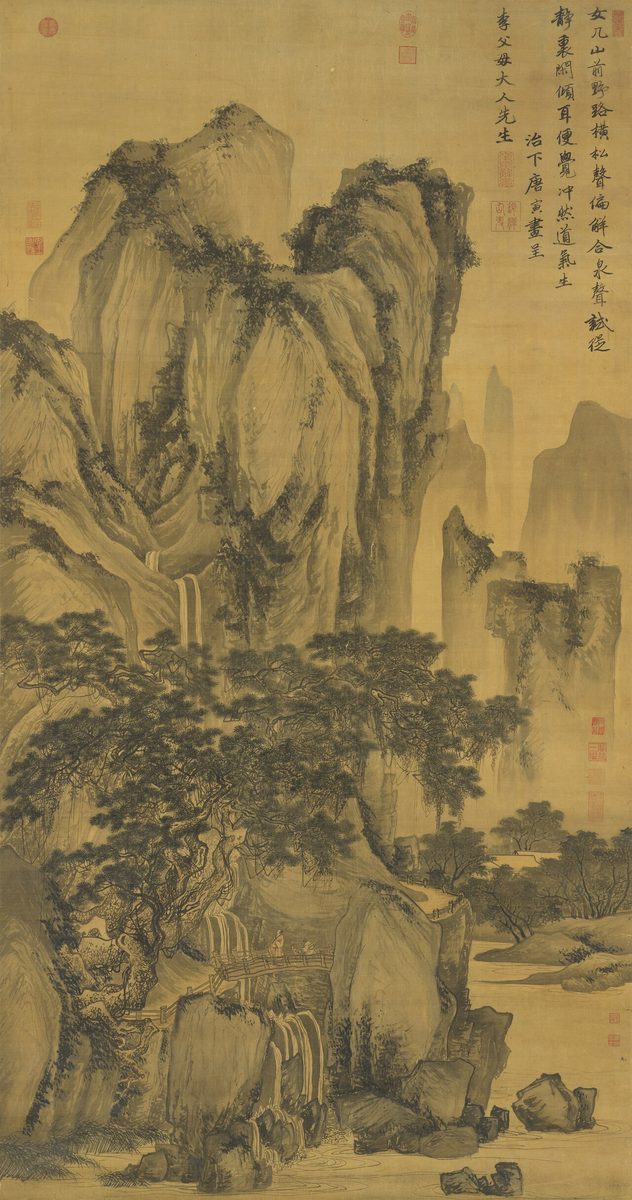
Whispering Pines on a Mountain Path; National Palace Museum, Taipei
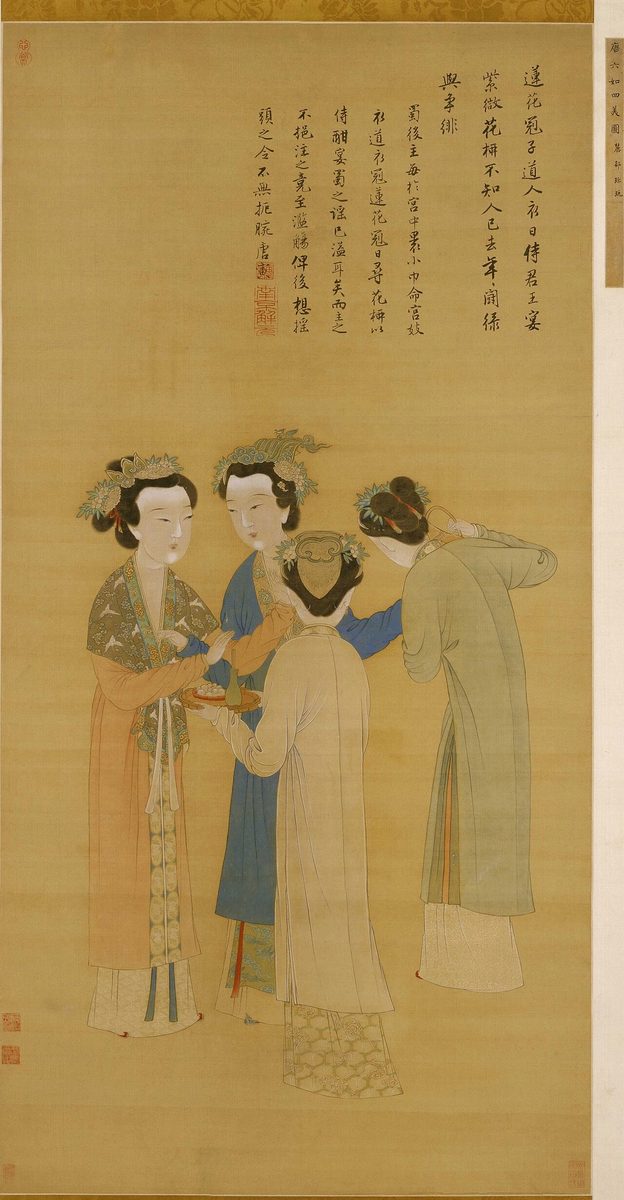
Court Ladies of the Former Shu; Palace Museum, Beijing
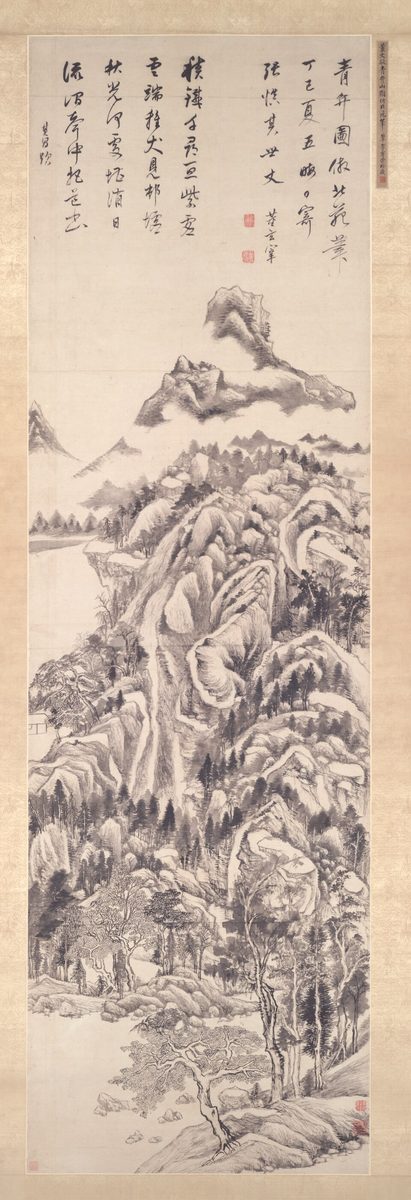
The Qingbian Mountains; Cleveland Museum of Art
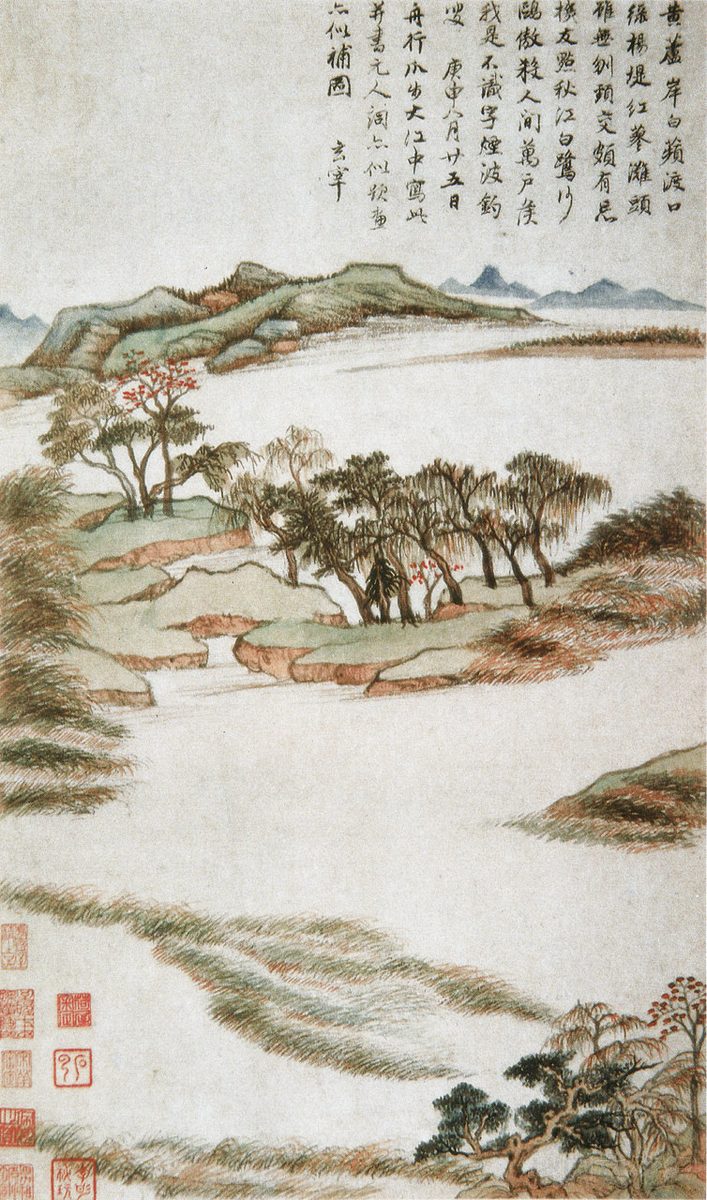
A leaf from Eight Views of Autumn Moods; Shanghai Museum
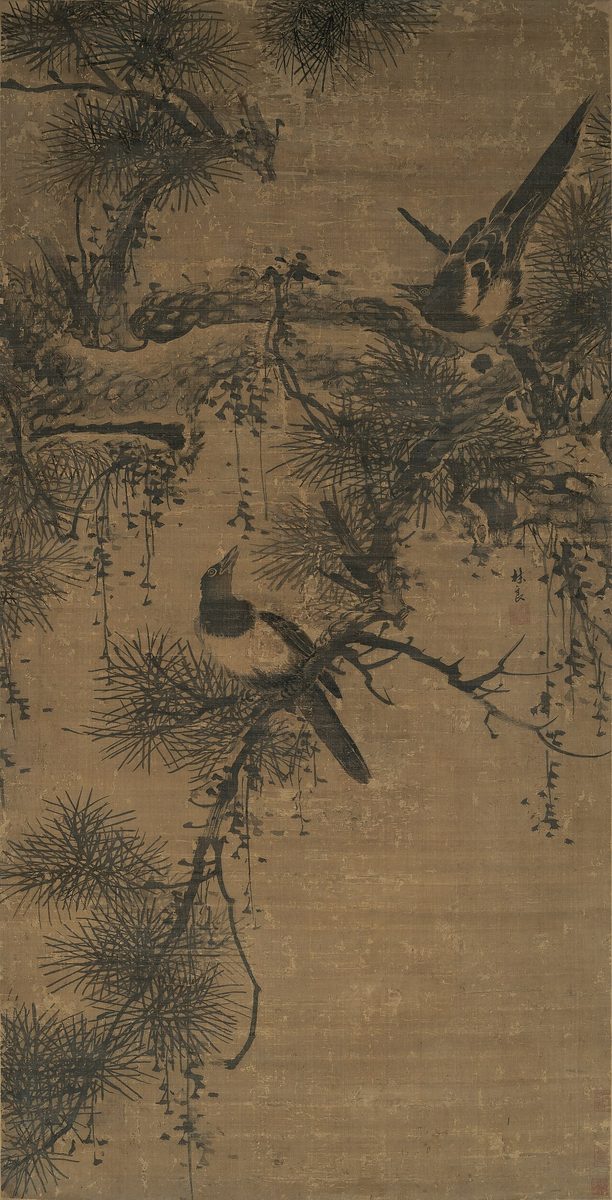
The court and the Zhe School. Court bird-and-flower painting is represented by Bian Jingzhao's meticulous, richly colored manner, Lin Liang's freehand ink, and Lü Ji's combination of both. In landscape, Dai Jin of Qiantang was summoned to court; it is said that rivals pushed him out, and he returned to Hangzhou and sold paintings for the rest of his life. He followed Ma-Xia with a freer brush, and since most of his followers were from Zhejiang they were called the "Zhe School". Wu Wei of Jiangxia came after him with even more unrestrained brushwork. The Zhe School flourished in the early Ming; its later followers grew coarse and were mocked by the Suzhou literati for their "wild manner".

Fishermen Cooking by a Pine Stream
Shen Zhou. Shen Zhou, from Changzhou (present-day Suzhou), came from a wealthy family and never held office. His early style was fine and detailed, called "Fine Shen"; from middle age he studied Wu Zhen and Huang Gongwang, and his brushwork became broad, spare and robust, called "Coarse Shen". Lofty Mount Lu was painted for his teacher Chen Kuan's birthday. He had never been to Mount Lu; using Wang Meng's dense manner, he painted layered peaks and flying waterfalls, comparing the height of the mountain to his teacher's virtue.

National Palace Museum, Taipei
Wen Zhengming. Wen Zhengming, from Changzhou, studied painting with Shen Zhou and repeatedly failed the examinations. In his fifties he entered the Hanlin Academy as a senior licentiate with a post as Painter-in-Attendance, resigned after a few years, and then lived by calligraphy and painting in Suzhou for more than thirty years. He had many pupils, and through him the Wu School flourished. His landscapes are mostly in fine brushwork, clear, graceful and refined. Garden-making was fashionable in Ming Suzhou, and scholars were closely involved with gardens. Wang Xianchen, owner of the Humble Administrator's Garden, was his friend; Wen painted a picture of each scene in the garden and added poems and a record, forming the Humble Administrator's Garden album. Some say he also took part in planning the garden. These gardens are now part of the Classical Gardens of Suzhou.
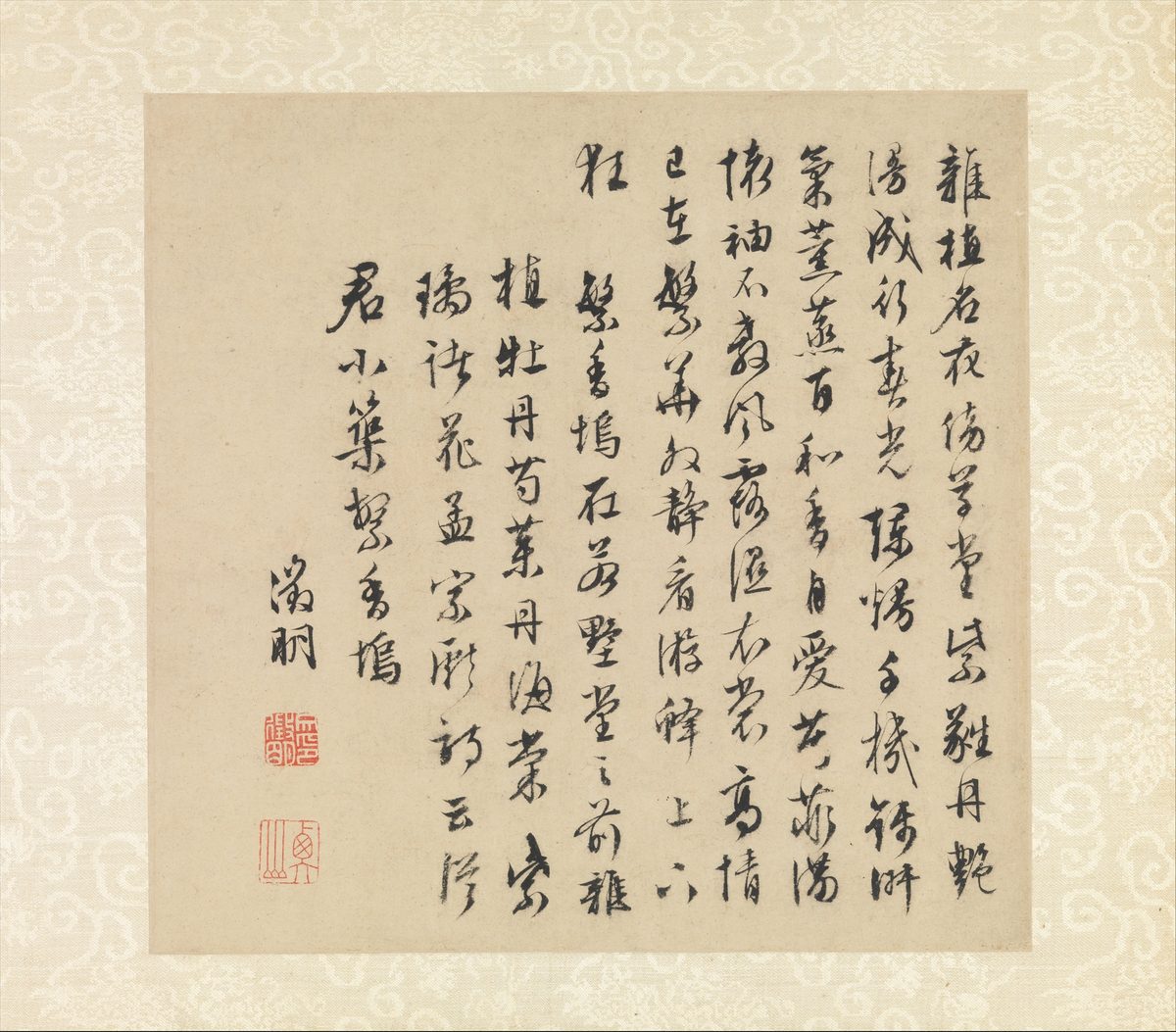
A leaf from Thirty-one Views of the Humble Administrator's Garden; Metropolitan Museum of Art
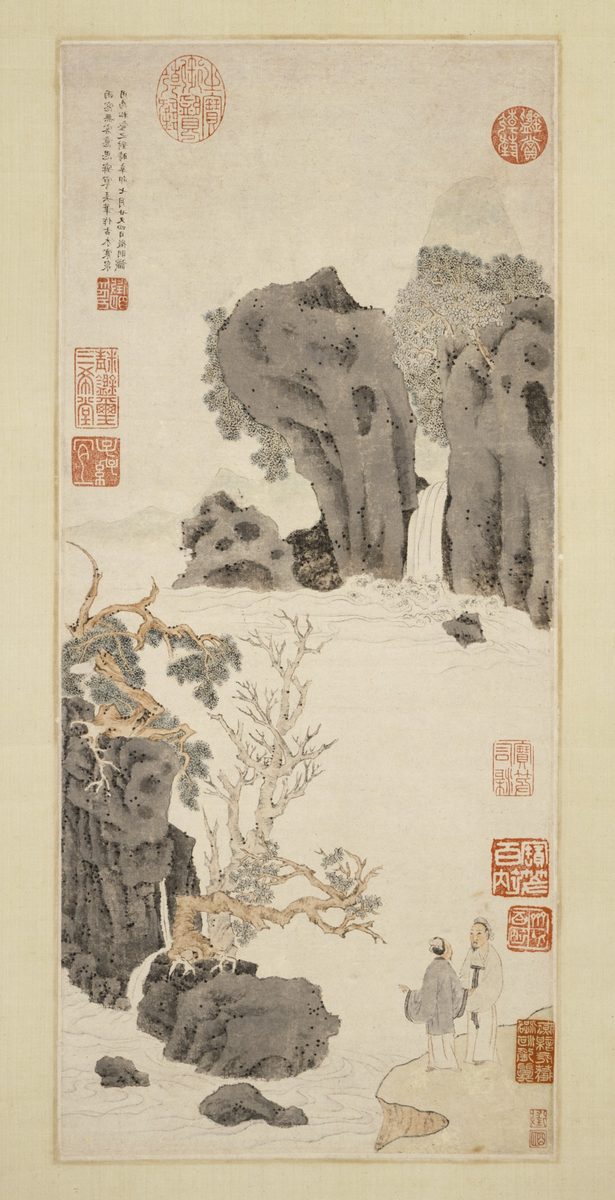
Wen Zhengming's Old Trees by a Cold Spring; Los Angeles County Museum of Art
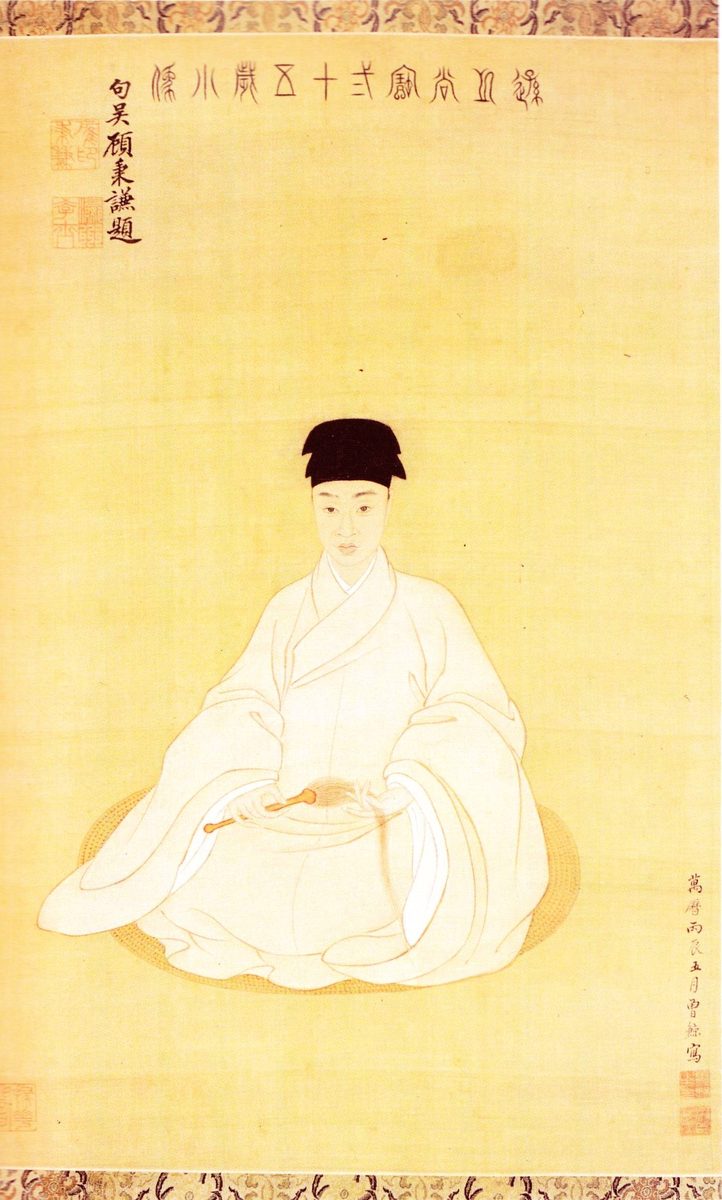
Portrait of Wang Shimin
Tang Yin and Qiu Ying. Tang Yin (Tang Bohu), from Suzhou, placed first in the provincial examination, but the following year was implicated in a cheating scandal at the metropolitan examination and imprisoned. Giving up all hope of office, he built the Peach Blossom Hermitage at Taohuawu and lived by selling paintings; his Song of the Peach Blossom Hermitage was written at this time. He had studied Li Tang and the local professional painter Zhou Chen, combining academic rigor with scholarly grace. Lady with a Fan in the Autumn Wind shows a woman holding a fan in the autumn wind, with a poem comparing himself to a fan discarded in autumn. Qiu Ying, a lacquerer by origin, was a professional painter who spent long periods copying old paintings in collectors' homes; he was finest at meticulous, richly colored work and blue-green landscape. Spring Morning in the Han Palace shows the life of palace women in spring. Shen, Wen, Tang and Qiu are known as the "Four Masters of the Wu School", also called the "Four Masters of the Ming".

Full scroll; National Palace Museum, Taipei
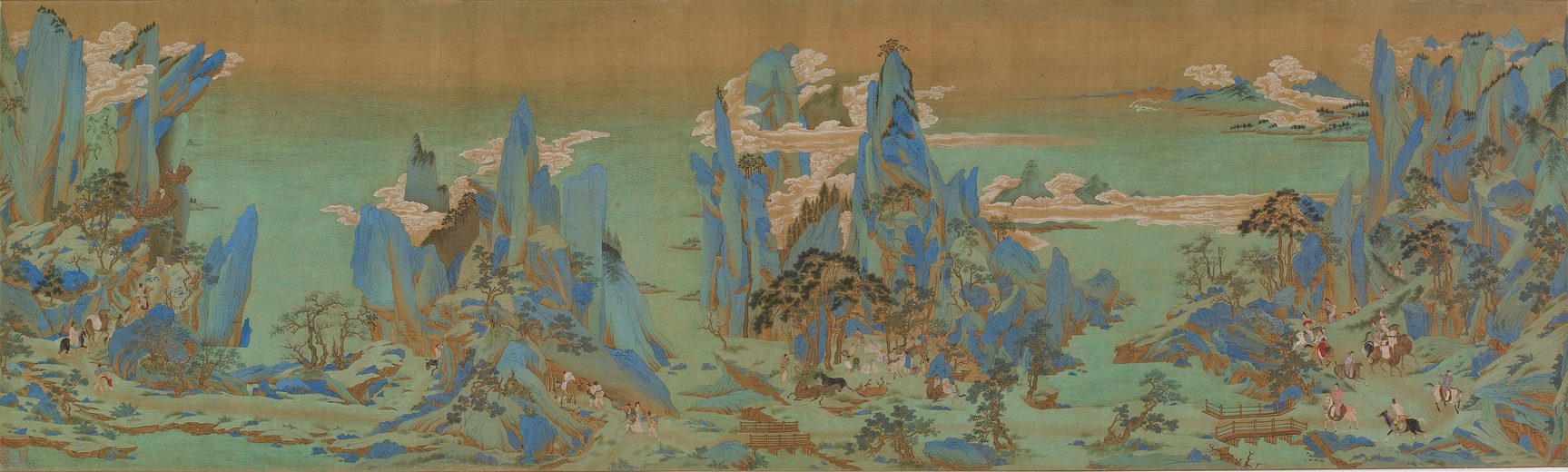
Another work by Qiu Ying
Xu Wei. Xu Wei, from Shaoxing, styled Qingteng (Green Vine), achieved distinction in poetry, prose, calligraphy and drama, but his life was full of misfortune; he repeatedly failed the examinations and ended his days in poverty and illness. He applied the brushwork of cursive script to flowers, splashing ink freely without seeking likeness, and created great freehand bird-and-flower painting. Ink Grapes dabs grape vines and leaves in ink, with the poem: "Half a life down and out, I have grown old; alone in my study I whistle at the evening wind. The pearls beneath my brush find no buyer; idly I toss them among the wild vines." He and the slightly earlier Chen Chun (the Recluse of Baiyang Mountain) are known together as "Qingteng and Baiyang"; Bada Shanren and the Eight Eccentrics of Yangzhou in the Qing, down to Qi Baishi in modern times, were all influenced by him.

Album of flowers; Metropolitan Museum of Art
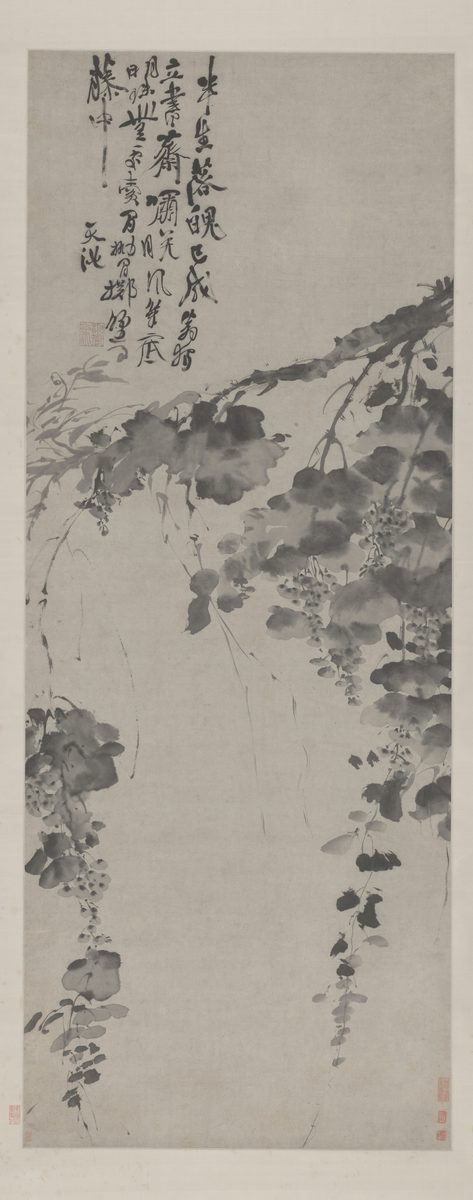
Palace Museum, Beijing
Dong Qichang. Dong Qichang, from Huating in Songjiang (now part of Shanghai), rose to Minister of Rites in Nanjing and was the authority on calligraphy, painting and connoisseurship in the late Ming. Borrowing the division of Chan Buddhism into Northern and Southern schools, he divided landscape painting since the Tang into two lines. The Northern School began with Li Sixun and his son and passed to Zhao Gan, Zhao Boju, Ma Yuan and Xia Gui in the Song; the Southern School began with Wang Wei, used ink washes, and passed through Zhang Zao, Jing Hao, Guan Tong, Dong Yuan, Juran and the Mis to the Four Masters of the Yuan. He championed the Southern School as the painting of scholars and disparaged the Northern. The division does not fully fit the historical facts, but its influence was enormous. He held that a painter should "read ten thousand books and travel ten thousand li", and that painting should be based on imitating the ancients, seeking change within their brush and ink; his views are mostly collected in Essays from the Painting Meditation Studio. His calligraphy, sparse, pale and graceful, also represents the late Ming, and like that of Zhao Mengfu it was favored by the early Qing emperors.
Late Ming figure painting and woodblock prints. Late Ming figure painting developed a distorted, exaggerated style. Chen Hongshou painted figures with large heads and small bodies and angular drapery, archaic and strange; he and Cui Zizhong in the north are known as "Chen of the South and Cui of the North". He also made designs for woodblock prints, such as the Water Margin Playing Cards and The Romance of the Western Chamber. The block cutters of late Ming Huizhou were highly skilled, and woodblock printing flourished. Hu Zhengyan in Nanjing printed the Ten Bamboo Studio Manual of Painting using "douban" printing, with separate blocks for each color, producing color close to the original paintings.
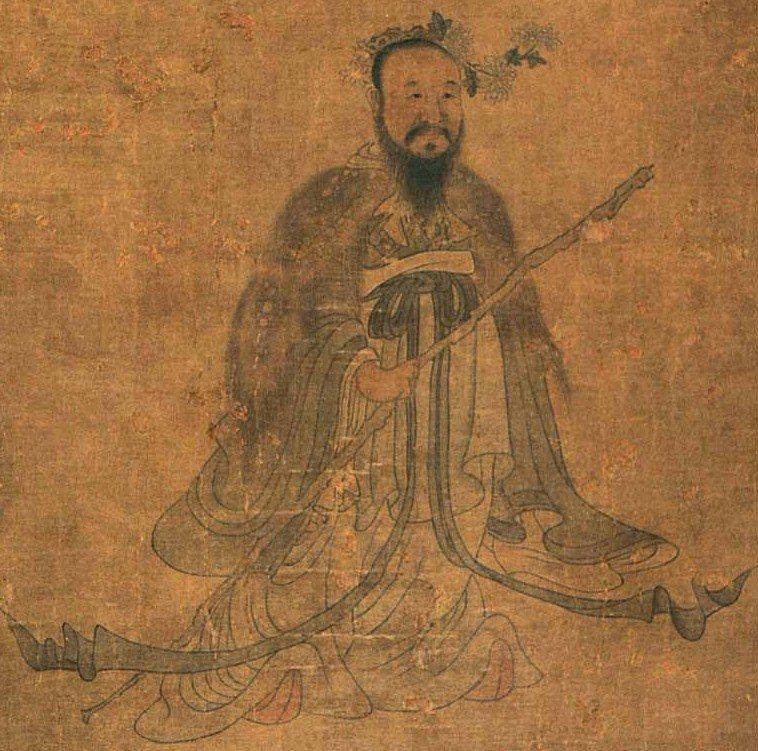
Qu Yuan Chanting (woodblock print)

Album leaf
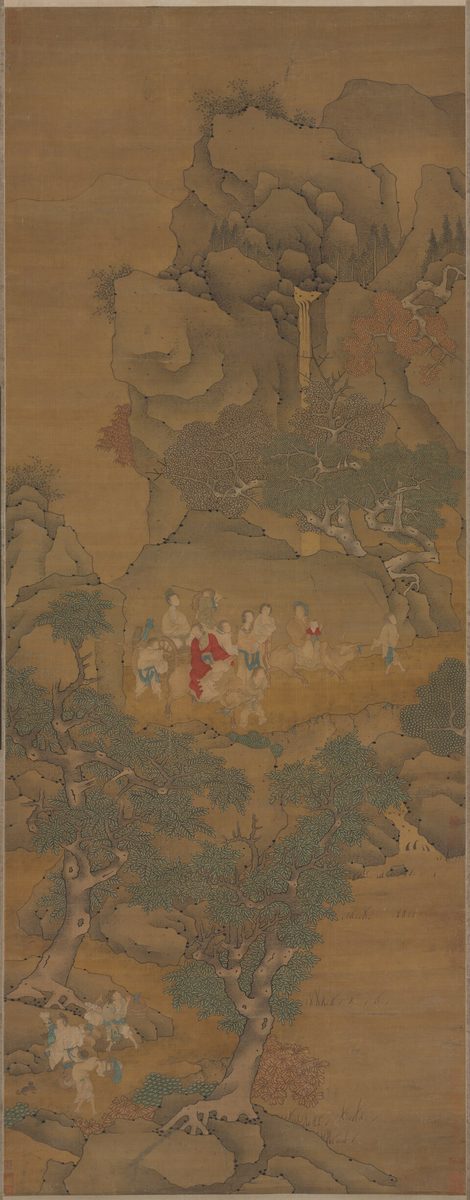
Xu Jingyang Moving His Dwelling; Cleveland Museum of Art
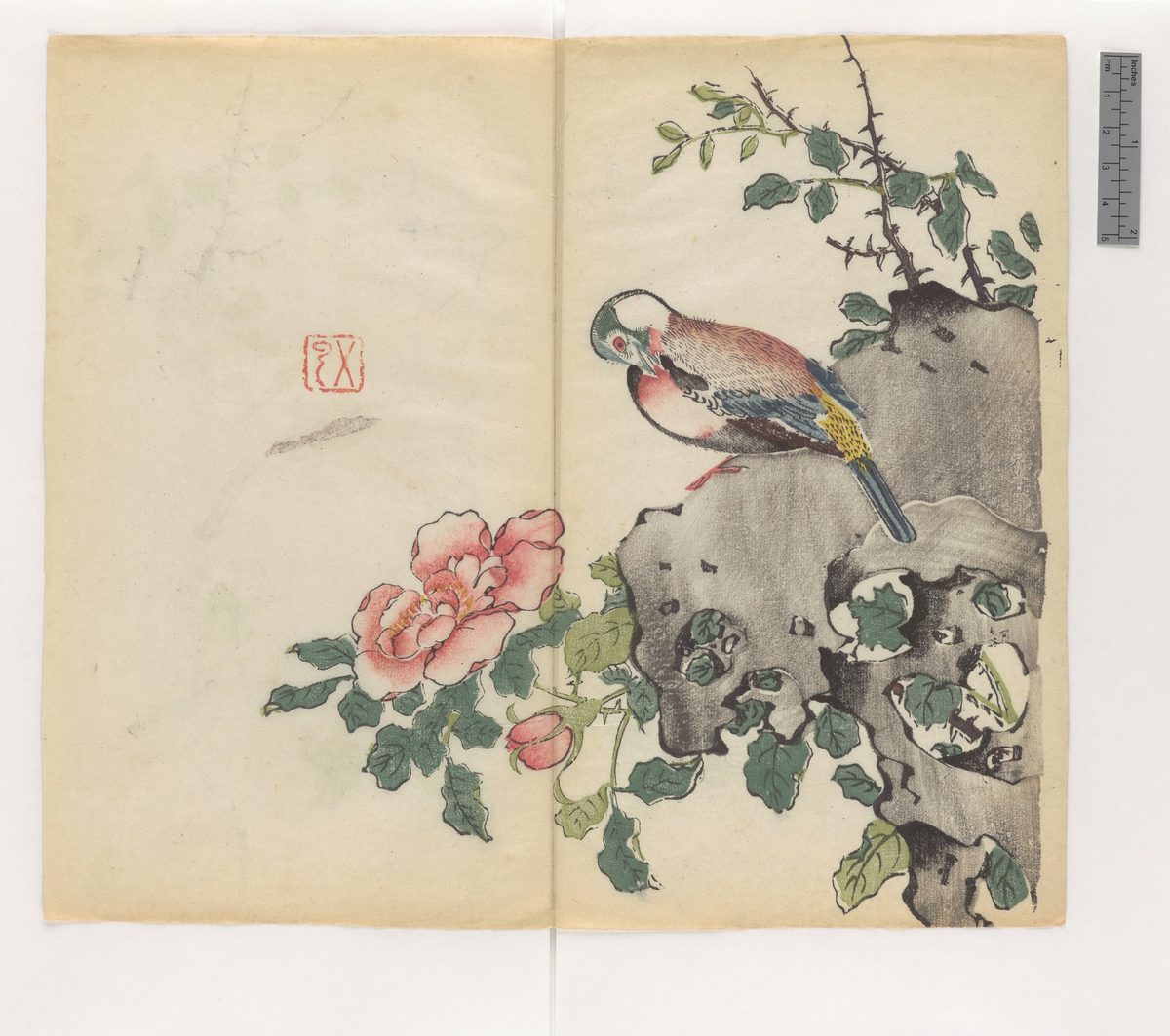
A page from the first edition (multi-block color printing)
Sculpture and crafts. Many Ming temples have painted sculpture: the Shuanglin Temple at Pingyao preserves more than two thousand Yuan and Ming painted figures; the backward-facing Guanyin in the Moni Hall of the Longxing Temple in Zhengding sits in a relaxed pose; and at the Shuilu Temple in Lantian, Shaanxi, the walls are covered with tier upon tier of suspended sculpture. Stone figures line the spirit way of the Ming Tombs in Beijing. In ceramics, Jingdezhen became the national center of porcelain making, producing blue-and-white porcelain in great quantities, much of it exported overseas.
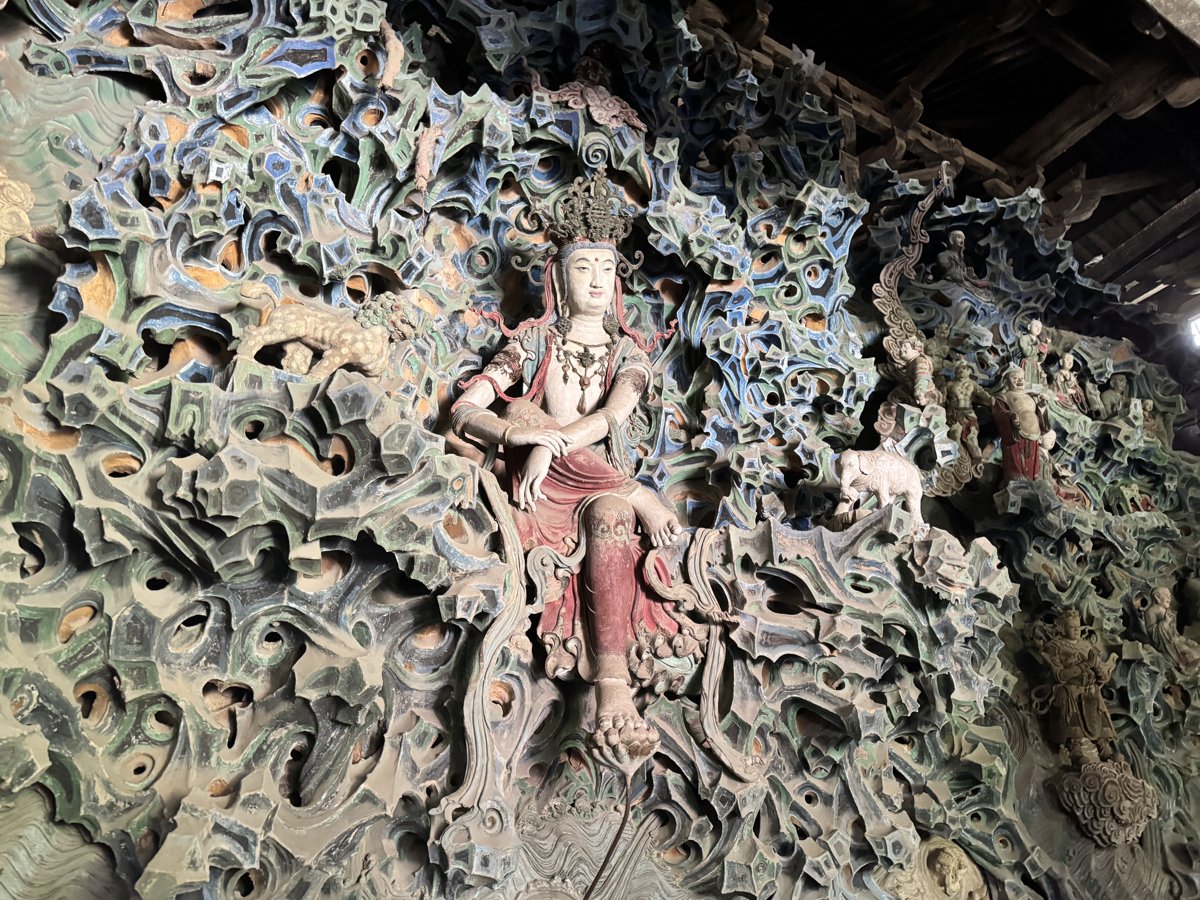
Ming painted sculpture; Moni Hall, Longxing Temple, Zhengding

Ming; Lantian, Shaanxi

Jingdezhen Porcelain (T166), 1991
Representative works
| Work | Period | Type | Collection | Notes | |
|---|---|---|---|---|---|
| Travelers at a Mountain Pass | Ming | Hanging scroll, ink and color on silk, Dai Jin | Palace Museum | Zhe School landscape. | |
| Birds Gathering in Shrubs | Ming | Handscroll, ink and color on paper, Lin Liang | Palace Museum | Freehand ink bird-and-flower painting. | |
| Osmanthus, Chrysanthemums and Mountain Birds | Ming | Hanging scroll, ink and color on silk, Lü Ji | Palace Museum | Court bird-and-flower painting. | |
| Lofty Mount Lu↑ | Ming | Hanging scroll, ink and color on paper, Shen Zhou | National Palace Museum, Taipei | Painted for his teacher Chen Kuan's birthday. |
| Humble Administrator's Garden↑ | Ming | Album, ink on paper, Wen Zhengming | Each scene of the garden painted separately, with poems. Wen Zhengming painted more than one set. | |
| The Xiang River Goddesses | Ming | Hanging scroll, ink and color on paper, Wen Zhengming | Palace Museum | Subject from the Nine Songs. | |
| Lady with a Fan in the Autumn Wind | Ming | Hanging scroll, ink on paper, Tang Yin | Shanghai Museum | A woman holding a fan, with a poem alluding to himself. | |
| Court Ladies of the Former Shu | Ming | Hanging scroll, ink and color on silk, Tang Yin | Palace Museum | Also titled Court Ladies of the Later Shu. | |
| Spring Morning in the Han Palace↑ | Ming | Handscroll, ink and color on silk, Qiu Ying | National Palace Museum, Taipei | Meticulous, richly colored. |
| Ink Grapes↑ | Ming | Hanging scroll, ink on paper, Xu Wei | Palace Museum | With the poem containing "the pearls beneath my brush find no buyer". |
| Eight Views of Autumn Moods | Ming | Album, ink and color on paper, Dong Qichang | Shanghai Museum | Eight leaves; a late work. | |
| Water Margin Playing Cards | Ming | Woodblock prints, designed by Chen Hongshou | Forty characters from the Water Margin. | ||
| Ten Bamboo Studio Manual of Painting↑ | Ming | Multi-block color woodblock prints, compiled and printed by Hu Zhengyan | Color printing from multiple blocks. |