
← Chapter 11: Liao, Western Xia, Jin and YuanA Brief History of ChinaChapter 13: Qing →
Chapter 12: Ming
1368–1644
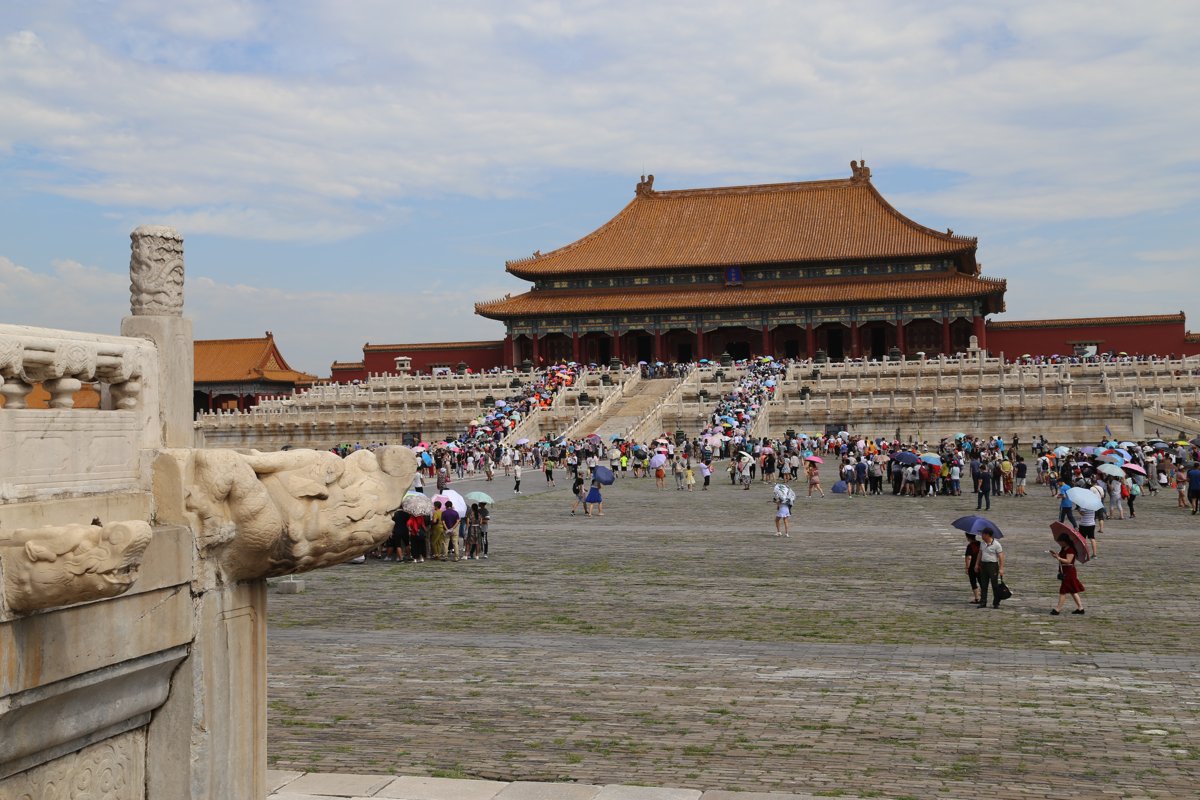
Zhu Yuanzhang defeated Chen Youliang at the Battle of Lake Poyang in 1363 and founded the Ming dynasty at Nanjing in 1368; the same year he took Dadu, and the Yuan withdrew north of the Gobi. The Ming founder, Taizu, abolished the post of chancellor and ruled the Six Ministries directly, concentrating power as never before. The Yongle Emperor, Zhu Di, moved the capital to Beijing and built the Forbidden City and the Temple of Heaven; from 1405 he sent Zheng He on seven voyages to the Western Oceans, his fleet reaching as far as East Africa.
In 1449 Emperor Yingzong led a campaign against the Oirats in person and was captured in the Tumu Crisis; Yu Qian led the army that held Beijing. To guard the north the Ming rebuilt the Great Wall on a vast scale in brick and stone, and most of the wall seen today is the Ming Great Wall. In the mid and late Ming, crafts and commerce flourished south of the Yangtze, and wage labor appeared. Novels such as Journey to the West, Water Margin and Romance of the Three Kingdoms were widely read; Wang Yangming founded the School of Mind, Li Shizhen wrote the Compendium of Materia Medica (Bencao Gangmu), and Xu Xiake traveled the famous mountains and rivers and wrote his travel diaries.
In the late Ming, eunuchs held power, factional strife was constant, land was concentrated in fewer and fewer hands, and famine struck year after year. In 1644 Li Zicheng took Beijing, the Chongzhen Emperor took his own life, and the Ming dynasty fell. Its imperial tombs are the Ming Tombs in Beijing.
← Chapter 11: Liao, Western Xia, Jin and YuanContentsChapter 13: Qing →