 Park of China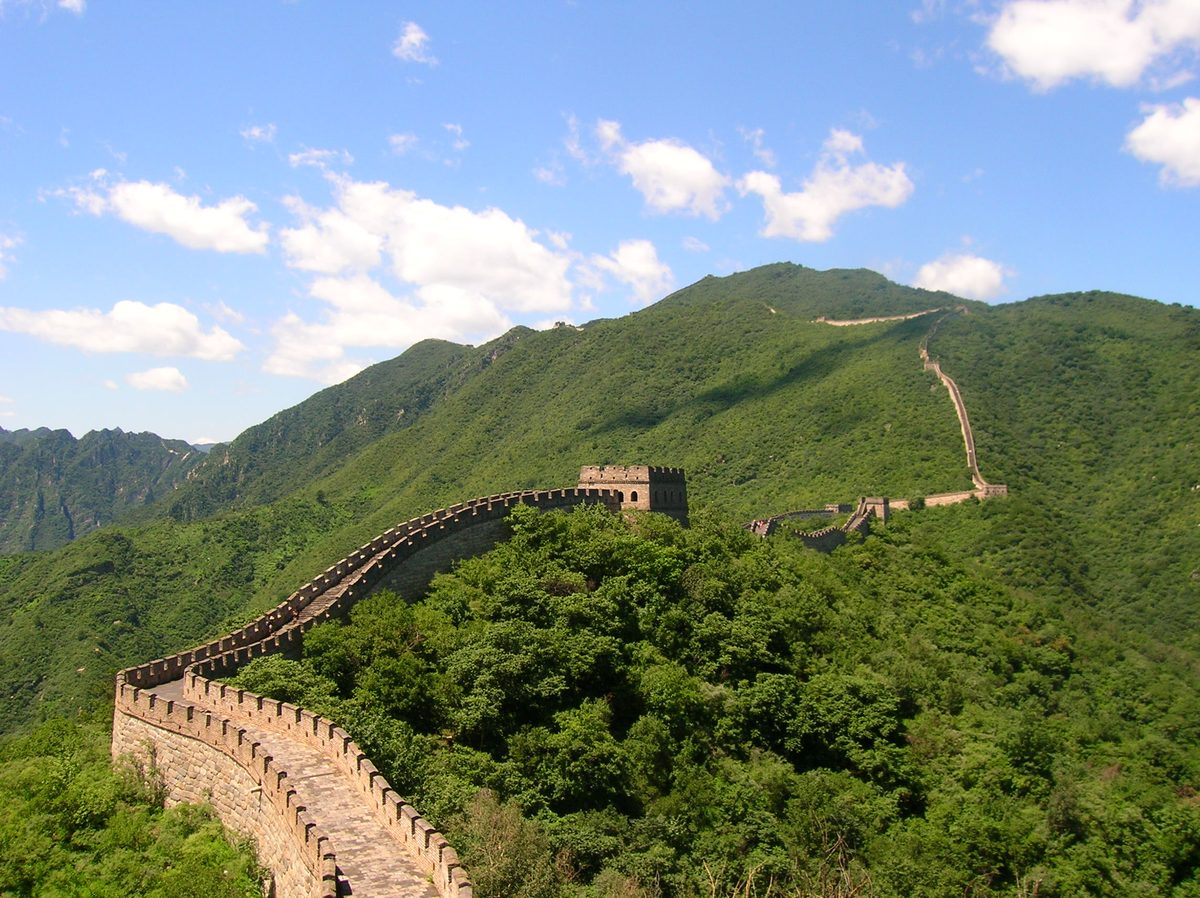
Overview
| Name | The Great Wall 万里长城 |
| Designation | World Heritage Site (1987, cultural); first batch of national key cultural relics (1961) |
| Location | The Ming wall runs from Hushan in Dandong, Liaoning, past Shanhaiguan in Qinhuangdao, Hebei, to Jiayuguan in Gansu, across ten provinces and regions: Liaoning, Hebei, Beijing, Tianjin, Shanxi, Inner Mongolia, Shaanxi, Ningxia, Gansu and Qinghai |
| Length | Ming wall about 8,850 km; all walls of all periods about 21,200 km (National Cultural Heritage Administration, 2012) |
| Highlights | Brick and stone walls, watchtowers and passes following the mountain ridges |
| Top sights | Badaling, Mutianyu, Jinshanling, Simatai, Shanhaiguan, Jiayuguan |
| Nearby cities | Beijing, Qinhuangdao, Zhangjiakou, Datong, Yulin, Yinchuan, Jiayuguan |
| Mountains | Yanshan Mountains, Taihang Mountains, Lüliang Mountains, Helan Mountains |
| Themes | City Wall, Culture, Ancient Building, Mountain, Passes & fortifications |
About
The Great Wall of China runs for thousands of kilometres across northern China from the Bohai Sea to the Gobi, built and rebuilt from the Warring States period to the Ming dynasty. The Ming wall of the sixteenth century, of brick and stone, is the one most visitors see; it was inscribed as World Heritage in 1987 and is one of the ten great scenic sights of China.
The best-known sections are near Beijing: Badaling, Mutianyu, Simatai and Jinshanling. The wall meets the sea at Shanhaiguan in the east and ends at Jiayuguan in Gansu in the west.
Main sections
Badaling: in Yanqing, Beijing, the best-known stretch of the Ming wall, the first to open and the busiest, restored and with gentler slopes.
Juyongguan: in Changping, Beijing, the pass south of Badaling, a key gap between the Taihang and Yan mountains.
Mutianyu: in Huairou, Beijing, with closely spaced watchtowers, battlements on both sides and wooded hills around.
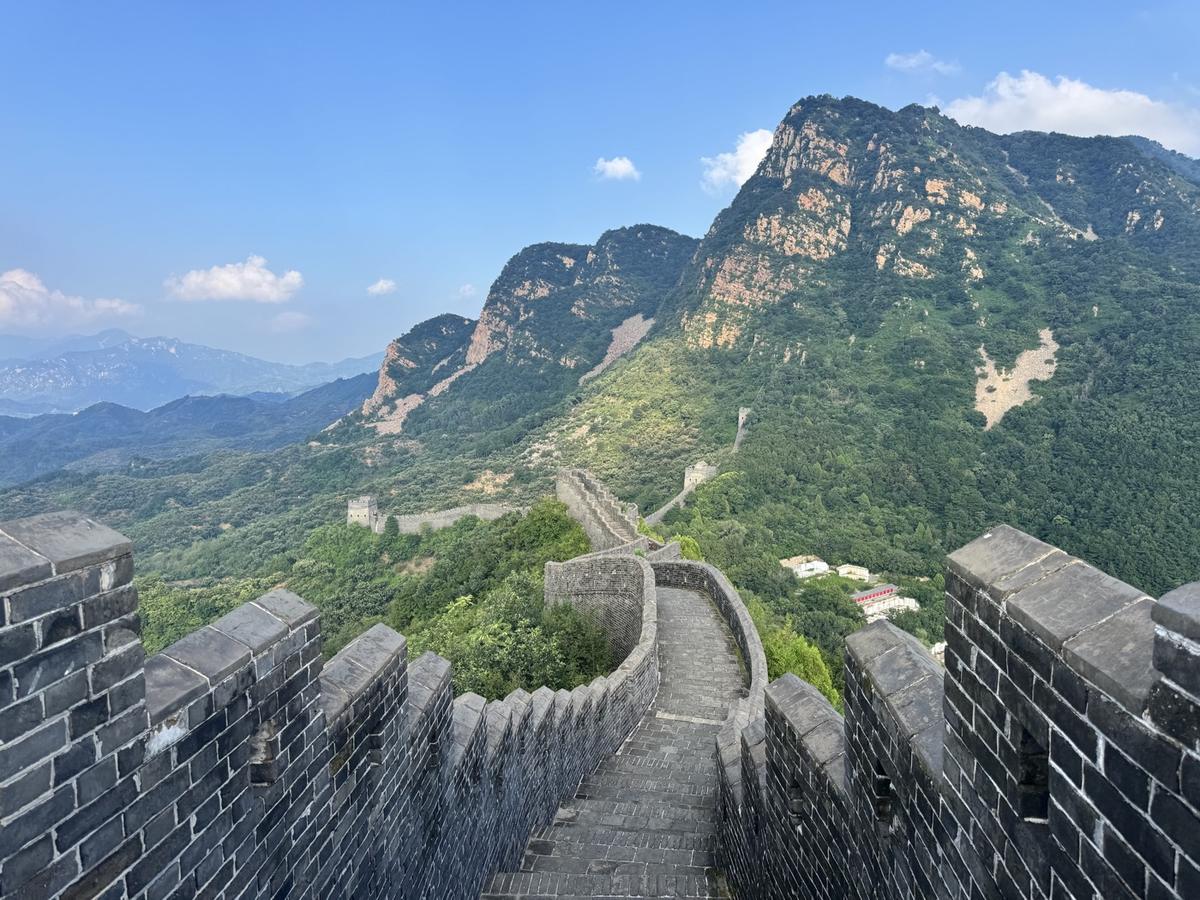
Jinshanling and Simatai: on the Beijing–Hebei border, where the wall follows the ridges up and down and much of it keeps its original look.
Huangyaguan: in Jizhou, Tianjin, running along a ridge, with a pass fort and a water gate.
Shanhaiguan and Laolongtou: in Qinhuangdao, Hebei; Shanhaiguan is known as the "First Pass under Heaven", and Laolongtou is where the wall runs into the Bohai Sea.
Yanmenguan: in Dai County, Shanxi, a pass fought over through many dynasties.
Jiayuguan: in Jiayuguan city, Gansu, the well-preserved fort at the western end of the Ming wall.
Main sights
Cloud Platform at Juyongguan: built 1342–1345 under the Yuan as the base of a gateway stupa; its three Tibetan-style stupas were lost in the early Ming. The passage is carved with the Four Heavenly Kings and a dharani in six scripts: Sanskrit, Tibetan, Phags-pa, Uyghur, Tangut and Chinese.
The main pass tower at Mutianyu consists of three hollow watchtowers standing side by side, the middle one larger, an arrangement rare on the Great Wall.
Travel tips
Around Beijing: Badaling has its own station on the Beijing–Zhangjiakou high-speed railway and is also served by a suburban line; Juyongguan is on the way; Mutianyu, Jinshanling and Simatai are farther out and usually reached by car or on a tour.
Booking: the popular sections are crowded on holidays, and some require advance booking under your real name.
Choosing: for easy access and less climbing, Badaling or Juyongguan; for fewer people and a more original wall, Mutianyu or Jinshanling; Simatai is part of the Gubei Water Town complex and can be visited at night.
Safety: climbing unopened "wild wall" sections is forbidden; the wall there is in poor repair and dangerous.
Season: spring and autumn are best; summer is hot with strong sun; winter can bring snow scenes, but steps may be icy.
Stamps
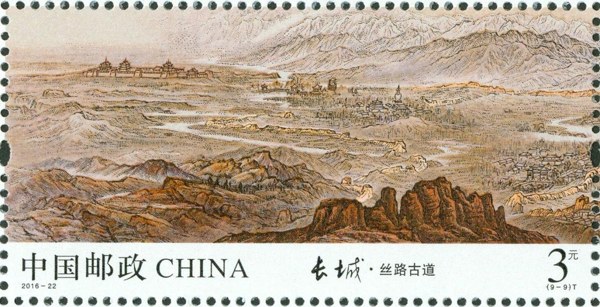
In 2016 China Post issued 2016-22 “The Great Wall”, nine stamps: passes by the sea, the natural barrier of Ji and Liao, the spirit of Yan and Zhao, the shield of the capital, the passes of Shanxi, a dragon along the river, looking north from the plateau, a pass city in the desert and the ancient Silk Road.


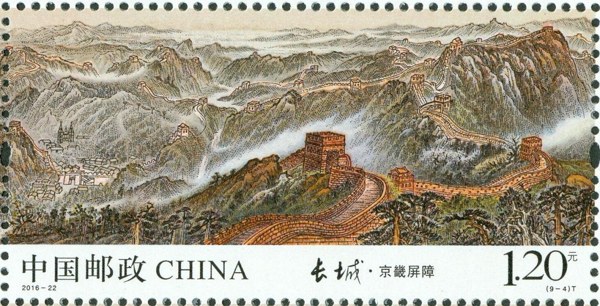


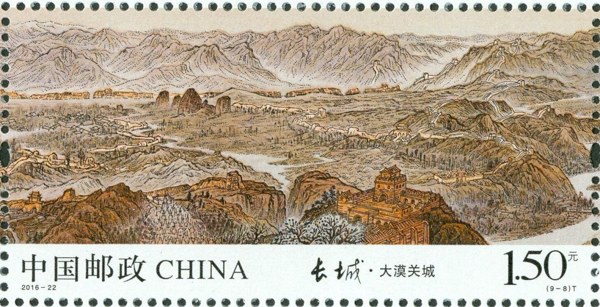
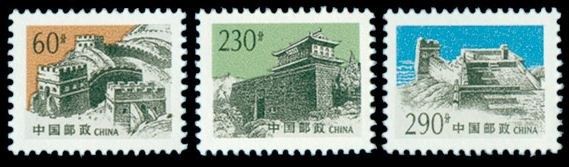
In 1995 China Post issued the definitive set R28 “The Great Wall”, three stamps: Jinshanling, Shanhaiguan and Laolongtou.
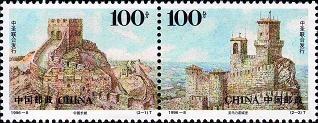
In 1996 China Post issued 1996-8 “Ancient Architecture”, two stamps issued jointly with San Marino: the Great Wall of China and a castle of San Marino.
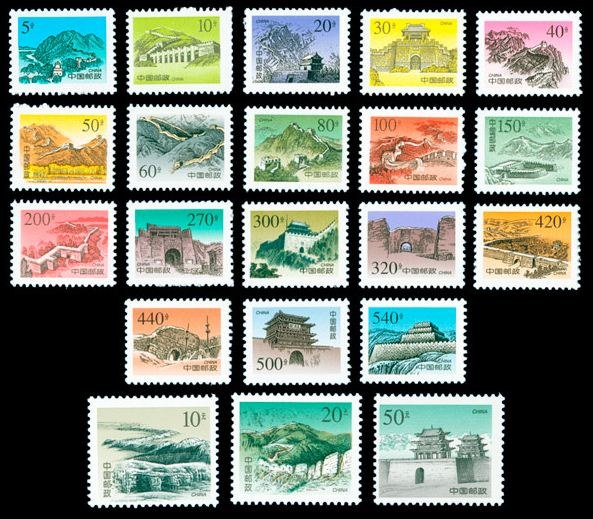
From 1997 to 1999 China Post issued the definitive set R29 “The Ming Great Wall”, 21 stamps: Hushan, Jiumenkou, Shanhaiguan, Huangyaguan, Jinshanling, Gubeikou, Huanghuacheng, Mutianyu, Badaling, Juyongguan, Zijingguan, Pingxingguan, Niangziguan, Deshengkou, Pianguan, Yanmenguan, the Bianjing Tower, Zhenbeitai, Huamachi, Sanguankou and Jiayuguan.
Banknotes and coins
The 5-yuan coin “World Cultural Heritage: the Great Wall”, issued by the People’s Bank of China in 2002, shows a beacon tower of the Great Wall and the mountains on the reverse.