
← Chapter 10: Five Dynasties and SongA Brief History of ChinaChapter 12: Ming →
Chapter 11: Liao, Western Xia, Jin and Yuan
907–1368
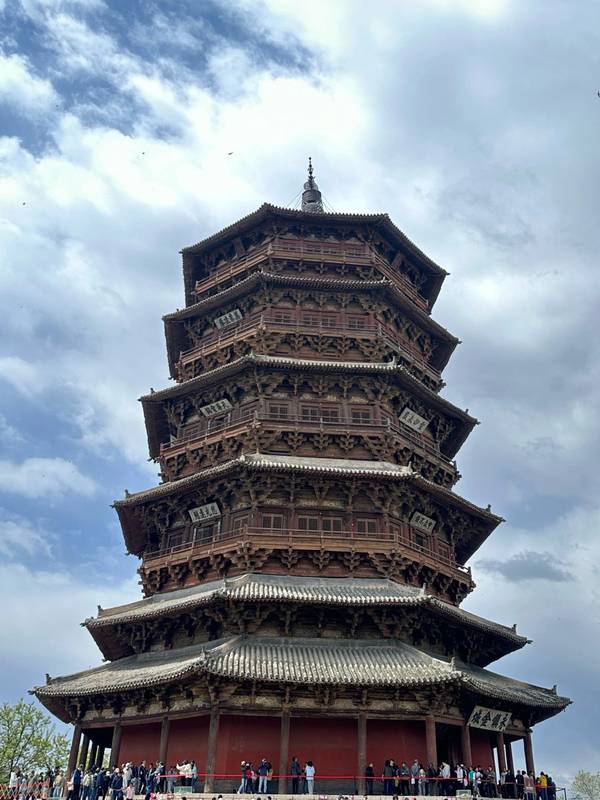
Liao (907–1125) In 907 Yelü Abaoji became leader of the Khitan tribes; he proclaimed himself emperor in 916, and the state later took the name Liao. The Liao held the Sixteen Prefectures of Yan and Yun and long faced the Northern Song; in 1005 the two concluded the Treaty of Chanyuan. The Liao “ruled according to custom,” governing Han Chinese with Han institutions and the nomadic tribes with old Khitan ones. The Yingxian Wooden Pagoda and the main hall of Shanhua Temple in Datong are masterpieces of Liao architecture. In 1125 the Liao was destroyed by the Jin.
Western Xia (1038–1227) In 1038 the Tangut leader Li Yuanhao proclaimed himself emperor of Great Xia, known to history as the Western Xia, with its capital at Xingqingfu (today’s Yinchuan). The Western Xia created Tangut script modeled on Chinese characters and stood alongside the Song, Liao and Jin in turn. The Western Xia Imperial Tombs in Ningxia are the tombs of its rulers. In 1227 the Western Xia was destroyed by the Mongols.
Jin (1115–1234) In 1115 the Jurchen leader Wanyan Aguda proclaimed himself emperor and founded the Jin dynasty (the Jurchen Jin, not to be confused with the earlier Jin of the 3rd–5th centuries). The Jin destroyed the Liao and then the Northern Song, held the land north of the Huai River, and later moved its capital to Zhongdu (today’s Beijing). It followed Han institutions while keeping Jurchen traditions; the gate and the Hall of the Three Sages at Shanhua Temple in Datong are Jin buildings. In 1234 the Mongols and the Southern Song together destroyed the Jin.
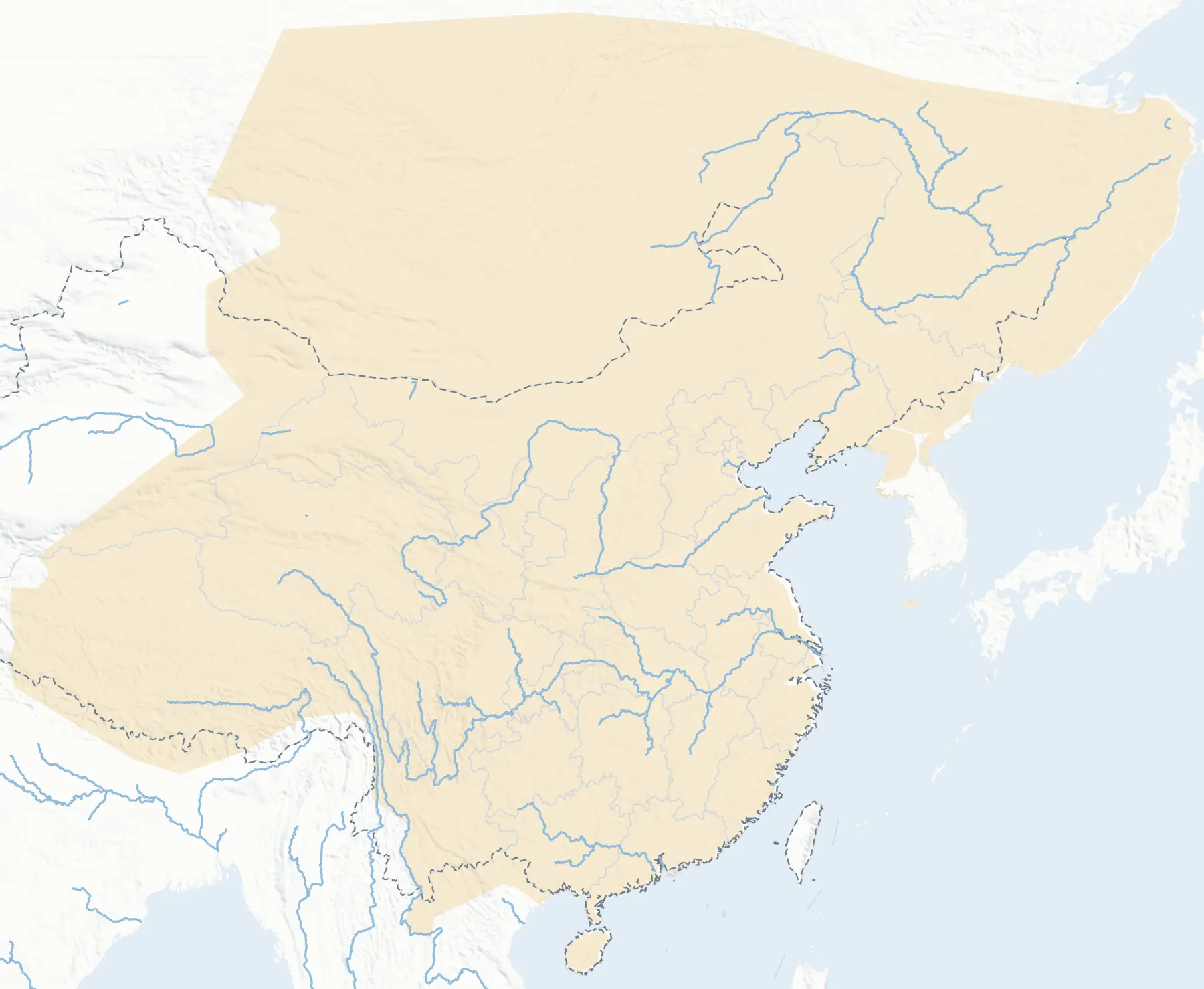
Yuan (1271–1368) In 1206 Genghis Khan united the Mongol tribes, founded the Great Mongol State and expanded in every direction. In 1271 Kublai named his dynasty Yuan, with its capital at Dadu (today’s Beijing); he took Xiangyang in 1273 (the Siege of Xiangyang) and destroyed the Southern Song in 1279, reunifying China. The Yuan governed the regions through provinces (xingsheng) and set up the Xuanzheng Yuan to administer Tibet; its territory was larger than ever before. Shangdu (Xanadu) was the Yuan summer capital.
Sea and land routes thrived under the Yuan. Quanzhou was one of the busiest ports in the world, and Marco Polo described what he saw in China. Guo Shoujing compiled the Shoushi Calendar; the Yuan drama (yuanqu) of Guan Hanqing and others and the landscape painting of Huang Gongwang and others are famous. In the late Yuan government grew corrupt and the Red Turbans rose in revolt; in 1368 Ming troops took Dadu, and the Yuan withdrew north of the Gobi, leaving the Central Plains.
← Chapter 10: Five Dynasties and SongContentsChapter 12: Ming →