
How to Read an Imperial Tomb
Imperial tombs were the highest-ranking building complexes of ancient China, and their form changed greatly from dynasty to dynasty. This article traces how tombs developed from earthen mounds to tombs set inside mountains and then to the precious citadel and mound, and explains how to look at the spirit way, the sacrificial halls and the underground palace.
Earthen mounds: Qin and Han
In early times most graves had no mound. By the Warring States period kings and lords were heaping tall hills of earth over their tombs, called burial mounds, and from then on an emperor’s tomb was called a ling, a “hill”, for being as high as a mountain. Qin and Han imperial mounds were mostly shaped like an upturned dou: a square base, a flat top and four sloping sides, like a grain measure turned upside down. The mound of the First Qin Emperor’s mausoleum still towers at the foot of Mount Li; the tomb park has an inner and an outer enclosure wall, and the Terracotta Army pits are only one group of the burial pits east of the tomb (see A Brief History of Chinese Architecture, Chapter 3).
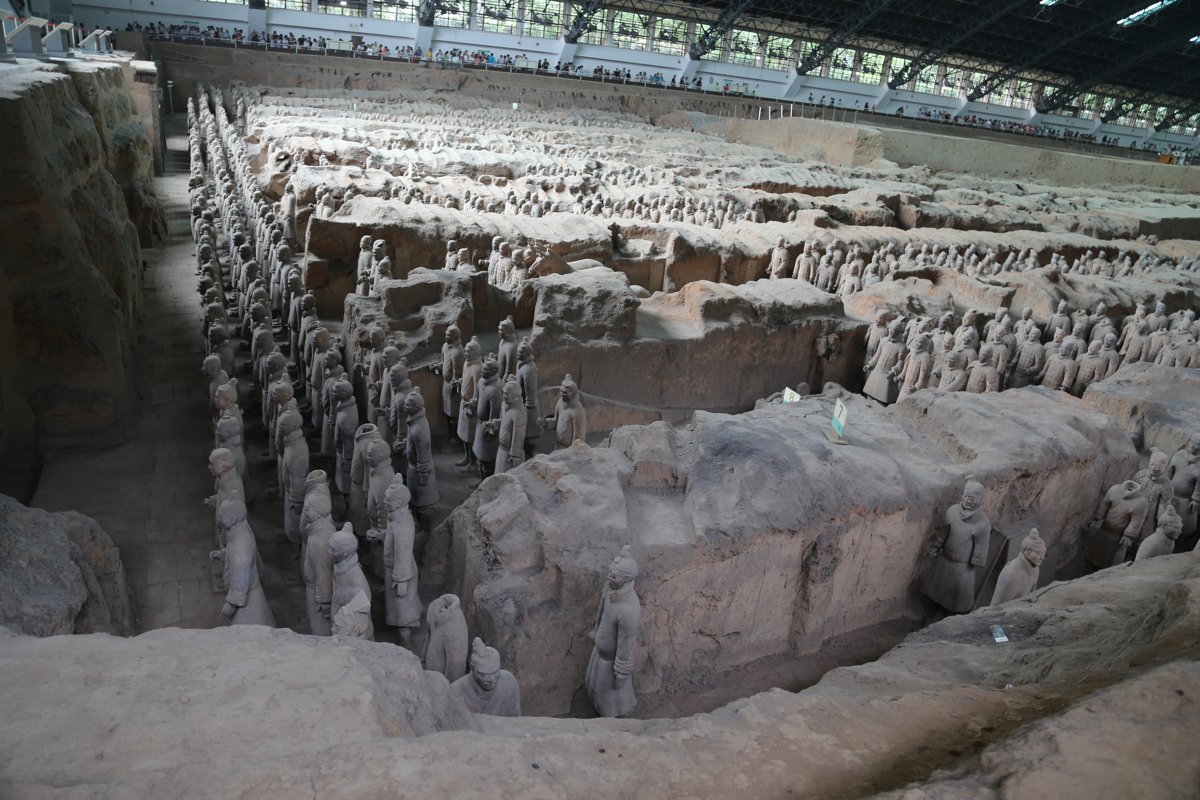
Lintong, Xi’an, Shaanxi; Pit 1 of the Terracotta Army
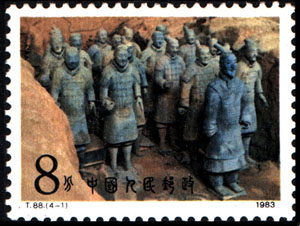
Group of figures
Most Western Han imperial tombs stand in a row on the Xianyang tableland north of the Wei River, following the Qin form: an upturned-dou mound, an enclosure wall with a gate on each side, and satellite tombs and burial pits outside the wall. Emperors also founded tomb towns beside their tombs and moved wealthy families there from all over the country; these towns later grew into busy cities. To be buried beside an emperor’s tomb was an honour for meritorious officials and imperial relatives. Next to Emperor Wu’s Maoling, the mound of the Tomb of Huo Qubing was heaped in the shape of the Qilian Mountains to commemorate his campaigns in the Hexi region, and the stone carvings in front of it, among them “Horse Trampling a Xiongnu”, are the earliest large-scale tomb sculptures that survive.
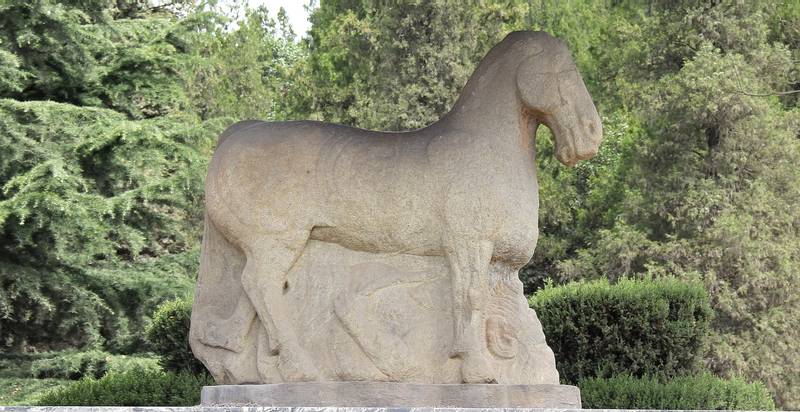
Xingping, Shaanxi; stone carving “Horse Trampling a Xiongnu”
Hanming Huang, CC BY-SA 4.0, Wikimedia Commons
Mountains as tombs: Tang
Emperor Taizong of Tang began using a whole mountain peak as a tomb, cutting a passage into its body and building the underground palace inside. This “mountain as tomb” saved the labour of piling up earth, borrowed the mountain’s bulk to show imperial grandeur, and made robbery harder. Zhaoling in Liquan uses the main peak of Mount Jiuzong; more than a hundred satellite tombs surround it, the most of any imperial tomb.

The spirit way looking north to Mount Liang, with the remains of the third pair of gate towers on either side
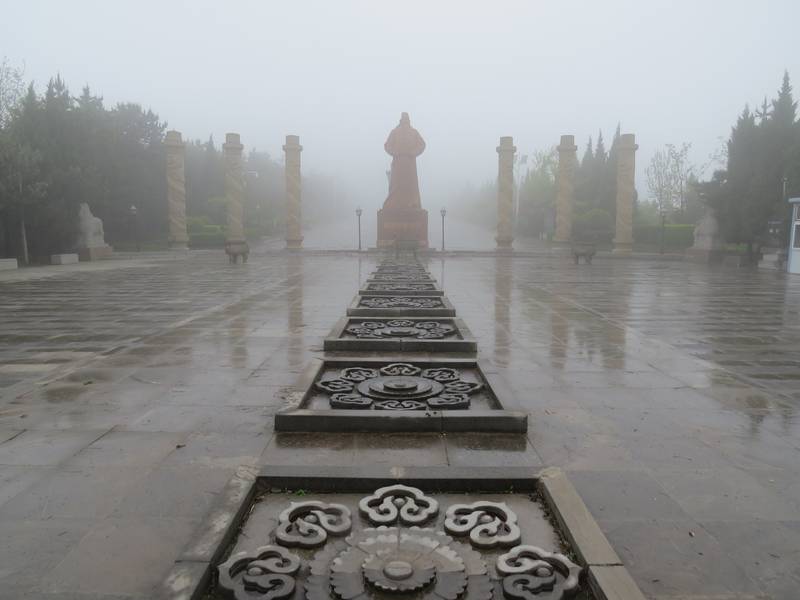
Liquan, Shaanxi; tomb of Emperor Taizong of Tang
Qianling in Qian County is the best preserved of the Tang tombs. Emperor Gaozong and Wu Zetian are buried here, the only tomb shared by two emperors. It uses the northern peak of Mount Liang; two small peaks to the south look like a pair of natural gate towers, and a long spirit way runs between them, lined with ornamental columns, winged horses, ostriches, stone men and stone lions, as well as sixty-one statues of foreign envoys and chiefs of minority peoples, most of which have lost their heads. At the end of the spirit way two steles face each other: on the west the Shusheng Stele, on the east the Wordless Stele (see A Brief History of Chinese Architecture, Chapter 5).
Small tombs on level ground: Northern Song
The Northern Song tombs are gathered at Gongyi in Henan: seven emperors plus the father of the dynastic founder, eight tombs in all, popularly called “seven emperors, eight tombs” and together known as the Song tombs. Following the geomantic theory of the “five sounds” matched to family names, the sites are high in the southeast and low in the northwest, so the mound platform lies at the low end, the reverse of the “rising step by step” layout of other dynasties. Song emperors did not build their tombs in their lifetime, and burial had to take place within seven months of death; with so little time, the tombs are far smaller than those of Han and Tang. They still have an upturned-dou platform, a spirit wall with a gate on each side, and corner towers at the four corners. Many of the spirit-way carvings survive, and they are the main thing to see at the Song tombs.
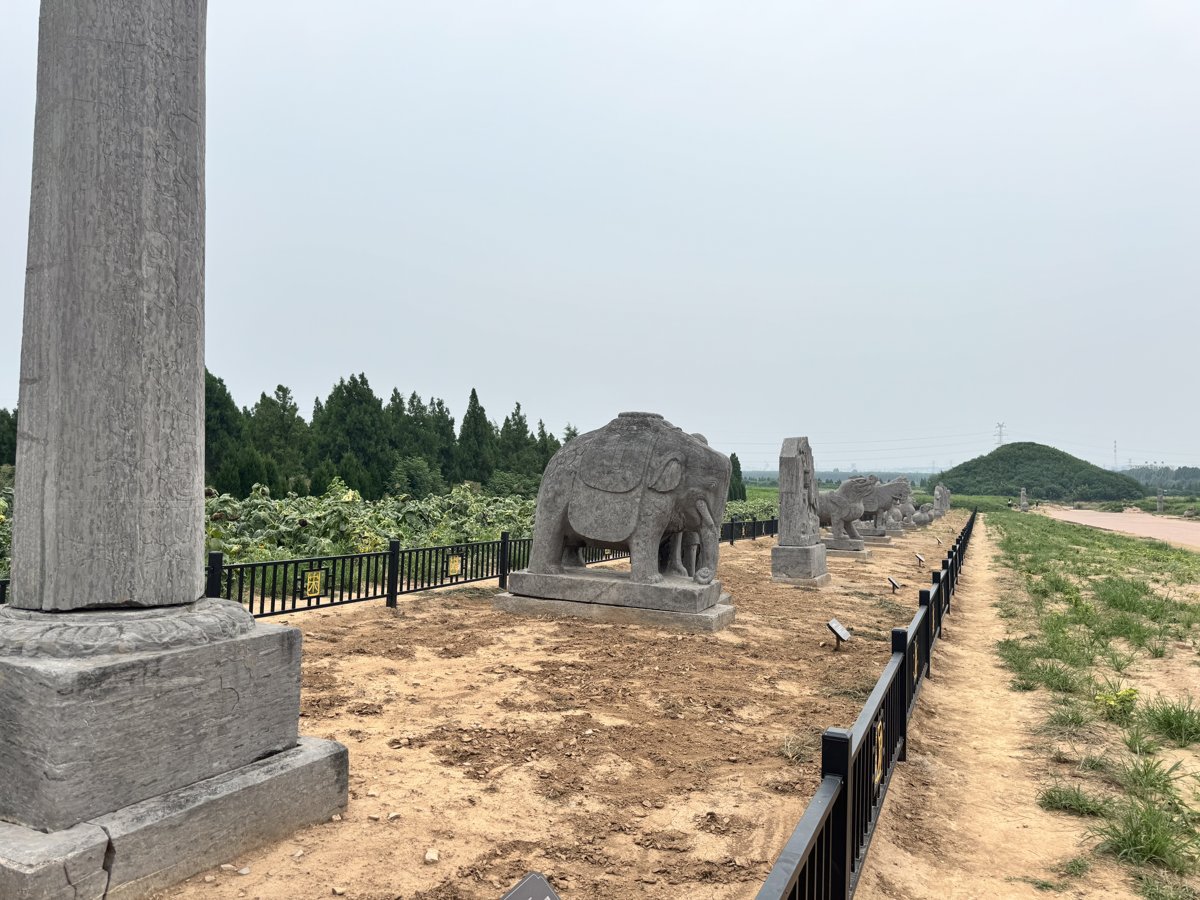
Spirit way of Yongchangling (Taizu), with the mound platform in the distance
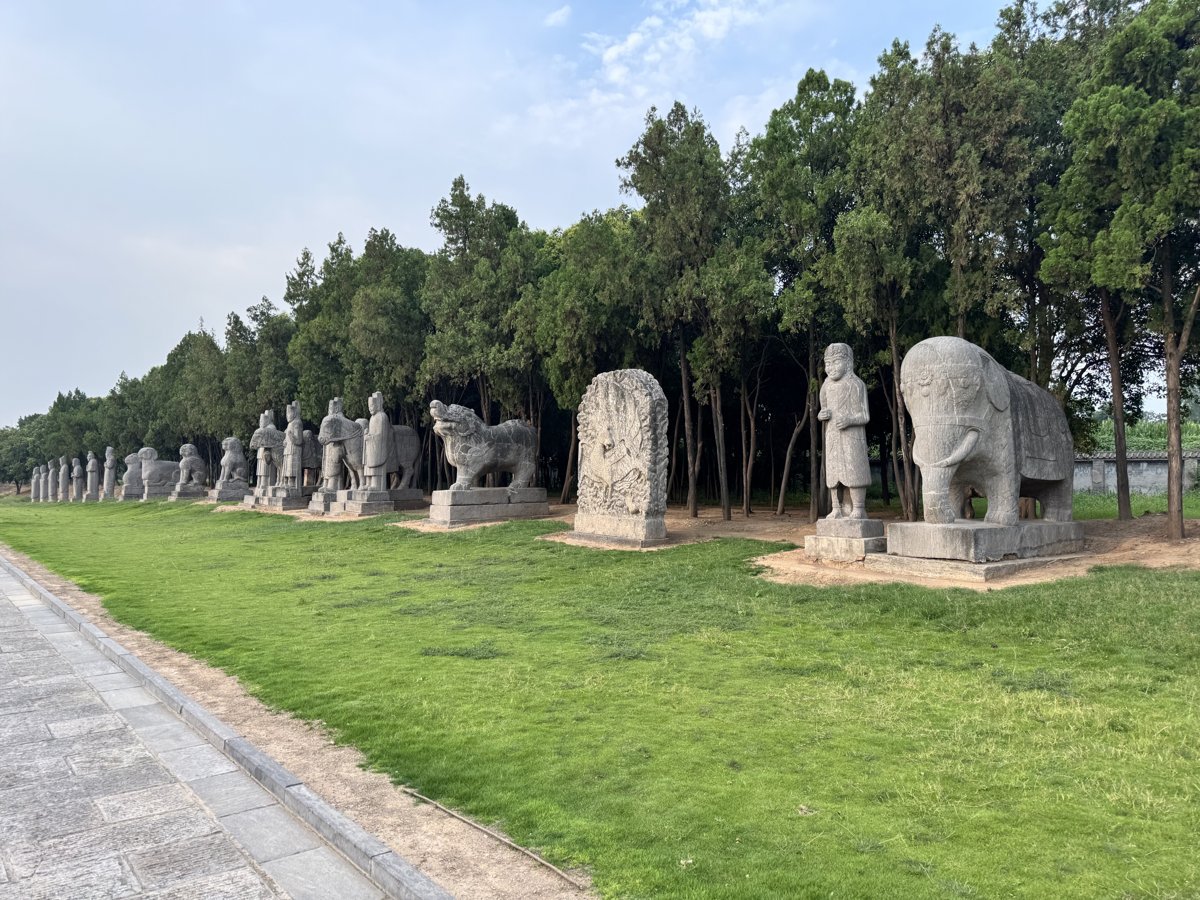
Spirit-way sculpture at the tomb of Emperor Zhenzong
Precious citadel and mound: Ming and Qing
The Ming changed the tomb system greatly. The Ming Xiaoling Mausoleum in Nanjing set a new pattern: the mound became round instead of square and was enclosed by a brick wall, called the precious citadel (baocheng), while the earth mound inside is the precious mound (baoding). In front of the citadel stands a square fort topped by a soul tower (minglou), which holds a stele carved with the emperor’s temple name; in front of the fort are the hall and gates for sacrifices. The separate upper and lower palaces of Tang and Song tombs were merged into one, with the court in front and the chambers behind, like a palace (see A Brief History of Chinese Architecture, Chapter 8).
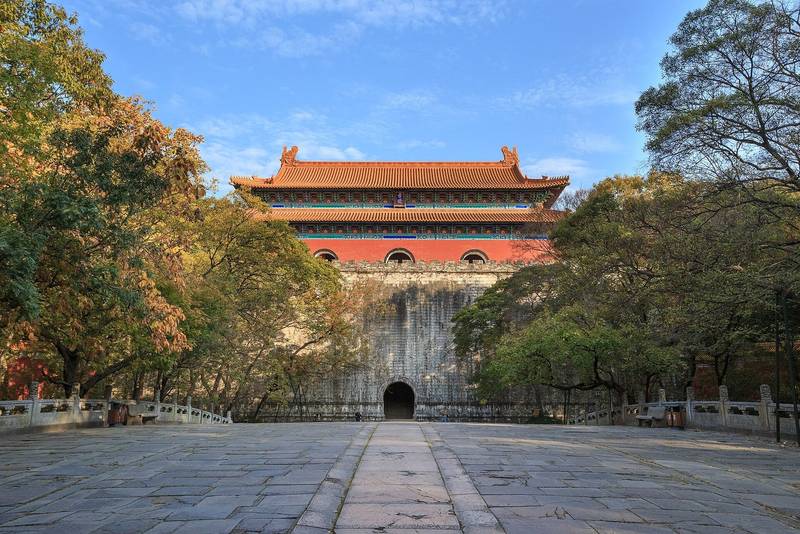
Nanjing, Jiangsu; tomb of the Ming founder Taizu
Zhangzhugang, CC BY-SA 4.0, Wikimedia Commons
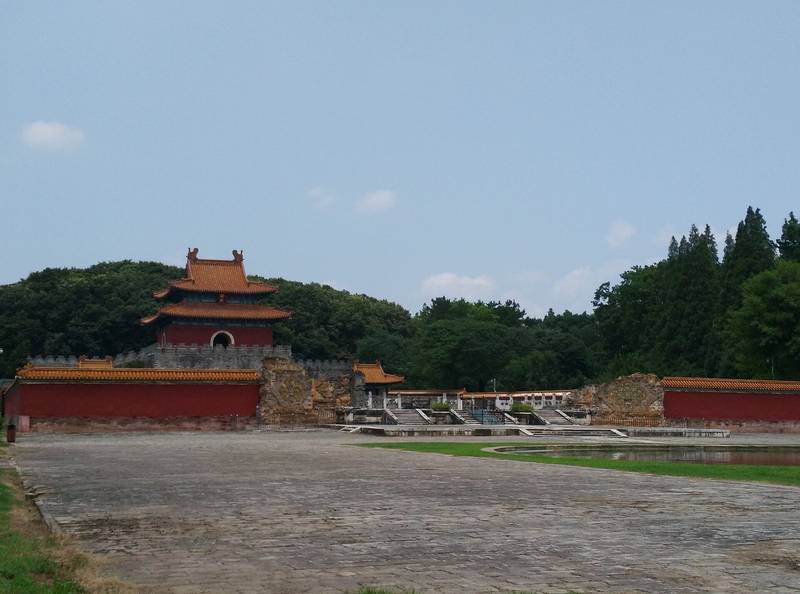
Zhongxiang, Hubei
三猎, CC BY-SA 4.0, Wikimedia Commons
The Ming Tombs at Changping, Beijing, carried this pattern to its height. The thirteen tombs share one main spirit way: starting from the stone archway, the Great Red Gate and the stele pavilion, it is lined with thirty-six stone animals and stone men, and past the Lingxing Gate (popularly the Dragon and Phoenix Gate) it branches off to the individual tombs. Each tomb forms its own group, with the Ling’en Gate, Ling’en Hall, two-pillar gate, stone altar with five offering vessels, square fort and soul tower, and precious citadel and mound in order along the central axis. The Ling’en Hall of Changling, with its great columns of nanmu wood, is one of the largest Ming timber halls in existence. In the northeast, the Qing tombs Yongling, Fuling and Zhaoling were built before the Qing entered the Shanhai Pass; Fuling and Zhaoling already have a square fort and precious citadel, with castle-like enclosure walls added.
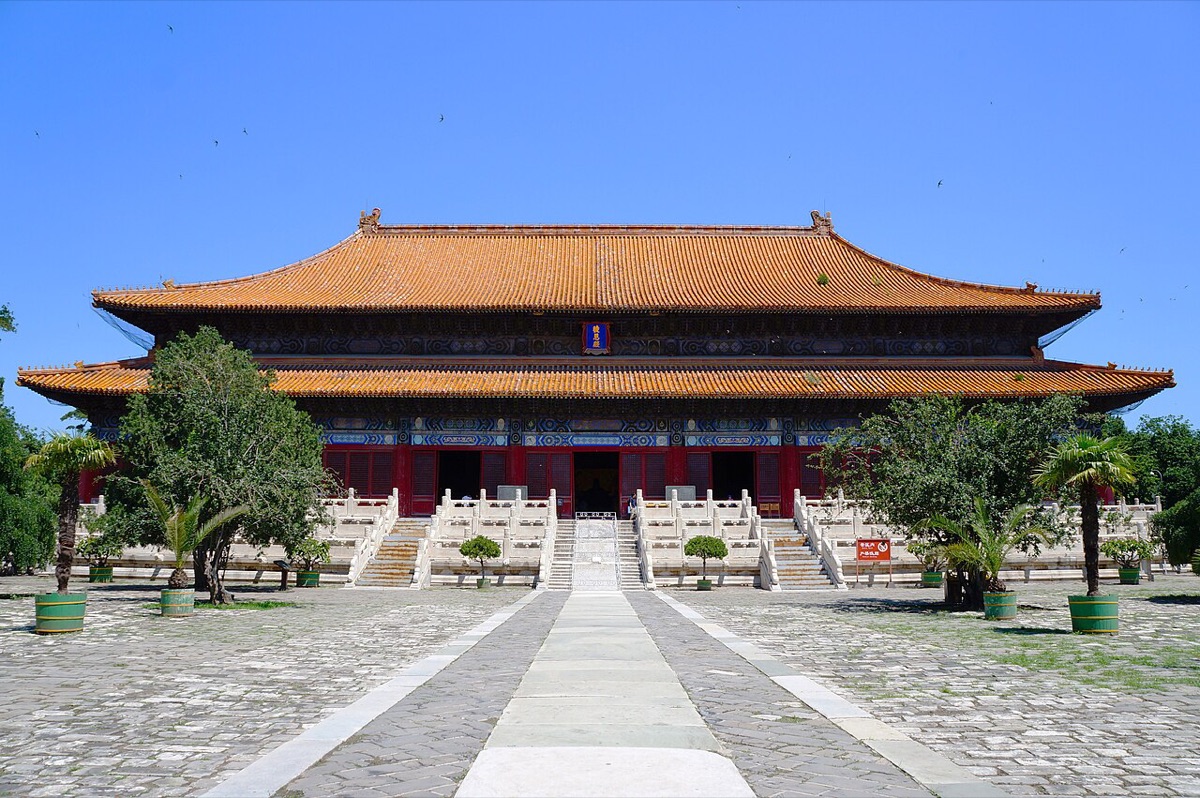
Changping, Beijing
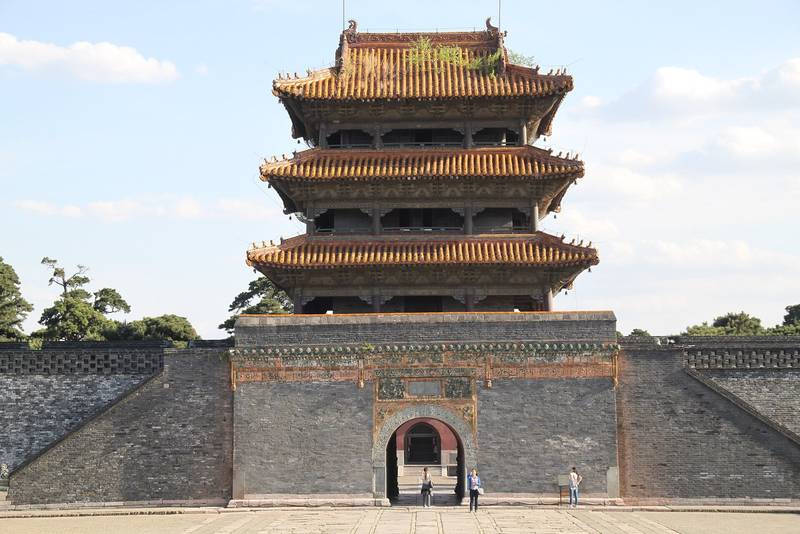
Tomb of Emperor Taizong of Qing
Gary Lee Todd, CC0, Wikimedia Commons
After entering the pass, the Qing kept the Ming system and built two tomb districts, the Eastern Qing Tombs (Zunhua, Hebei) and the Western Qing Tombs (Yi County, Hebei), where the tombs of emperors, empresses and consorts each have their rank. Qing precious mounds are mostly oblong, and behind the square fort and soul tower there is a crescent enclosure (popularly the “mute courtyard”). Each district centres on its first tomb, and the spirit ways follow the lie of mountains and rivers in one sweep; the spirit way of the Shunzhi Emperor’s Xiaoling in the Eastern Tombs is several kilometres long.
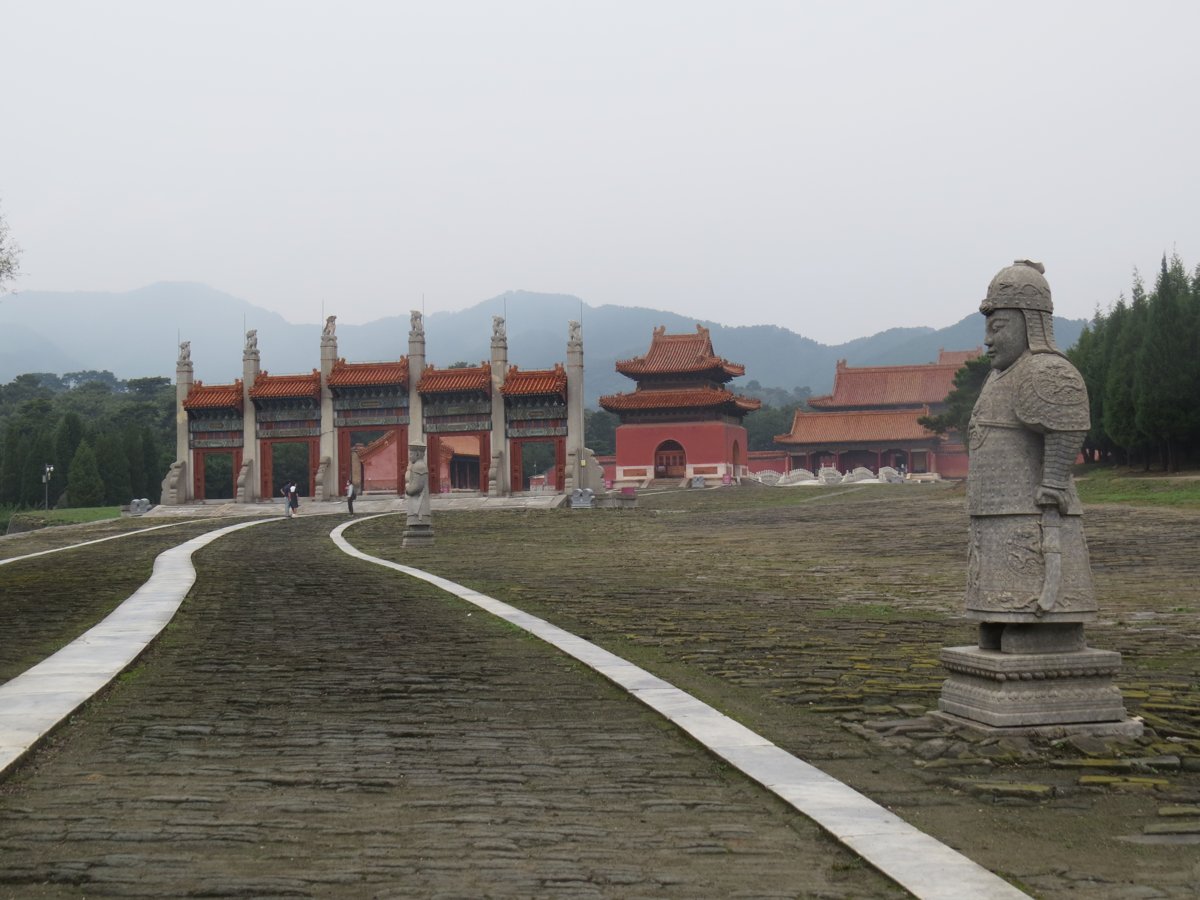
Zunhua, Hebei; Jingling of the Kangxi Emperor
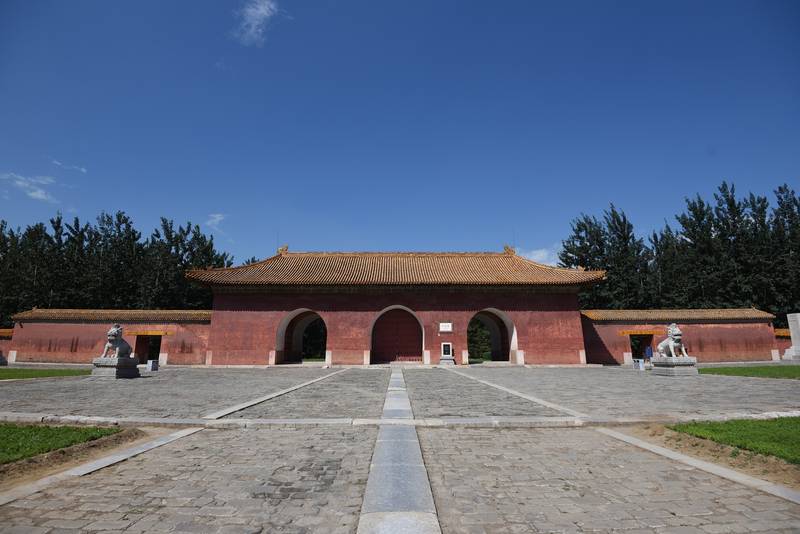
Yi County, Hebei; Great Red Gate on the main spirit way
Siyuwj, CC BY-SA 4.0, Wikimedia Commons
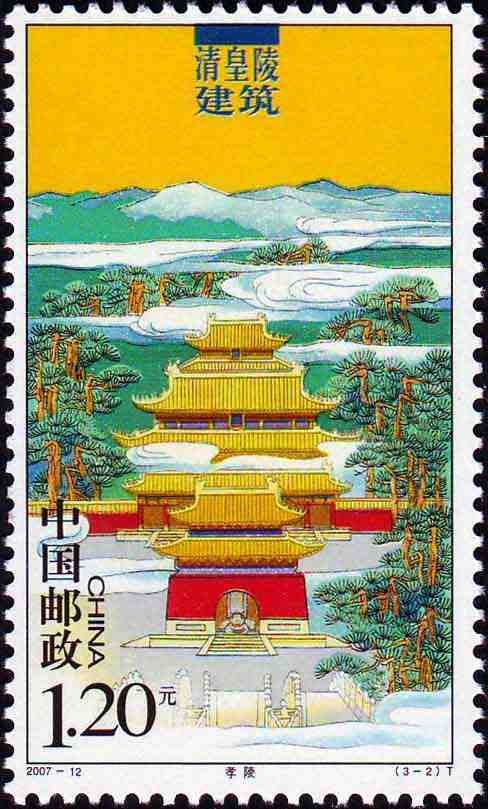
Xiaoling
Spirit way, underground palace and fengshui
Spirit way. The avenue leading up to the sacrificial hall in front of a tomb is called the spirit way, and the stone men and animals along it are called stone figures. Stone carvings already stood in front of the Han Tomb of Huo Qubing; under the Tang and Song the set became fixed as ornamental columns, horses, lions and civil and military officials in pairs, and the Ming and Qing added camels, elephants and qilin. The spirit-way carvings show the sculptural style of each dynasty: vigorous in the Tang, restrained in the Song, regular in the Ming and Qing.
Underground palace. Beneath the burial mound or precious mound lies the underground palace; the great majority of imperial tombs have never been excavated. Dingling in the Ming Tombs is the only Ming imperial tomb to have been formally excavated. Its underground palace is built entirely of stone vaults, divided into front, middle and rear halls and side halls to left and right; the rear hall holds the coffins of the emperor and empresses, and it is now open to visitors.
Fengshui. A tomb site was chosen with a mountain behind and water in front: a main mountain at the back for support, hills embracing it on left and right, a river flowing past in front, and a distant mountain as a screen. The Ming Tombs, backed by Mount Tianshou, enclosed by mountains on three sides and open to the south, are a model of this layout. When visiting a tomb, first stand on the spirit way and see how it relates to the mountains; this is often more rewarding than looking at individual buildings.