 Park of China
Overview
| Name | Northern Song Imperial Tombs 宋陵 |
| Web address | https://parkofchina.com/en/songling.html |
| Designation | Major Historical and Cultural Site Protected at the National Level (second batch, 1982) |
| Province | Henan |
| Location | Gongyi, Zhengzhou, Henan; at the northern foot of Mount Song, south of the Yiluo River |
| Latitude, longitude | 34.74, 112.98 Google Maps |
| Highlights | Tombs of the Northern Song emperors, stone sculptures along the spirit ways |
| Top sights | Yongzhao, Yongding, Yongxi, Yongyu and Yongtai tombs |
| Nearby cities | Zhengzhou, Luoyang |
| Nearby sites | Gongyi Grottoes, Shaolin Temple, Mount Song, Longmen Grottoes, Luoyang, Mount Yuntai (Henan), Yin Xu, Anyang |
| Themes | Tomb, Statue, Imperial palaces & gardens, Culture |
About
The Northern Song Imperial Tombs lie in Gongyi, Zhengzhou, Henan, on the loess uplands at the northern foot of Mount Song, south of the Yiluo River. Of the nine Northern Song emperors, Huizong and Qinzong were carried off by the Jin and died in the north; the other seven are buried here, and with the tomb of Zhao Hongyin, father of the dynasty’s founder Taizu, there are eight imperial tombs, known as “seven emperors, eight tombs”. The area also holds more than twenty tombs of empresses and nearly a thousand satellite tombs of imperial kin and officials. The Song tombs are a Major Historical and Cultural Site Protected at the National Level (second batch).
The eight imperial tombs are in four groups: around Xicun are Yong’an (Zhao Hongyin), Yongchang (Taizu) and Yongxi (Taizong); at Caizhuang is Yongding (Zhenzong); near Xiaoyi on the edge of Gongyi city are Yongzhao (Renzong) and Yonghou (Yingzong); and around Baling village are Yongyu (Shenzong) and Yongtai (Zhezong).
The Song tombs differ from those of other dynasties. A Northern Song emperor did not build his tomb in his lifetime; work began only after his death, and ritual required burial within seven months, so the tombs are far smaller than those of the Tang or Ming. They share one plan: a truncated-pyramid mound in the middle, a wall with a gate on each side, and a long spirit way outside the south gate. The sites follow the geomantic rule of the “five sounds and surnames”: the surname Zhao belongs to the jiao sound, which calls for ground high in the south-east and low in the north-west, so the mound stands at the lowest point—the reverse of the usual tomb set against a hill and facing water.
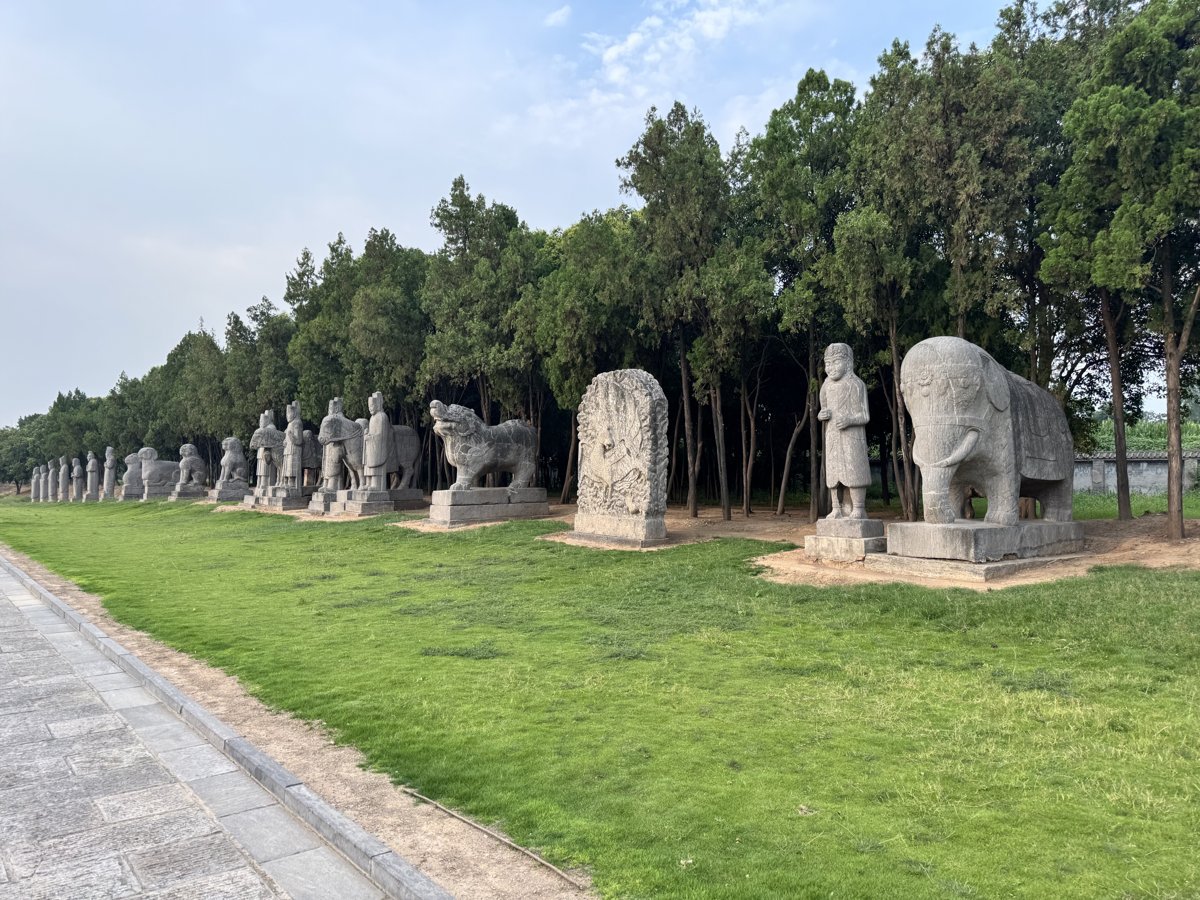
The most valuable feature of the tombs is the stone sculpture along the spirit ways. From south to north come pillars, elephants with their keepers, auspicious birds, the mythical jiaoduan, horses with grooms, tigers, rams, foreign envoys and civil and military officials, with lions and guardian generals at the gates; more than a thousand pieces survive, a key source for the study of Song sculpture. From the early Yong’an and Yongchang tombs to the late Yongyu and Yongtai tombs the figures become slimmer and more lifelike, showing how the style changed. Most of the stone came from the hills of Yanshi to the west, where the Song tomb quarry is also a nationally protected site.
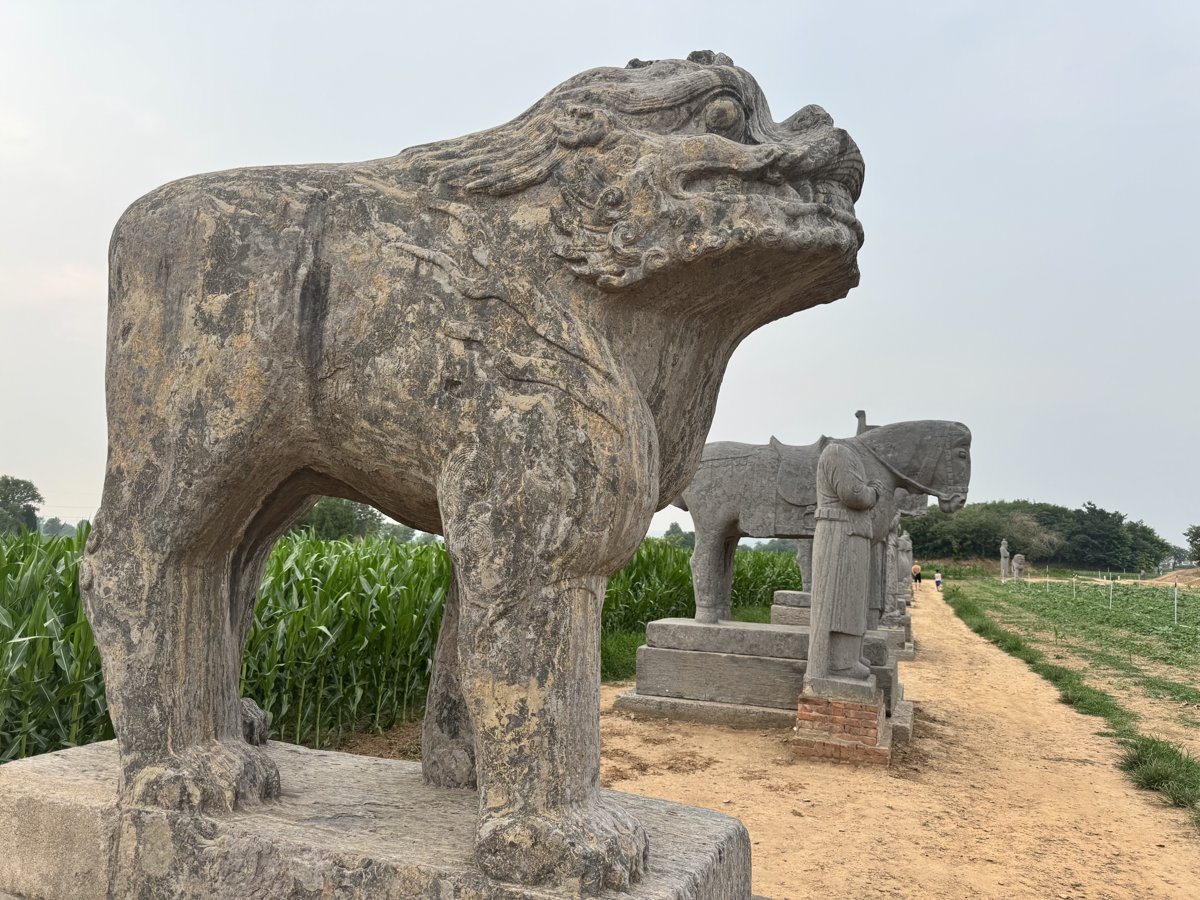
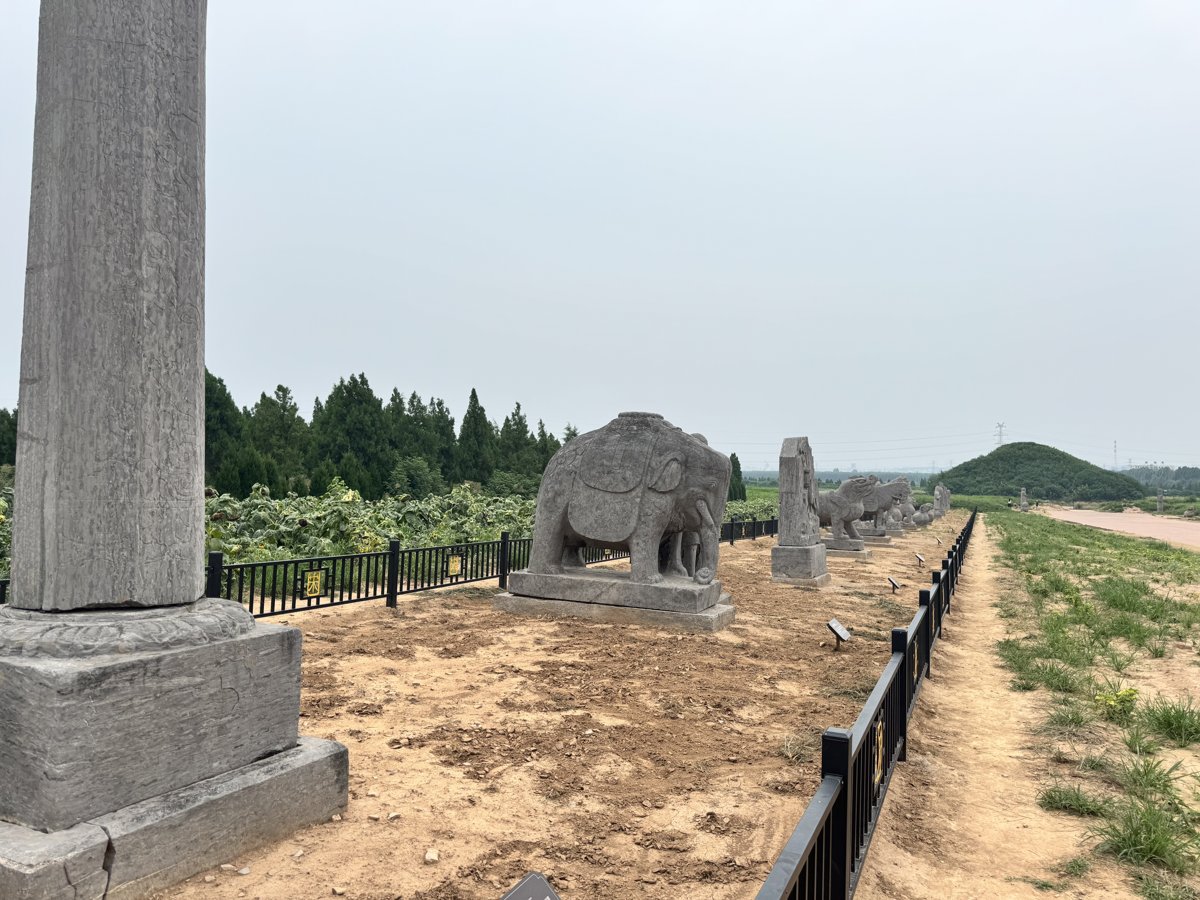
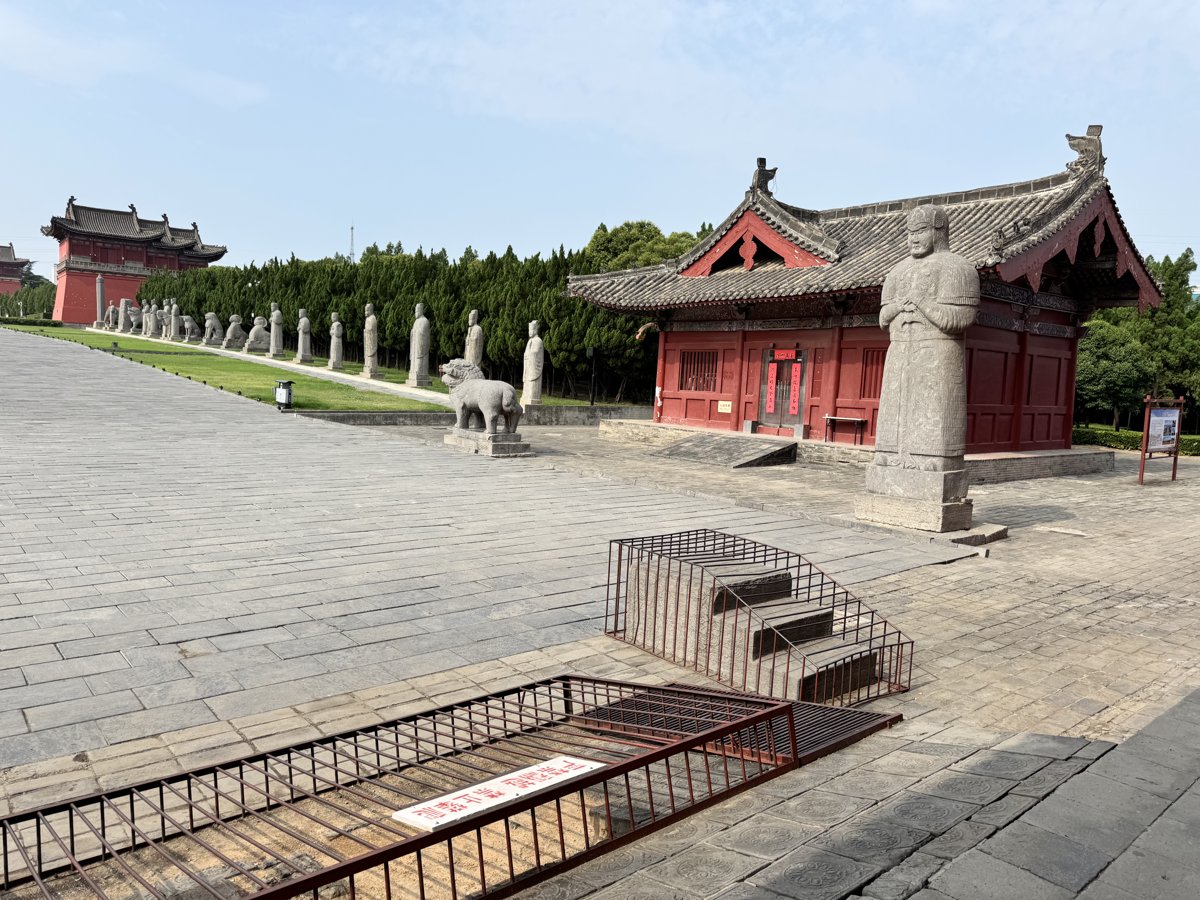
After the fall of the Northern Song the tombs were plundered by Jin troops and by the puppet regime of Liu Yu; all the buildings above ground were lost, leaving each tomb with only its mound and stone sculptures. The Yongzhao tomb, in Gongyi city, has since had its buildings restored on the original plan and is now the Song Tombs Park, which shows how a Song imperial tomb once looked.
Travel tips
Visiting: the Yongzhao tomb, in Gongyi city, has had its buildings restored as the Song Tombs Park and is the easiest to reach; the Yongding, Yongxi, Yongyu and Yongtai tombs also keep good sculpture but are scattered among the fields, and seeing them all by car takes about a day.
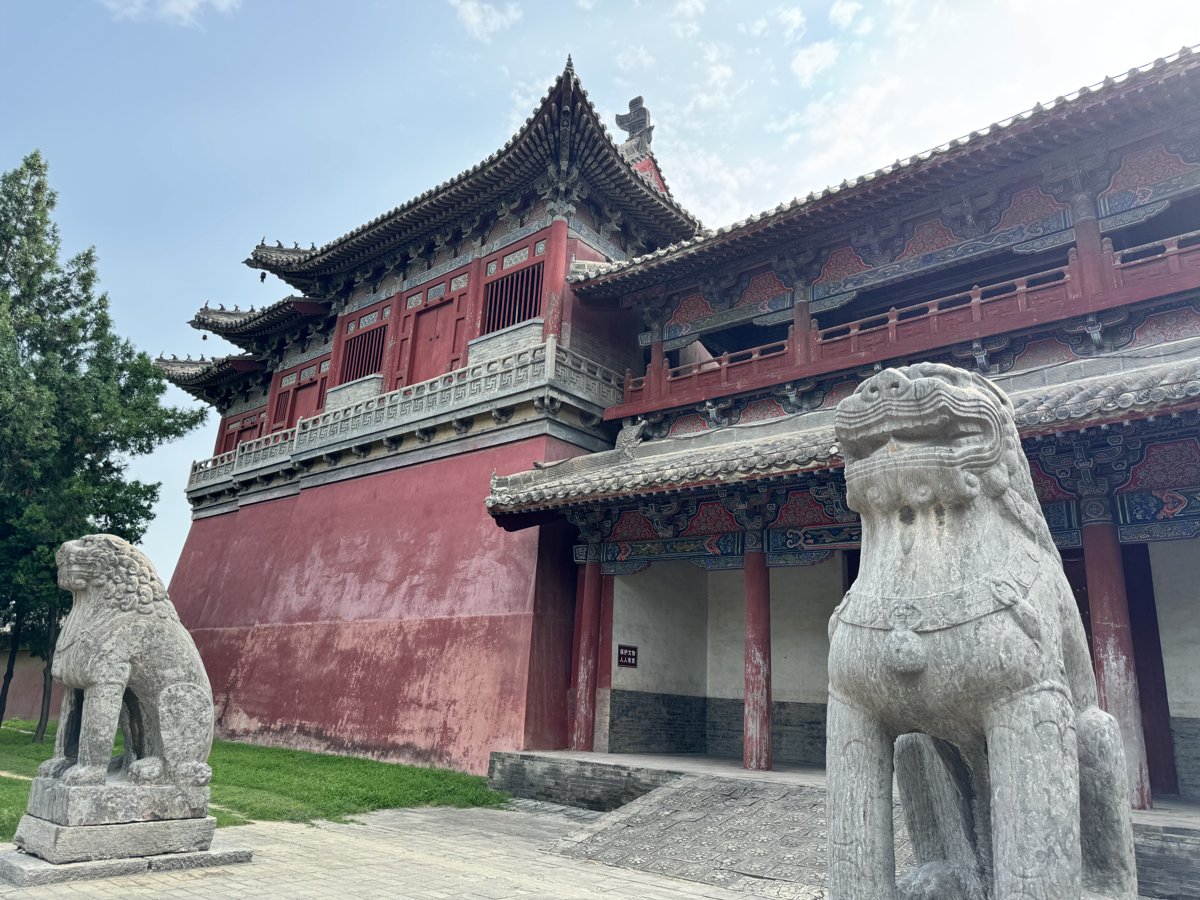
Getting there: Gongyi lies between Zhengzhou and Luoyang, with a high-speed station, Gongyi South; from either city it is under an hour. It combines well with Dengfeng and Mount Song.
Map

Nearby
| World Heritage | Shaolin Temple 27km, Mount Song 29km, Taishi Que and Zhongyue Temple 33km, Site of Luoyang City from the Eastern Han to Northern Wei Dynasty 33km |
| National parks | Mount Shennong 53km, Zhengzhou Yellow River 54km, Mount Wangwu–Mount Yuntai Scenic Area 63km, Qingtian River 64km |
| Detailed guides | Gongyi Grottoes 9km, Mount Wangwu 80km, Wangmang Ridge 118km |
| AAAAA attractions | Mount Yuntai (Henan) 84km, Baoquan Tourist Area 92km, Longtan Grand Canyon Scenic Area 92km, Huangcheng Xiangfu Ecological and Cultural Tourist Area 93km |
| AAAA attractions | Kang Baiwan Manor 4km, Red Stone Forest 26km, Erlitou Xia Capital Site Museum 28km, Chenjiagou 28km |
| UNESCO Global Geoparks | Wangwushan-Daimeishan UNESCO Global Geopark 80km, Funiushan UNESCO Global Geopark 194km |
| Historic cities | Luoyang 51km, Zhengzhou 63km |
| Cities | Luoyang 53km, Zhengzhou 57km, Kaifeng 121km |
| Historical sites | Huangye Tricolor Kiln Site 6km, Jiulong Temple in Yanshi 6km, Shaochai Site 7km, Stele of the Newly Built Huisheng Palace of the Great Song 8km |
| National geoparks | Songshan Stratigraphic Structure National Geopark 29km, Guanshan National Geopark 106km, Yaoshan National Geopark 132km |
| Nature reserves | Danjiang Wetland National Nature Reserve 29km, Yangcheng Manghe Macaque National Nature Reserve 75km, Lishan National Nature Reserve 116km, Dongzhai National Nature Reserve 144km |