← Chapter 4: Western ZhouA Brief History of ChinaChapter 6: Qin →
Chapter 5: Spring and Autumn and Warring States
770–221 BC
The first half of the Eastern Zhou is called the Spring and Autumn period (770–476 BC), the second half the Warring States period (475–221 BC). In the Spring and Autumn period the Zhou king could no longer command the realm; the lords competed to be hegemon in the name of “honoring the king and repelling the barbarians,” and Duke Huan of Qi, Duke Wen of Jin, King Zhuang of Chu and others took turns as hegemon. By the Warring States period seven great states remained, Qin, Chu, Qi, Yan, Han, Zhao and Wei, swallowing one another in ever larger wars. In 260 BC, at the Battle of Changping between Qin and Zhao, more than 400,000 Zhao troops were wiped out, and after that no state could resist Qin alone.
To become rich and strong, the states carried out reforms. The most thorough were the reforms of Shang Yang in Qin, begun in 356 BC: they rewarded farming and fighting, granted rank for military merit and set up commanderies and counties, and Qin grew powerful. Iron tools and ox-drawn plows spread and irrigation works were built; Dujiangyan, built under Li Bing, still irrigates the Chengdu Plain today.
Social upheaval also brought an unprecedented flowering of thought, known as the “Hundred Schools of Thought.” Confucius taught benevolence (ren) and ritual (li) and founded Confucianism; the Temple and Cemetery of Confucius in Qufu go back to him. Laozi and Zhuangzi taught following the way of nature; Mozi taught universal love and opposition to aggressive war; Han Fei brought Legalism to its full form. The Songs of Chu (Chuci) of Qu Yuan began the tradition of personal lyric poetry.

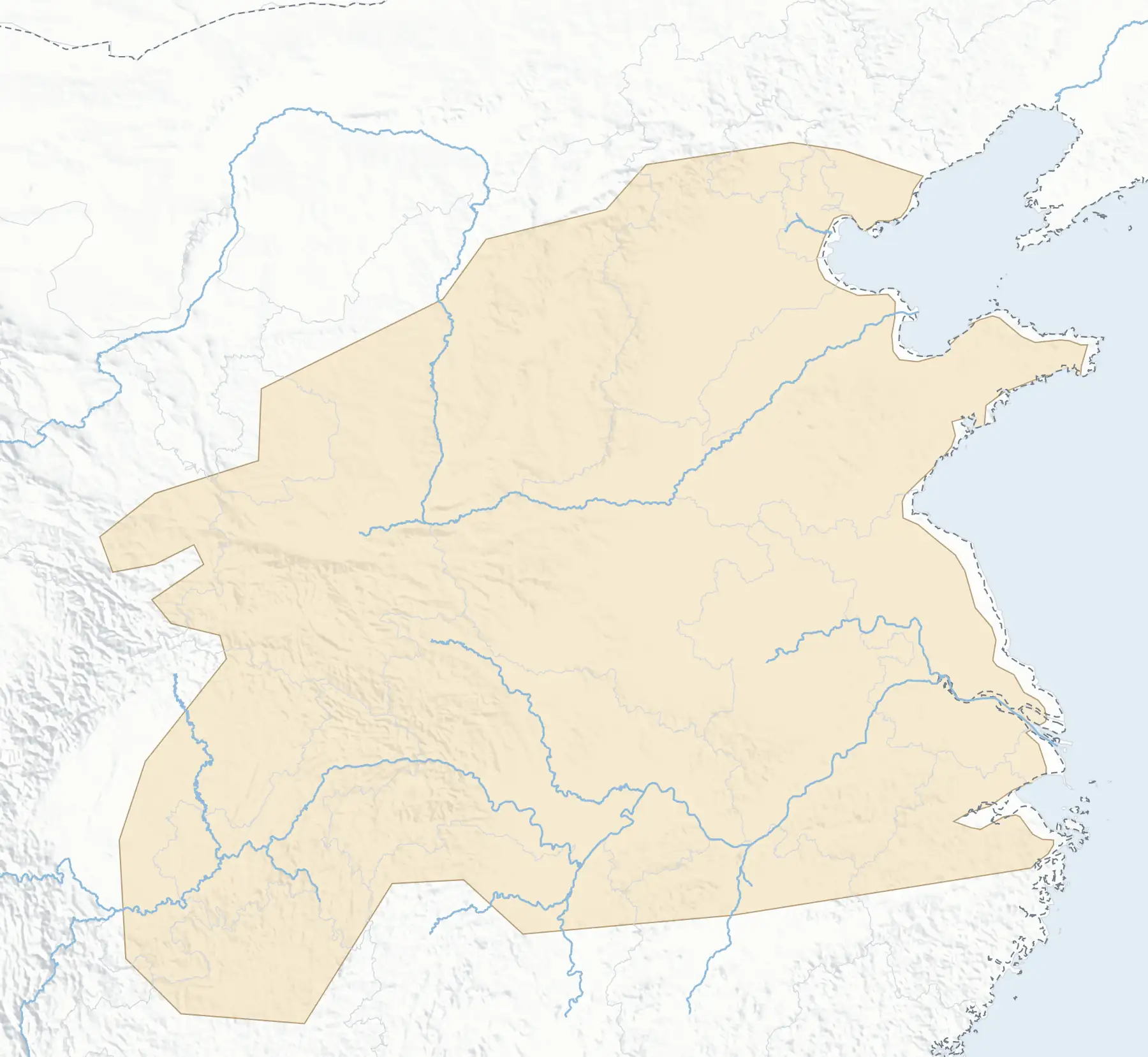
YouTable, CC BY-SA 4.0, Wikimedia Commons
By the Warring States period the Zhou royal house held only a small area near Luoyang. In 256 BC Qin destroyed the Eastern Zhou and the Zhou dynasty ended. With the strength gained from its reforms, from 230 BC Qin conquered Han, Zhao, Wei, Chu, Yan and Qi one after another, and in 221 BC it unified the realm, ending the Warring States period.