
← Chapter 1: Prehistory (Neolithic)A History of Chinese ArtChapter 3: Qin and Han →
Chapter 2: Xia, Shang and Zhou
The Xia period is represented by the Erlitou site in Yanshi, Henan, which yielded China's earliest bronze vessels, such as jue and jia, a dragon-shaped object assembled from more than two thousand pieces of turquoise, and bronze plaques inlaid with turquoise. Under the Shang and Zhou, bronzes were the most important works of art. Most were ritual vessels for sacrifices and banquets, used in sets according to rank, and the ding cauldron thus became a symbol of power.
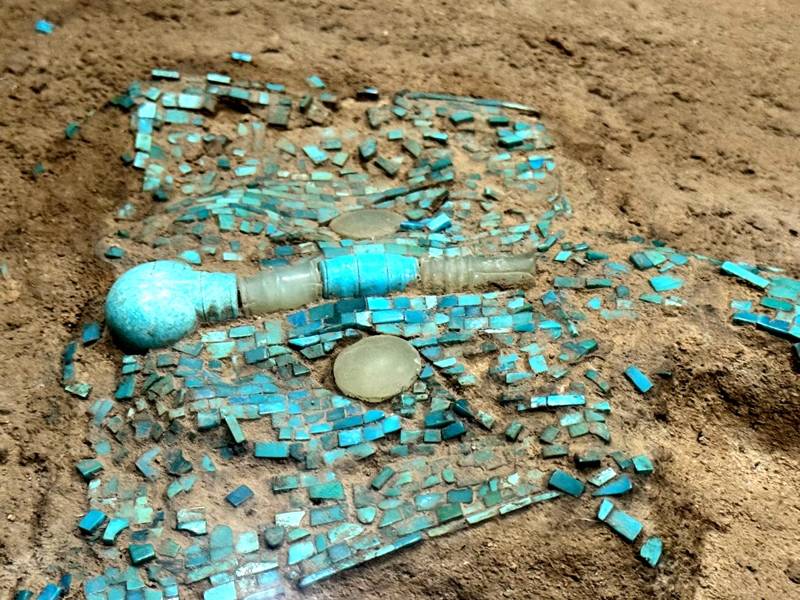
Excavated at Erlitou, assembled from more than two thousand pieces of turquoise; Erlitou Site Museum of the Xia Capital, Luoyang
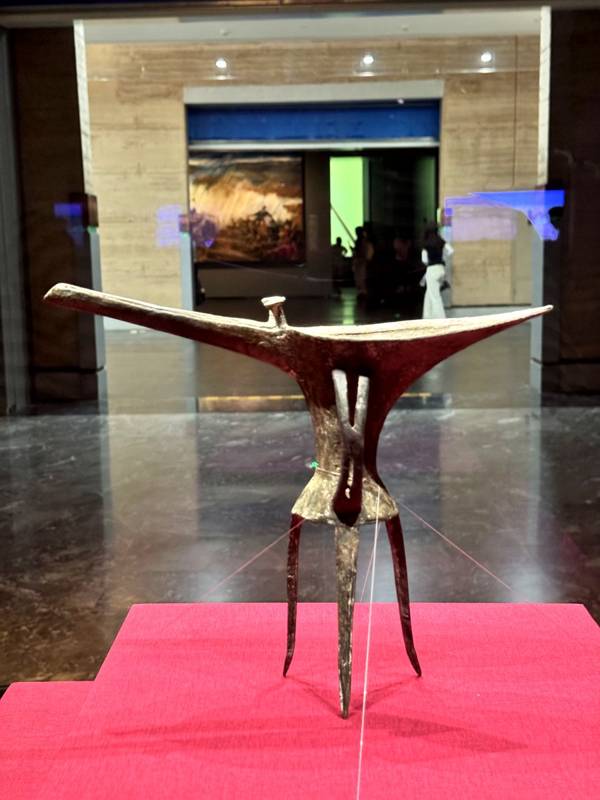
Excavated at Erlitou, one of the earlier known bronze wine vessels; Erlitou Site Museum of the Xia Capital, Luoyang
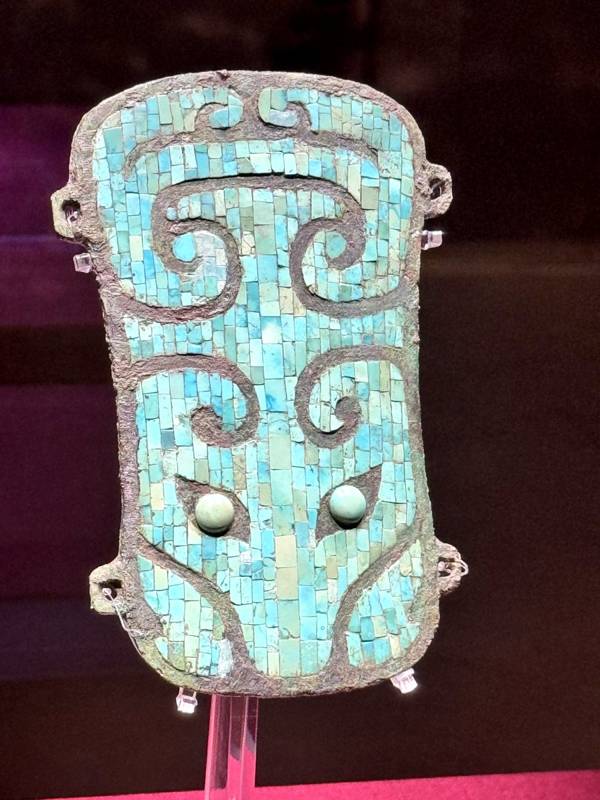
Excavated at Erlitou; Erlitou Site Museum of the Xia Capital, Luoyang
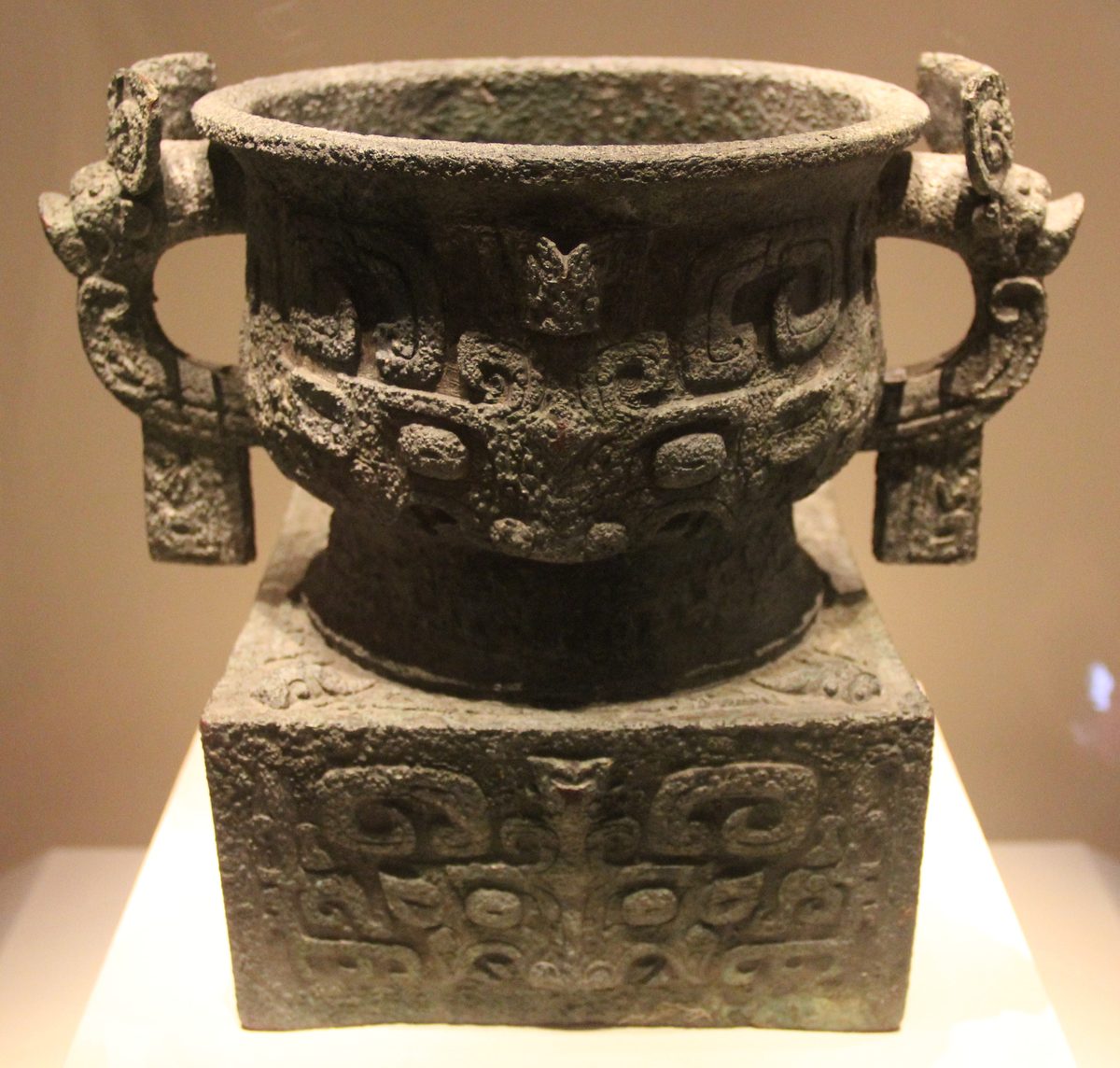
Vessel types. Shang and Zhou bronzes fall into several groups by use. Food vessels include the ding (for boiling and serving meat, on three or four legs), li (with hollow legs to take the heat), yan (a steamer, a zeng over a li), gui (for millet), fu and dou. Wine vessels include the jue, jiao and jia (for warming and drinking wine), gu and zhi (for drinking), zun, you, lei, fangyi and hu (for holding wine), and the lidded, animal-shaped gong. Water vessels, the pan, yi and jian, were for washing. Musical instruments include the nao, zhong and bo bells. There were also weapons and chariot fittings. The Shang favored wine vessels; after the Western Zhou wine vessels declined and food vessels increased, which some attribute to Zhou warnings against drink. In the Western Zhou the number of ding and gui marked a noble's rank.
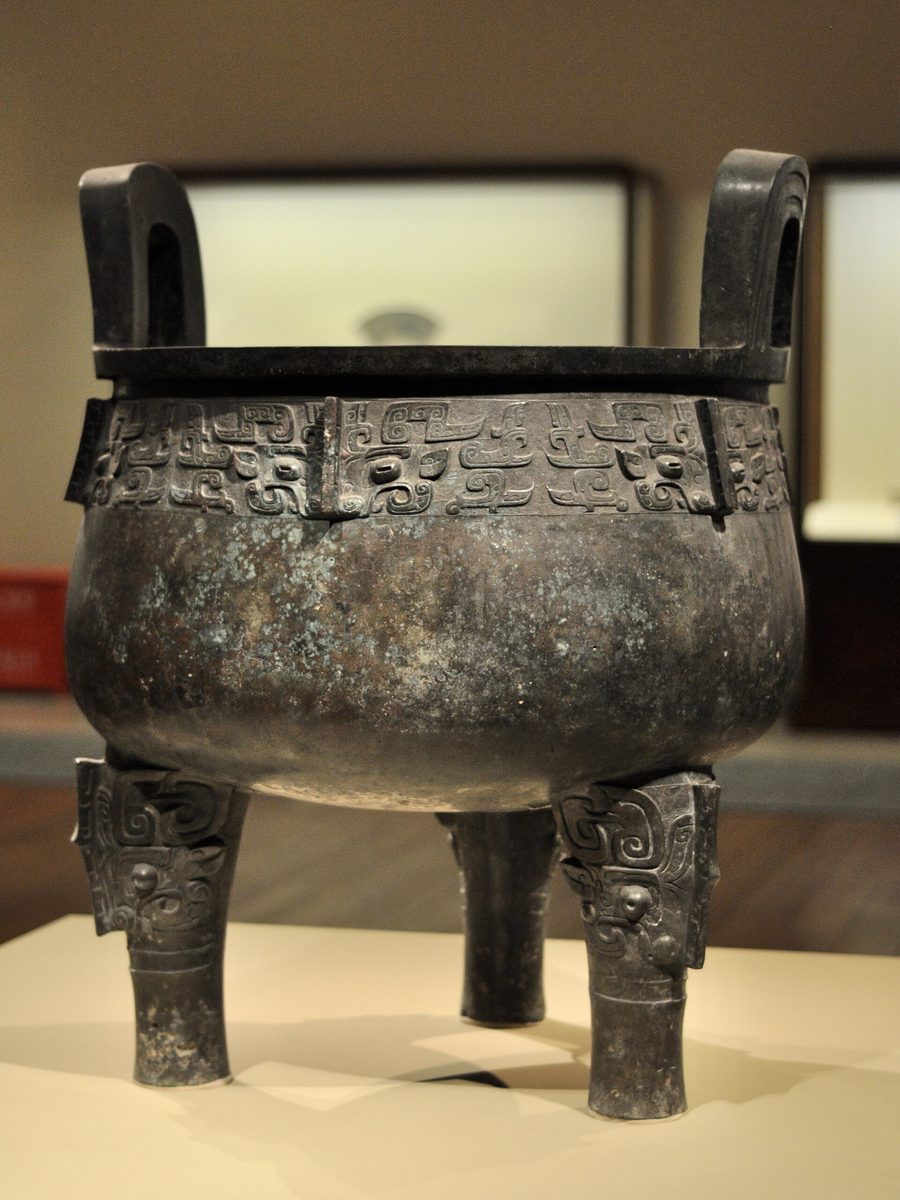
Decoration. The most common motif of the Shang and early Western Zhou is the taotie, now usually called the beast face: from a central ridge forming the nose, a pair of large eyes with horns, ears and claws spreads symmetrically to each side, making a frontal animal face. The name "taotie" was given in the Song, after a line in the Lüshi Chunqiu: "Zhou ding bear the taotie, which has a head but no body." The beast face is often set on a ground of fine cloud-and-thunder spirals, the main motif raised and the ground flat and shallow, giving clear layers. Secondary motifs include the side-view kui dragon and the phoenix, which was especially popular in the early and middle Western Zhou. From the middle Western Zhou, patterns became more abstract and open: the qiequ motif turns a beast face or dragon into a horizontal S-shaped band, the overlapping-ring motif is rows of oval rings, and the wave motif (also called the ring band) rises and falls in broad waves. The Spring and Autumn and Warring States periods favored tiny interlaced dragons and interlaced serpents, countless small creatures entwined over the whole vessel.
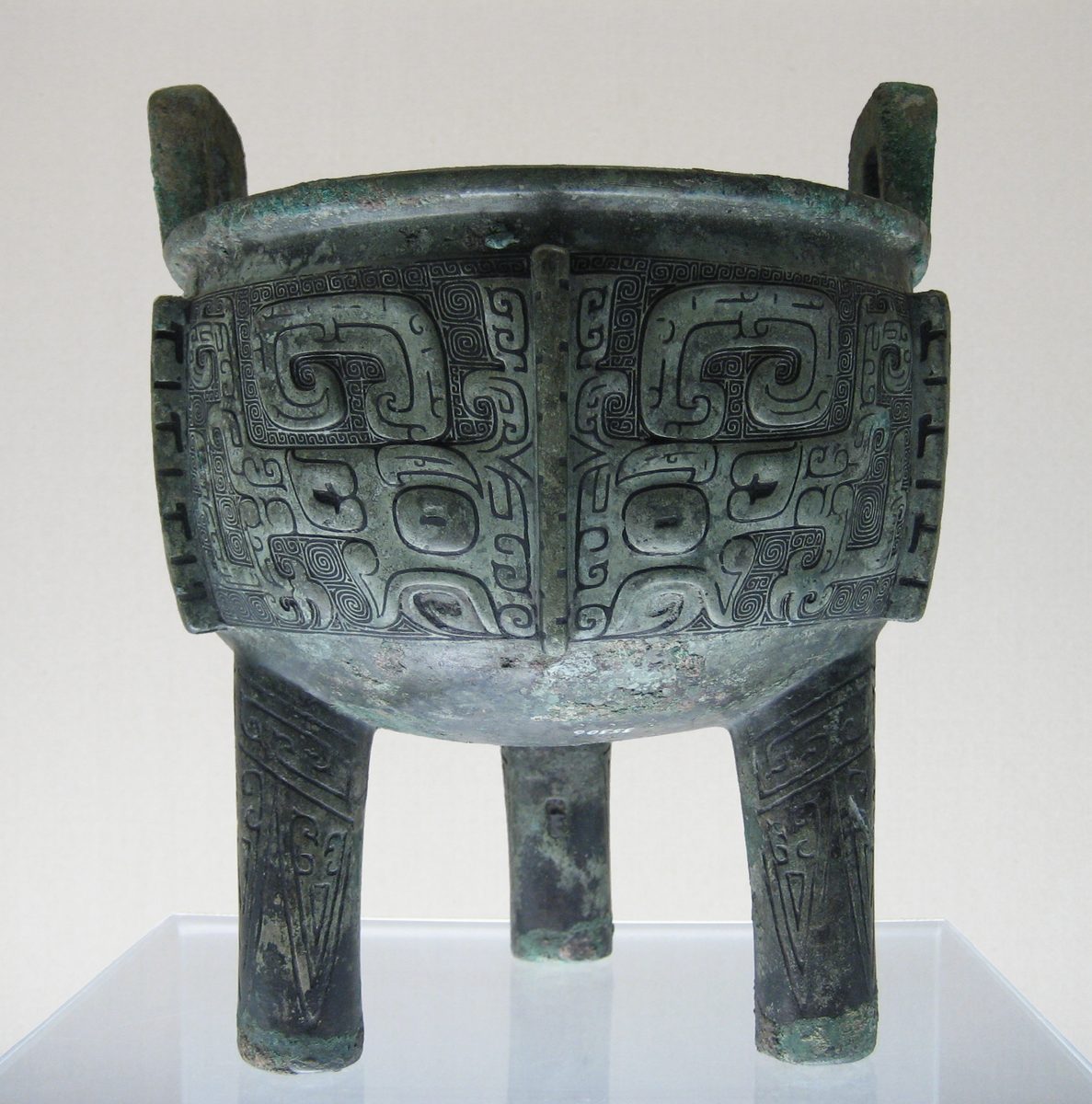
Shang ding with beast-face motif
Mountain / Own work, CC BY-SA 3.0, Wikimedia Commons
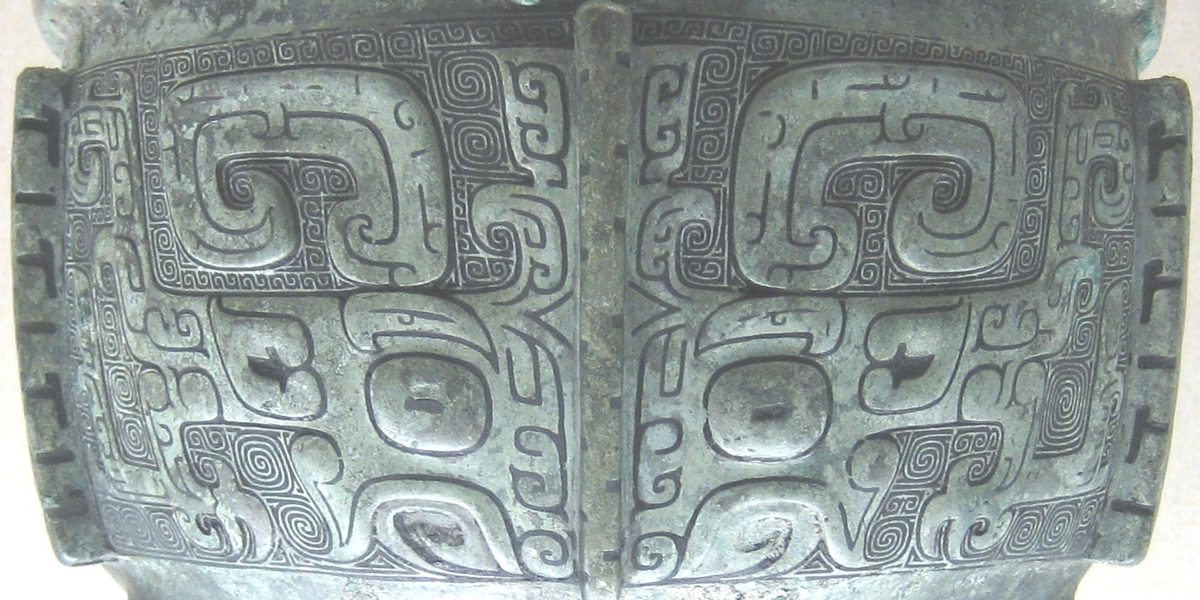
Detail of a beast face
, CC BY-SA 3.0, Wikimedia Commons
Inscriptions. Text cast on bronzes is called jinwen (bronze script). Shang inscriptions are mostly a few characters, recording a clan emblem or an ancestor's name; long Western Zhou inscriptions record appointments, rewards, wars and lawsuits. They are important historical sources and one of the origins of Chinese calligraphy. The inscription on the Li Gui records that King Wu attacked the Shang on the morning of a jiazi day; the He Zun contains the phrase "dwell in this central land" (zhai zi Zhongguo), the earliest known occurrence of the word "Zhongguo" (China); the Da Yu Ding records King Kang of Zhou admonishing the noble Yu; the Mao Gong Ding bears the longest known bronze inscription; and the San Shi Pan records the boundary between two states.
National Museum of China
Charlie fong / Own work, CC BY-SA 4.0, Wikimedia Commons
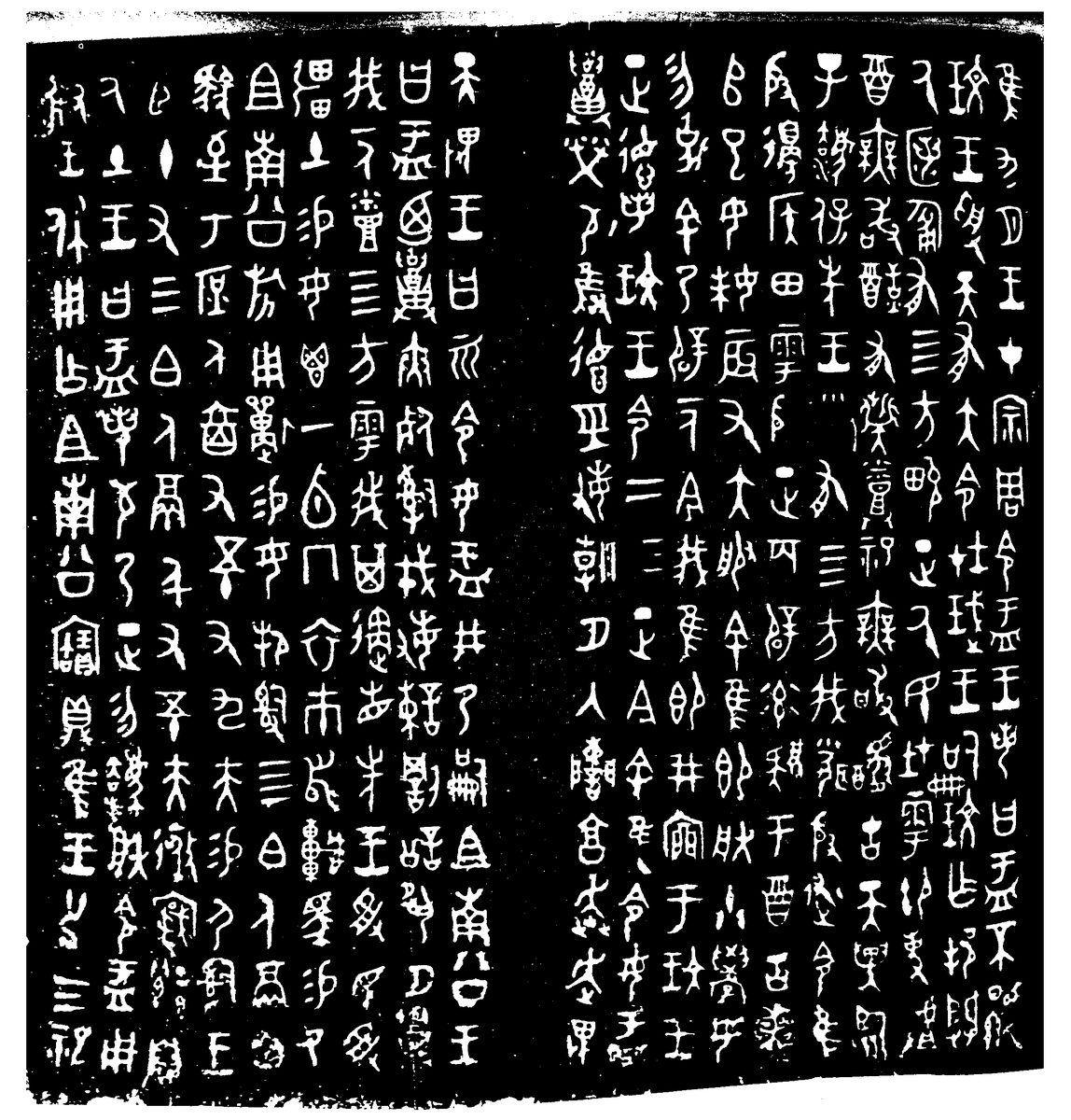
Rubbing of the inscription
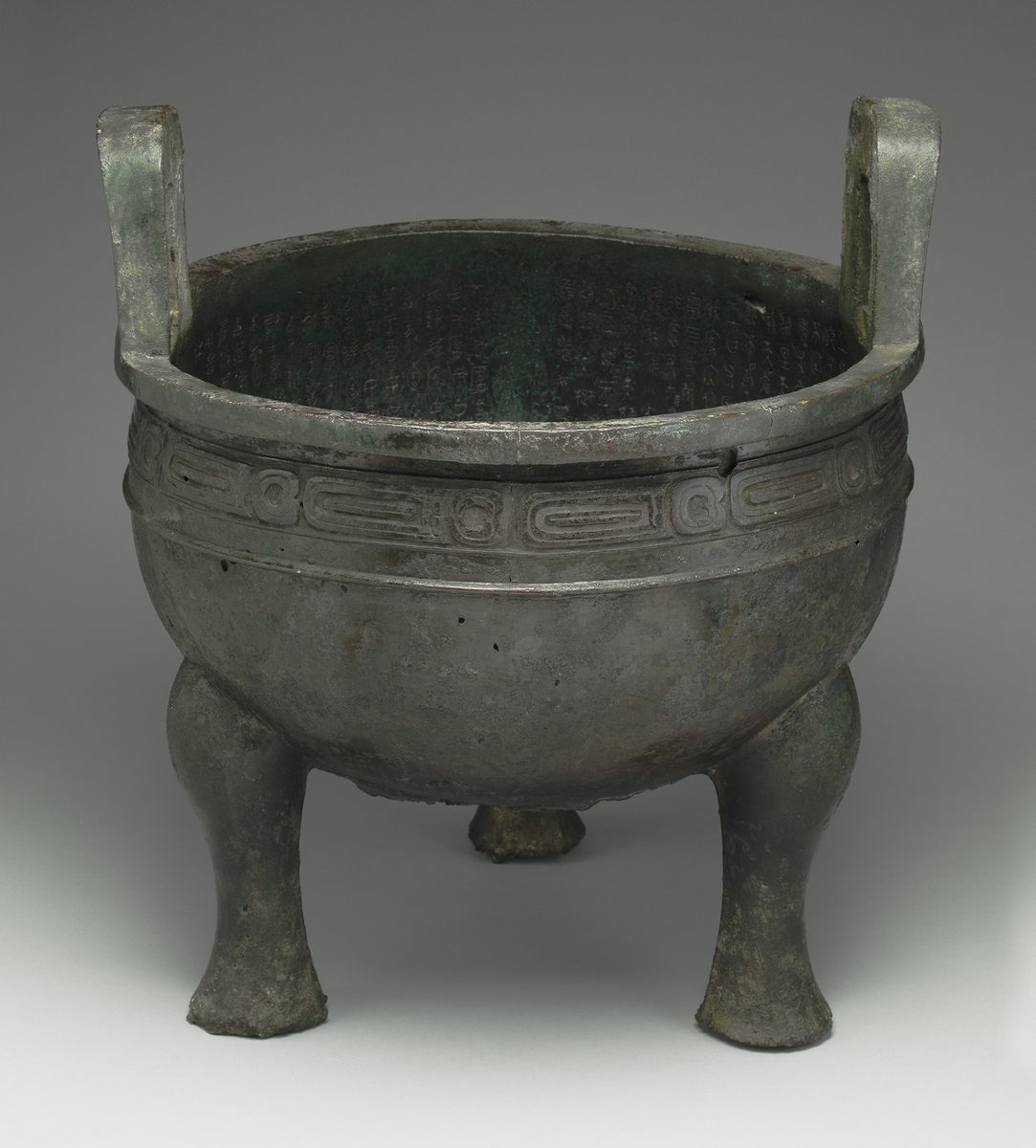
National Palace Museum, Taipei
anonymous / 國立故宮博物院器物典藏資料檢索系統, CC BY 4.0, Wikimedia Commons
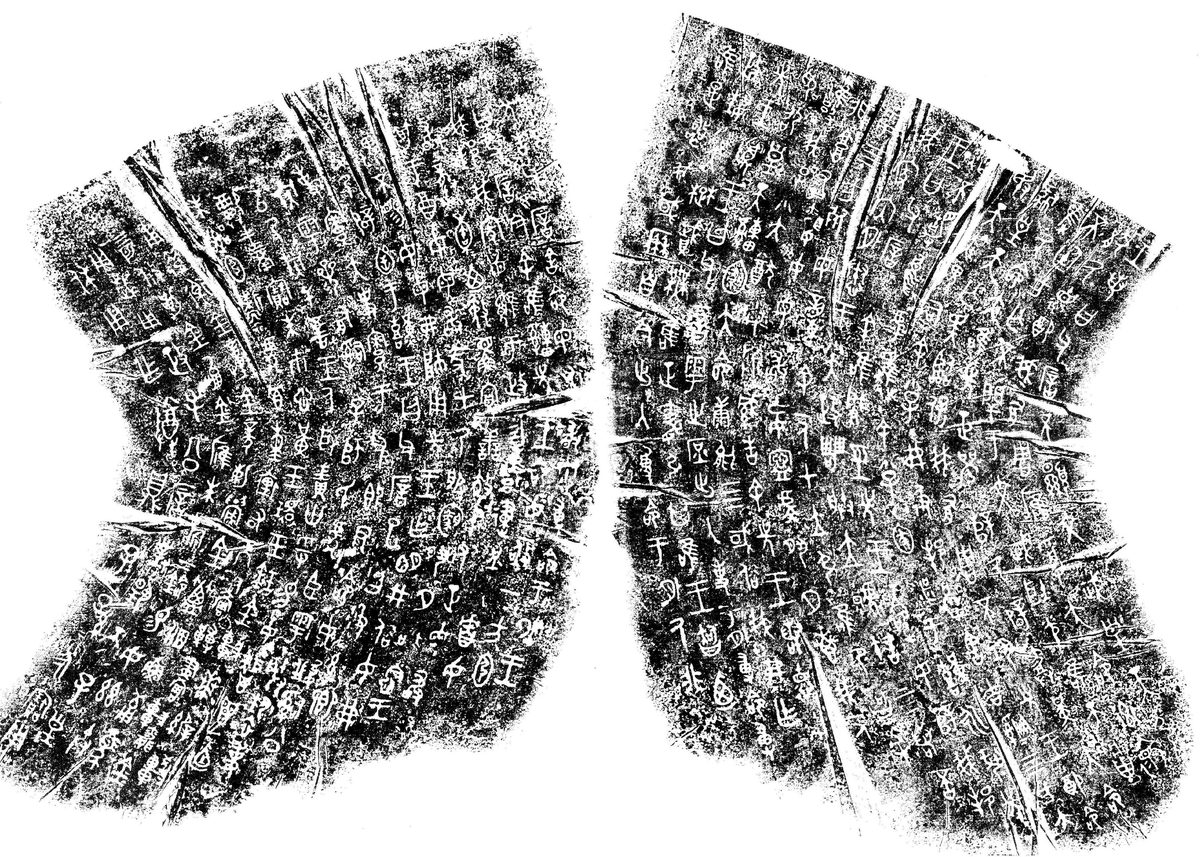
Rubbing of the inscription
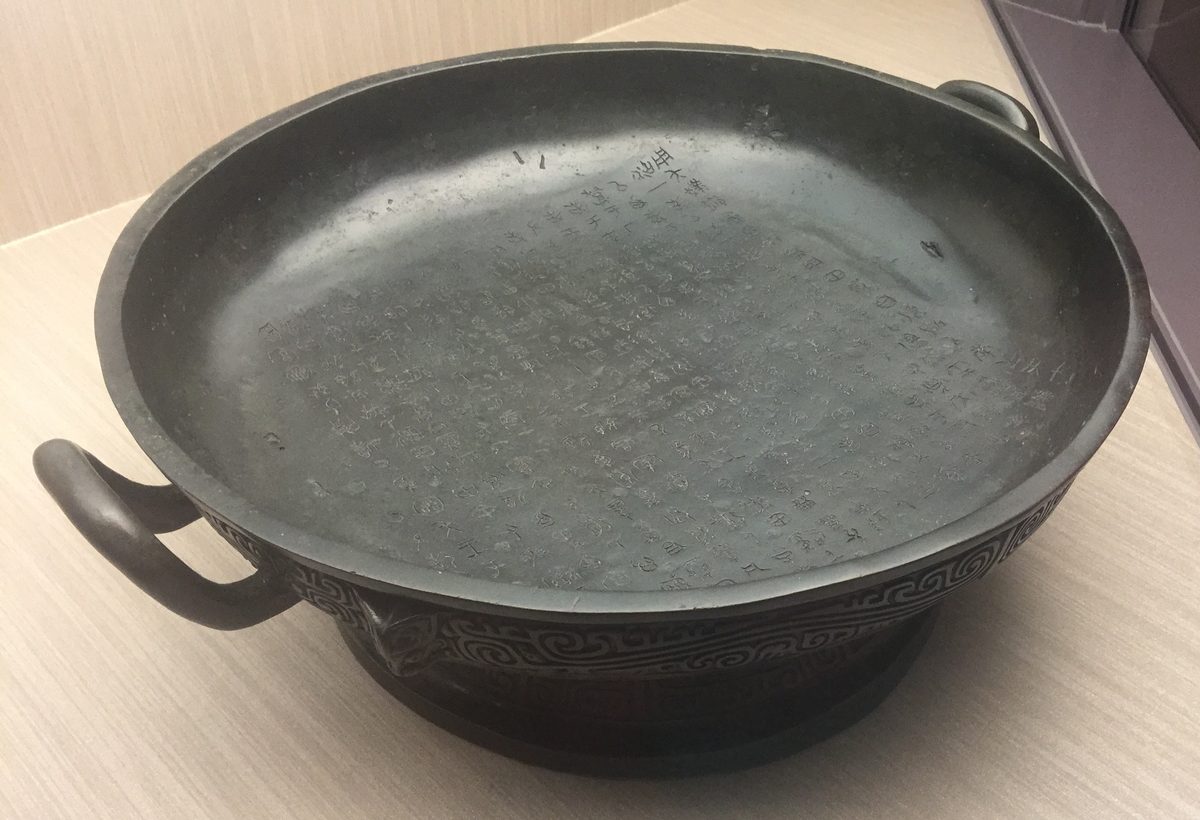
National Palace Museum, Taipei
Own work, CC BY-SA 4.0, Wikimedia Commons

Rubbing of the inscription
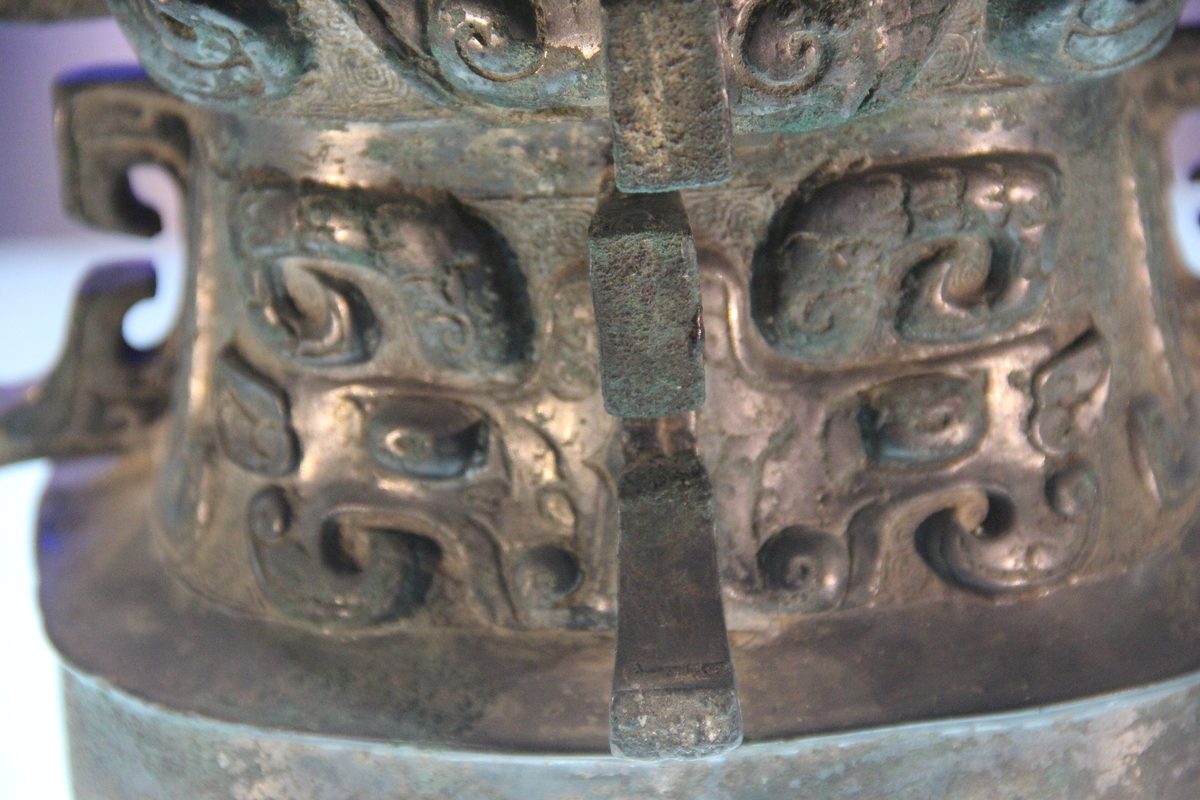
Baoji Bronze Ware Museum
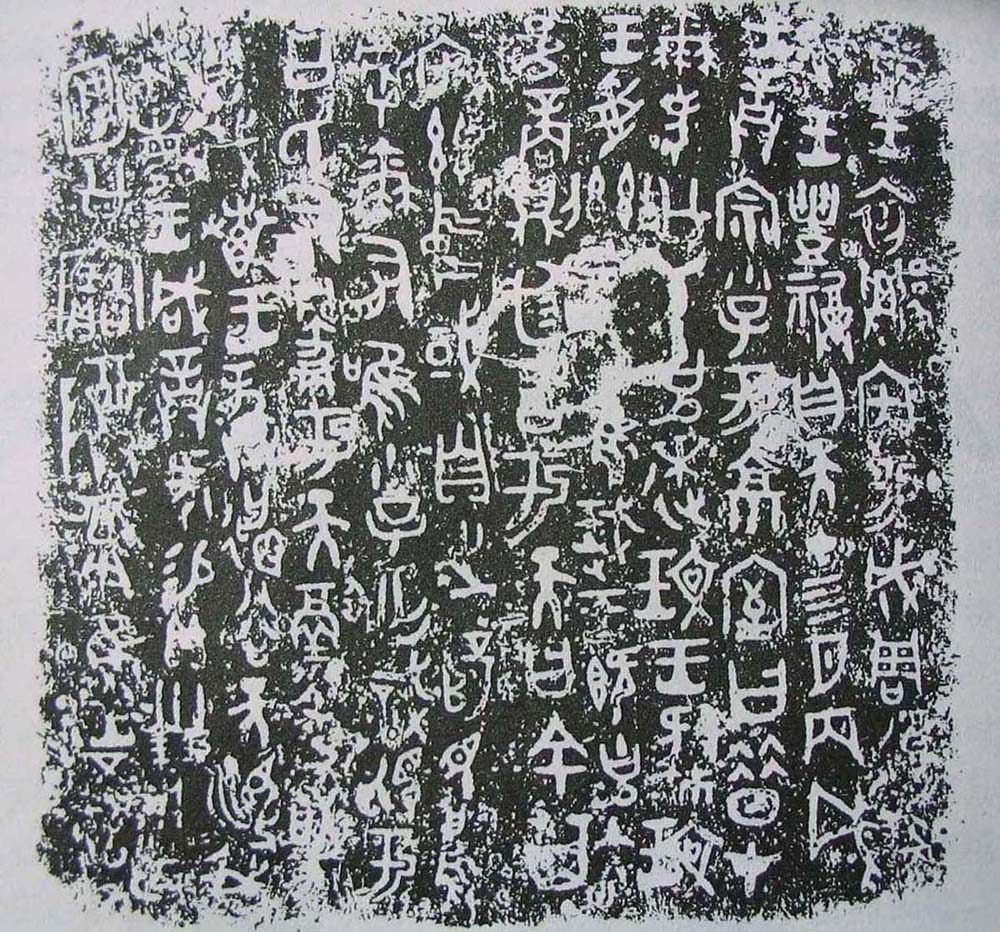
Rubbing of the inscription ("dwell in this central land")
Western Zhou; inscription records King Wu's conquest of the Shang; National Museum of China
Famous pieces. The Houmuwu Ding, formerly called the Simuwu Ding, from Yinxu at Anyang in Henan, is the heaviest known Shang bronze, a rectangular vessel on four legs decorated with beast faces. The Four-Ram Square Zun from Ningxiang, Hunan (now part of Changsha), has a curly-horned ram's head projecting from each corner, fusing sculpture in the round with the vessel form. Both are now in the National Museum of China. The tomb of Fu Hao at Yinxu yielded several hundred bronzes. Fu Hao, a consort of the Shang king Wu Ding, appears in oracle-bone inscriptions; the owl-shaped zun from her tomb is strikingly unusual.
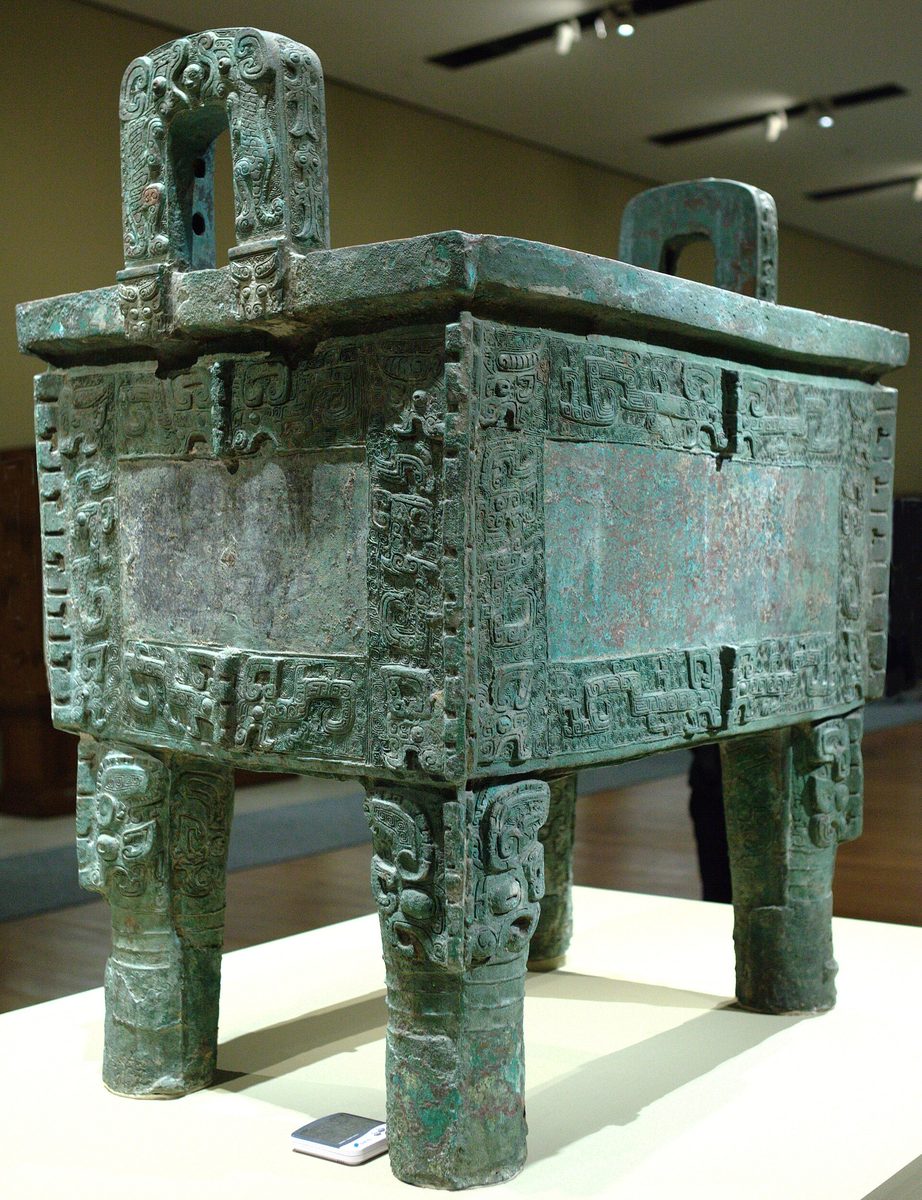
National Museum of China
Mlogic / Own work, CC BY-SA 3.0, Wikimedia Commons
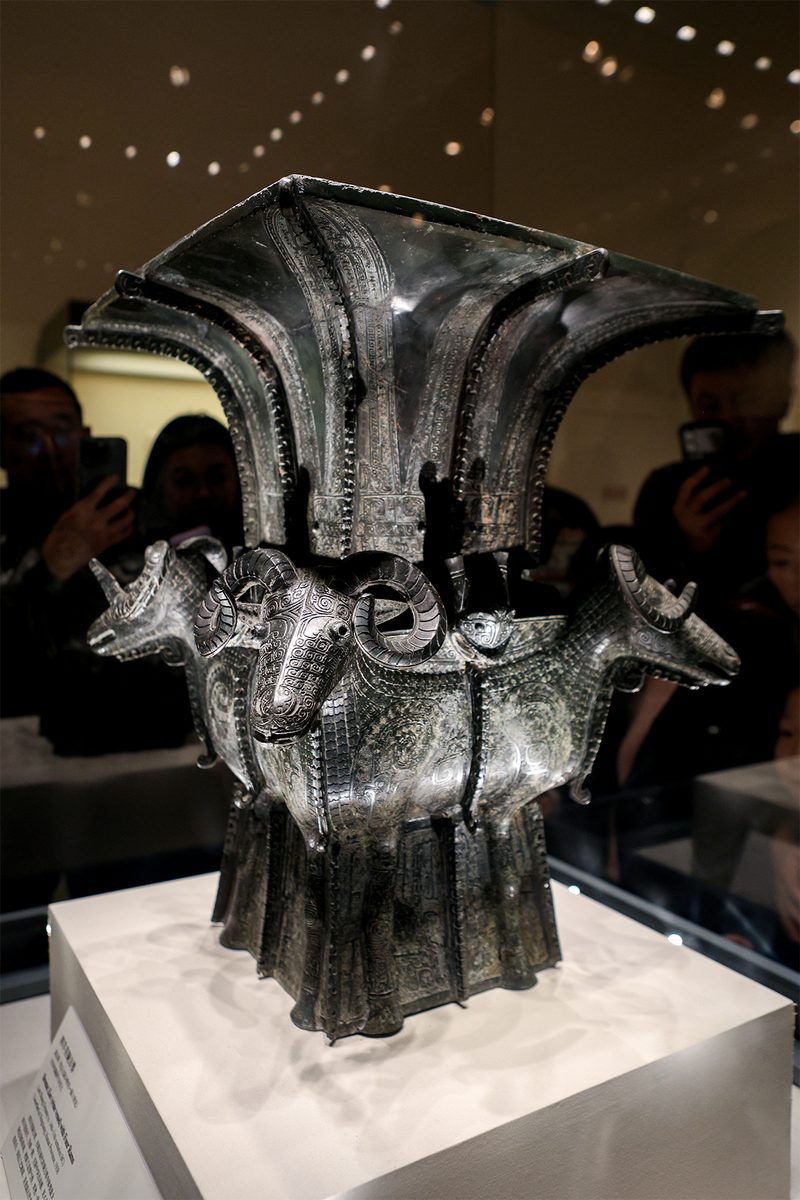
National Museum of China
Windmemories / Own work, CC BY-SA 4.0, Wikimedia Commons
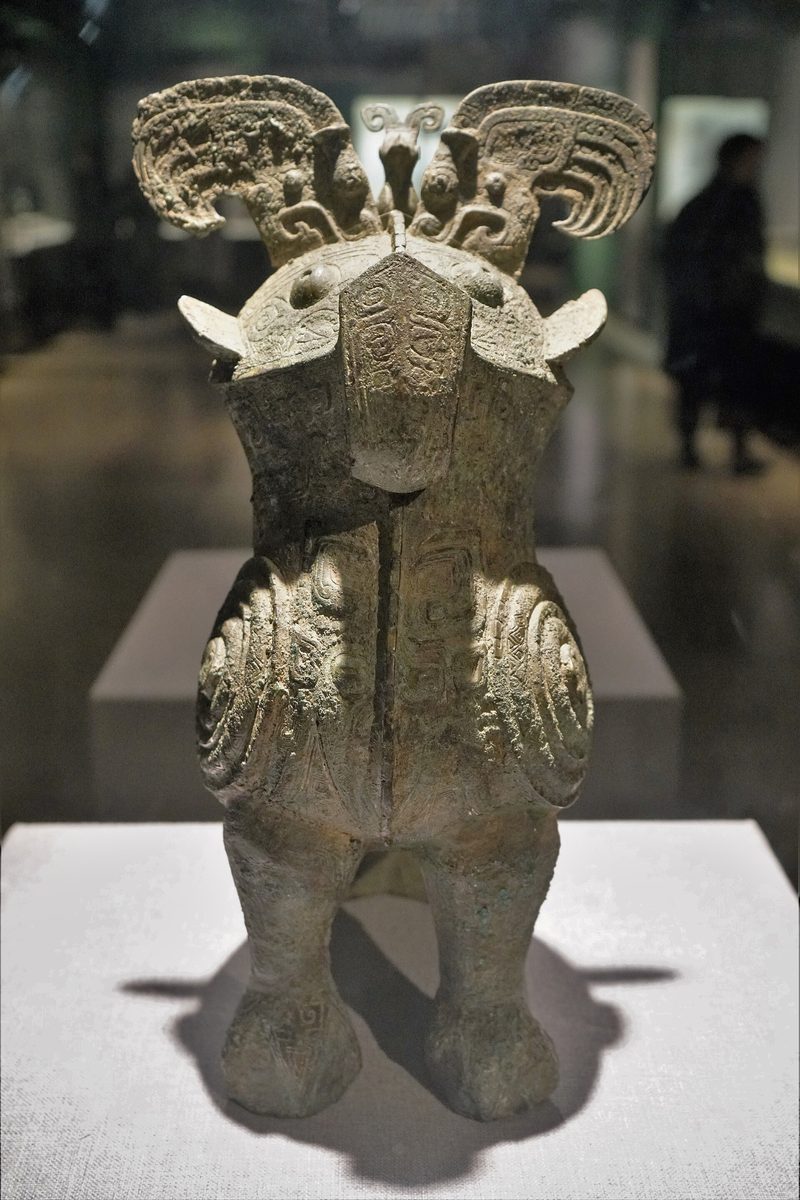
Henan Museum
Cangminzho / Own work, CC BY-SA 4.0, Wikimedia Commons
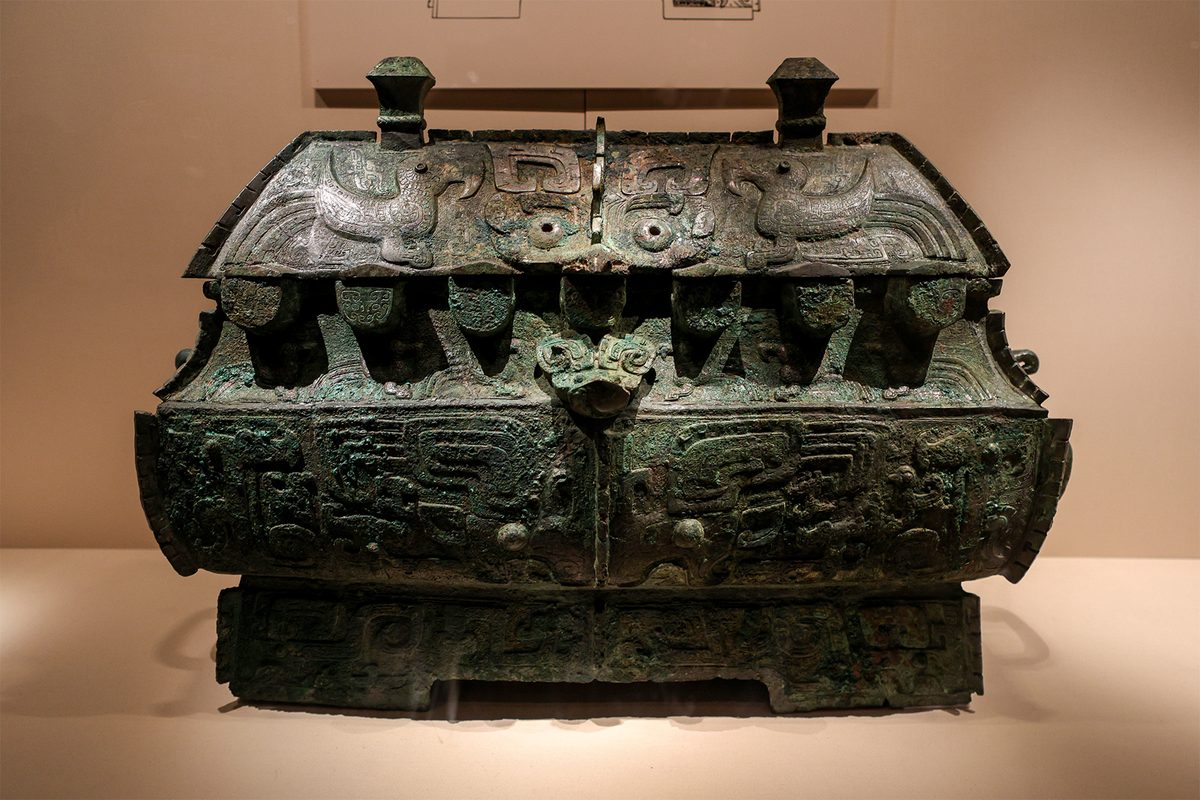
Fu Hao's double fangyi / fangyi; National Museum of China
Windmemories / Own work, CC BY-SA 4.0, Wikimedia Commons
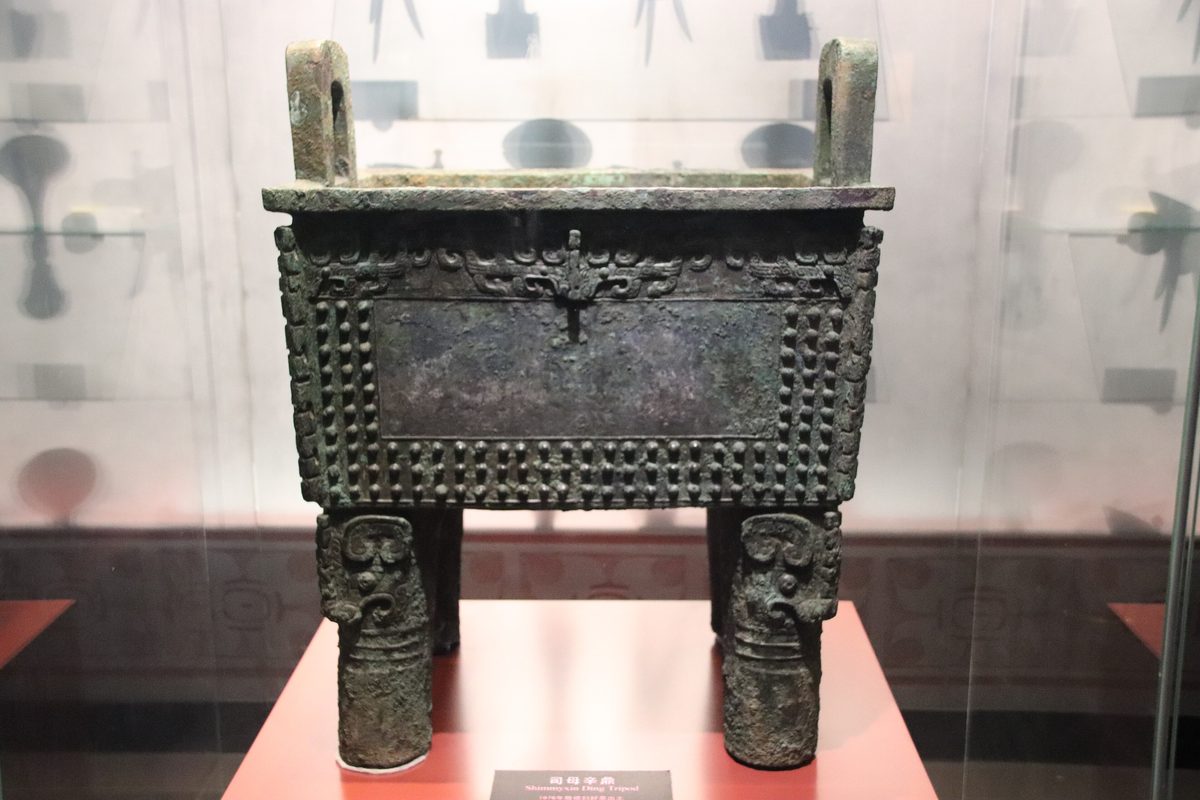
Bronze ding from the tomb of Fu Hao
Changes in the Eastern Zhou. In the Spring and Autumn and Warring States periods, each feudal state cast its own bronzes, and styles became more varied, moving from solemn mystery to lightness and elegance. The Square Hu with Lotus and Crane from Xinzheng, Henan (a pair, now divided between the Henan Museum and the Palace Museum), has a lid of double lotus petals with a crane about to take flight standing in the center, and is regarded as typical of the new style. New techniques included gold and silver inlay (grooves cut into the surface and filled with gold and silver wire and sheet), copper inlay, and pictorial bands showing hunting, feasting and battle. The bells of Marquis Yi of Zeng from Suizhou, Hubei (now in the Hubei Provincial Museum), each sound two notes when struck, and their inscriptions record musical theory; together they show the height of pre-Qin music and casting. The zun and pan from the same tomb carry intricate openwork, and whether they were cast by the lost-wax method is debated.

Hubei Provincial Museum
YouTable / Own work, CC BY-SA 4.0, Wikimedia Commons
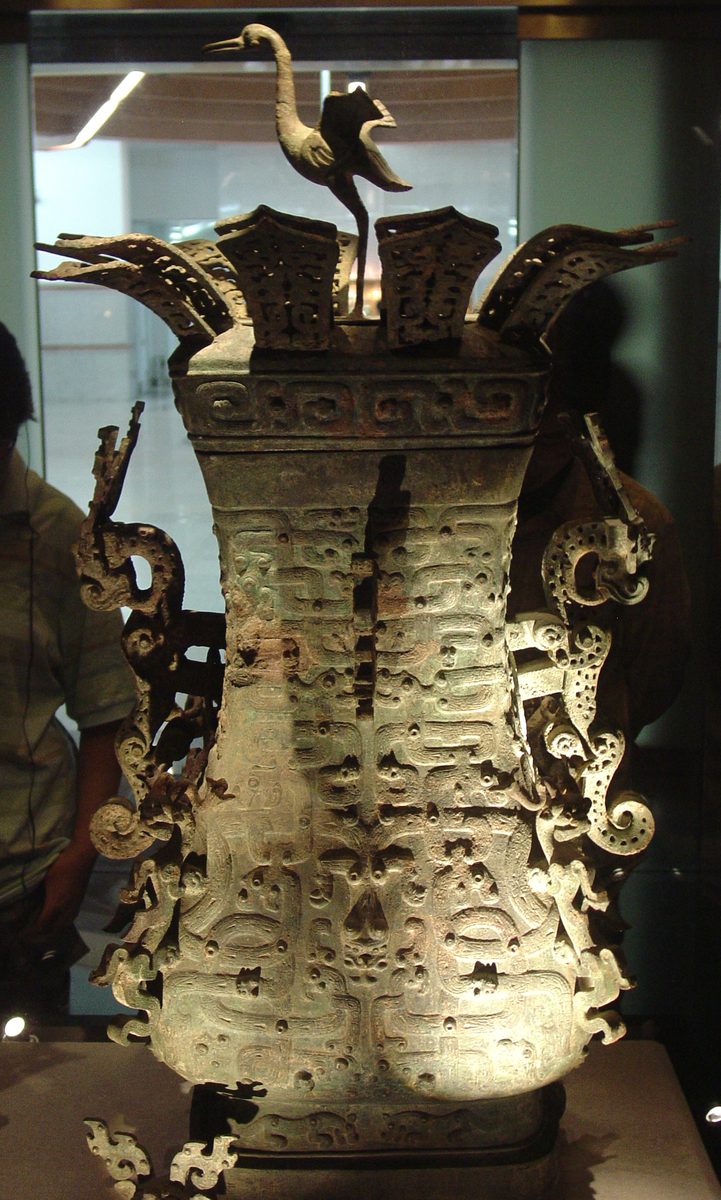
Henan Museum
G41rn8 / Own work, CC BY-SA 4.0, Wikimedia Commons

From the tomb of a Warring States king of Zhongshan; Hebei Museum
Baomi, CC BY-SA 4.0, Wikimedia Commons
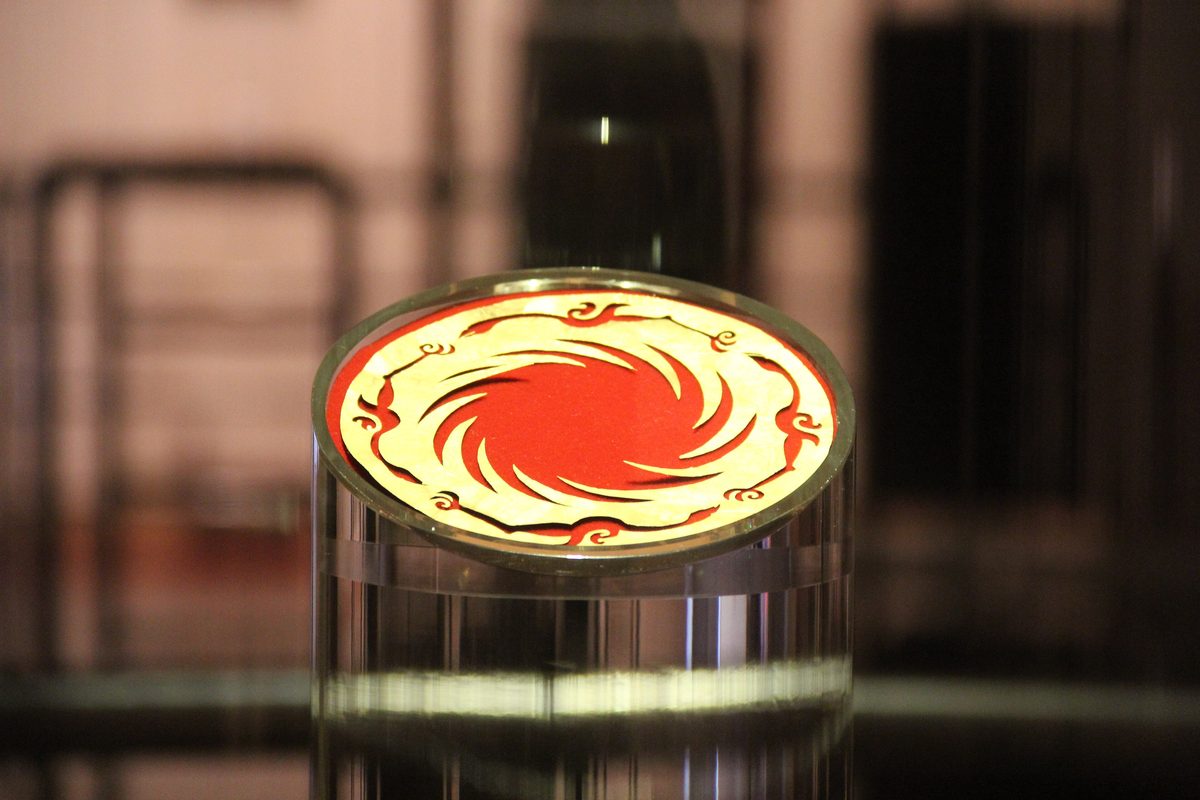
Sanxingdui and Jinsha. The bronzes from Sanxingdui in Guanghan, Sichuan, are entirely unlike those of the Central Plains: a tall standing bronze figure, masks with protruding eyes, a bronze sacred tree about four meters high, as well as gold masks and a gold staff. The Jinsha site in Chengdu continues the Sanxingdui tradition; its Sun and Immortal Birds gold ornament is a thin sheet of gold foil cut with four birds circling a whirling sun. The origins of this culture and the use of these objects remain largely unexplained.
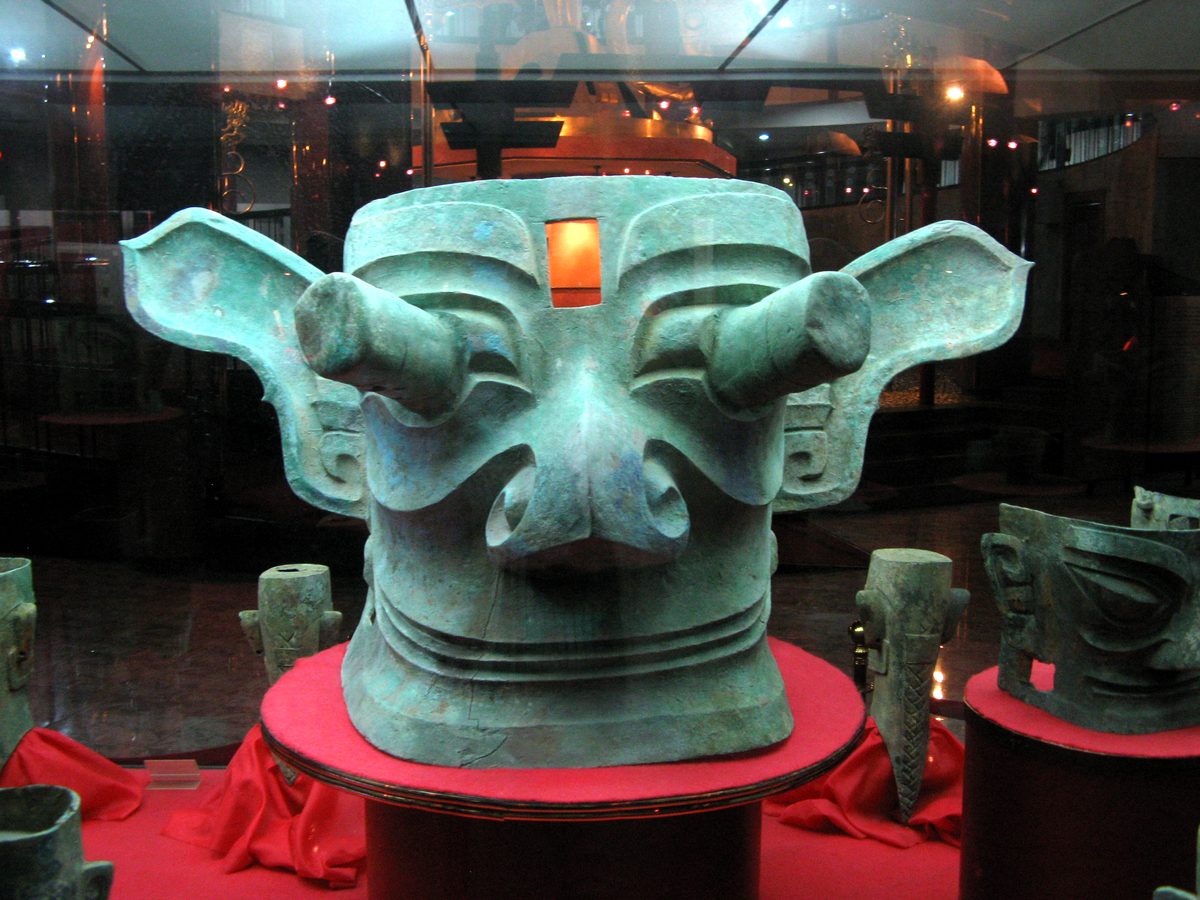
G41rn8 / Own work, CC BY-SA 4.0, Wikimedia Commons
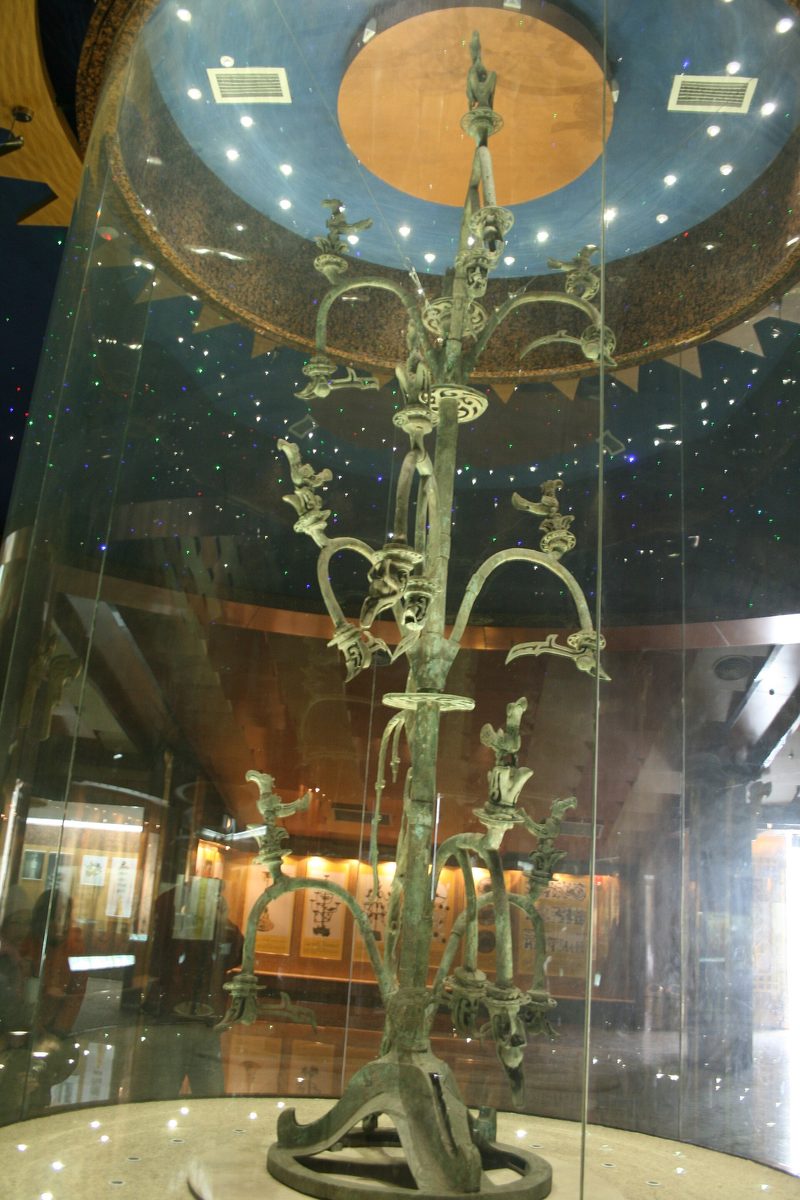
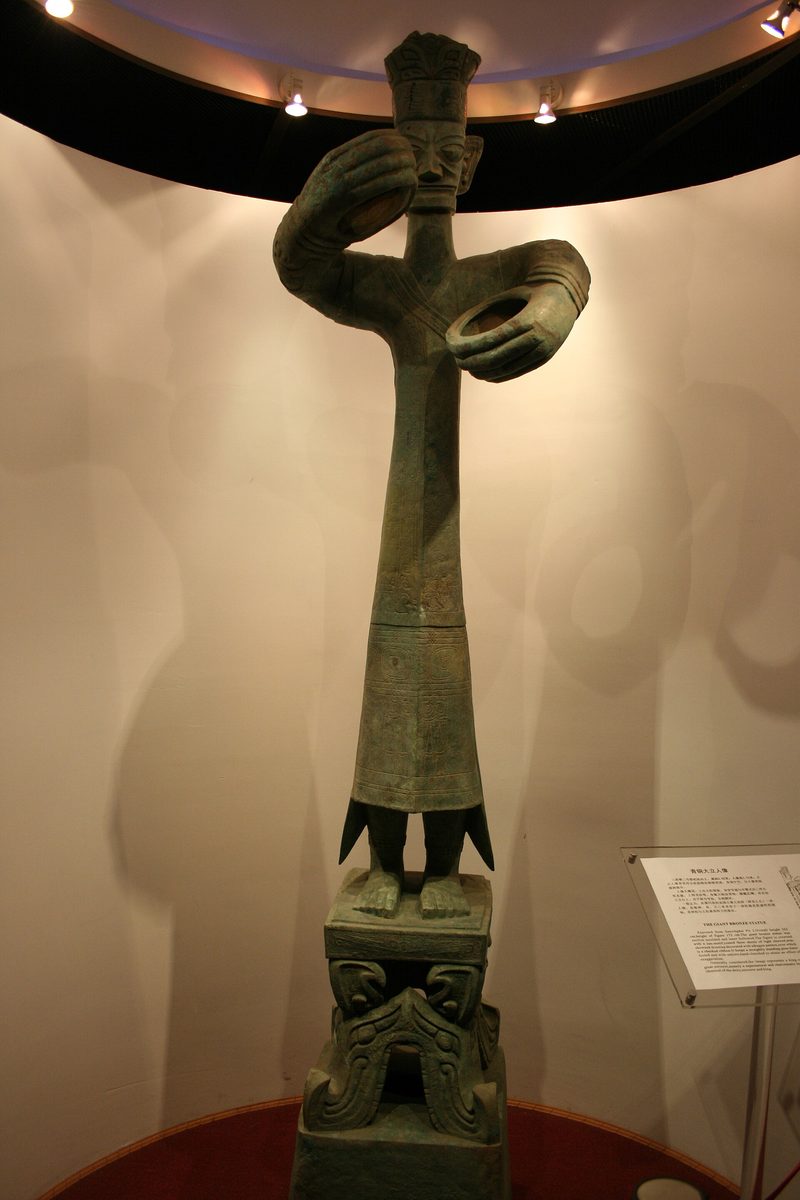
Sanxingdui Museum
Jade, lacquer and the earliest paintings. Shang and Zhou jades continue prehistoric traditions, mostly flat dragons, phoenixes and human figures, their lines changing over time from stiff and straight to rounded. Lacquerware flourished in the Warring States state of Chu, usually red painting on black, with patterns flowing like clouds. The earliest surviving independent paintings are two silk paintings from Warring States Chu tombs, both from Changsha and now in the Hunan Museum: Lady with Dragon and Phoenix shows a woman in profile with hands joined, a dragon and phoenix above her; Man Riding a Dragon shows a man driving a dragon. Both are drawn in ink outline, with lines already varying in thickness, and are generally thought to guide the soul of the deceased to heaven.
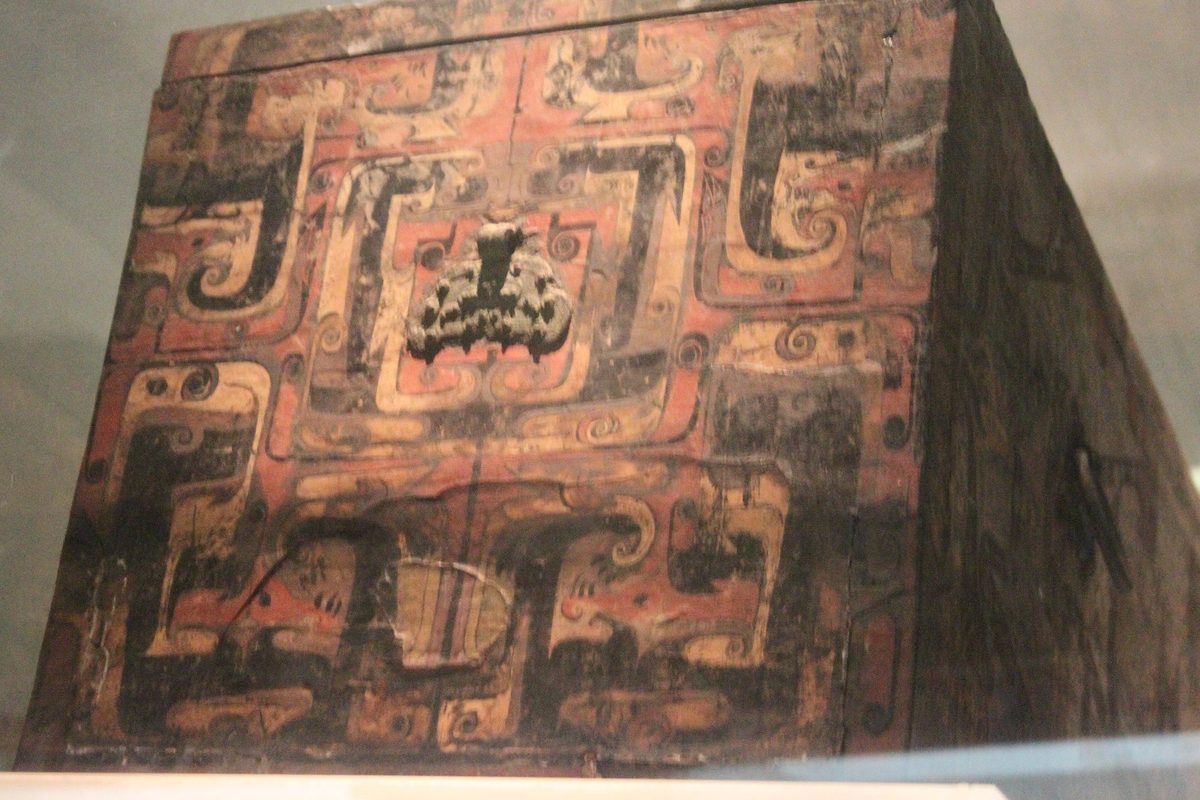
Lacquer coffin from the tomb of Marquis Yi of Zeng (Chu culture)
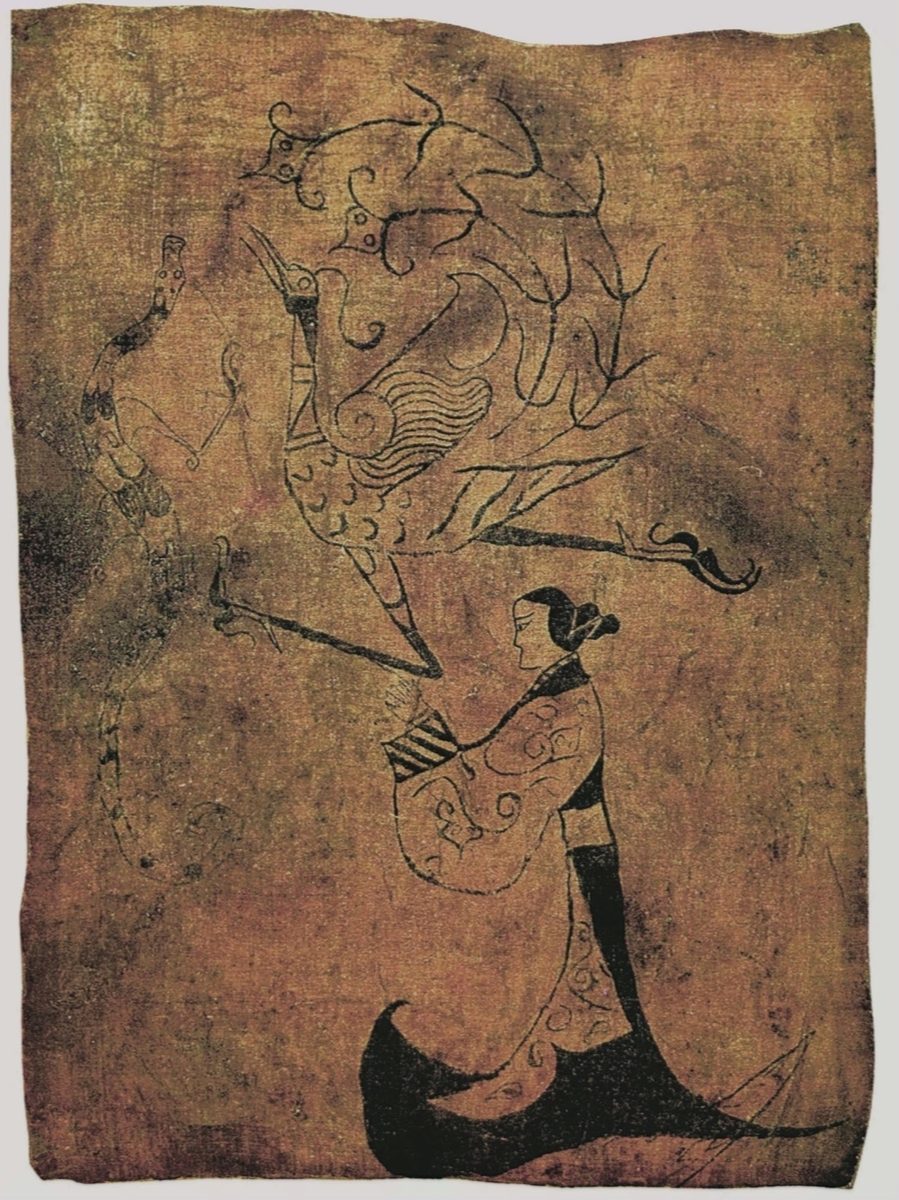
Chu tomb at Chenjiadashan, Changsha; Hunan Museum

Line drawing traced from the original by Park of China
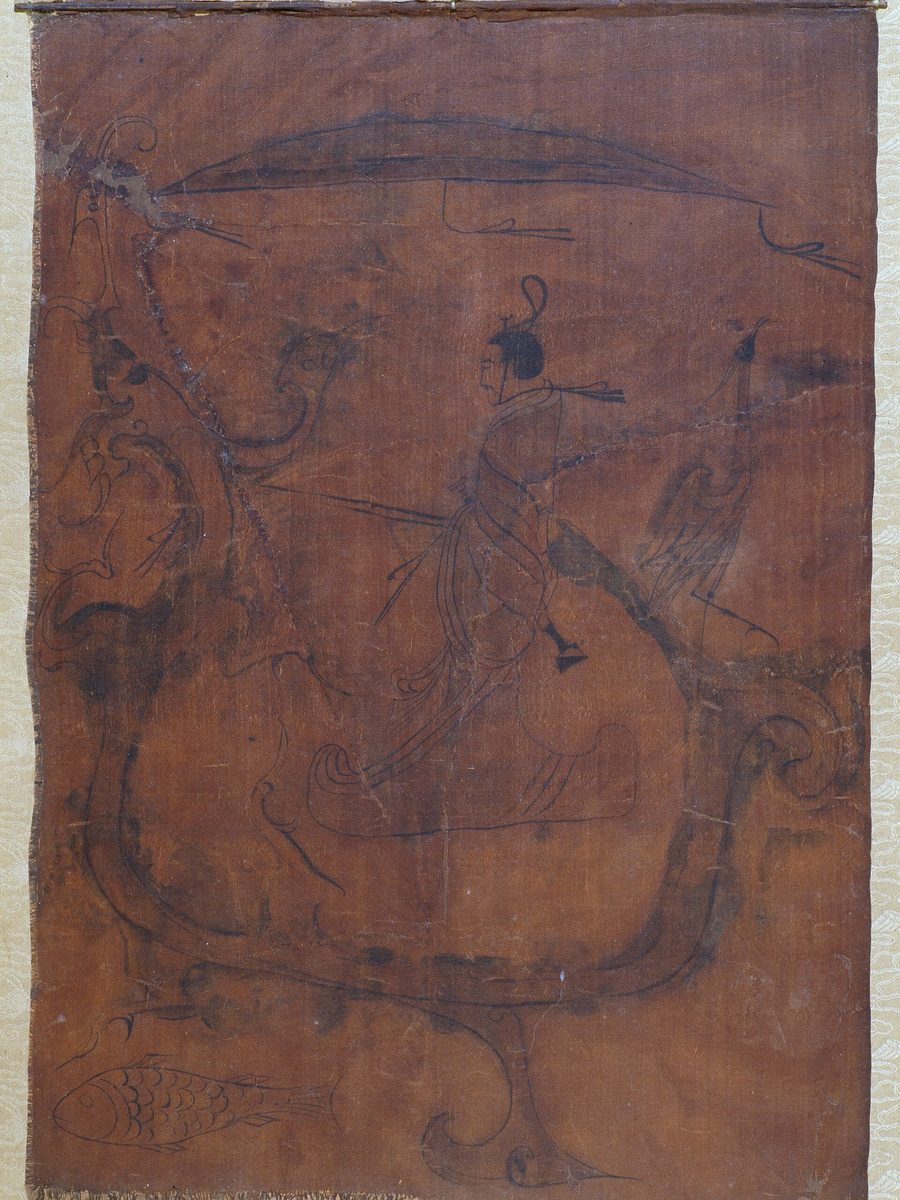
Chu tomb at Zidanku, Changsha; Hunan Museum
Representative works
| Work | Period | Type | Collection | Notes | |
|---|---|---|---|---|---|
| Turquoise Dragon↑ | Xia (Erlitou culture) | Turquoise inlay | Excavated at Erlitou; assembled from more than two thousand pieces of turquoise. | |
| Houmuwu Ding↑ | Shang | Bronze ding | National Museum of China | Excavated at Yinxu, Anyang; the heaviest known Shang bronze. |
| Four-Ram Square Zun↑ | Shang | Bronze zun | National Museum of China | Found at Ningxiang, Hunan; the rams' heads at the corners are sculpted in the round. |
| Owl-shaped Zun of Fu Hao↑ | Shang | Bronze zun | Henan Museum | From the tomb of Fu Hao at Yinxu; one of a pair, the other in the National Museum of China. |
| Li Gui↑ | Western Zhou | Bronze gui | National Museum of China | Inscription records King Wu's conquest of the Shang. |
| He Zun↑ | Western Zhou | Bronze zun | Baoji Bronze Ware Museum | Inscription contains "dwell in this central land". |
| Da Yu Ding↑ | Western Zhou | Bronze ding | National Museum of China | Long inscription records King Kang admonishing Yu. |
| Square Hu with Lotus and Crane↑ | Spring and Autumn | Bronze hu | Henan Museum | Found at Xinzheng; one of a pair, the other in the Palace Museum. |
| Bells of Marquis Yi of Zeng↑ | Warring States | Bronze chime bells | Hubei Provincial Museum | Found at Suizhou; each bell sounds two notes, and the inscriptions record musical theory. |
| Zun and Pan of Marquis Yi of Zeng↑ | Warring States | Bronze zun and pan | Hubei Provincial Museum | Intricate openwork decoration. |
| Table Base with Four Dragons and Four Phoenixes, Inlaid with Gold and Silver↑ | Warring States | Bronze | Hebei Museum | From the tomb of a king of Zhongshan at Pingshan, Hebei; a masterpiece of gold and silver inlay. |
| Standing Bronze Figure↑ | Shang (Sanxingdui culture) | Bronze figure | Sanxingdui Museum | Excavated at Sanxingdui, Guanghan. |
| Bronze Mask with Protruding Eyes↑ | Shang (Sanxingdui culture) | Bronze mask | Sanxingdui Museum | The eyeballs project like columns. |
| Bronze Sacred Tree↑ | Shang (Sanxingdui culture) | Bronze | Sanxingdui Museum | Birds perch on the branches; some see it as the mythical Fusang tree. |
| Sun and Immortal Birds Gold Ornament↑ | Late Shang to early Zhou (Jinsha site) | Gold | Jinsha Site Museum, Chengdu | Cut with four birds circling a whirling sun. |
| Silk Painting of a Lady with Dragon and Phoenix↑ | Warring States | Painting on silk | Hunan Museum | From a Chu tomb at Chenjiadashan, Changsha; one of the earliest surviving independent paintings. |
| Silk Painting of a Man Riding a Dragon↑ | Warring States | Painting on silk | Hunan Museum | From a Chu tomb at Zidanku, Changsha. |
← Chapter 1: Prehistory (Neolithic)ContentsChapter 3: Qin and Han →