 Park of China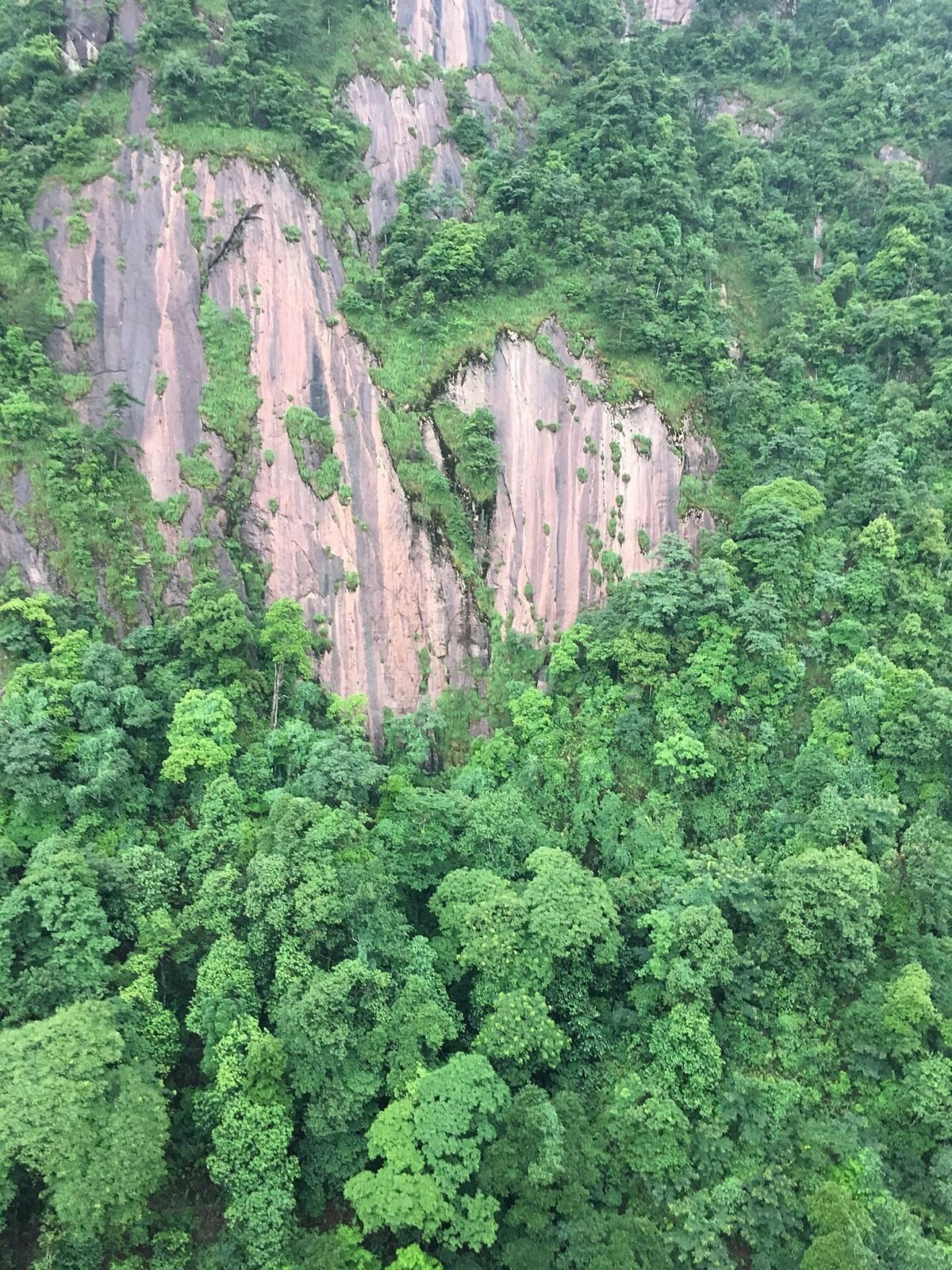
Overview
| Designation | National Park of China (second batch) |
| Province | Zhejiang |
| Location | Tiantai County, Taizhou, central Zhejiang |
| Latitude, longitude | 29.2, 121.0 Google Maps |
| Highlights | Scenery; Buddhism and Taoism; home of the monk Jigong |
| Top sights | Guoqing Temple, the Stone Bridge waterfall |
| Area | 187 km² |
| Highest point | 1,138 m |
| Nearby cities | Taizhou (Zhejiang), Ningbo |
| Nearby sites | Mount Yandang 90km, The Grand Canal 93km, West Lake, Hangzhou 147km, Fuchun and Xin’an Rivers 153km, Mount Putuo 161km Search nearby |
| Themes | Mountain, Famous Mountain, Buddha, Temple, Statue, Museum, Culture, Taoism, Small Waterfall |
About
The Mount Tiantai scenic area in Tiantai County, Taizhou, central Zhejiang, covers 187 km², “divine scenery, the root of Buddhism and Taoism”; the main peak, Huading, is 1,138 m. The Ming traveller Xu Xiake wrote a Diary of a Journey to Mount Tiantai.
It is in the second batch of national parks of China (national scenic areas) named by the State Council in 1988.
Travel tips
Getting there: Tiantai County has a high-speed station (Tiantaishan station on the Hangzhou-Shaoxing-Taizhou line), reachable from Hangzhou and Taizhou; from the station you need a bus or taxi to Guoqing Temple and the scenic areas. Long-distance buses also run from Ningbo and Taizhou to the county town.
Guoqing Temple: it lies north of the county town and is the ancestral temple of the Tiantai school. Inside are the Sui Plum and the pagoda of the monk Yixing, which can be seen on the way.
Stone Bridge Waterfall: it is near Fangguang Temple, where a rock arch spans two hills with a waterfall below. It looks best when the water is high, particularly after spring and summer rain.
Huading: the main peak, Huading Mountain, has Huading Temple and a sunrise platform at the top, with views of sunrise and sea of clouds. It is cold up there and often foggy.
Other sights: Qiongtai Gorge, Hanyan and others are scattered across the county and not close together, so you need a car or a hired vehicle.
Time: Guoqing Temple and the waterfall make a one-day trip; allow two days to climb Huading and see more.
Season: azaleas bloom on Huading in April and May; summer is cool, autumn colour is good, and in winter the ground on Huading may be icy.
Where to stay: the county town and the area near Guoqing Temple have lodging; there is little on Huading Mountain, so book ahead.
Scenery
Its character is “ancient, graceful, strange and secluded”: Spring Dawn at Taoyuan, Rosy Clouds at Chicheng, the Stone Bridge waterfall, the Returning Waves of the Two Streams, Clouds Returning to Huading, Night Moon at Qiongtai, Fishing Boat on Luoxi Stream and Sunset at Hanyan.
The Stone Bridge north-east of Guoqing Temple is a huge rock spanning two hills like a roof beam, with a waterfall plunging beneath it.
Culture
In the Sui dynasty the monk Zhiyi founded here the first Chinese school of Buddhism, the Tiantai school, whose teachings later spread to Japan and Korea. The famous surviving temples are Guoqing, Fangguang and Gaoming; Guoqing, the ancestral temple of the school, is one of the four great temples of China.
Guoqing Temple covers 19,600 m² with four halls (Maitreya, Yuhua, the Great Buddha Hall and Guanyin), five towers (bell, drum, abbot’s, pagoda-side and sutra library), four halls (Miaofa, Anyang, refectory and guest hall), two pavilions (Plum and Clear Heart) and a relics room holding over 2,000 objects. The bronze Shakyamuni in the main hall weighs 13 tonnes; the eighteen arhats beside it are carved in nanmu and gilded, with a fine mural of Guanyin ferrying all beings behind. The plum before the Plum Pavilion is said to have been planted by the fifth patriarch, the “Sui Plum”.
Outside the temple are relics of the Tang monk and astronomer Yixing and of the poet-monks Hanshan, Shide and Fenggan. Tiantai is also the home of the monk Jigong, with a Jigong hall on Chicheng Hill.
The mountain is the ancestral seat of the southern school of Taoism too: in the Eastern Han Ge Xuan founded the Tiantai school, and in the Northern Song the local Zhang Boduan founded the Ziyang school, honoured as the founder of the southern lineage. Tongbai Mountain in the scenic area is the southern school’s ancestral temple and the Yujing Cave on Chicheng the sixth of the ten Taoist “grotto heavens”.
Nearby
| World Heritage | The Grand Canal 93km, West Lake, Hangzhou 147km, Archaeological Ruins of Liangzhu City 168km, Classical Gardens of Suzhou 239km |
| National parks of China | Wuyishan National Park 345km |
| National parks | Mount Tianmu (Tianlao) 20km, Xianju Scenic Area 38km, Dapan Mountain 57km, Mount Xuedou 59km |
| Detailed guides | Mount Fang 86km, Changyu Caves 92km |
| AAAAA attractions | Taizhou Prefectural City Cultural Tourist Area 38km, Xikou-Tengtou Tourist Area 62km, Hengdian World Studios Scenic Area 71km, Tianyi Pavilion - Moon Lake Scenic Area 91km |
| AAAA attractions | Nanpingxiang Scenic Area 14km, Wulongxia 30km, Qiantong Ancient Town 31km, Yong’anxi Leisure Greenway 33km |
| Historic cities | Linhai 38km, Ningbo 92km |
| Cities | Hangzhou 147km |
| Historical sites | Guoqing Temple 1km |
| National geoparks | Linhai National Geopark 37km |
| Nature reserves | Dapanshan National Nature Reserve 54km, Xiangshan Jiushan Islands National Nature Reserve 117km, Jiulongshan National Nature Reserve 136km |
| Historic towns | Qiantong Town 31km |
| Historic villages | Zhangsi Village 18km, Longgong Village 32km |