 Park of China

Overview
| Name | Dule Temple 独乐寺 |
| Web address | https://parkofchina.com/en/dulesi.html |
| Designation | Major Historical and Cultural Site Protected at the National Level (first batch, 1961); National 4A tourist attraction |
| Province | Tianjin |
| Location | West Street of the old town, Jizhou District, Tianjin |
| Latitude, longitude | 40.04, 117.40 Google Maps |
| Highlights | Liao-dynasty timber pavilion and gate, Liao clay statue of the eleven-headed Guanyin |
| Top sights | Guanyin Pavilion, eleven-headed Guanyin, gate hall, guardian statues |
| Nearby cities | Beijing, Tianjin, Tangshan |
| Nearby sites | Eastern Qing Tombs, The Temple of Heaven, Beijing, The Forbidden City (Palace Museum), Beijing, The Summer Palace, Beijing |
| Themes | Ancient Building, Temple, Buddha, Statue, Tower |
About
Dule Temple (Temple of Solitary Joy), on West Street in the old town of Jizhou District, Tianjin, popularly called the Great Buddha Temple, is one of the most important Liao-dynasty temples surviving in China. Its founding date is uncertain, but it existed in the Tang; the gate hall and the Guanyin Pavilion that stand today were rebuilt under the Liao, and it was in the first batch of Major Historical and Cultural Sites Protected at the National Level.
The Guanyin Pavilion has two storeys outside and three inside (with a hidden mezzanine), rises over twenty metres and is one of the oldest timber pavilions in China. The clay statue of the eleven-headed Guanyin at its centre, about sixteen metres tall, is one of the largest ancient clay statues in China; its head reaches the third floor, and the pavilion is built around it with an open well in the middle. Over a thousand years the area has suffered several great earthquakes, and the pavilion still stands intact.

The gate hall, with its gently sloping roof and massive brackets under the eaves, still shows the style of Tang architecture. Inside stand two Liao clay guardian figures, popularly known as Heng and Ha.
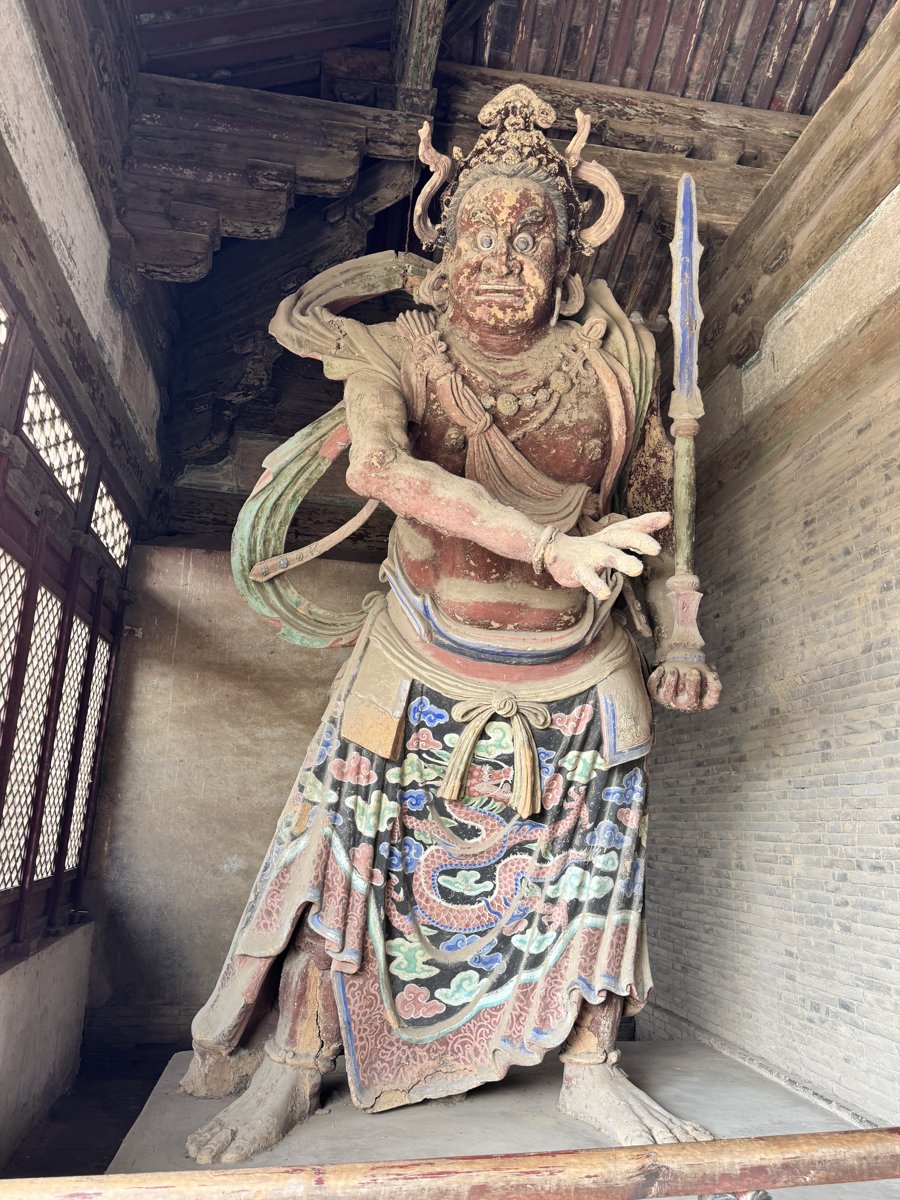

In 1932 the architect Liang Sicheng surveyed the temple and published a study of its pavilion and gate, one of the first studies of old Chinese buildings by Chinese scholars using modern methods. He described Dule Temple as “carrying on the legacy of the Tang and opening the way to the Song style of building”. In the east of the temple is a travelling palace built under the Qianlong Emperor of the Qing. Panshan, north-west of the town, is a national scenic area.

Travel tips
Getting there: Jizhou is about two hours by road from central Tianjin or Beijing.
Sightseeing: The temple is small and takes an hour or two; it can be combined with Panshan on the same day.
Nearby
| World Heritage | Tongzhou Section of Tonghui Canal 66km, The Temple of Heaven, Beijing 86km, The Forbidden City (Palace Museum), Beijing 87km, Beijing Central Axis: A Building Ensemble Exhibiting the Ideal Order of the Chinese Capital 87km |
| National parks | Mount Pan 13km, Badaling–Ming Tombs Scenic Area 122km, Stone Flower Cave 126km, Yesanpo 194km |
| Detailed guides | Shidu 161km |
| AAAAA attractions | Eastern Qing Tombs 26km, Jinshanling Great Wall Scenic Area 72km, Tangshan Nanhu Kailuan Tourist Area 82km, Olympic Park 86km |
| AAAA attractions | Guojiagou 16km, Jinhai Lake 17km, Limutai 17km, Huangyaguan 21km |
| UNESCO Global Geoparks | Yanqing UNESCO Global Geopark 128km |
| Cities | Tangshan 81km, Beijing 86km, Tianjin 95km |
| Historical sites | Jixian White Pagoda <1km, Qianxiang Temple Statues 10km, Former Front Command of the Pingjin Campaign 11km, Shangzhai Site 18km |
| National geoparks | Jizhou National Geopark <1km, Xinglong National Geopark 58km, Qian'an National Geopark 111km, Yanqing Petrified Wood National Geopark 113km |
| Nature reserves | Baxianshan National Nature Reserve 22km, Wulingshan National Nature Reserve 64km, Songshan National Nature Reserve 144km, Dahaituo National Nature Reserve 146km |
| Historic villages | Xijingyu Village 3km, Jiaozhuanghu Village 50km |