 Park of China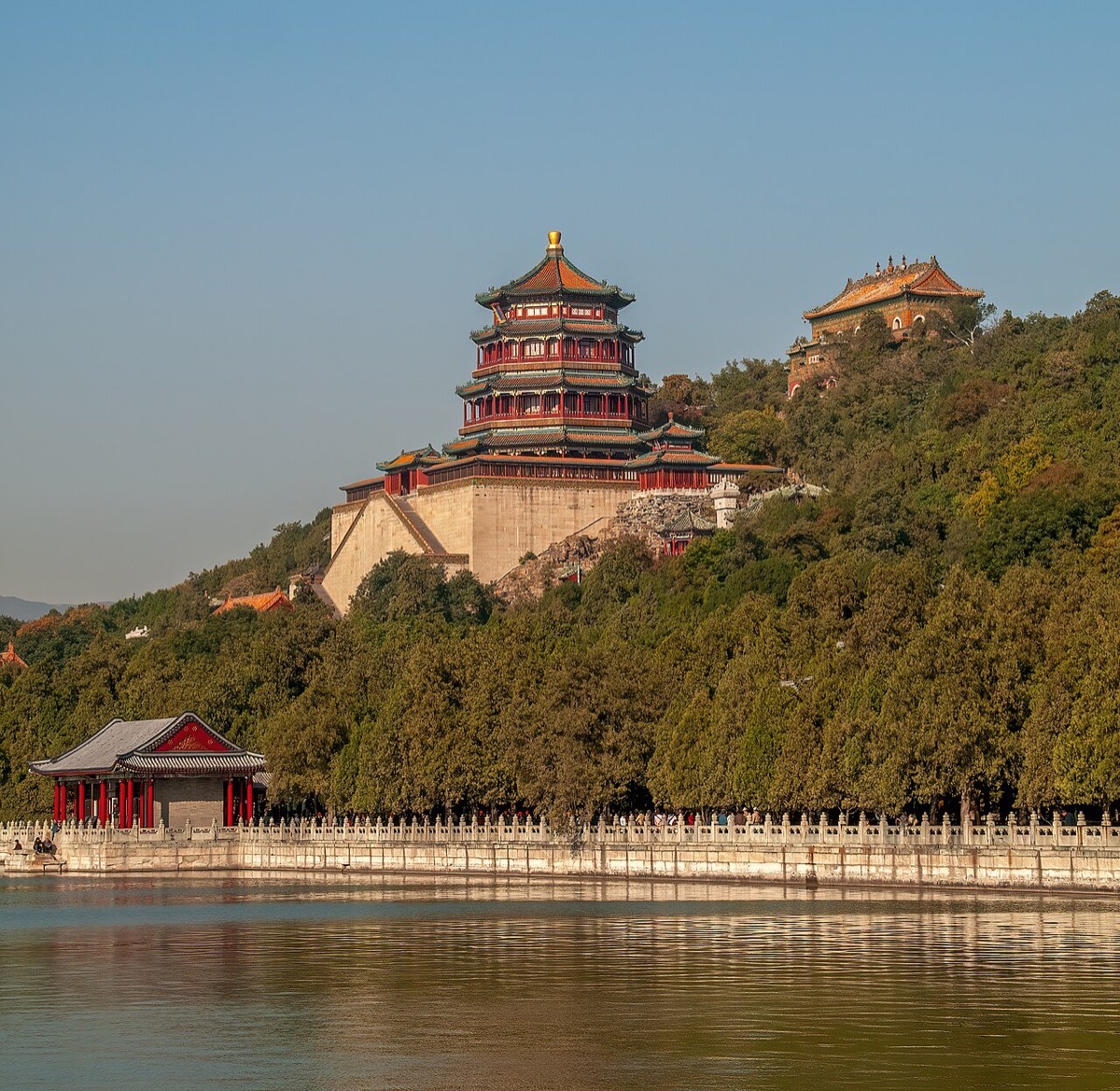
Overview
| Designation | UNESCO World Heritage (cultural, 1998) AAAAA tourist attraction |
| Province | Beijing |
| Location | Haidian District, north-west Beijing |
| Latitude, longitude | 40.0, 116.3 Google Maps |
| Nearby cities | Tianjin |
| Highlights | Imperial garden |
| Top sights | Longevity Hill, Kunming Lake |
| Area | 3 km² |
| Nearby sites | The Forbidden City (Palace Museum), Beijing 13km, The Temple of Heaven, Beijing 17km, Ming Tombs 34km, Chengde Mountain Resort and its Outlying Temples 180km Search nearby |
| Official website | Summer Palace Administration |
| Themes | Lake, Garden, Tower, Palace, Ancient Building, Big City, Culture, Stamp, Banknote, Hill, Imperial palaces & gardens, Chinese gardens, Old bridges |
About
The Summer Palace (Yiheyuan), originally the Garden of Clear Ripples, lies at the foot of the Western Hills in Haidian District, north-west Beijing. It was built in the Qianlong reign of the Qing dynasty and rebuilt under the Guangxu Emperor. Centred on Longevity Hill and Kunming Lake and covering about 3 km², it is a large imperial garden.
Longevity Hill stands on the north shore of Kunming Lake and is divided into a front and a back hill. On the front hill are the East Palace Gate, the Hall of Benevolence and Longevity, the great theatre of the Garden of Virtue and Harmony, the Long Corridor, the Hall of Dispelling Clouds, the Tower of Buddhist Incense, the Sea of Wisdom and the Marble Boat. On the back hill are Suzhou Street and the Garden of Harmonious Interest.
Nanhu Island, in the southern part of the lake, is joined to the east dyke by the Seventeen-Arch Bridge.
The east and west dykes of Kunming Lake imitate the Bai and Su causeways of West Lake in Hangzhou; like the Su Causeway, the west dyke carries six bridges.
The Qianlong Emperor built the Garden of Clear Ripples in 1750 for his mother's birthday. Anglo-French forces burned it in 1860; the court rebuilt it with diverted navy funds and renamed it Yiheyuan in 1888. It was damaged again by the Eight-Nation Alliance in 1900 and later repaired.
The Tower of Buddhist Incense, the centrepiece of the garden, is an octagonal three-storey tower with four tiers of eaves, about 41 m high on a stone terrace some 20 m high; the present building was rebuilt in 1891.
The Long Corridor at the foot of Longevity Hill is 728 m long with 273 bays, its beams carrying more than 14,000 painted scenes.
The Seventeen-Arch Bridge, built in the Qianlong reign, is 150 m long and 8 m wide, the longest bridge in the garden.
The great theatre of the Garden of Virtue and Harmony was built for Empress Dowager Cixi's sixtieth birthday, begun in 1891; it is 21 m high with three stages.
It was inscribed on the UNESCO World Heritage List in 1998, as a cultural site.

Travel tips
Getting there: take Metro Line 4 to Beigongmen, next to the North Palace Gate, or Line 4 or Line 16 to Xiyuan and walk to the East Palace Gate.
Tickets: book online in advance under your real name and bring the same ID to enter; holiday dates fill up.
Visiting: a common route enters by the East Palace Gate, passes the Hall of Benevolence and Longevity and the Garden of Virtue and Harmony, follows the Long Corridor to the Hall of Dispelling Clouds and the Tower of Buddhist Incense, and ends at the Marble Boat. The Tower, the Garden of Virtue and Harmony, Suzhou Street and the Wenchang Galleries need an extra ticket or a combined ticket.
Kunming Lake: boats run between Longevity Hill and South Lake Island; you can also walk the West Causeway and cross the Seventeen-Arch Bridge to the island.
Back Hill: Suzhou Street and the Garden of Harmonious Interests are quieter and near the North Palace Gate.
Time: half a day for the main sights, a full day to see it properly.
Season: flowers in spring, lotus in summer, red leaves in autumn; the lake freezes in winter. Around the winter solstice, crowds gather at sunset to see the light shine through the Seventeen-Arch Bridge.
Caution: distances inside are long, and the steps on the front of Longevity Hill are steep. Weekends and holidays are crowded; go early.
Stamps and banknotes
The first stamp of the 1956 set S15 “Scenic Spots of the Capital” shows the Summer Palace.
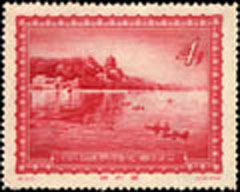
The second stamp of the 1979 definitive set R20 “Scenes of Beijing” shows the Summer Palace.

Some varieties of the 20-, 100- and 200-yuan notes of the first series of renminbi (1949) show Longevity Hill.

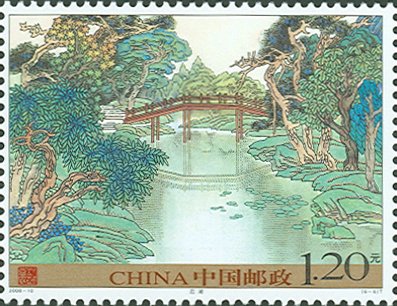
In 2008 China Post issued 2008-10 “The Summer Palace”, six stamps: the Seventeen-Arch Bridge, the Long Corridor, the Marble Boat, the Garden of Harmonious Interest, the Jade Belt Bridge and the Back Lake.


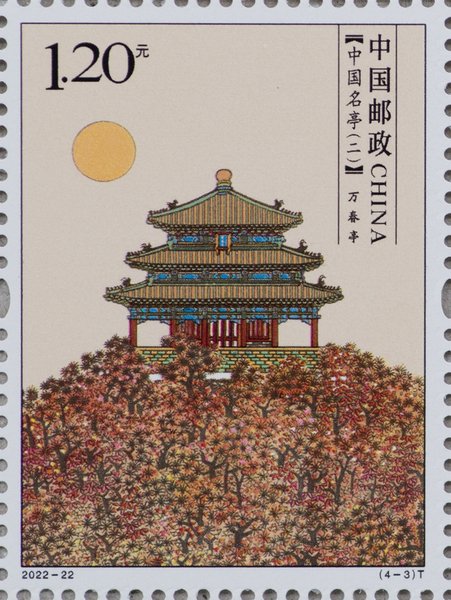
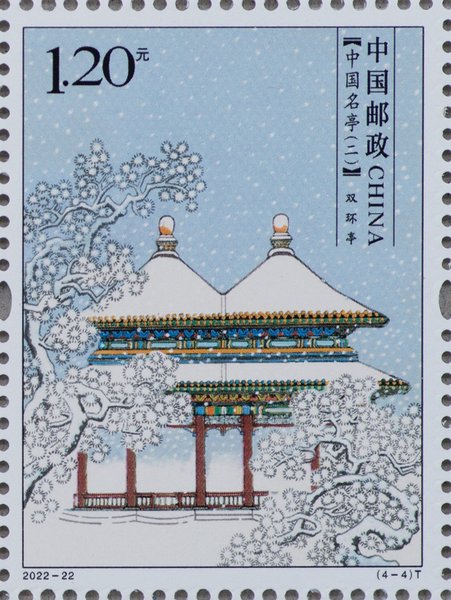
In 2022 China Post issued 2022-22 “Famous Pavilions of China (II)”, four stamps: Zhichun Pavilion at the Summer Palace, Shuiliu Yunzai Pavilion at the Mountain Resort, Wanchun Pavilion on Jingshan and the Double-Ring Pavilion at the Temple of Heaven.


The 5-yuan coin “World Cultural Heritage: the Summer Palace”, issued by the People’s Bank of China in 2006, shows the Tower of Buddhist Incense on Longevity Hill, Kunming Lake and the Marble Boat on the reverse.
Map

Photo credits: The Summer Palace: Ermell (CC BY-SA 4.0, Wikimedia Commons); The Summer Palace: Charlie fong (CC BY-SA 4.0, Wikimedia Commons)
Nearby
| World Heritage | The Forbidden City (Palace Museum), Beijing 13km, Beijing Central Axis: A Building Ensemble Exhibiting the Ideal Order of the Chinese Capital 14km, The Temple of Heaven, Beijing 17km, Ming Tombs 34km |
| National parks | Stone Flower Cave 34km, Badaling–Ming Tombs Scenic Area 40km, Mount Pan 86km, Yesanpo 101km |
| Detailed guides | Shidu 72km |
| AAAAA attractions | Old Summer Palace (Yuanmingyuan) 3km, Olympic Park 10km, Prince Gong's Mansion Scenic Area 11km, Mutianyu Great Wall Tourist Area 46km |
| AAAA attractions | National Botanical Garden 5km, Zizhuyuan Park 7km, Xiangshan Park 7km, Yuan Dadu City Wall Ruins Park 8km |
| UNESCO Global Geoparks | Yanqing UNESCO Global Geopark 55km |
| National key parks | Beijing Botanical Garden 5km, Beijing Zhongshan Park 14km, Tiantan Park 17km |
| Cities | Beijing 15km, Tianjin 119km |
| Historical sites | Jingming Garden 2km, Jingtai Mausoleum 3km, Yuanmingyuan (Old Summer Palace) Ruins 3km, Weiming Lake Yanyuan Buildings 3km |
| National geoparks | Yanqing Petrified Wood National Geopark 80km, Jizhou National Geopark 97km, Xinglong National Geopark 140km |
| Nature reserves | Baihuashan National Nature Reserve 58km, Songshan National Nature Reserve 69km, Dahaituo National Nature Reserve 75km, Baxianshan National Nature Reserve 112km |
| Historic villages | Liuliqu Village 16km, Zhenbiancheng Village 43km, Lingshui Village 46km, Shuiyu Village 47km |