← Chapter 2: PrehistoryA Brief History of ChinaChapter 4: Western Zhou →
Chapter 3: Xia and Shang
c. 2000–1046 BC
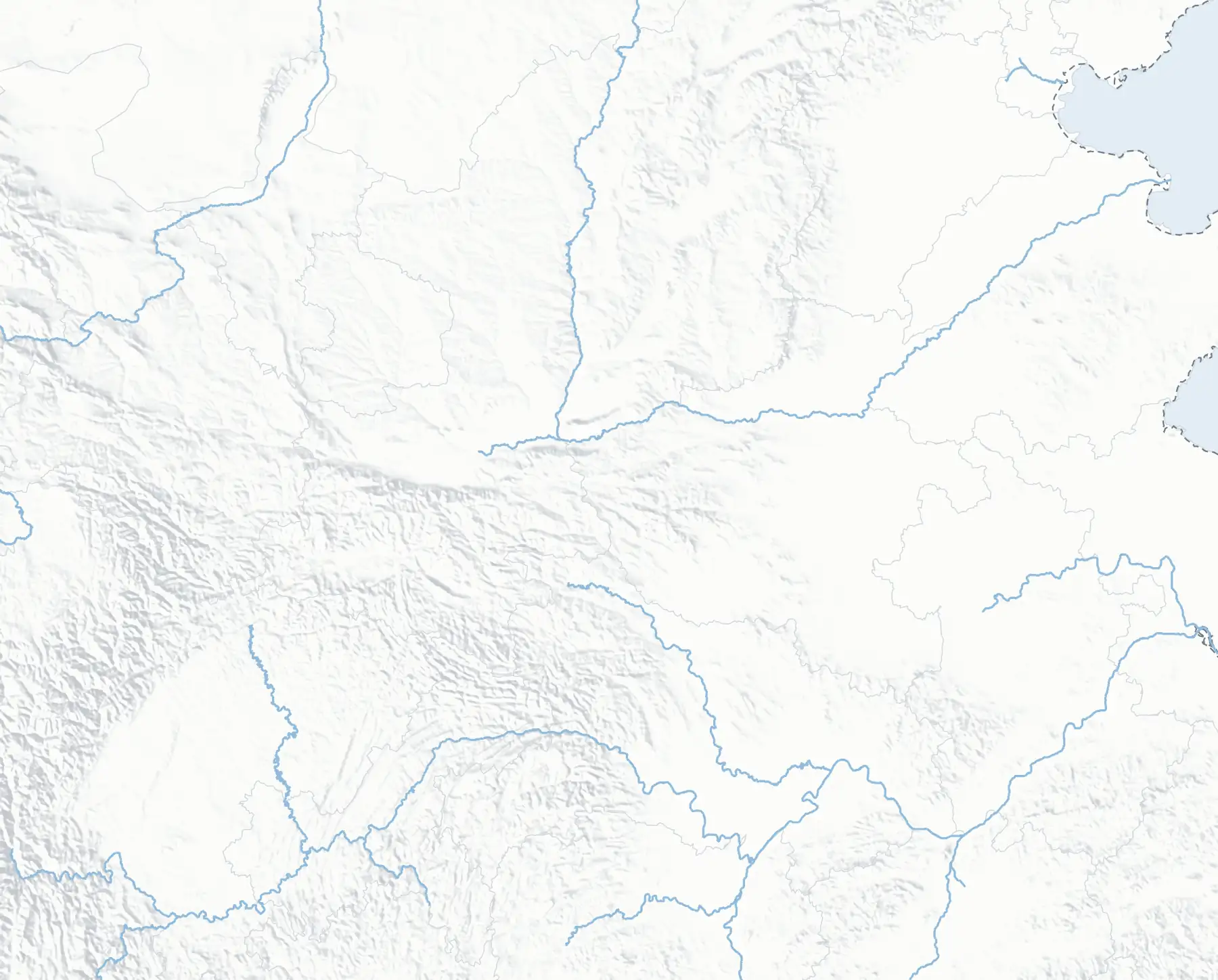
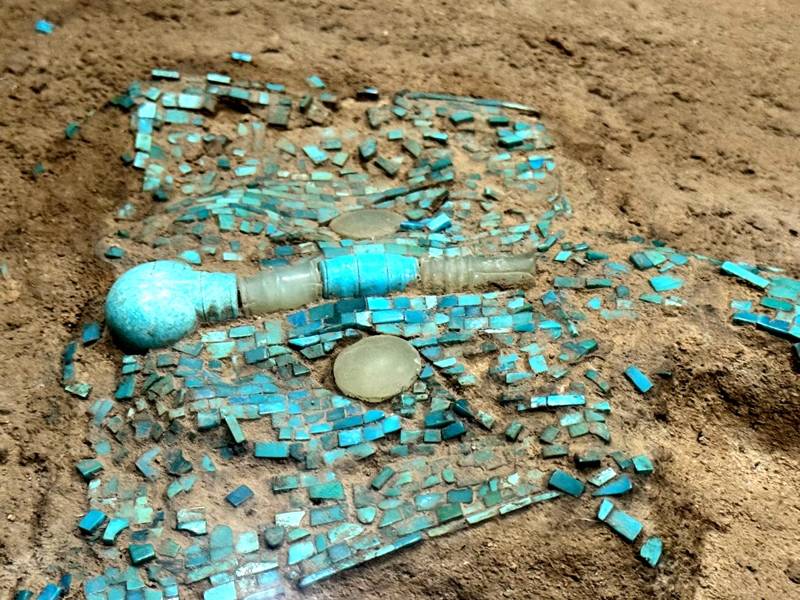
Xia (c. 2000–c. 1600 BC) According to the Shiji, Yu’s son Qi founded the Xia dynasty, which lasted fourteen generations and seventeen kings, more than 400 years, roughly from 2000 to 1600 BC. The last ruler, Jie, was cruel and lost the people’s support, and about 1600 BC he was overthrown by Tang of Shang. No writing from the Xia period has yet been found. The Erlitou Site in Yanshi, Henan, has a palace enclosure, large palace foundations and bronze and turquoise workshops; its date matches the late Xia of tradition, and many scholars consider it a Xia capital. A dragon-shaped object found there is made of more than 2,000 pieces of turquoise.
Shang (c. 1600–c. 1046 BC) About 1600 BC Tang of Shang overthrew the Xia and founded the Shang dynasty. The Shang moved their capital many times; after Pan Geng moved it to Yin (today’s Anyang, Henan) around 1300 BC it moved no more, so the Shang is also called the Yin. Excavations at Yinxu in Anyang have uncovered palaces and ancestral temples, royal tombs and vast numbers of oracle bones. Shang kings divined before every undertaking and carved the results on turtle shells and ox bones; this is oracle bone script. It was already a mature writing system, and today’s Chinese characters descend directly from it.
Shang bronze casting reached its peak. The Houmuwu Ding, weighing over 800 kg, is the heaviest ancient bronze vessel in existence. Fu Hao, queen of the Shang king Wu Ding, led armies on campaign; her tomb is the only Shang royal tomb at Yinxu found intact, and it yielded nearly 2,000 bronzes and jades.
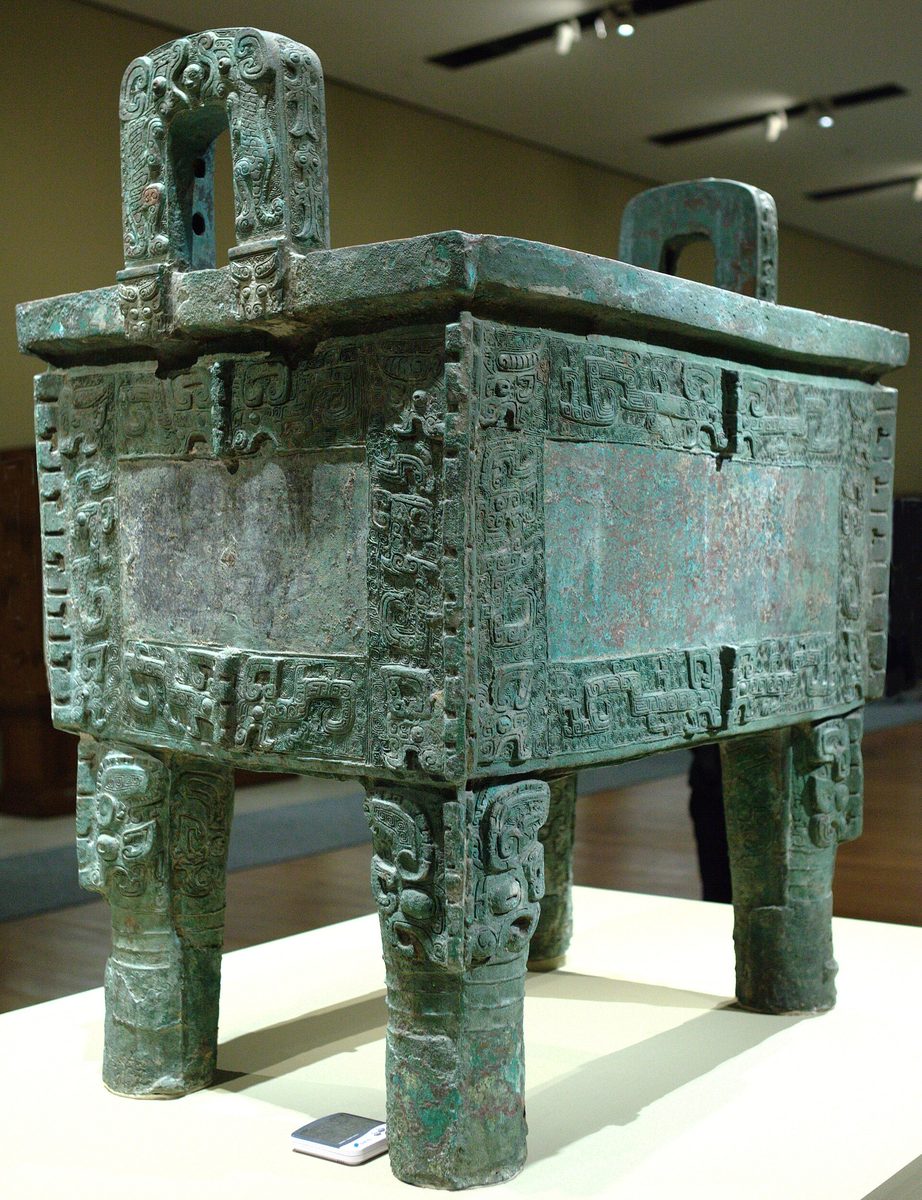
Mlogic, CC BY-SA 3.0, Wikimedia Commons
At the same time another highly developed civilization flourished on the upper Yangtze. The Sanxingdui site in Guanghan, Sichuan, has an ancient city and several sacrificial pits. Its bronze masks with protruding eyes, a large standing bronze figure, a bronze sacred tree nearly four meters tall and a gold staff are strikingly unusual and quite unlike Central Plains bronzes; the nearby Jinsha Site in Chengdu yielded the gold Sun and Immortal Birds ornament. The ancient Shu civilization had contact with Shang culture yet remained distinctive, showing that Chinese civilization had many origins that blended together.
At the end of the Shang, the last king, Zhou, was dissolute, while the Zhou people rose in the west. About 1046 BC King Wu of Zhou gathered the lords and defeated the Shang army at Muye (the Battle of Muye), and the Shang dynasty fell.