
← Chapter 1: Myths and LegendsA Brief History of ChinaChapter 3: Xia and Shang →
Chapter 2: Prehistory
Humans were living in what is now China more than a million years ago. “Peking Man” at Zhoukoudian, Beijing, lived about 700,000 to 200,000 years ago and already used fire.
About 10,000 years ago the Neolithic began: people ground stone tools, fired pottery, grew crops, raised livestock and settled in villages. Millet was the main crop in the north, rice in the south. The Hemudu Site in Yuyao, Zhejiang, has left large amounts of rice and timber parts of stilt houses joined with mortise and tenon. The Yangshao culture of the middle Yellow River is known for its painted pottery; the Banpo Site in Xi’an is a village ringed by a moat, and its painted basin with a human face and fish design is a classic piece.
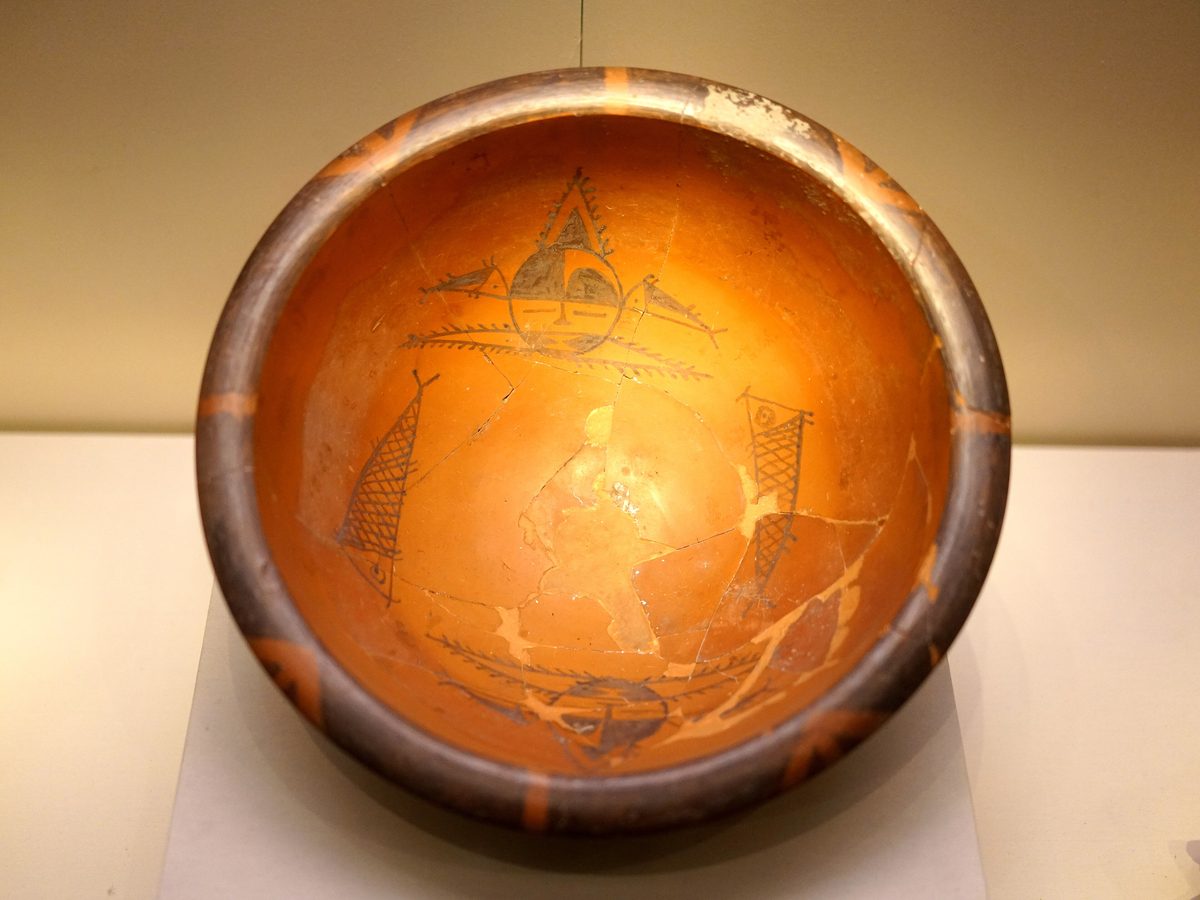
Augusthaiho, CC BY-SA 4.0, Wikimedia Commons
Around 5,000 years ago large walled sites and clear differences in rank appeared in many regions. The Ancient City of Liangzhu on the lower Yangtze had palace platforms, city walls and a large water-management system; its jade cong are carved with a motif of a deity and a beast mask. It is regarded as proof of more than 5,000 years of Chinese civilization and is a World Heritage Site. In the north were the Hongshan culture of western Liaoning and the ancient city of Shimao in northern Shaanxi; the Taosi Site in Xiangfen, Shanxi, has city walls, a palace area and the remains of a structure for observing sunrise to fix the solar terms, and many scholars link it to the capital of Yao. The middle and lower Yellow River at this time belonged to the Longshan culture (about 2500–2000 BC), named after the Chengziya Site in Longshan Town, Zhangqiu, Shandong, where it was first found. Best known is its eggshell pottery, black, glossy and as thin as an eggshell; many Longshan sites already had rammed-earth walls, and the Xia and Shang cultures grew out of it.
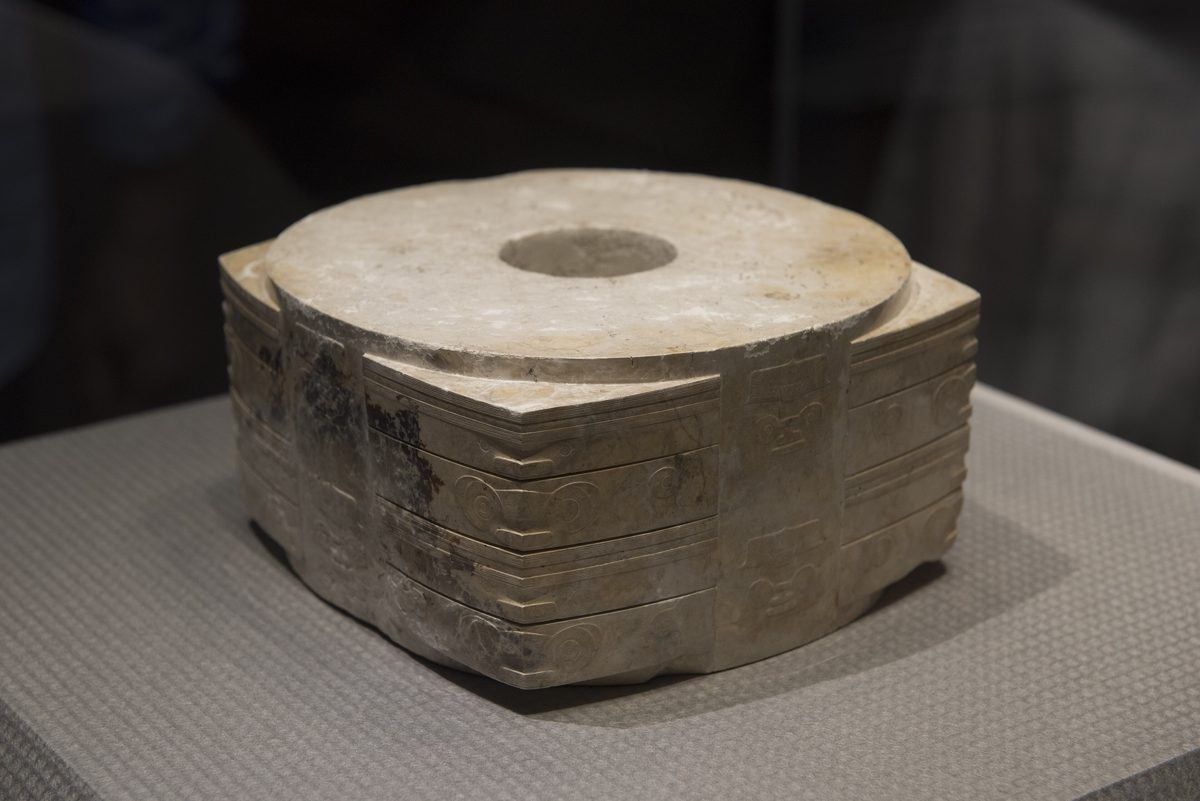
Siyuwj, CC BY-SA 4.0, Wikimedia Commons
Archaeologists liken this period to “a sky full of stars”: each regional culture had its own character, yet they influenced one another and gradually converged on the Central Plains.
← Chapter 1: Myths and LegendsContentsChapter 3: Xia and Shang →