 Park of China
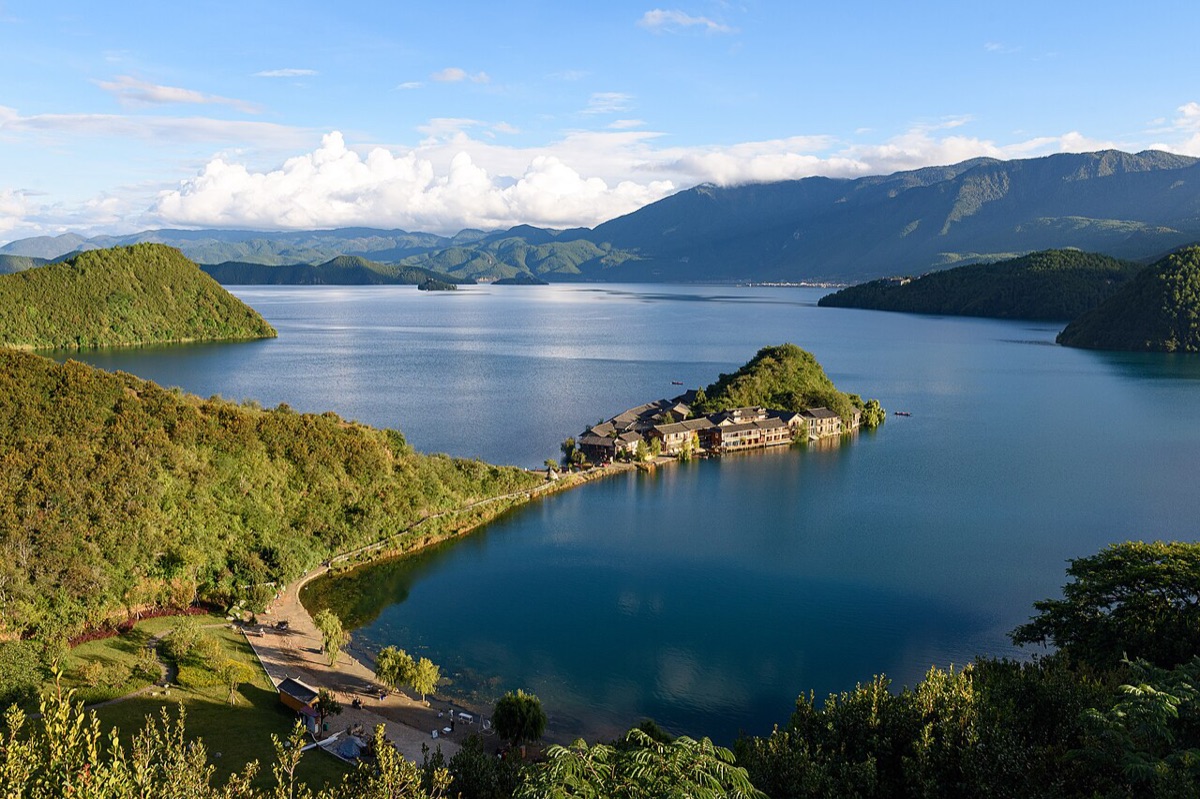
Overview
| Name | Lugu Lake 泸沽湖 |
| Web address | https://parkofchina.com/en/luguhu.html |
| Designation | National Park of China (Yunnan side: the Lugu Lake section of the second-batch Lijiang Jade Dragon Snow Mountain national park) National AAAA tourist attraction (Yunnan: Lijiang Lugu Lake Scenic Area; Sichuan: Liangshan Lugu Lake Scenic Area) National Water Conservancy Scenic Area (Sichuan side, 2006) |
| Province | Yunnan |
| Location | Ninglang Yi Autonomous County, Lijiang, Yunnan; Yanyuan County, Liangshan Yi Autonomous Prefecture, Sichuan |
| Latitude, longitude | 27.70, 100.78 Google Maps |
| Highlights | Highland lake, Mosuo villages, matrilineal households |
| Top sights | Lige Peninsula, Gemu (Goddess) Mountain, Liwubi Island, the Grass Sea and Walking Marriage Bridge, Luoshui village |
| Nearby cities | Lijiang, Xichang |
| Nearby sites | Jade Dragon Snow Mountain, Yading, Daocheng, Old Town of Lijiang, Shangri-La, Three Parallel Rivers of Yunnan |
| Themes | Highland, Lake, Island, Wetland, Mountain, Ethnic cultures, Old villages & vernacular houses, Tibetan Buddhism, Temple, Cable Car |
About
Lugu Lake lies between Ninglang Yi Autonomous County in north-west Yunnan and Yanyuan County in south-west Sichuan, and the lake is shared by the two provinces. At about 2,690 m, it is a highland lake formed in a down-faulted basin, with clear water more than ninety metres deep at its deepest. Several small islands and peninsulas break up the water, and on the south-east shore is a shallow, reed-covered wetland called the Grass Sea.
The lakeshore is home mainly to the Mosuo, along with Pumi, Yi and others. The Mosuo are classed as Naxi in Yunnan and as Mongol in Sichuan, and most are Tibetan Buddhists. Their households pass down the mother’s line and are headed by an older woman, the members being relatives on the mother’s side. Adults traditionally do not marry; in the “walking marriage” a man visits a woman at night and returns to his mother’s house in the morning, children grow up in their mother’s household, and the mother’s brothers carry great weight in the family.
Gemu Mountain on the north shore is revered by the Mosuo as the goddess mountain; legend says the tears of the goddess Gemu filled the lake. On the 25th day of the seventh lunar month the Mosuo walk round the mountain in the mountain-circling festival.
Map
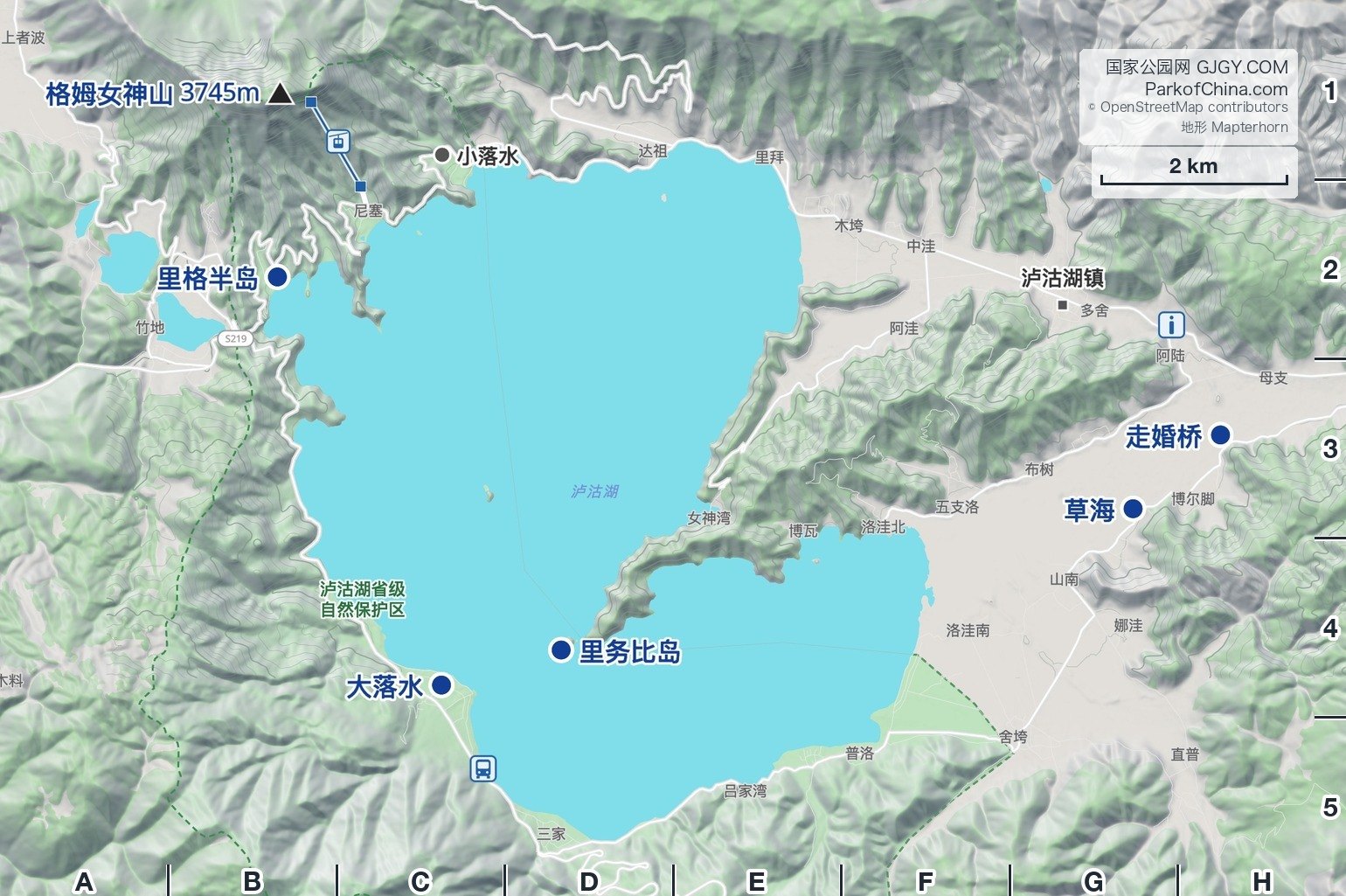
Main sights
Lige Peninsula: a narrow peninsula reaching into the lake from the north-west corner, with Lige village surrounded by water on three sides; a viewing platform on the hill to the north looks down on the peninsula and the lake.
Gemu (Goddess) Mountain: on the north shore, the Mosuo goddess mountain; a cable car goes up, with views over the whole lake.
Liwubi Island: a small island in the south of the lake with a Tibetan Buddhist temple.
The Grass Sea and Walking Marriage Bridge: the Grass Sea, on the Sichuan side of the south-east shore, is a shallow wetland thick with water plants, visited by migrating birds in autumn and winter; a long wooden bridge across it is called the Walking Marriage Bridge.
Luoshui village: a Mosuo village on the Yunnan shore, in two parts, Daluoshui and Xiaoluoshui; Daluoshui, on the west shore, has many guesthouses, and boats leave from here for trips on the lake.
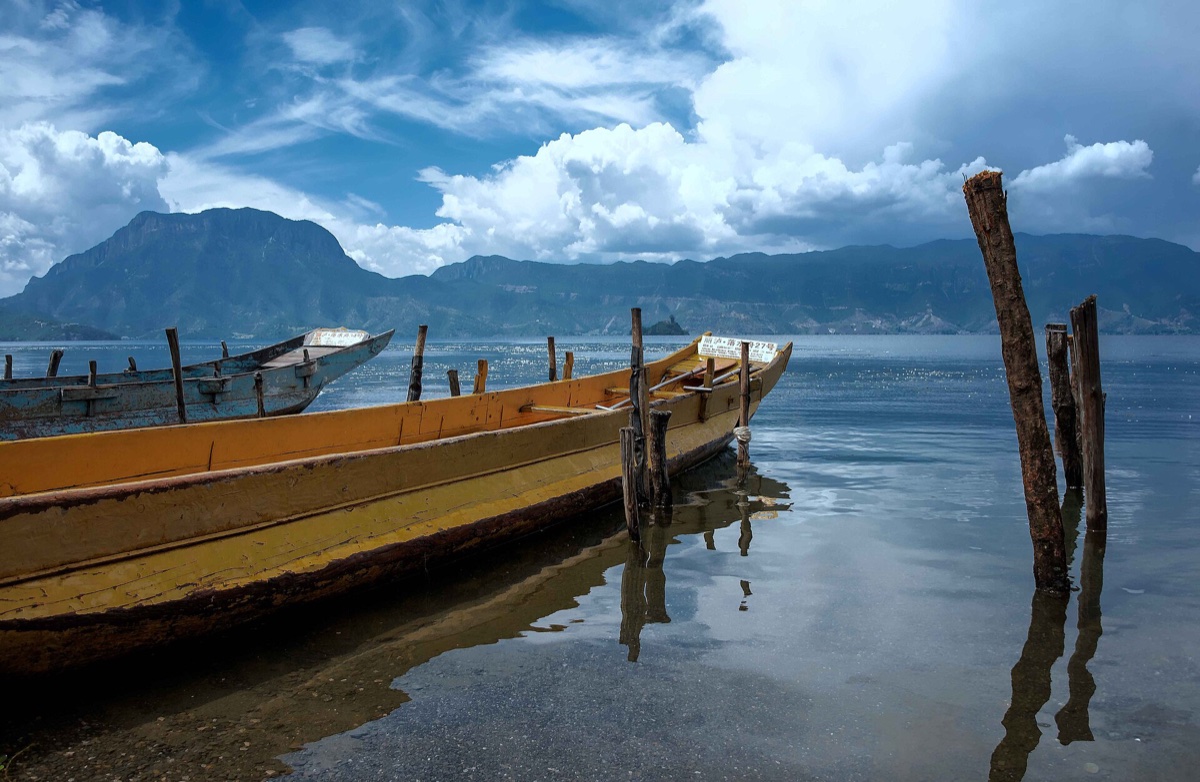
Pig-trough boats: the traditional Mosuo boats, once hollowed out of a single tree trunk and shaped like a pig trough; most boat trips on the lake use them today.
Travel tips
Getting there: first go to Lijiang; by road from Lijiang to the lake takes most of a day. Ninglang County has Lugu Lake Airport, with few flights. From the Sichuan side, the lake can be reached from Xichang via Yanyuan.
Round the lake: the lakeside road is about 50 km; go round by hired car or bicycle, passing Lige, the Grass Sea and the Walking Marriage Bridge.
Where to stay: Daluoshui and Lige have many guesthouses.
Time: allow two or three days on its own.
Season: at this altitude mornings and evenings are cool; June to September is the rainy season, and winter and spring are dry and sunny.
Note: the lake is at nearly 2,700 m, so take it slowly at first.
Photo credits: Lige Peninsula from the viewing platform: N509FZ (CC BY-SA 4.0, Wikimedia Commons); Wooden boats on Lugu Lake: Rod Waddington (CC BY-SA 2.0, Wikimedia Commons)
Nearby
| World Heritage | Old Town of Lijiang 107km, Three Parallel Rivers of Yunnan 122km, Mount Emei 321km, Leshan Giant Buddha 357km |
| National parks | Jade Dragon Snow Mountain 87km, Qionghai Lake–Mount Luoji Scenic Area 151km, Dali Scenic Area 231km, Mount Gongga (Minya Konka) 236km |
| AAAAA attractions | Yading, Daocheng 88km, Shangri-La 107km |
| AAAA attractions | Lijiang Lugu Lake Scenic Area <1km |
| Nature reserves | Panzhihua Cycad National Nature Reserve 148km |