 Park of China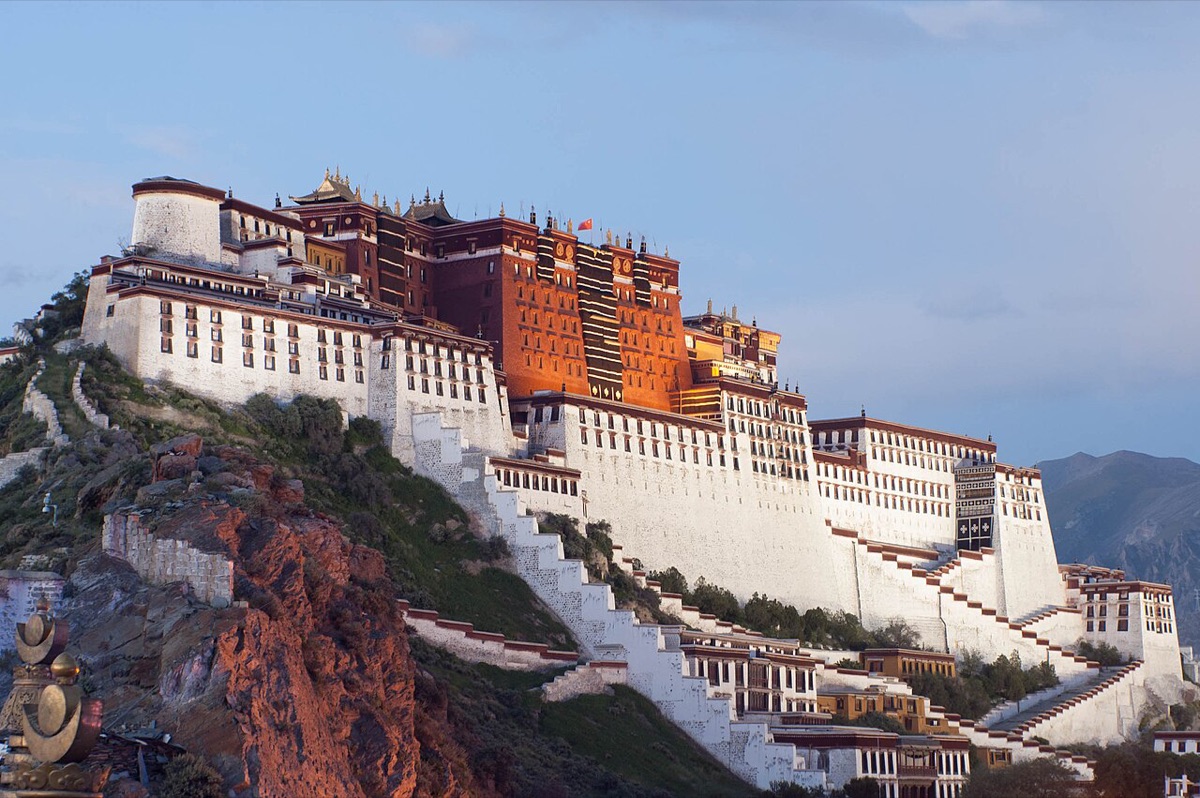
Overview
| Designation | UNESCO World Heritage (cultural, 1994) |
| Province | Tibet |
| Location | Central Lhasa, Tibet |
| Latitude, longitude | 29.6, 91.1 Google Maps |
| Highlights | Holy place of Tibetan Buddhism; palace; works of art |
| Top sights | The stupas of the Dalai Lamas, the golden roofs |
| Elevation | 3,650 m |
| Nearby cities | Lhasa |
| Nearby sites | Yarlung River 57km, Yamdrok Lake 90km, Namtso and the Nyainqêntanglha Mountains 126km Search nearby |
| Themes | Palace, Buddha, Ancient Building, Museum, Temple, Statue, Highland, Snow Mountain, City, Stamp, Banknote, Tibetan Buddhism, Imperial palaces & gardens, Rock art & murals |
The Potala Palace
The Potala stands on Marpo Ri (Red Hill) in the centre of Lhasa, Tibet, and is the highest Buddhist palace in the world. Begun in the seventh century under the Tibetan king Songtsen Gampo, it rises 113 m in 13 storeys, 360 m east to west and 270 m north to south, with about 130,000 m² of floor space in a thousand rooms: living quarters, chapels, stupa halls and monks’ cells. It holds a vast number of statues, murals and other treasures.
The palace is in two parts: the Red Palace in the centre and the White Palace across the two wings. The Red Palace contains the stupa tombs of the Dalai Lamas and many chapels and assembly halls; the White Palace was where the Dalai Lama governed and lived. “Potala” is Sanskrit, also rendered Putuoluo or Putuo, the name of the island home of the bodhisattva Avalokiteshvara, so the palace is also called the second Mount Putuo. In the 1,300 years from Songtsen Gampo to the fourteenth Dalai Lama, nine Tibetan kings and ten Dalai Lamas ruled and taught here.
Main sights
White Palace: the eastern part and wings of the Potala, where the Dalai Lama lived and conducted government; it was begun in the mid-seventeenth century under the Fifth Dalai Lama.
Red Palace: the central part of the building, used for religious purposes, containing the stupa halls of past Dalai Lamas and many chapels; it was built in the late seventeenth century.
Dharma King's Cave and Avalokiteshvara Chapel: the oldest parts of the complex, traditionally linked with the meditation of Songtsen Gampo, holding early images and remains from the seventh century.
Fifth Dalai Lama's stupa hall: the largest stupa hall in the Red Palace, the stupa covered in gold and set with jewels and the largest in the palace.
Shol: the old town below the palace, once home to government offices, a prison and workshops, now courtyards and exhibitions.
Dzongyab Lukhang (Dragon King Pool): a park and pond behind the palace to the north, a common place to view the Potala from that side.
Chakpori (Medicine King Hill): the small hill west of the Potala, with views over the palace and city.
Barkhor Street: the pilgrim circuit and old street around the Jokhang, lined with monasteries, shops and homes; pilgrims walk it clockwise.
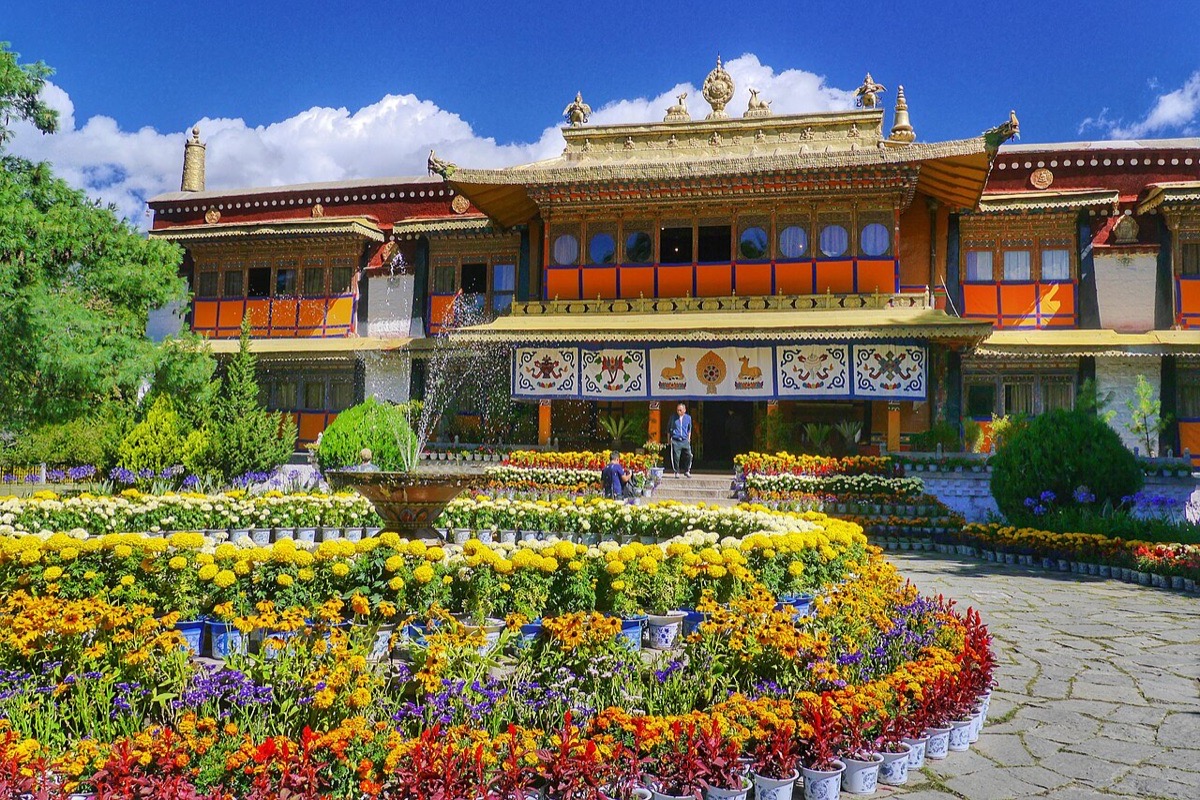
Norbulingka New Palace: the palace built in the 1950s inside Norbulingka, where the Fourteenth Dalai Lama spent his summers.
East Great Hall: the largest hall of the White Palace, 27.8 m by 25.8 m, with a plaque written by the Tongzhi Emperor; enthronements and assumption-of-power ceremonies of the Dalai Lamas were held here.
West Great Hall (Sishi Phuntsok): the largest hall of the Red Palace and the assembly hall for the Fifth Dalai Lama's stupa chapel, 725 m² on 44 pillars, with a plaque written by the Qianlong Emperor.
History and culture
In the seventh century Songtsen Gampo moved his political centre to Lhasa and married Princess Bhrikuti of Nepal and Princess Wencheng of the Tang. The early buildings of the Jokhang and the Potala are linked with this period.
The White and Red Palaces seen today were rebuilt mainly from the seventeenth century under the Fifth Dalai Lama, and later Dalai Lamas made additions, including the Thirteenth Dalai Lama's stupa hall.
The Potala is a Tibetan-style building of stone and timber with thick walls; the walls are whitewashed, the Red Palace is painted red, and the roofs are covered with gilded copper tiles. It holds many murals, thangkas, scriptures and images.
The Jokhang was added to the World Heritage listing in 2000 and Norbulingka in 2001, so the three together form Lhasa's historic ensemble.
Barkhor is the old street that grew around the Jokhang, where the stele recording the Tang–Tibetan treaty still stands in front of the temple, an important document of the period.
Travel tips
Getting there: Lhasa Gonggar Airport is south of the city, about an hour by airport bus or taxi; the Qinghai–Tibet Railway ends at Lhasa station. The Potala and the Jokhang are in the city centre; the Norbulingka is in the west of the city.
Booking: the Potala must be booked online in advance under your real name; numbers are limited each day, entry is by time slot, and it is closed on Mondays. Book early in high season.
Potala Palace: visitors climb steps from the foot of the hill to the palace; there are many steep steps, so go slowly. No photography inside.
Jokhang Temple: at the centre of Barkhor Street. Mornings are crowded with pilgrims; tourists visit in the time slots the temple sets. The roof has a view of the Potala.
Barkhor: the pilgrim circuit around the Jokhang; walk it clockwise.
Norbulingka: the summer palace gardens, best in summer; Tibetan opera is performed during the Shoton Festival, at the end of the sixth Tibetan month (usually August).
Altitude: Lhasa is over 3,600 m. Take it easy for the first day or two before climbing places like the Potala.
Season: May to October is warmer; July and August are peak season and crowded. Winter has few visitors and plenty of sun, but mornings and evenings are cold.
Caution: walk clockwise inside temples, and do not touch statues or step over prayer flags. Foreign visitors need a Tibet Travel Permit and must travel on an agency itinerary.
The Jokhang Temple
The Jokhang, in the heart of old Lhasa, was founded in 647 by Songtsen Gampo to welcome Princess Wencheng of the Tang court. The holiest temple of Tibetan Buddhism, it belongs to no single school. Since the rise of the Gelug school the Great Prayer Festival has been held here every year, and the ordination ceremonies of the Dalai Lamas and Panchen Lamas take place here. It enshrines the statue of Shakyamuni at the age of twelve brought by Princess Wencheng, and statues of Songtsen Gampo, Princess Wencheng and the Nepalese Princess Bhrikuti, as well as rare Tang relics; its corridors and halls are covered in murals of historical and legendary scenes. The golden roof is one of the best places from which to view the Potala.

Norbulingka
Norbulingka, in the west of the city, was the summer palace of the Dalai Lamas.
Stamps and banknotes
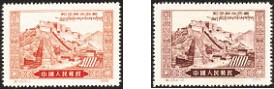
On 15 March 1952 China Post issued C13 “Peaceful Liberation of Tibet”, four stamps, two of which (400 and 800 yuan, old currency) show a panorama of the Potala.
The back of the 50-yuan note of the fifth series of renminbi shows the Potala.

The 1-yuan coin issued by the People’s Bank of China in 1985 for the 20th anniversary of the Tibet Autonomous Region shows the Potala Palace on the reverse.
Map
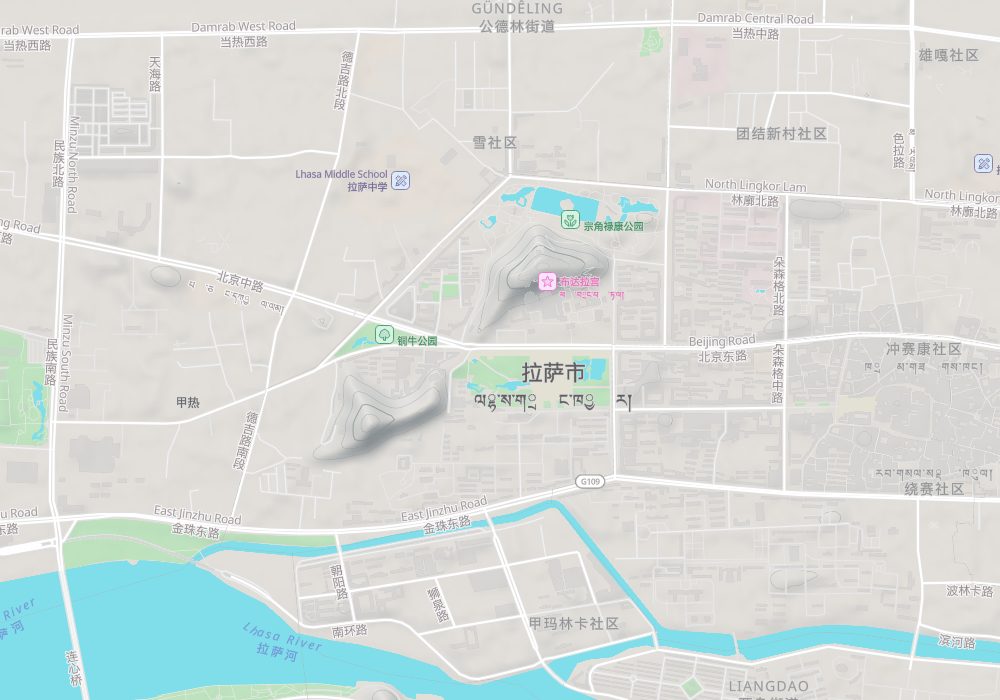
Photo credits: Norbulingka: travel oriented (CC BY-SA 2.0, Wikimedia Commons); The Potala Palace: Coolmanjackey (CC BY-SA 3.0, Wikimedia Commons)
Nearby
| National parks | Yarlung River 57km, Namtso and the Nyainqêntanglha Mountains 126km |
| Detailed guides | Yamdrok Lake 90km |
| AAAAA attractions | Jokhang Temple 2km |
| AAAA attractions | Tibet Museum 2km, Tibet Natural Science Museum 6km, Drepung Monastery 7km, Samye Monastery 53km |
| Historic cities | Lhasa 1km |
| Cities | Lhasa 2km |
| Historical sites | Chalaluput Grottoes <1km, Xide Monastery 1km, Lalu Podrang 1km, Bangdacang 2km |
| National geoparks | Yangbajing National Geopark 74km |
| Nature reserves | Lhalu Wetland National Nature Reserve 3km |
| Historic towns | Jiedexiu Town 42km |