
75 AAAA tourist attractions in Beijing, from the list published by the provincial tourism department. See also AAAAA tourist attractions in Beijing, Beijing and all provinces.

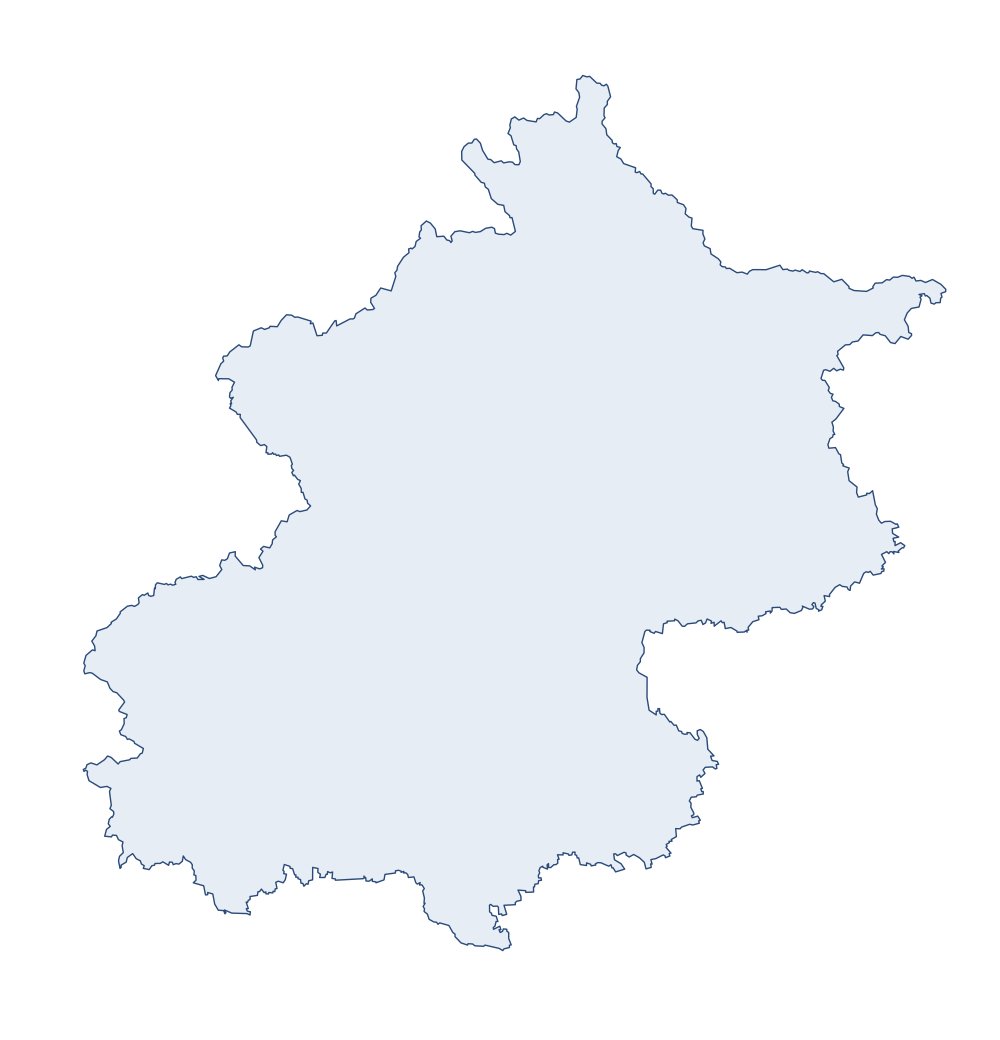

豊台区(8)
- 北京世界公園 北京世界公园A park featuring miniature replicas of famous sites around the world, opened in 1993 on 46.7 hectares; its zones follow the five continents and hold over a hundred models, mostly at 1:10 scale.
- 北宮国家森林公園 北宫国家森林公园A national forest park named after an imperial resting place, designated national-level in 2005 with 68.8% forest cover; its 1,800 mu of autumn foliage makes it one of Beijing’s main leaf-viewing spots.
- Museum of the War of Chinese People’s Resistance Against Japanese Aggression 中国人民抗日战争纪念馆A large comprehensive memorial museum inside Wanping Fortress presenting the full history of the Chinese People’s War of Resistance against Japanese Aggression.
- 中国園林博物館 中国园林博物馆China’s first national-level museum devoted to gardens and landscape architecture.
- 南宮観光景区 南宫旅游景区
- 世界花卉大観園 世界花卉大观园
- 北京汽車博物館 北京汽车博物馆
- 北京園博園 北京园博园
西城区(8)
- 什刹海 什刹海The collective name for three lakes, Qianhai, Houhai and Xihai, in northern old Beijing, about 34 hectares, named for the ten temples around them; listed in 2013 as part of the Grand Canal national key cultural heritage site.
- 北海公園 北海公园First laid out in the Song-Liao-Jin era, the world’s oldest surviving imperial garden, centred on Qionghua Island whose White Dagoba at Yong’an Temple forms an axis with the Round City and the northern palace complex.
- 北京動物園 北京动物园Founded in 1906, China’s earliest-opened zoo with the most species, now keeping over 490 kinds and nearly 5,000 wild animals; it has bred giant pandas, crested ibises and golden snub-nosed monkeys.
- 北京海洋館 北京海洋馆An aquarium inside Beijing Zoo covering 120,000 square metres, the world’s largest inland aquarium.
- 景山公園 景山公园An imperial garden of the Yuan, Ming and Qing dynasties on Beijing’s central axis; its hill was once the city’s highest point, and it historically served for archery, funerary rites, ancestral worship and official schooling.
- 首都博物館 首都博物馆Beijing’s large comprehensive museum, under the Beijing Municipal Administration of Cultural Heritage.
- 陶然亭公園 陶然亭公园An urban park named after the Taoran Pavilion within it, on Taiping Street in Xicheng District.
- 北京天文館 北京天文馆Beijing’s astronomy exhibition hall and science education base, under the Beijing Academy of Science and Technology.
昌平区(7)
- 居庸関長城 居庸关长城A famous fortified pass of the Ming Great Wall, together with nearby Badaling a key barrier northwest of Beijing; with Daoma and Zijing passes it forms the “Inner Three Passes”. First built in the Qin dynasty, it was the key pass of the Jundu route among the Eight Passes of Taihang.
- 中国航空博物館 中国航空博物馆An aviation museum originally at Shahe Airfield in Xiaotangshan, Changping, now moved to Dafangshen Airport in Changchun.
- 銀山塔林 银山塔林A group of pagodas comprising 6 dense-eave pagodas, 1 dense-eave stupa-style pagoda and 11 stupa-style pagodas, built from the Jin to the Qing dynasty as tomb pagodas for monks of nearby temples; a national key cultural heritage site since 1988.
- 龍脈温泉リゾート村 龙脉温泉度假村
- Xiaotangshan Modern Agriculture Demonstration Park 小汤山现代农业示范园区
- 温都水城 温都水城
- 楽多港仮日広場 乐多港假日广场
海淀区(6)
- 国家植物園 国家植物园Formed by merging the former Beijing Botanical Garden with the Institute of Botany’s garden and inaugurated in 2022, with a planned area of nearly 600 hectares and a target of over 30,000 plant species.
- 香山公園 香山公园A former imperial garden once called Jingyi Garden, drawing hundreds of thousands of visitors each autumn for its red leaves.
- 中央広播電視塔 中央广播电视塔A 405-metre broadcasting tower, once Beijing’s tallest structure and the fourth-tallest tower in China and ninth in the world, made up of a trestle bridge, terrace, base, shaft, turret and antenna mast.
- 紫竹院公園 紫竹院公园One of Beijing’s municipal parks, on Zhongguancun South Street in Haidian District.
- 玉淵潭公園 玉渊潭公园The largest park inside Beijing’s Third Ring Road, over 100 hectares, best known for its cherry blossoms and the festival held each late April to early May; its lake is fed from the Summer Palace.
- 鳳凰嶺 凤凰岭A scenic area in Beijing’s western suburbs, anciently called Qianfeng Mountain and known as the “Little Huangshan of West Beijing”, with Longquan Temple, Taoyuan Taoist Temple, the Flying Rock and the Sky Ladder.
平谷区(6)
- 金海湖 金海湖Also known as Haizi Reservoir, formed by damming the Ju River; one of Beijing’s four large reservoirs, serving flood control, irrigation and water supply.
- 北京丫髻山道教文化名勝区 北京丫髻山道教文化名胜区A famed Taoist mountain in northern Liujiadian Town, Pinggu, where a Qing-dynasty travelling palace once stood.
- 京東大峡谷 京东大峡谷A gorge scenic area at Yuzishan Village northeast of Pinggu, comprising the Grand Canyon and Jingtai Mountain zones over about 20 square kilometres.
- 北京平谷青龍山観光区 北京平谷青龙山旅游区
- 京東石林峡風景区 京东石林峡风景区
- 漁陽国際滑雪場 渔阳国际滑雪场
延慶区(6)
- 龍慶峡 龙庆峡A gorge scenic area formed around Gucheng Reservoir, completed in 1981, popular in Beijing’s outer suburbs; an ice lantern festival has been held around Spring Festival every year since 1987.
- 延慶百里山水画廊景区 延庆百里山水画廊景区A large scenic area in Qianjiadian Town, northeast Yanqing, roughly matching the Qianjiadian zone of the Yanqing Global Geopark; at 371 square kilometres it is Beijing’s first 4A area covering an entire town.
- 野鴨湖国家湿地公園 野鸭湖国家湿地公园Beijing’s largest wetland ecosystem and its only national wetland park, 283.4 hectares including reservoir, river, marsh and other wetland types.
- 八達嶺水関長城景区 八达岭水关长城景区
- 松山森林観光区 松山森林旅游区
- 北京世園公園 北京世园公园
朝陽区(5)
- 北京歓楽谷 北京欢乐谷A large cultural theme park by the East Fourth Ring Road in Chaoyang District, Beijing, opened in July 2006 on 560,000 square metres.
- 中国紫檀博物館 中国紫檀博物馆China’s first museum devoted to red sandalwood art and the first private museum bearing the name “China”, founded by Chen Lihua in 1999, with more than 3,000 items in its collection.
- 元大都城垣遺跡公園 元大都城垣遗址公园A park built along the ruins of the Yuan capital Dadu’s city wall, spanning Haidian and Chaoyang districts; earthen wall remains over ten metres high survive, known locally as the “Earth City”.
- 朝陽公園 朝阳公园The largest urban park inside Beijing’s Fourth Ring Road, with a planned area of 288.7 hectares.
- 蟹島緑色生態農荘 蟹岛绿色生态农庄
東城区(5)
- 孔廟/国子監 孔庙/国子监China’s second-largest Confucius temple after Qufu, founded in 1302 as the site of official state sacrifices to Confucius under the Yuan, Ming and Qing dynasties; it holds stelae naming imperial examination graduates since the Yuan and a forest of 189 stelae inscribed with the Thirteen Classics.
- 龍潭公園 龙潭公园A comprehensive urban park built around a lake and themed on dragon culture, opened in 1984 with 42.3 hectares, nearly half of it water.
- 中山公園 中山公园Formerly the Altar of Land and Grain of the Ming and Qing dynasties, built opposite the Imperial Ancestral Temple under the “ancestors left, altars right” rite, just west of Tian’anmen; now a 230,000-square-metre memorial garden of classical altar and temple architecture.
- 地壇公園 地坛公园The altar where Ming and Qing emperors sacrificed to the god of the earth every summer solstice, in use from the Jiajing Emperor onward and gradually turned into a park in the 20th century.
- 明城牆遺跡公園 明城墙遗址公园
房山区(5)
- 雲居寺 云居寺Originally called Xiyu Temple; its hillside buildings were destroyed during the war against Japan, leaving Tang and Liao pagodas and the caves on Stone Sutra Hill that hold stone-carved scriptures. Listed among the first national key cultural heritage sites in 1961.
- 周口店遺跡博物館 周口店遗址博物馆A paleoanthropological site made up of caves on Dragon Bone Hill where abundant Peking Man fossils were found; among the first national key cultural heritage sites in 1961 and inscribed as a World Heritage Site in 1987.
- 房山十渡風景名勝区 房山十渡风景名胜区The only large-scale karst landscape in northern China, and a national geopark.
- 石花洞 石花洞
- 聖蓮山観光リゾート区 圣莲山旅游度假区
懐柔区(4)
- 紅螺寺 红螺寺A Han Buddhist temple at the southern foot of Hongluo Mountain, a sacred Buddhist site of northern China.
- 雁栖湖 雁栖湖Originally the Beitaishang Reservoir completed in 1962, with 1.8 million square metres of water and a 5-km lakeside road; venue of the 2014 APEC meeting.
- 青龍峡観光リゾート区 青龙峡旅游度假区
- Beijing Huanghuacheng Water Great Wall Scenic Area 北京黄花城水长城旅游区
門頭溝区(4)
- 潭柘寺 潭柘寺Formally Xiuyun Chan Temple, founded in the Western Jin dynasty as Beijing’s oldest temple; a local saying goes, “First came Tanzhe Temple, then came Beijing.”
- 戒台寺 戒台寺Also called Jietan Temple, famed for its grand ordination platform, one of China’s three great ordination platforms alongside those of Zhaoqing Temple in Hangzhou and Kaiyuan Temple in Quanzhou; a national key cultural heritage site since 1996.
- 谷山村 谷山村
- 八奇洞 八奇洞
密雲区(4)
- 司馬台長城景区 司马台长城景区The most precipitous section of the Great Wall, 5.4 km long, first built under the Northern Qi with Ming-era structures surviving; restoration preserved its original appearance. The “Sky Bridge” between east towers 15 and 16 is only about 30 cm wide.
- 黒龍潭観光区 黑龙潭旅游区
- 仙居谷風景区 仙居谷风景区
- 北京張裕愛菲堡国際酒荘 北京张裕爱菲堡国际酒庄
石景山区(2)
- 八大処公園 八大处公园Also called the Eight Great Sites of the Western Hills, eight Han Buddhist temples on Cuiwei, Lushi and Jue mountains, now a park.
- 石景山遊楽園 石景山游乐园Beijing’s second-largest amusement park, built in 1986 on over 260,000 square metres, blending Chinese garden style with Western castles.
順義区(2)
- 北京奥林匹克水上公園 北京奥林匹克水上公园Venue for rowing, canoeing and marathon swimming at the 2008 Beijing Olympics, built on the Chaobai River with 1,200 permanent seats.
- 北京順義国際鮮花港 北京顺义国际鲜花港