
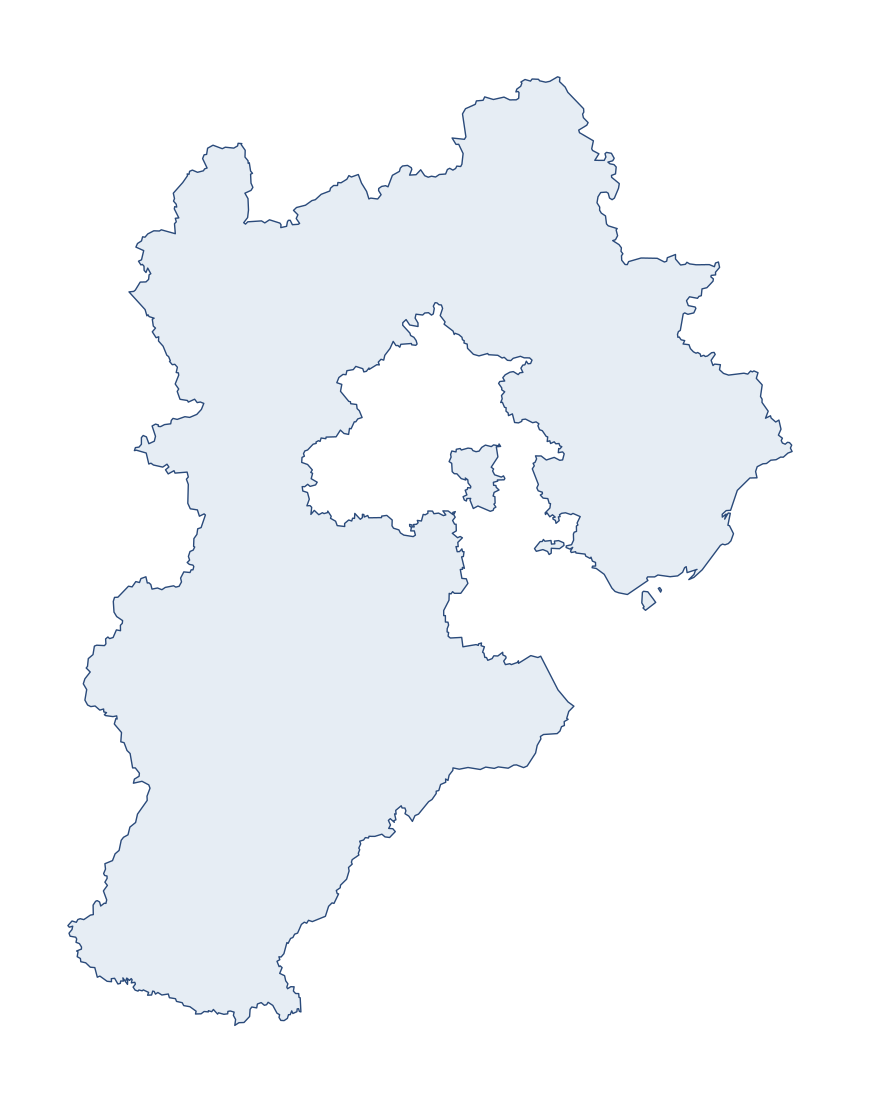
290 Major Historical and Cultural Sites Protected at the National Level in Hebei (batches 1–8, named by the State Council 1961–2019; 4 of them cross provincial borders, such as the Great Wall and the Grand Canal). Dots are coloured by category. See also Hebei and all provinces.
Liste:


Baoding (68)
- Tunnelkampfstätte Ranzhuang 冉庄地道战遗址Stätten der neueren Geschichte · 1. Liste (1961)Site of tunnel warfare waged by the people of Ranzhuang during the War of Resistance against Japan; the tunnel network has four main lines and 24 branches, about 15 kilometers in total, and a memorial hall has been built.
- Pagode des Kaiyuan-Tempels in Dingxian 定县开元寺塔Alte Bauwerke · 1. Liste (1961)Also called the Liaodi Pagoda, built in the Northern Song and 84 meters tall; the tallest surviving brick pagoda in China.
- Yicihui-Steinsäule 义慈惠石柱Alte Bauwerke · 1. Liste (1961)Stone pillar erected in the Northern Qi to commemorate the suppression of Ge Rong's uprising; 7 meters tall, with inscriptions of over 4,000 characters on the shaft.
- Fundstätte Yan Xiadu 燕下都遗址Alte Fundstätten · 1. Liste (1961)Site of a secondary capital of the Yan state in the Warring States period, southeast of Yi County, made up of eastern and western linked cities; archaeological surveys began in 1929.
- Westliche Qing-Gräber 清西陵Alte Gräber · 1. Liste (1961)One of the three Qing imperial cemeteries, planned in the seventh year of the Yongzheng reign (1729); it holds four emperors, nine empresses and many consorts, princes and princesses.
- Beiyue-Tempel 北岳庙Alte Bauwerke · 2. Liste (1982)Ancient Yuan-dynasty building, a Daoist temple for worshipping the Northern Peak.
- Amtssitz des Generalgouverneurs von Zhili 直隶总督署Alte Bauwerke · 3. Liste (1988)Office of the Zhili Governor-General in the Qing dynasty, an ancient building.
- Ding-Brennofenstätte Jiancicun 涧磁村定窑遗址Alte Fundstätten · 3. Liste (1988)Kiln site of the Ding kiln, one of the five great kilns of the Song, begun in the Tang and famed for white porcelain.
- Gräber des Liu Sheng, Prinz Jing von Zhongshan 中山靖王墓Alte Gräber · 3. Liste (1988)Two tombs of Liu Sheng, Prince Jing of Zhongshan of the Western Han, and his wife Dou Wan, discovered in 1968 during defense construction.
- Geyuan-Tempel 阁院寺Alte Bauwerke · 4. Liste (1996)Buddhist temple whose main building, the Manjusri Hall, is a Liao timber structure and one of the "Eight Great Liao Structures."
- Kaishan-Tempel 开善寺Alte Bauwerke · 4. Liste (1996)Commonly called the Great Buddha Temple, with the Heavenly Kings Hall, Vajra Hall and Mahavira Hall surviving; the building complex covers 9,500 square meters.
- Ciyun-Pavillon 慈云阁Alte Bauwerke · 4. Liste (1996)Originally named the Dabei Pavilion; the present building was rebuilt in the tenth year of the Dade reign of the Yuan (1306), two stories with a hip-gable roof.
- Große Mauer bei Zijingguan 万里长城—紫荆关Alte Bauwerke · 4. Liste (1996)Pass of the Ming Great Wall, one of the important passes along the Great Wall.
- Daodejing-Säule des daoistischen Longxing-Tempels 龙兴观道德经幢Grotten und Steinschnitzereien · 4. Liste (1996)Tang-dynasty pillar inscribed with the Daode Jing, about 6 meters tall and octagonal, the only reasonably well-preserved Tang Daode Jing pillar in China.
- Site of the Shanxi-Chahar-Hebei Border Region Government and Military Region Headquarters 晋察冀边区政府及军区司令部旧址Stätten der neueren Geschichte · 4. Liste (1996)Seat of the Shanxi-Chahar-Hebei Border Region government and military region headquarters from 1938 to 1948, at Huashan Village, Chengnanzhuang Town, Fuping County.
- Fundstätte Nanzhuangtou 南庄头遗址Alte Fundstätten · 5. Liste (2001)One of the earliest Neolithic sites in North China, about 10,500 to 9,700 years old.
- Gräber der Han-zeitlichen Könige von Zhongshan 汉中山王墓Alte Gräber · 5. Liste (2001)The tombs of successive Western Han Kings of Zhongshan, with 175 Han tombs surviving in Dingzhou.
- Yaowang-Tempel 药王庙Alte Bauwerke · 5. Liste (2001)Built in the Yongle reign of the Ming around the tomb of Pi Tong and enlarged in the Jiaqing reign of the Qing, it is the largest Yaowang (King of Medicine) temple in China.
- Prüfungshalle Dingzhou 定州贡院Alte Bauwerke · 5. Liste (2001)An imperial examination hall first built in the 3rd year of Qianlong of the Qing (1738), the most complete surviving ancient examination hall complex in northern China.
- Zwillingspagoden Zhuozhou 涿州双塔Alte Bauwerke · 5. Liste (2001)Made up of the Yunju Temple Pagoda and the Zhidu Temple Pagoda, both Liao octagonal multi-story brick pagodas imitating wood construction, about 250 m apart.
- Anwesen der Familie Wang in Yaoshan 腰山王氏庄园Alte Bauwerke · 5. Liste (2001)A Qing dynasty manor of about 500,000 square meters in total, which the Wang family built on land enclosed after following Dorgon through the pass.
- Alter Lotusteich 古莲花池Alte Bauwerke · 5. Liste (2001)A garden from the Jin to the Qing, one of the Eight Scenes of Baoding, next to the Zhili Governor-General's Office.
- Blumenpagode des Qinghua-Tempels 庆化寺花塔Alte Bauwerke · 5. Liste (2001)A Liao brick pagoda; the temple has been destroyed and only this pagoda remains, whose body is shaped like a bouquet and is called a flower pagoda.
- Fundstätte Beifudi 北福地遗址Alte Fundstätten · 6. Liste (2006)An early Neolithic site about 6,500 to 8,000 years old, on the north bank of the Yishui River.
- Fundstätte Diaoyutai 钓鱼台遗址Alte Fundstätten · 6. Liste (2006)A Neolithic Yangshao culture site in Xiaolin Village, Quyang County.
- Fundstätte Nanyang 南阳遗址Alte Fundstätten · 6. Liste (2006)Fundstätte der Zhou-Zeit im Dorf Nanyang, Kreis Rongcheng.
- Shaoguo-Brennereistätte Liulingzui 刘伶醉烧锅遗址Alte Fundstätten · 6. Liste (2006)A distillery site of the Jin to Yuan period, in Xushui District.
- Wandmalereigräber Suoyaocun 所药村壁画墓Alte Gräber · 6. Liste (2006)Eastern Han mural tombs, two tombs facing each other east and west about 30 m apart, cleared in 1952 and 1955.
- Grab des Zhang Rou 张柔墓Alte Gräber · 6. Liste (2006)The tomb of Zhang Rou of the Yuan, in Gangtou Village, Mancheng District.
- Grab des Prinzen Yixian 怡贤亲王墓Alte Gräber · 6. Liste (2006)The tomb of Yinxiang (Prince Yixian), thirteenth son of the Kangxi Emperor of the Qing; remains such as stelae and a bridge survive.
- Pagode des Xingguo-Tempels in Xiecun 解村兴国寺塔Alte Bauwerke · 6. Liste (2006)Buddhistische Pagode aus der Tang-Zeit in Xiecun, Kreis Boye.
- Pagode des Xiude-Tempels 修德寺塔Alte Bauwerke · 6. Liste (2006)A Song dynasty Buddhist pagoda, a relic of the former Xiude Temple.
- Fundamentkrypta der Pagode des Jingzhi-Tempels 静志寺塔基地宫Alte Bauwerke · 6. Liste (2006)A pagoda foundation crypt built in the 2nd year of Taiping Xingguo of the Song (977), found during construction in 1969, which yielded many relics.
- Fundamentkrypta der Jingzhongyuan-Pagode 净众院塔基地宫Alte Bauwerke · 6. Liste (2006)Krypta unter einer Pagode der Nördlichen Song in Dingzhou.
- Shengtayuan-Pagode 圣塔院塔Alte Bauwerke · 6. Liste (2006)Commonly called the Jing Ke Pagoda, a Liao dense-eaved brick pagoda built on Jingkeshan in Yi County.
- Xigang-Pagode 西岗塔Alte Bauwerke · 6. Liste (2006)Ziegelpagode mit dichten Traufen aus der Liao-Zeit im Kreis Laishui.
- Xingwen-Pagode 兴文塔Alte Bauwerke · 6. Liste (2006)A Liao dense-eaved brick pagoda, octagonal with five stories and solid brick.
- Yongji-Brücke 永济桥Alte Bauwerke · 6. Liste (2006)Alte Brücke aus der Ming- und Qing-Zeit in Zhuozhou.
- Jadekaiser-Halle von Dadaoguan 大道观玉皇殿Alte Bauwerke · 6. Liste (2006)A Ming dynasty hall, the only surviving building of Dadaoguan.
- Wuren-Brücke 伍仁桥Alte Bauwerke · 6. Liste (2006)Also called Guifei Bridge, a five-span stone arch bridge begun in the 27th year of Wanli of the Ming (1599) and completed the next year, across the Ci River.
- Jinmen-Schleuse 金门闸Alte Bauwerke · 6. Liste (2006)A water conservancy project built on the Yongding River in the Qing.
- Daci-Pavillon 大慈阁Alte Bauwerke · 6. Liste (2006)Originally named Dabei Pavilion, the tallest surviving ancient building in Baoding and one of the landmarks of the old city of Baoding.
- Stätte der Mittelschule Yude 育德中学旧址Stätten der neueren Geschichte · 6. Liste (2006)The location of the Work-Study in France Movement Memorial Hall; the old buildings date from 1907 to 1937.
- Stätte der Militärakademie Baoding 保定陆军军官学校旧址Stätten der neueren Geschichte · 6. Liste (2006)Surviving buildings of the Baoding Military Academy, with the Baoding Military Academy Memorial Hall built on the site.
- Stätte der Buli-Schule für das Werkstudium in Frankreich 布里留法工艺学校旧址Stätten der neueren Geschichte · 6. Liste (2006)The site of a work-study school for study in France from 1917 to 1919, in Buli Village, Gaoyang County.
- Ehemaliger Wohnsitz von Y. C. James Yen 晏阳初旧居Stätten der neueren Geschichte · 6. Liste (2006)The former residence of the mass-education pioneer Y. C. James Yen from 1926 to 1936, in Dingzhou.
- Fundstätte Beifangshui 北放水遗址Alte Fundstätten · 7. Liste (2013)A site of the Xia, Eastern Zhou and Han, first found in the 2003 cultural relics survey for the South-to-North Water Diversion Project.
- Fundstätte Yaozhuang 要庄遗址Alte Fundstätten · 7. Liste (2013)Fundstätte der Shang- und Zhou-Zeit in Yaozhuang, Stadtbezirk Mancheng.
- Fundstätte Dongheishan 东黑山遗址Alte Fundstätten · 7. Liste (2013)Fundstätte der Zeit der Streitenden Reiche und der Han-Zeit, 5.400 Quadratmeter groß.
- Ahnenmausoleen der Song 宋祖陵Alte Gräber · 7. Liste (2013)Three Song mausolea, including Qinling of Xizu, Kangling of Shunzu and Jingling of Yizu of the Song.
- Grab des Wang Chuzhi 王处直墓Alte Gräber · 7. Liste (2013)Tomb of Wang Chuzhi (died 923), Prince of Beiping and military governor of Yiwu Circuit in the Five Dynasties period.
- Pagode des Yong'an-Tempels 永安寺塔Alte Bauwerke · 7. Liste (2013)Liao-dynasty Buddhist pagoda; the other buildings of the former Yong'an Temple were demolished in 1952, leaving only the pagoda.
- Wuhou-Pagode 伍侯塔Alte Bauwerke · 7. Liste (2013)Liao-dynasty Buddhist pagoda in Wuhou Village, Shunping County.
- Zwillingspagoden der Shuang'ta-Einsiedelei 双塔庵双塔Alte Bauwerke · 7. Liste (2013)Two dense-eave pagodas standing side by side east and west, in Taininsi Village, Xiling Township, Yi County.
- Pagode des Huangfu-Tempels 皇甫寺塔Alte Bauwerke · 7. Liste (2013)Jin-dynasty Buddhist pagoda in Huangfusi Village, Laishui County.
- Reliquienpagode des Jinshan-Tempels 金山寺舍利塔Alte Bauwerke · 7. Liste (2013)Yuan-dynasty relic pagoda in Donglongquan Village, Laishui County.
- Moschee Dingzhou 定州清真寺Alte Bauwerke · 7. Liste (2013)Mosque whose surviving buildings were built from the Yuan to the Qing.
- Xiahuliang-Brücke 下胡良桥Alte Bauwerke · 7. Liste (2013)Alte Brücke aus der Ming-Zeit im Dorf Xiahuliang, Zhuozhou.
- Glockenturm Baoding 保定钟楼Alte Bauwerke · 7. Liste (2013)Also called the Mingshuang Tower, with a double-eave hip-gable tiled roof, rebuilt or first built in the Xuande reign of the Ming (1426-1435).
- Fangshun-Brücke 方顺桥Alte Bauwerke · 7. Liste (2013)Ancient bridge of the Song to Ming, in Fangshunqiao Village, Mancheng District.
- Konfuziustempel Dingzhou 定州文庙Alte Bauwerke · 7. Liste (2013)The best-preserved Confucian temple in Hebei, in the urban area of Dingzhou.
- Gildehaus der Huai-Armee 淮军公所Alte Bauwerke · 7. Liste (2013)Also called the Li Wenzhong Shrine or Li Gong Shrine, a Qing-dynasty building in Lianchi District, Baoding.
- Amtssitz der Intendantur Qinghe 清河道署Alte Bauwerke · 7. Liste (2013)Yamen of the Qinghe Circuit established in the Yongzheng reign of the Qing, covering about 4,000 square meters, with courtyards including the main, second and third halls and a flower hall.
- Sutra-Inschriften des Bahui-Tempels 八会寺刻经Grotten und Steinschnitzereien · 7. Liste (2013)A Sui dynasty sutra-carving niche on the summit of Shaorong Mountain, carved with five Buddhist sutras including the Names of the Thousand Buddhas Sutra.
- Felsskulpturen des Wofo-Tempels 卧佛寺摩崖造像Grotten und Steinschnitzereien · 7. Liste (2013)Northern Song cliff carvings cut into a west-facing limestone cliff about 6 meters high.
- Stätte des Gerichtshofs von Zhili 直隶审判厅旧址Stätten der neueren Geschichte · 7. Liste (2013)The site of the late Qing Zhili High Court, completed in 1910, the only surviving late Qing local judicial building in northern China.
- Guang-Garten 光园Stätten der neueren Geschichte · 7. Liste (2013)A courtyard built by Cao Kun in Baoding, now with only one gray-walled, white-roofed brick-concrete building left.
- Pagode des Longyan-Tempels in Laishui 涞水龙严寺塔Alte Bauwerke · 8. Liste (2019)A Liao-dynasty pagoda, commonly called the Shuidong Pagoda; said to have been built to suppress mountain floods.
Zhangjiakou (45)
- Qingyuan-Turm 清远楼Alte Bauwerke · 3. Liste (1988)Ming-dynasty tower in the ancient city of Xuanhua, one of the important surviving buildings of Xuanhua.
- Gräber von Xiabali 下八里墓群Alte Gräber · 4. Liste (1996)Liao-dynasty tomb group of over ten Liao tombs, mostly of the Zhang family, with rich and brightly colored murals.
- Jadekaiser-Pavillon in Yuzhou 蔚州玉皇阁Alte Bauwerke · 4. Liste (1996)Also called Jingbian Tower, a defensive work completed when Yuzhou city was built in the Hongwu years of the Ming, the main part being the two-story Yuhuang Pavilion hall.
- Fundstättengruppe Nihewan 泥河湾遗址群Alte Fundstätten · 5. Liste (2001)Group of Paleolithic sites in the Sanggan River basin, with several early human remains found over an area 82 kilometers from east to west and 27 kilometers from north to south.
- Stadtruine Daiwang 代王城遗址Alte Fundstätten · 5. Liste (2001)Site of a Warring States capital at Daiwangcheng Town, Yu County.
- Fundstätte Yuan Zhongdu 元中都遗址Alte Fundstätten · 5. Liste (2001)Site of the fourth capital built in the 11th year of the Dade reign of the Yuan (1307), originally called Baichengzi.
- Yuan-zeitliche Gräber von Shuzhuanglou 梳妆楼元墓Alte Gräber · 5. Liste (2001)A Yuan dynasty tomb group, named after a well-preserved above-ground building in one tomb that was mistaken for the dressing tower of the Liao Empress Dowager Xiao.
- Zhaohua-Tempel 昭化寺Alte Bauwerke · 5. Liste (2001)First built in the 25th year of Hongwu of the Ming (1392) as Yongqing Chan Temple, and rebuilt in the first year of Zhengtong (1436).
- Poststadt Jimingyi 鸡鸣驿城Alte Bauwerke · 5. Liste (2001)A post station first built in the early Ming, the largest surviving post station in China.
- Pagode des Nan'an-Tempels 南安寺塔Alte Bauwerke · 5. Liste (2001)A Liao Buddhist pagoda of brick and stone, octagonal with thirteen dense eaves and solid, with an underground chamber.
- Shijia-Tempel 释迦寺Alte Bauwerke · 5. Liste (2001)Commonly called Da Temple, formerly a Yuan dynasty hermitage, the largest Buddhist temple in Ming Yuzhou city.
- Stadtruine Tuchengzi 土城子城址Alte Fundstätten · 6. Liste (2006)A city site of the Northern and Southern Dynasties, in Sangongdi Town, Shangyi County.
- Stadtruine Jiulian 九连城城址Alte Fundstätten · 6. Liste (2006)A city site of the Jin to Yuan period, at Jiulian City in Guyuan County.
- Fundstätte Xiaohongcheng 小宏城遗址Alte Fundstätten · 6. Liste (2006)A Yuan dynasty city site at Xiaohongchengzi in Guyuan County.
- Xigubao 西古堡Alte Bauwerke · 6. Liste (2006)An ancient fort of the Ming and Qing, in Nuanquan Town, Yu County.
- Shien-Tempel 时恩寺Alte Bauwerke · 6. Liste (2006)A Buddhist temple in Xuanhua District of which only the Ming and Qing main hall remains, west of Zhenshuo Tower.
- Huayan-Tempel in Nuanquan 暖泉华严寺Alte Bauwerke · 6. Liste (2006)Also called Da Temple and named Chongjiao Temple in the Qing, its history goes back to the Tang, and it had been repaired by the 32nd year of Hongwu of the late Ming (1399).
- Zhenwu-Tempel 真武庙Alte Bauwerke · 6. Liste (2006)A Ming dynasty ancient building at the foot of the northwest city wall inside Yuzhou city.
- Changping-Getreidespeicher 常平仓Alte Bauwerke · 6. Liste (2006)Staatlicher Getreidespeicher aus der Ming-Zeit im Kreis Yu.
- Lingyan-Tempel in Yuzhou 蔚州灵岩寺Alte Bauwerke · 6. Liste (2006)Also called Qian Temple (Front Temple), with the Heavenly Kings Hall, Daxiongbao Hall and other Ming buildings surviving.
- Garnisonsstadt Youwei, Wanquan 万全右卫城Alte Bauwerke · 6. Liste (2006)A Ming garrison city, the Right Guard city of the western route of Xuanfu Garrison of the Ming, where the route headquarters stood.
- Jadekaiser-Pavillon Ximalin 洗马林玉皇阁Alte Bauwerke · 6. Liste (2006)A Ming dynasty Yuhuang pavilion in Ximalin Town, Wanquan District.
- Stätte des Dutong-Amtes von Qahar 察哈尔都统署旧址Stätten der neueren Geschichte · 6. Liste (2006)Also called the Prince De Mansion, the only fairly well preserved Qing-dynasty government office building in Zhangjiakou.
- Fundstätte Shaizi Lingluo 筛子绫罗遗址Alte Fundstätten · 7. Liste (2013)A Neolithic site of 100,000 square meters, east of Shaizi Lingluo Village, Yuxian County.
- Fundstätte Zhuangke 庄窠遗址Alte Fundstätten · 7. Liste (2013)A site from the Neolithic Longshan culture to the Shang in Zhuangke Village, Yuxian County.
- Fundstätte Sanguan 三关遗址Alte Fundstätten · 7. Liste (2013)A site from the Neolithic to the Warring States at Sanguan, Yuxian County.
- Familienfriedhof des Yang Yun 杨赟家族墓地Alte Gräber · 7. Liste (2013)Cemetery of the Yang Yun family from the Yuan to the Qing, at Maizitai in Yu County.
- Festung Zhangjiakou 张家口堡Alte Bauwerke · 7. Liste (2013)Popularly called Buzili, a stronghold on the Xuanfu Garrison Great Wall defense line of the Ming, from which the city of Zhangjiakou grew; known as Zhangjiakou's "origin point".
- Foshen-Sheli-Tuoluoni-Pagode 佛真猞猁迤逻尼塔Alte Bauwerke · 7. Liste (2013)Liao-dynasty Buddhist pagoda in Tar Village, Xuanhua District.
- Pagode des Shujiu-Tempels 澍鹫寺塔Alte Bauwerke · 7. Liste (2013)Also called Jiufeng Temple and popularly Tar'er Temple, first built in the Zhenyuan years of the Tang according to research, on Jiufengling in Yangyuan County; the temple holds a Jin-Yuan pagoda.
- Jinhe-Tempel und Pagodengruppe der Xuankong-Einsiedelei 金河寺悬空庵塔群Alte Bauwerke · 7. Liste (2013)Pagoda group of the Yuan to Ming period in Jinhekou Valley, Yu County.
- Guandi-Tempel, Kreis Yu 蔚县关帝庙Alte Bauwerke · 7. Liste (2013)Also called the Sanyi Hall, a Ming-dynasty building inside Yu County No. 3 Middle School, west of Shijia Temple.
- Tianqi-Tempel 天齐庙Alte Bauwerke · 7. Liste (2013)Ming-dynasty Taoist building worshipping the Great Emperor of the Eastern Peak, one of the national key protected sites in the urban area of Yu County.
- Alte Stadtmauer Yuzhou 蔚州古城墙Alte Bauwerke · 7. Liste (2013)First built in the Northern Zhou, with the surviving wall built in the Ming and 1,600 m long.
- Gucheng-Tempel 故城寺Alte Bauwerke · 7. Liste (2013)Also known as Xinfo Temple and Dongdasi, founded in the second year of the Zhengde reign of the Ming (1507); the Maitreya Hall behind the Buddha hall is rather rare.
- Chongguang-Pagode 重光塔Alte Bauwerke · 7. Liste (2013)Ming-dynasty Buddhist pagoda in Longguan Town, Chicheng County.
- Bolin-Tempel in Xuanhua 宣化柏林寺Alte Bauwerke · 7. Liste (2013)Temple of the Ming and Qing periods, in a mountain hollow in Xuanhua District; local legend holds it was first built in the Northern Wei.
- Yuquan-Tempel in Bubeipu 卜北堡玉泉寺Alte Bauwerke · 7. Liste (2013)Family temple built in his hometown by the powerful eunuch Wang Zhen in the fourth year of the Zhengtong reign of the Ming (1439).
- Stadtmauer Ximalin 洗马林城墙Alte Bauwerke · 7. Liste (2013)City wall of the Ming to Qing, in Ximalin Town, Wanquan District.
- Laojun-Tempel in Shazipo 沙子坡老君观Alte Bauwerke · 7. Liste (2013)Taoist temple of the Ming and Qing, consisting of an opera stage, mountain gate, front hall and rear hall, in the north of Nuanquan Ancient Town, Yu County.
- Chongtai-Tempel, Kreis Yu 蔚县重泰寺Alte Bauwerke · 7. Liste (2013)Temple of the Ming and Qing, in Yanjiazhai Village, Yu County.
- Stätte der Demokratischen Regierung von Qahar 察哈尔民主政府旧址Stätten der neueren Geschichte · 7. Liste (2013)Originally the Catholic St. Joseph's Seminary, founded in 1930, a three-row siheyuan combining Chinese and Western styles; from September 1945 it was the seat of the Communist Chahar Provincial Government.
- Site of the Shanxi-Chahar-Hebei Military Region Headquarters 晋察冀军区司令部旧址Stätten der neueren Geschichte · 7. Liste (2013)The site of the Shanxi-Chahar-Hebei Military Region Headquarters in 1945-1946, now the campus of Zhangjiakou No. 6 Middle School.
- Fundstätte Taizicheng 太子城遗址Alte Fundstätten · 8. Liste (2019)A Jin-dynasty city site, south of Taizicheng Village, Sitaizui Township, Chongli District.
- Fundstätte Xitucheng 西土城遗址Alte Fundstätten · 8. Liste (2019)Remains of a large frontier-trade city of the middle and late Jin period, at the border between Hebei and Inner Mongolia.
Handan (40)
- Xiangtangshan-Grotten 响堂山石窟Grotten und Steinschnitzereien · 1. Liste (1961)Cave complex begun in the Eastern Wei and mainly cut in the Northern Qi, divided into Northern Xiangtang, Southern Xiangtang and Shuiyusi; it is the largest grotto group found in Hebei Province.
- Alte Hauptstadt des Staates Zhao in Handan 赵邯郸故城Alte Fundstätten · 1. Liste (1961)Capital site of the Zhao state in the Warring States period; from Marquis Jing of Zhao's move of the capital until Qin's conquest of Zhao, Handan was the capital for 158 years.
- Fundstätte Cishan 磁山遗址Alte Fundstätten · 3. Liste (1988)Representative site of the early Neolithic Cishan culture about 7,300 years old, discovered in 1972 and covering nearly 140,000 square meters.
- Fundstätte Yecheng 邺城遗址Alte Fundstätten · 3. Liste (1988)Capital site from Cao Wei to Northern Qi, made up of two linked cities, Ye North City and Ye South City, which Cao Cao built up.
- Gräber der Nördlichen Dynastien in Cixian 磁县北朝墓群Alte Gräber · 3. Liste (1988)Tomb group of emperors, generals, ministers and nobles of the Eastern Wei and Northern Qi, 134 tombs of which 19 have been excavated, including the tombs of Gao Run and Princess Rouru.
- Brennofenstätte Cizhou 磁州窑遗址Alte Fundstätten · 4. Liste (1996)Porcelain kiln sites of the Northern Qi, Sui, Song and Yuan, distributed in Cixian and Fengfeng Mining District.
- Wahuang-Palast und Steinmetzarbeiten 娲皇宫及石刻Alte Bauwerke · 4. Liste (1996)Also called the Wahuang Holy Mother Temple, built on Phoenix Mountain in She County and first built in the Northern Qi; the surviving buildings are Ming and Qing, with stone carvings.
- Site of the Eighth Route Army 129th Division Headquarters 八路军一二九师司令部旧址Stätten der neueren Geschichte · 4. Liste (1996)Headquarters of the Eighth Route Army's 129th Division during the War of Resistance against Japan, also called the site of the Liu-Deng Army headquarters, made up of Jiangjun Ridge, the headquarters site and an exhibition hall.
- Gräber der Könige von Zhao 赵王陵Alte Gräber · 5. Liste (2001)Tombs of the rulers of the Warring States state of Zhao, five in all, on the eastern foot of Zishan at the boundary of Congtai and Yongnian Districts.
- Fundstätte Shibeikou 石北口遗址Alte Fundstätten · 6. Liste (2006)A Neolithic site on a terrace southwest of Beishibeikou Village, Linmingguan Town, Yongnian District.
- Fundstätte Jiangwucheng 讲武城遗址Alte Fundstätten · 6. Liste (2006)A city site from the Warring States to the Han, parallelogram in plan; legend says Cao Cao trained military officers here.
- Alte Stadt der Präfektur Daming 大名府故城Alte Fundstätten · 6. Liste (2006)The city site of Daming Prefecture, the secondary capital of the Northern Song, covering about 26 square kilometers.
- Bergtor des Chengtang-Tempels 成汤庙山门Alte Bauwerke · 6. Liste (2006)A temple completed in the 4th year of Dading of the Jin (1164), of which only the mountain gate remains, an original Jin structure.
- Hongji-Brücke 弘济桥Alte Bauwerke · 6. Liste (2006)An ancient bridge of unknown founding date, repaired in the Wanli reign of the Ming, in Dongqiao Village, Yongnian District.
- Stadt Yongnian 永年城Alte Bauwerke · 6. Liste (2006)Also called Guangfu City, the seat of Guangping Prefecture and Yongnian County in the Ming and Qing, lying within the Yongnian depression.
- Jadekaiser-Pavillon Zhifang 纸坊玉皇阁Alte Bauwerke · 6. Liste (2006)Also called the Beamless Pavilion, first built in the Longqing or Wanli reign of the Ming and repaired in the 22nd year of Guangxu of the Qing (1896).
- Wuli-Ji-Stele 五礼记碑Grotten und Steinschnitzereien · 6. Liste (2006)A Tang-to-Song inscribed stele in Shuangtai Village, Daming County.
- Site of the CPC Jin-Ji-Lu-Yu Central Bureau and Military Region 中共晋冀鲁豫中央局和军区旧址Stätten der neueren Geschichte · 6. Liste (2006)The location of the Party, government and military headquarters of the Shanxi-Hebei-Shandong-Henan Border Region during the War of Liberation, in Yetao Town, Wu'an City.
- Fundstätte Nanchengcun 南城村遗址Alte Fundstätten · 7. Liste (2013)A site from the Neolithic to the Shang and Han, on a terrace on the south bank of the ancient Jian River northwest of Nanchengcun Village, Cixian County.
- Fundstätte Jiangou 涧沟遗址Alte Fundstätten · 7. Liste (2013)A site from the Neolithic to the Han with Longshan culture remains, in Jiangou Village, Handan.
- Ruinen der alten Stadt Guzhen 固镇古城遗址Alte Fundstätten · 7. Liste (2013)An ancient city site from the Spring and Autumn period to the Warring States, Qin and Han, in Guzhen Village, Yetao Town, Wu'an City.
- Fundstätte des Changuo-Tempels 禅果寺遗址Alte Fundstätten · 7. Liste (2013)Made up of Buddhist architectural remains from the Eastern Han to the Eastern Wei and stone carvings of the early Republic; the earliest and most complete architectural site and stone carvings in Wu'an.
- Gräber von Lincun 林村墓群Alte Gräber · 7. Liste (2013)Tomb group of the Warring States to Han dynasty, spread across Lincun, Hucun and Jiangou in Fuxing District.
- Haupthalle des Yuquan-Tempels 玉泉寺大殿Alte Bauwerke · 7. Liste (2013)Temple main hall of the Jin and Yuan periods, in Shangwen Village, She County.
- Haupthalle des Drachenkönig-Tempels Changle 常乐龙王庙正殿Alte Bauwerke · 7. Liste (2013)Large hall for worshipping the Dragon King, first built in the Yuan, three bays wide at 10.10 m.
- Tempel der Heiligen Mutter, Jiujiang 九江圣母庙Alte Bauwerke · 7. Liste (2013)Holy Mother temple of the Yuan to Qing, in Guantao Village, Guantao Township, Wu'an.
- Acht Schleusen westlich des Fuyang-Flusses 滏阳河西八闸Alte Bauwerke · 7. Liste (2013)Eight water conservancy structures built in the Ming, popularly called the "Western Eight Locks" because they lie west of Yongnian town.
- Haupthalle des Tianqing-Tempels 天青寺大殿Alte Bauwerke · 7. Liste (2013)Tempelhaupthalle aus der Ming-Zeit im Dorf Cuilu, Wu'an.
- Lü-Dongbin-Tempel vom Hirsetraum (Huangliangmeng) 黄粱梦吕仙祠Alte Bauwerke · 7. Liste (2013)Temple mainly worshipping Lü Dongbin, first built in the Northern Song and named after the story of the Yellow Millet Dream; greatly expanded in the Jiaqing reign of the Qing.
- Steinmetzarbeiten am Zhushan 朱山石刻Grotten und Steinschnitzereien · 7. Liste (2013)Stone carvings of the Han and Tang periods at Zhushan, Wuzhuang, Yongnian District.
- Grotten des Shuiyu-Tempels 水浴寺石窟Grotten und Steinschnitzereien · 7. Liste (2013)Also called Xiao Xiangtang, smaller than the South and North Xiangtang, facing the North Xiangtang across Phoenix Terrace and Tiangong Peak, with carvings from the Northern and Southern Dynasties to the Ming.
- Grotten der Fahua-Höhle 法华洞石窟Grotten und Steinschnitzereien · 7. Liste (2013)Grottoes of the Song to Qing periods in Qingyan Village, Wu'an.
- Katholische Kirche Daming 大名天主堂Stätten der neueren Geschichte · 7. Liste (2013)A Catholic church built in 1921, the cathedral of the Catholic Diocese of Daming.
- Site of the Shanxi-Hebei-Shandong-Henan Border Region Government 晋冀鲁豫边区政府旧址Stätten der neueren Geschichte · 7. Liste (2013)The site of the Shanxi-Hebei-Shandong-Henan Border Region Government from 1942 to 1945, in Tanyin Village, Suobao Town, She County.
- Gräber von Beizhangzhuang 北张庄墓群Alte Gräber · 8. Liste (2019)A cemetery of officials and ministers of the Warring States and Han periods, spread across the Beizhangzhuang Town area.
- Sarira-Pagode in Wu'an 武安舍利塔Alte Bauwerke · 8. Liste (2019)Sarira-Pagode der Nördlichen Song in Wu'an.
- Qingquan-Tempel in Shexian 涉县清泉寺Alte Bauwerke · 8. Liste (2019)Built in the Tiantong era of the Northern Qi and named for the spring east of the temple; Ming and Qing buildings survive.
- Stele des Di-Renjie-Schreins 狄仁杰祠堂碑Grotten und Steinschnitzereien · 8. Liste (2019)A Tang-dynasty stele erected for the shrine of Di Renjie, at Kongzhuang in Daming County.
- Qianfodong-Grotten in Quli 曲里千佛洞石窟Grotten und Steinschnitzereien · 8. Liste (2019)Ming-dynasty grottoes on the mountainside at Tiemajiao, Quli Village, Liaocheng Township, Shexian, covering 400 square meters in all.
- Grab des Generals Zuo Quan 左权将军墓Stätten der neueren Geschichte · 8. Liste (2019)Tomb of General Zuo Quan, built in 1950, in the Jin-Ji-Lu-Yu Martyrs' Cemetery, with a relief head portrait and a stele pavilion in front.
Shijiazhuang (40)
- Anji-Brücke 安济桥Alte Bauwerke · 1. Liste (1961)Single-span open-spandrel stone arch bridge built by the Sui craftsman Li Chun in the Daye years, commonly called the Great Stone Bridge; one of the oldest large stone arch bridges still standing.
- Yongtong-Brücke 永通桥Alte Bauwerke · 1. Liste (1961)Single-span circular-arc stone arch bridge of the Jin dynasty, commonly called the Small Stone Bridge, named in contrast with the nearby Anji Bridge (Great Stone Bridge).
- Blumenpagode des Guanghui-Tempels 广惠寺华塔Alte Bauwerke · 1. Liste (1961)Also called the Flower Pagoda, first built in the Tang and rebuilt in the Dading years of the Jin; four stories and octagonal, with an upper body shaped like a bouquet decorated with figures of guardians, elephants, lions and bodhisattvas.
- Dharani-Säule Zhaozhou 赵州陀罗尼经幢Alte Bauwerke · 1. Liste (1961)Dharani pillar built in the Northern Song, 16.44 meters tall, the tallest and largest surviving one in China.
- Longxing-Tempel 隆兴寺Alte Bauwerke · 1. Liste (1961)Also called the Zhengding Great Buddha Temple, one of the earlier, larger and well-preserved Buddhist temples surviving in China.
- Stätte des Zentralkomitees der KPCh in Xibaipo 西柏坡中共中央旧址Stätten der neueren Geschichte · 2. Liste (1982)Former seat of the CPC Central Committee and the PLA headquarters during the War of Liberation, now with the Xibaipo Memorial Hall.
- Glockenturm des Kaiyuan-Tempels 开元寺钟楼Alte Bauwerke · 3. Liste (1988)Bell tower in Kaiyuan Temple at Zhengding, a surviving Tang building; the temple also has a Tang-dynasty Xumi Pagoda.
- Lingxiao-Pagode 凌霄塔Alte Bauwerke · 3. Liste (1988)Nine-story pavilion-style pagoda first built in the first year of the Zhide reign of the Tang (756), brick below and timber above, 42 meters tall and commonly called the Wooden Pagoda.
- Ruinen der alten Stadt Zhongshan 中山古城遗址Alte Fundstätten · 3. Liste (1988)Site of Lingshou, the capital of the Zhongshan state in the Warring States period; nearby tombs of the kings of Zhongshan yielded many artifacts with northern ethnic characteristics.
- Steinpagoden des Zhiping-Tempels 治平寺石塔Alte Bauwerke · 4. Liste (1996)Tang remains: a four-story octagonal large stone pagoda of the eighth year of the Tianbao reign (749), two small stone pagodas and a dharani pillar.
- Dacheng-Halle des Konfuziustempels Zhengding 正定文庙大成殿Alte Bauwerke · 4. Liste (1996)Main hall of the Zhengding Confucian Temple, its architectural style judged to date from the late Tang to early Five Dynasties; the temple also keeps a screen wall, Pan Pond and Ji Gate.
- Pilu-Tempel 毗卢寺Alte Bauwerke · 4. Liste (1996)Ming-dynasty Buddhist temple in Xinhua District, Shijiazhuang.
- Tianhu-Dharani-Säule 天护陀罗尼经幢Grotten und Steinschnitzereien · 4. Liste (1996)Tang-dynasty Buddhist dharani pillar, one of the earlier surviving dharani pillars in China.
- Brennofenstätte Jingxing 井陉窑遗址Alte Fundstätten · 5. Liste (2001)Porcelain kiln site of the Sui to the Qing at Tianchang Town, Jingxing County.
- Chengling-Pagode des Linji-Tempels 临济寺澄灵塔Alte Bauwerke · 5. Liste (2001)The ancestral temple of the Linji school of Chan Buddhism, with the Jin dynasty Chengling Pagoda.
- Pagode des Youju-Tempels 幽居寺塔Alte Bauwerke · 5. Liste (2001)The temple was first built in the Northern Qi; after it was destroyed only the Tang pagoda survives, which has seven stories.
- Stele der kaiserlichen Schrift aus der Daguan-Ära 大观圣作之碑Grotten und Steinschnitzereien · 5. Liste (2001)A stele set up in the 2nd year of Daguan of the Northern Song (1108), now in Zhao County town.
- Stele in Praise of the Merits and Governance of the Tang Prince of Qinghe 大唐清河郡王纪功载政之颂碑Grotten und Steinschnitzereien · 5. Liste (2001)A Tang stele, commonly called the Li Baochen Stele, the Stele of Frozen Sealing or the Stele Moved by Wind, recording the achievements of Li Baochen, Prince of Qinghe.
- Fundstätte Taixi 台西遗址Alte Fundstätten · 6. Liste (2006)A middle-to-late Shang site made up of three earth platforms, Xitai, Nantai and Beitai, covering about 100,000 square meters in all.
- Alte Stadt der Kommandantur Changshan 常山郡故城Alte Fundstätten · 6. Liste (2006)A commandery city site first built in the 11th year of King Xiaocheng of Zhao (255 BC), destroyed in the 2nd year of Wude of the Tang (619).
- Pagodenwald des Wanshou-Tempels 万寿寺塔林Alte Bauwerke · 6. Liste (2006)The group of pagodas over the graves of successive eminent monks at Wanshou Chan Temple, also called Linshan Temple, covering about 60,000 square meters.
- Pagode des Bailin-Tempels 柏林寺塔Alte Bauwerke · 6. Liste (2006)Also called the Pagoda of Chan Master Congshen, an octagonal seven-story dense-eaved brick pagoda; the surviving pagoda body was built in the Yuan.
- Präfektur-Konfuziustempel Zhengding 正定府文庙Alte Bauwerke · 6. Liste (2006)The Confucian temple of the Zhengding Prefecture school; Zhengding was a prefecture for 1,131 years, and the city had both a prefectural and a county school and Confucian temple.
- Alte Poststraße Jingxing 井陉古驿道Alte Bauwerke · 6. Liste (2006)An ancient post road in Jingxing County, a transport relic of the Ming and Qing.
- Fuqing-Tempel 福庆寺Alte Bauwerke · 6. Liste (2006)A Ming and Qing temple on Cangyan Mountain in Jingxing County.
- Fundstätte Fuxitai 伏羲台遗址Alte Fundstätten · 7. Liste (2013)A Shang-Zhou to Han site made of three stacked terraces, covering 151,875 square meters in all.
- Fundstätte Xizhangcun 西张村遗址Alte Fundstätten · 7. Liste (2013)Fundstätte der Shang- und Zhou-Zeit im Dorf Xizhang, Kreis Yuanshi.
- Ruinen der alten Stadt Dongyuan 东垣古城遗址Alte Fundstätten · 7. Liste (2013)In the late Warring States the Qin set up Hengshan Commandery here as the regional administrative center; power moved away in the early Han.
- Stadtruine Gusong 古宋城址Alte Fundstätten · 7. Liste (2013)A Han-dynasty ancient city site in Songcheng Village, Zhao County.
- Gräber der Familie Zhen in Wuji 无极甄氏墓群Alte Gräber · 7. Liste (2013)Tomb group of the Zhen family from the Eastern Han to the Northern Dynasties, in Shicun Village, Beisu Town, Wuji County.
- Gräber der Familie Li in Zanhuang 赞皇李氏墓群Alte Gräber · 7. Liste (2013)Tomb group of the Li family of the Northern Dynasties, in Nanxingguo Village, Zanhuang County.
- Pagode des Kaihua-Tempels 开化寺塔Alte Bauwerke · 7. Liste (2013)Buddhistische Pagode aus der Jin-Zeit in der Kreisstadt Yuanshi.
- Steinerner Ehrenbogen Lingshou 灵寿石牌坊Alte Bauwerke · 7. Liste (2013)Steinerner Ehrenbogen aus der Ming-Zeit in der Kreisstadt Lingshou.
- Stadtmauer Zhengding 正定城墙Alte Bauwerke · 7. Liste (2013)Zhengding city was first built in the Sixteen Kingdoms period and rebuilt many times; the surviving wall dates from the Ming.
- Stadtmauer der Altstadt Jingxing 井陉旧城城墙Alte Bauwerke · 7. Liste (2013)City wall of Jingxing County seat in the Ming and Qing, in Tianchang Town.
- Grotten am Fenglong-Berg 封龙山石窟Grotten und Steinschnitzereien · 7. Liste (2013)Buddhist grottoes from the Northern and Southern Dynasties to the Ming, on Fenglong Mountain in Yuanshi County.
- Felsskulpturen am Yujia-Berg 瑜伽山摩崖造像Grotten und Steinschnitzereien · 7. Liste (2013)Cliff carvings of the Song and Ming periods in Nanye Village, Pingshan County.
- Industriegebäudekomplex der Zhengfeng-Mine 正丰矿工业建筑群Stätten der neueren Geschichte · 7. Liste (2013)A complex of mining industrial buildings of the Republican period, in the industrial plaza of Jingxing No. 3 Mine in Jingxing Mining District.
- Site of the People's Bank of China Head Office 中国人民银行总行旧址Stätten der neueren Geschichte · 7. Liste (2013)Commonly called the Small Gray Building, the birthplace of the People's Bank of China, a three-story brick-concrete structure.
- Ahnenhalle der Familie Liang in Zhengding 正定梁氏宗祠Alte Bauwerke · 8. Liste (2019)A Ming-dynasty ancestral hall of the Liang family; the gate and a late Ming hall survive.
Chengde (21)
- Puning-Tempel 普宁寺Alte Bauwerke · 1. Liste (1961)Gelug-school Tibetan Buddhist temple commonly called the Great Buddha Temple, one of the "Eight Outer Temples" of Chengde in the Qing.
- Pule-Tempel 普乐寺Alte Bauwerke · 1. Liste (1961)Buddhist temple commonly called the Round Pavilion, one of the "Eight Outer Temples" of Chengde in the Qing; no monks were ever resident after its completion.
- Putuo-Zongcheng-Tempel 普陀宗乘之庙Alte Bauwerke · 1. Liste (1961)Gelug-school Tibetan Buddhist temple commonly called the Little Potala Palace, one of the "Eight Outer Temples" of Chengde in the Qing.
- Xumi-Fushou-Tempel 须弥福寿之庙Alte Bauwerke · 1. Liste (1961)Gelug-school Tibetan Buddhist temple commonly called the Panchen Lama's Travel Palace, one of the "Eight Outer Temples" of Chengde in the Qing.
- Kaiserliche Sommerresidenz Chengde 避暑山庄Alte Bauwerke · 1. Liste (1961)Summer palace of the Qing emperors, also called the Rehe Travel Palace; the largest surviving imperial garden, inscribed as World Heritage together with the surrounding temples.
- Große Mauer bei Jinshanling 金山岭长城Alte Bauwerke · 3. Liste (1988)Section of the Ming Great Wall from Gubeikou in the west to Wangjinglou in the east, 10.5 kilometers long, with 5 passes, 67 watchtowers and 3 beacon towers.
- Shuxiang-Tempel 殊像寺Alte Bauwerke · 3. Liste (1988)Gelug-school Tibetan Buddhist temple modelled on the Shuxiang Temple of Mount Wutai and dedicated to Manjushri, one of the "Eight Outer Temples" of Chengde in the Qing.
- Anyuan-Tempel 安远庙Alte Bauwerke · 3. Liste (1988)Gelug-school Tibetan Buddhist temple commonly called the Ili Temple or Golden Roof Temple, one of the "Eight Outer Temples" of Chengde in the Qing.
- Puren-Tempel 溥仁寺Alte Bauwerke · 5. Liste (2001)A Tibetan Buddhist Gelug temple, commonly called Qian Temple (Front Temple), one of the Eight Outer Temples of Chengde of the Qing.
- Stadt Huizhou 会州城Alte Fundstätten · 6. Liste (2006)First built in the Liao, the former site of Huizhou Garrison of the Ming.
- Stadtgott-Tempel Chengde 承德城隍庙Alte Bauwerke · 6. Liste (2006)A Qing dynasty City God temple in Shuangqiao District, Chengde.
- Puyou-Tempel 普佑寺Alte Bauwerke · 6. Liste (2006)A Tibetan Buddhist Gelug temple east of Puning Temple, once its college of scriptures; one of the Eight Outer Temples of Chengde of the Qing.
- Fundstätte Sifangdong 四方洞遗址Alte Fundstätten · 7. Liste (2013)A Paleolithic cave site, named for its fairly regular square entrance; the excavated stone tools are mainly scrapers.
- Fundstätte Huazidong 化子洞遗址Alte Fundstätten · 7. Liste (2013)A Late Paleolithic site in the heart of the Yanshan Mountains.
- Fundstätte Dingzicheng 顶子城遗址Alte Fundstätten · 7. Liste (2013)A site from the Xia to the Zhou, in Shaoguoyingzi Village, Pingquan County.
- Fundstätte Fujianggou 付将沟遗址Alte Fundstätten · 7. Liste (2013)A Warring States to Han site southeast of Fujianggou Village, Xinglong County.
- Stadtruine Tuchengzi, Longhua 隆化土城子城址Alte Fundstätten · 7. Liste (2013)A city site of the Northern Wei, Liao, Jin and Yuan, in Xiawazi Village, Longhua County.
- Gräber von Shiyang-Shihu 石羊石虎墓群Alte Gräber · 7. Liste (2013)Gräbergruppe der Liao- und Jin-Zeit in Pingquan.
- Banjie-Pagode 半截塔Alte Bauwerke · 7. Liste (2013)Yuan-dynasty ancient pagoda in Banjieta Town, Weichang Manchu and Mongol Autonomous County.
- Guandi-Tempel in Fengshan 凤山关帝庙Alte Bauwerke · 7. Liste (2013)Also called Fengning Guandi Temple, a Qing-dynasty building in Fengshan Town, Fengning Manchu Autonomous County.
- Imperial Steles and Cliff Inscriptions of Mulan Paddock 木兰围场御制碑、摩崖石刻Grotten und Steinschnitzereien · 7. Liste (2013)A series of Qing dynasty imperial steles and cliff inscriptions related to the Mulan autumn hunt and the Mulan Paddock, distributed in Weichang and Longhua.
Xingtai (21)
- Brennofenstätte Xing 邢窑遗址Alte Fundstätten · 4. Liste (1996)Porcelain kiln sites of the Sui to Five Dynasties, distributed in Neiqiu, Lincheng, Xingtai and other places.
- Pagode des Puli-Tempels 普利寺塔Alte Bauwerke · 5. Liste (2001)A square dense-eaved brick pagoda imitating wood construction, dated to the 4th year of Huangyou of the Northern Song (1052); the only surviving pagoda of its type in China.
- Fundstätte Dongxianxian 东先贤遗址Alte Fundstätten · 6. Liste (2006)A Shang dynasty site covering about 750,000 square meters, about 3,300 years old, where house foundations, pottery kilns and ash pits were found.
- Gräberfeld des Staates Xing 邢国墓地Alte Gräber · 6. Liste (2006)An aristocratic cemetery of the Xing state of the Zhou, in Gejiazhuang Village, Xindu District.
- Ahnengräber der Tang in Longyao 隆尧唐祖陵Alte Gräber · 6. Liste (2006)Tang imperial mausoleums, with Jianchu Mausoleum of Li Xi, great-great-grandfather of Emperor Gaozu, and Qiyun Mausoleum of Li Tianxi, his great-grandfather.
- Bianque-Tempel 扁鹊庙Alte Bauwerke · 6. Liste (2006)A temple worshipping Bian Que, covering about 82,000 square meters, of unknown founding date and rebuilt in the Yuan and Ming.
- Kaiyuan-Tempel in Xingtai 邢台开元寺Alte Bauwerke · 6. Liste (2006)Also called Dongda Temple, whose predecessor goes back to the Later Zhao, named for the Kaiyuan reign of the Tang.
- Stele des Song Jing 宋璟碑Grotten und Steinschnitzereien · 6. Liste (2006)A Tang-dynasty stele erected to commemorate Song Jing, in Donghu Village, Shahe City.
- Stätte der Versammlungshalle der Yihequan (Boxer) 义和拳议事厅旧址Stätten der neueren Geschichte · 6. Liste (2006)The site of the Yihequan council hall of 1898, in Shaliuzhai Village, Wei County.
- Fundstätte Dorf Buyao 补要村遗址Alte Fundstätten · 7. Liste (2013)A site in five phases: Yangshao, pre-Shang, late Shang, Eastern Zhou to Qin-Han, and Tang-Song, in Buyao Village, Lincheng County.
- Stadtruine Boren 柏人城遗址Alte Fundstätten · 7. Liste (2013)An ancient city site of the Western and Eastern Zhou, in Shuangbei Village, Longyao County.
- Stadtruine Lucheng Gang 鹿城岗城址Alte Fundstätten · 7. Liste (2013)A pre-Qin ancient city built to the terrain, about 640 meters north-south and 700 meters east-west.
- Fundstätte Houdige 后底阁遗址Alte Fundstätten · 7. Liste (2013)A site within the Wucheng county seat area of the Northern Dynasties to the Sui and Tang, where 20 kinds of remains were found in 2006.
- Ruinen der alten Stadt Linqing 临清古城遗址Alte Fundstätten · 7. Liste (2013)An ancient city site from the Northern Wei to the Jin, covering 4.5 square kilometers, with the north wall and north gate site surviving.
- Steinpagode der Gemeinde Nanjia 南贾乡石塔Alte Bauwerke · 7. Liste (2013)Tang-dynasty stone pagoda, now the sole survivor, south of Nanjiaxiang Village, Nanshimen Town, Xingtai.
- Vorhalle des Tianning-Tempels 天宁寺前殿Alte Bauwerke · 7. Liste (2013)Also called Huachi Lanruo and popularly Xidasi; first built in the Tang, destroyed in war and rebuilt in the Yuan, with only the front hall now surviving.
- Dacheng-Halle des Konfuziustempels Pingxiang 平乡文庙大成殿Alte Bauwerke · 7. Liste (2013)Main hall of the Confucian Temple in Pingxiang County, built in the Yuan to Ming period.
- Putong-Pagode 普彤塔Alte Bauwerke · 7. Liste (2013)Alte Pagode aus der Ming-Zeit im Dorf Jiucheng, Nangong.
- Daodejing-Säule Xingtai 邢台道德经幢Grotten und Steinschnitzereien · 7. Liste (2013)Built in the 27th year of the Kaiyuan reign of the Tang (739) by Li Zhi, prefect of Xingzhou, 6.89 meters high, an octagonal pillar carved with the text of the Daode Jing.
- Stadtruine Beizhou 贝州故城遗址Alte Fundstätten · 8. Liste (2019)Originally the prefectural seat of Beizhou, which was renamed Enzhou in the Northern Song; also called Enzhou City.
- Qingfeng-Turm in Xingtai 邢台清风楼Alte Bauwerke · 8. Liste (2019)Completed in the Chenghua era of the Ming, with a predecessor traceable to the Tang; it has a double-eaved hip-and-gable tiled roof.
Cangzhou (15)
- Eiserner Löwe von Cangzhou 沧州铁狮子Grotten und Steinschnitzereien · 1. Liste (1961)Iron lion cast in the third year of the Guangshun reign of the Later Zhou (953), also called the Sea-Quelling Roarer; 6.26 meters long, 5.47 meters tall, weighing about 32 tons, and hollow inside.
- Han-Gräber von Xianxian 献县汉墓群Alte Gräber · 4. Liste (1996)Tomb group of Liu De, Prince Xian of Hejian of the Han, and his descendants, of which the tomb of Liu De is representative.
- Moschee Botou 泊头清真寺Alte Bauwerke · 5. Liste (2001)First built in the 2nd year of Yongle of the Ming (1404), the earliest and largest surviving mosque in Hebei.
- Fundstätte Haifengzhen 海丰镇遗址Alte Fundstätten · 6. Liste (2006)A Jin dynasty site covering about 2.28 million square meters, found in 1986, where many Jin remains and relics were found.
- Grab des Ji Xiaolan 纪晓岚墓地Alte Gräber · 6. Liste (2006)Gemeinsames Grab des Qing-Gelehrten Ji Xiaolan und seiner Frau.
- Dan-Brücke 单桥Alte Bauwerke · 6. Liste (2006)A five-span stone arch bridge begun in the 5th year of Chongzhen of the Ming (1632) and completed in the 2nd year of Shunzhi of the Qing (1645).
- Alter Tribut-Jujubengarten Juguan 聚馆古贡枣园Sonstiges · 6. Liste (2006)A jujube orchard that supplied tribute jujubes to emperors in the Ming and Qing, covering 666,000 square meters.
- Fundstätte Sangezhuang 三各庄遗址Alte Fundstätten · 7. Liste (2013)Jungsteinzeitliche Fundstätte im Dorf Sangezhuang, Stadt Renqiu.
- Fundstätte Yabazhuang 哑叭庄遗址Alte Fundstätten · 7. Liste (2013)A site from the Neolithic to the Eastern Zhou in Yabazhuang Village, Renqiu City.
- Stadtruine Wuyuan 武垣城址Alte Fundstätten · 7. Liste (2013)A Han-dynasty ancient city site southeast of Suning County town.
- Alte Stadt Cangzhou 沧州旧城Alte Fundstätten · 7. Liste (2013)The site of an old city of the Tang to Song periods, at Jiuzhou in Cang County.
- Dengying-Brücke 登瀛桥Alte Bauwerke · 7. Liste (2013)Alte Brücke aus der Ming-Zeit im Dorf Dulin, Kreis Cang.
- Festung Machang 马厂炮台Stätten der neueren Geschichte · 7. Liste (2013)A Qing dynasty fort at Machangying in Qing County, of which only one survives.
- Guangming-Theater 光明戏院Stätten der neueren Geschichte · 7. Liste (2013)Theater, 1934 fertiggestellt, in Hejian.
- Fundstätte Futicheng 郛堤城遗址Alte Fundstätten · 8. Liste (2019)A city site of the Warring States, Qin and Han periods, in Huanghua.
Tangshan (15)
- Östliche Qing-Gräber 清东陵Alte Gräber · 1. Liste (1961)The largest of the three Qing imperial cemeteries, with five emperors' tombs, four empresses' tombs and the tombs of many consorts and princes.
- Ehemaliger Wohnsitz von Li Dazhao 李大钊故居Stätten der neueren Geschichte · 3. Liste (1988)Former residence of Li Dazhao, born in 1889, an important modern historical site.
- Fundstätte Xizhai 西寨遗址Alte Fundstätten · 5. Liste (2001)Jungsteinzeitliche Fundstätte östlich des Dorfes Xizhai im Kreis Qianxi.
- Fundstätte Zhuacun 爪村遗址Alte Fundstätten · 6. Liste (2006)Altsteinzeitliche Fundstätte in Zhuacun, Qian'an.
- Pagode des Tiangong-Tempels 天宫寺塔Alte Bauwerke · 6. Liste (2006)A Liao dense-eaved brick-and-stone Buddhist pagoda, originally an adjunct of Tiangong Temple; only the pagoda remains after the temple was destroyed.
- Shoufeng-Tempel 寿峰寺Alte Bauwerke · 6. Liste (2006)A temple on the top of Chezhou Mountain in Fengrun District, with buildings from the Ming to the Republic.
- Jingjue-Tempel 净觉寺Alte Bauwerke · 6. Liste (2006)At the confluence of the Gong River and the Shaliu River in Yutian County, known as the "first temple east of the capital".
- Stätte der Mittelschule Fengrun 丰润中学校旧址Stätten der neueren Geschichte · 6. Liste (2006)The successor of the official Zunhua Prefecture middle school founded in 1903, with a campus of 308 mu; the old buildings date from 1913 to 1925.
- Stätte des Massakers von Panjiayu 潘家峪惨案遗址Stätten der neueren Geschichte · 6. Liste (2006)The site of the massacre carried out by Japanese troops on January 25, 1941, at Panjiayu, Fengrun District.
- Erdbebenruinen Tangshan 唐山大地震遗址Stätten der neueren Geschichte · 6. Liste (2006)The ruins of the 1976 Tangshan earthquake, made up of remains such as the former steel-casting workshop of the Tangshan Locomotive and Rolling Stock Plant.
- Fundstätte Mengjiaquan 孟家泉遗址Alte Fundstätten · 7. Liste (2013)Altsteinzeitliche Fundstätte im Dorf Shizhuang, Kreis Yutian.
- Fundstätte Wanjunshan 万军山遗址Alte Fundstätten · 7. Liste (2013)A site from the Neolithic to the Shang on Wanjun Mountain, Qian'an City.
- Fundstätte Guidi 龟地遗址Alte Fundstätten · 7. Liste (2013)A Shang-Zhou settlement site of about 3,320 square meters, found in 1990.
- Frühe Industrierelikte der Kailuan-Mine Tangshan 开滦唐山矿早期工业遗存Stätten der neueren Geschichte · 7. Liste (2013)Made up of three mining sites: No. 1 Shaft of Tangshan Mine, completed in 1878, the starting point of the Tangshan-Xugezhuang Railway, and the Dadao rail-road overpass culvert.
- Eiserne Brücke über den Luan-Fluss 滦河铁桥Stätten der neueren Geschichte · 7. Liste (2013)Railway bridges of the Beijing-Harbin Railway (formerly the Beijing-Fengtian Railway) across the Luan River, three in all, at the border of Changli County and Luanzhou.
Qinhuangdao (10)
- Große Mauer bei Shanhaiguan 万里长城—山海关Alte Bauwerke · 1. Liste (1961)Pass at the eastern end of the Ming Great Wall, backed by the Yan Mountains and facing the Bohai Sea, known as the "First Pass Under Heaven."
- Stätte des Qin-Reisepalasts in Beidaihe 北戴河秦行宫遗址Alte Fundstätten · 4. Liste (1996)Stätte eines Qin-zeitlichen Reisepalasts im Stadtbezirk Beidaihe.
- Pagode des Yuanying-Tempels 源影寺塔Alte Bauwerke · 5. Liste (2001)A Jin dynasty brick-and-wood pagoda, repaired many times in the Ming, Qing and modern periods.
- Dharani-Säule der Buddha-Krone 大佛顶尊胜陀罗尼经幢Grotten und Steinschnitzereien · 6. Liste (2006)Dharani-Säule aus der Jin-Zeit, 10 Meter hoch, mit sechs Stufen.
- Site of the Eight-Power Allied Forces Camp at Shanhaiguan 山海关八国联军营盘旧址Stätten der neueren Geschichte · 6. Liste (2006)The site of the camp set up by the Eight-Power Allied Forces at Shanhaiguan in the late Qing, a group of buildings.
- Moderne Gebäudegruppe Beidaihe 北戴河近代建筑群Stätten der neueren Geschichte · 6. Liste (2006)A group of modern buildings of the Qing to Republic periods, scattered across Beidaihe District.
- Brennofenstätten Banchangyu 板厂峪窑址群遗址Alte Fundstätten · 7. Liste (2013)Also called the Great Wall Brick Kilns site, kilns where Great Wall bricks were fired in the Ming.
- Stadtmauer der Präfektur Yongping 永平府城墙Alte Bauwerke · 7. Liste (2013)Ming-dynasty city wall of Yongping Prefecture; some wall sections survive, along with the Small West Gate, the Great West Gate (Wangjing Gate) and the Small South Gate.
- Moderner Gebäudekomplex des Hafens Qinhuangdao 秦皇岛港口近代建筑群Stätten der neueren Geschichte · 7. Liste (2013)A complex of modern port buildings of the Qing to Republican periods, in Haigang District.
- Stätte der Glasfabrik Yaohua 耀华玻璃厂旧址Stätten der neueren Geschichte · 7. Liste (2013)Begun in 1922, the first large glass manufacturer in China and the first to produce glass by machine.
Hengshui (9)
- Gräber der Familie Feng 封氏墓群Alte Gräber · 1. Liste (1961)Cemetery of the Feng family of Bohai from the Northern Wei to the Sui.
- Reliquienpagode des Kaifu-Tempels 开福寺舍利塔Alte Bauwerke · 4. Liste (1996)Octagonal 13-story pavilion-style brick-and-stone pagoda, also called the Jingzhou Pagoda, inferred to have been first built in the Northern Wei, with the present body rebuilt in the Song.
- Wandmalereigrab Lujiazhuang 逯家庄壁画墓Alte Gräber · 5. Liste (2001)Wandmalereigrab der Östlichen Han in Lujiazhuang, Kreis Anping.
- Gräber der Familie Gao aus der Nördlichen Qi 北齐高氏墓群Alte Gräber · 5. Liste (2001)Tombs of the Gao family of the Northern Qi, dating from the Northern Dynasties to the Sui, around Yelinzhuang in Jing County.
- Baoyun-Pagode 宝云塔Alte Bauwerke · 6. Liste (2006)Buddhistische Pagode aus der Song-Zeit im Stadtbezirk Taocheng.
- Pagode des Qinglin-Tempels 庆林寺塔Alte Bauwerke · 6. Liste (2006)A Northern Song brick pagoda with seven stories and an octagonal plan.
- Ruinen der alten Stadt Jizhou 冀州古城遗址Alte Fundstätten · 7. Liste (2013)A Han-dynasty ancient city site in Beiguan Village, Jizhou District.
- Anji-Brücke in Hengshui 衡水安济桥Alte Bauwerke · 7. Liste (2013)Also called Hengshui Stone Bridge, spanning the Fuyang River and completed in the 31st year of the Qianlong reign (1766); a wooden bridge had been requested in the first year of the Tianshun reign of the Ming (1457).
- Wohltätiger Getreidespeicher Yingyi in Shenzhou 深州盈亿义仓Alte Bauwerke · 7. Liste (2013)Getreidespeicher aus der Qing-Zeit im Ort Shenzhou, Stadt Shenzhou.
Langfang (1)
- Steinpagode Daxinge 大辛阁石塔Alte Bauwerke · 7. Liste (2013)Steinpagode aus der Liao-Zeit in Daxinge, Kreis Yongqing.
Mehrere Städte (1)
- Tunnelkampfstätte Bianguan 边关地道遗址Alte Fundstätten · 6. Liste (2006)The remains of underground combat tunnels built in the early Northern Song to defend against Liao incursions to the south, spread across Xiongxian, Bazhou, Wen'an, Yongqing and Gu'an, about 65 km east to west.
Provinzübergreifend (4)
- Fundstätte Xujiayao–Houjiayao 许家窑—侯家窑遗址Alte Fundstätten · 4. Liste (1996)Paleolithic site spanning Yanggao in Shanxi and Yangyuan in Hebei, where Xujiayao Man fossils were found.
- Große Mauer bei Jiumenkou 万里长城—九门口Alte Bauwerke · 4. Liste (1996)A Ming Great Wall pass built across the bed of a seasonal river, with a wall of nine arched gates that blocks the river for defense; also called Yipianshi Pass.
- Große Mauer 长城Alte Bauwerke · 5. Liste (2001)A combined listing of Great Wall sections from the Spring and Autumn period to the Ming dynasty, across Beijing, Hebei, Shanxi, Inner Mongolia, Shaanxi, Shandong, Ningxia, Liaoning and other provinces and regions; the Beijing section is mainly Ming Great Wall.
- Großer Kanal Beijing–Hangzhou 京杭大运河Alte Bauwerke · 6. Liste (2006)An artificial canal 1,794 km long, from Tongzhou in Beijing in the north to Hangzhou in the south; inscribed on the World Heritage List in 2014 as part of the Grand Canal.