 Park of China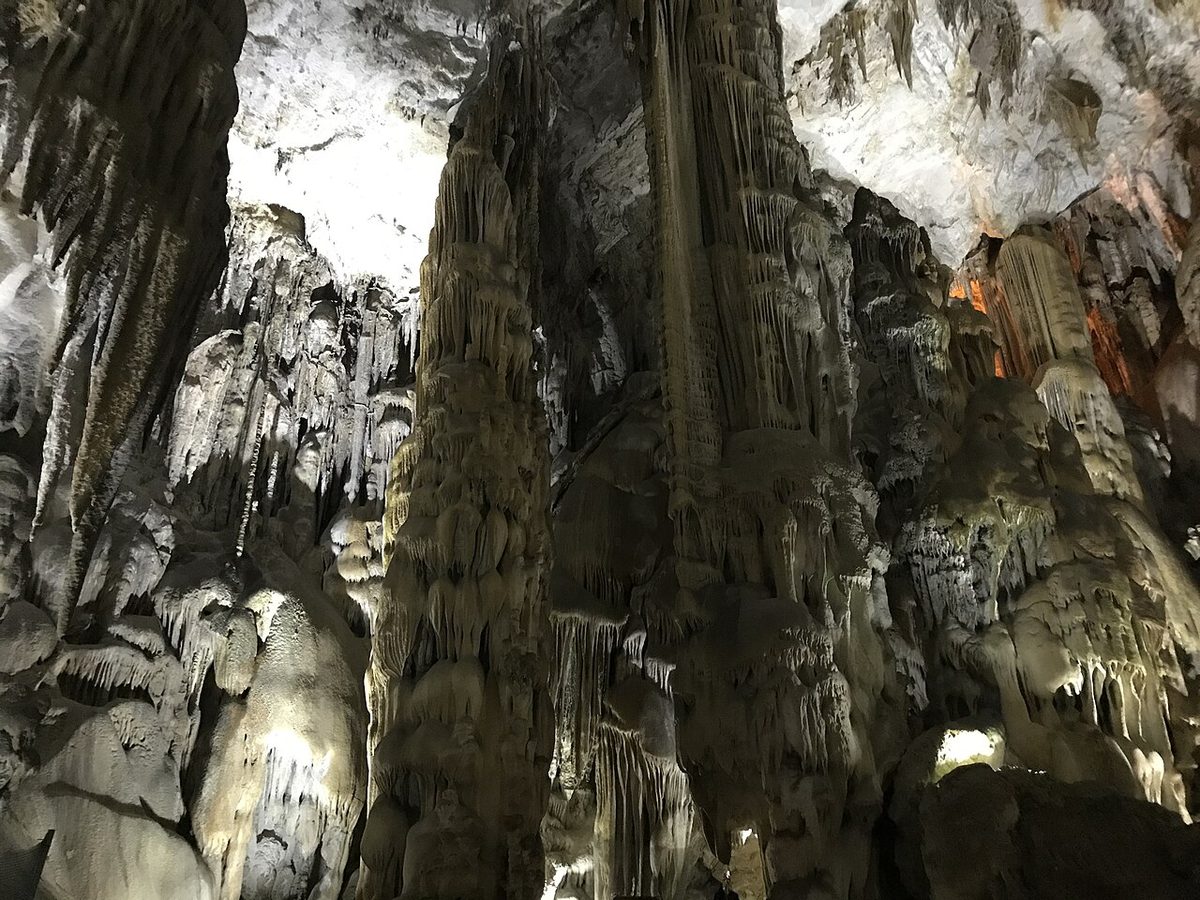
Overview
| Designation | National Park of China (second batch) |
| Province | Guizhou |
| Location | Guizhou |
| Latitude, longitude | 26.7, 105.9 Google Maps |
| Highlights | Cave |
| Area | 307 km² |
| Nearby cities | Guiyang, Anshun |
| Nearby sites | Red Maple Lake 57km, Dragon Palace Caves 67km, Huangguoshu Waterfall 82km, Pingtang Scenic Area 172km, Maling River 200km Search nearby |
| Themes | Cave, Karst |
About
Zhijin Cave lies in Zhijin County, Bijie, western Guizhou, 122 km from Anshun and 152 km from Guiyang; the 307 km² area includes the cave, the old town of Zhijin, the Hongjiadu plateau lake and the Luojie River. Its slogan: “after Huangshan you look at no other mountain; outside Zhijin Cave there is no other cave.”
The cave covers over 700,000 m², with 12 km developed; the widest span is 175 m, the height generally 60 to 100 m with a relative difference of over 150 m, and the deposits average about 40 m high, the tallest 70 m. More than 40 kinds of calcium carbonate formation are found, every type known in the world’s caves, composing scenes of great complexity. It is divided into 12 areas and 47 halls, among them the Welcome Hall, the Sutra Hall, the Longevity Palace, Wangshan Lake, the Moon Palace, the Lingxiao Hall, the Snow Fragrance Palace, the Pagoda Forest, the Hundred Thousand Mountains, the Water Country and the Golden Rat Palace.
The Moon Palace, one of the largest, is over 50,000 m². In its centre rises the “Suoluo Tree”, layered with stone lingzhi, also called Lingzhi Mountain; deep inside is the national treasure, the Silver Rain Tree, an extremely rare semi-transparent milky crystal formation like an opening flower, 17 m high in a white jade dish 2.4 m across, unmatched in the world. Nearby the Overlord’s Helmet, two halberd-shaped stalagmites growing from a round mound over 3 m across, the Mysterious Buddha, Chang’e Flying to the Moon, the Underground Star City and the Tropical Rainforest.
The Lingxiao Hall is among the most beautiful, with huge coloured curtains tens of metres wide hanging on both walls and dozens of snow-white dripstone groups: the Jade Emperor, the ornamental column, the crane, the jade dragon, the goddess and the snake.
The Snow Fragrance Palace, also the Crystal Palace, has white deposits throughout, with a stone bamboo garden and helictites. The Pagoda Forest cave has over a hundred travertine pagodas, with Snow on Green Pines, the Hanging Pipa, the Stone Drum, Jianmen Pass and the Shadow Spring.
Zhijin Cave was formerly called Daji Cave; it was found in 1980 by a county survey team.
It is in the second batch of national parks of China (national scenic areas) named by the State Council in 1988.
Main sights
Welcome Hall (Yingbin Hall): the hall near the start of the route, opening toward the deeper parts of the cave; the boardwalk leads on from here to the other halls.
Lecture Hall (Jiangjing Hall): one of the cave's sections, after the Welcome Hall, with a concentration of columns and flowstone curtains.
Hundred Thousand Mountains (Shiwan Dashan): a field of stalagmites in the cave, numerous and varied in form, hence the name.
Watery Land (Shuixiang Zeguo): a part of the cave with water, where pools set off the formations around them, hence the name.
Zhijin old town: in Zhijin county town, with lanes and temples dating from the Qing period. The Caishen Temple is one of the better-known buildings.
Hongjiadu: a reservoir on the Liuchong River, a headwater of the Wujiang, north of the cave, with a broad lake among karst hills.
Geology and landscape
Zhijin Cave lies in the karst of the Guizhou plateau. Water dissolves limestone and opens passages along fractures. As the underground river cut downward, the cave was left above it as a dry passage.
The deposits inside are calcite left by lime-bearing water as it drips, flows or seeps. Dripping from the roof builds stalactites and stalagmites, which join as columns; water running down a wall builds flowstone curtains and cascades; around pools it forms shields, rimstone dams and crystals on the floor.
What sets Zhijin apart is the range of forms. Silver Rain Tree, stone 'ganoderma', helictites, cave flowers, cave pearls and soda straws all occur, some tens of metres tall, and many are large.
Temperature in the cave stays fairly constant and humidity is high, so the deposits are still growing, slowly.
Travel tips
Getting there: Zhijin Cave is two to three hours by expressway from Guiyang, or can be reached from Anshun. The cave is northeast of Zhijin county town, where buses run to the site.
Route: a fixed route follows walkways through the cave, passing the Welcome Hall, Lecture Hall, Guanghan Palace, Lingxiao Hall, Xuexiang Palace and Pagoda Forest Cave.
What to see: the Silver Rain Tree in Guanghan Palace, the curtains of coloured flowstone in Lingxiao Hall and the white crystal formations in Xuexiang Palace are typical.
Time: a full tour takes about two to three hours, with many steps.
Season: the cave temperature is steady and cool all year; it is most pleasant in hot summer weather, and road conditions outside can be poor in the rainy season.
Nearby: Zhijin old town and Hongjiadu lake are close; the cave is often combined with Dragon Palace and Huangguoshu.
Where to stay: Zhijin county town has lodging, and there are a few places near the site; Guiyang and Anshun are alternatives.
Caution: the cave is damp and the steps are slippery; wear non-slip shoes and bring a jacket.
Map
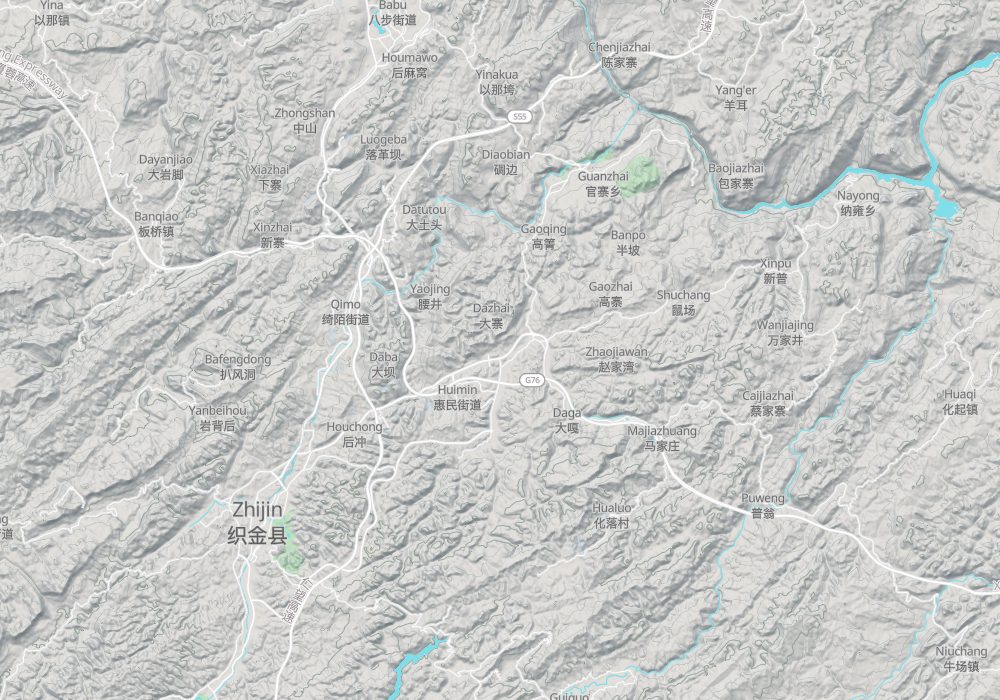
Photo credits: Zhijin Cave: Esiymbro (CC BY-SA 4.0, Wikimedia Commons)
Nearby
| World Heritage | Tusi Sites 153km, Chishui Scenic Area 200km, Shibing Karst (Yuntai Mountain) 224km, Wuyang River 242km |
| National parks | Red Maple Lake 57km, Dragon Palace Caves 67km, Jiudongtian (Nine Skylights) 74km, Huangguoshu Waterfall 82km |
| AAAAA attractions | Baili Azalea Scenic Area 62km, Qingyan Ancient Town Scenic Area 88km |
| AAAA attractions | Tianlong Tunpu 46km, Yunfeng Tunpu Scenic Area 49km, Hongshan Lake 49km, Qianshan Xiushui Tourist Scenic Area 51km |
| UNESCO Global Geoparks | Xingwen UNESCO Global Geopark 188km |
| Cities | Guiyang 80km |
| Historical sites | Zhijin Ancient Building Complex 13km, Qianxi Guanyindong Site 19km |
| Historic towns | Tianlong Town 46km |
| Historic villages | Yunshantun Village 49km |