 Park of China
Overview
| Name | Xiamen 厦门 |
| Web address | https://parkofchina.com/en/cityxiamen.html |
| Province | Fujian |
| Location | Fujian |
| Latitude, longitude | 24.48, 118.09 Google Maps |
| Top sights | Gulangyu, Nanputuo Temple, Xiamen University, Hulishan Fort, Jimei School Village |
About
Xiamen lies on the south-east coast of Fujian at the mouth of the Jiulong River. Its centre is Xiamen Island; across a narrow strait to the south-west is Gulangyu, and on the mainland opposite are Jimei, Haicang and other districts. With a mild climate and greenery all year round, it is a well-known seaside city. See also Cities of China.
The Ming fortified the place early in the dynasty, and the name Xiamen dates from then. At the end of the Ming, Zheng Chenggong (Koxinga) made Xiamen his base and sailed from here to recover Taiwan. After the Opium War Xiamen became one of the five treaty ports, and consulates and Western-style houses were built on Gulangyu. Xiamen is also a famous home of overseas Chinese, many of whom set out from here for South-East Asia.
Gulangyu is the best-known part of Xiamen: an island without cars whose lanes keep a wealth of early modern buildings mixing Chinese and Western styles. Called the “piano island” for its many pianos, “Kulangsu: a Historic International Settlement” is a World Cultural Heritage site. With Wanshi Hill on Xiamen Island it forms the national scenic area of Gulangyu–Wanshishan.

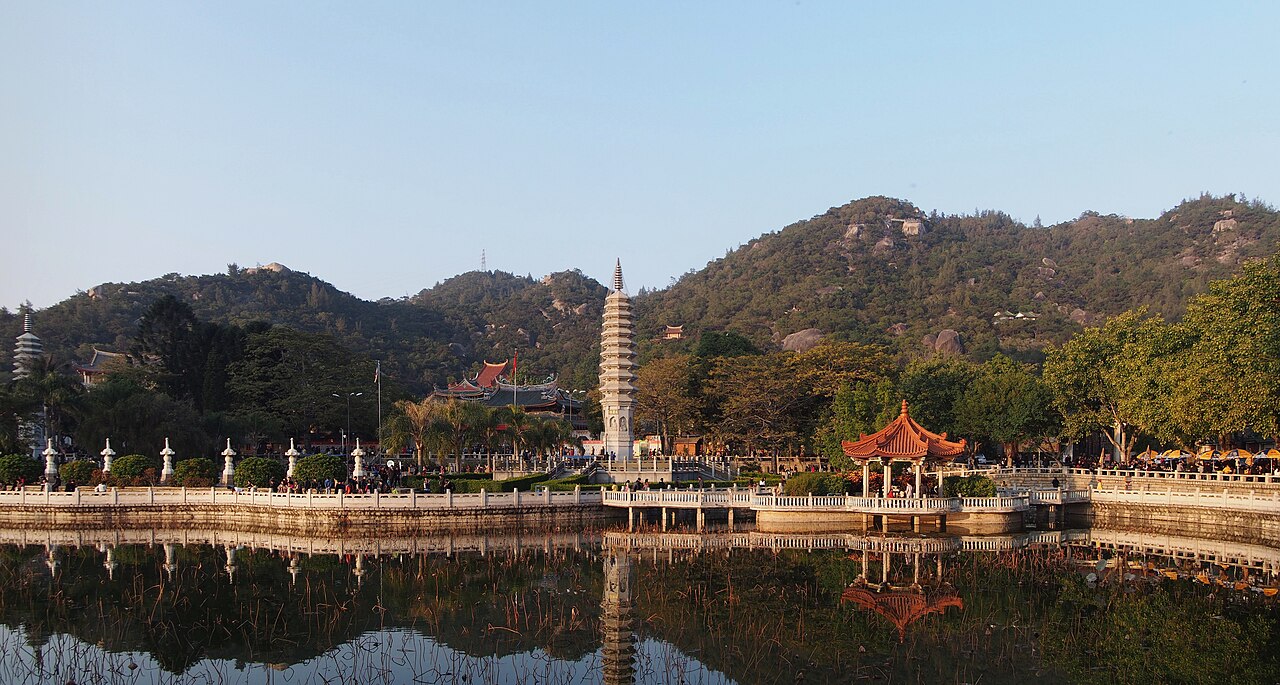
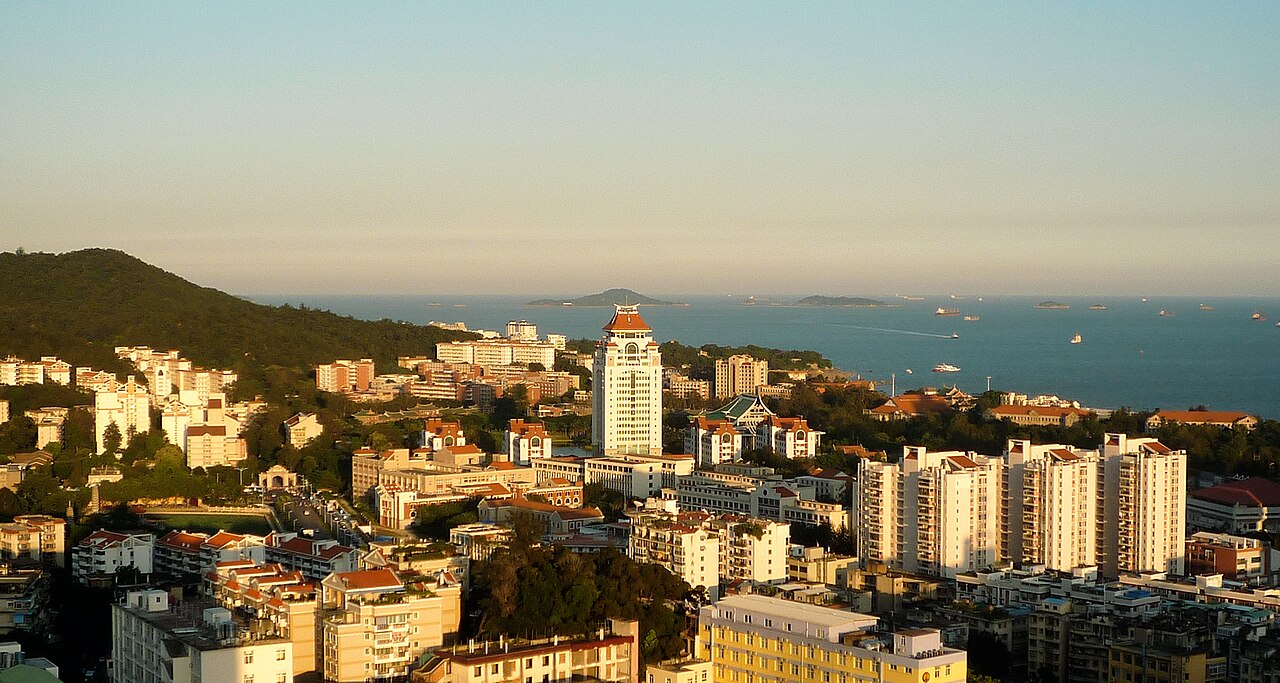
Below the Five Old Men Peaks in the south of Xiamen Island is Nanputuo Temple, a famous Buddhist temple of southern Fujian; beside it, Xiamen University, founded by the overseas Chinese Tan Kah Kee (Chen Jiageng), has a seaside campus with buildings in a style of their own. Hulishan Fort in the south-east of the island dates from the late Qing and keeps the great gun bought from Germany at the time. A coastal road runs round the island. Across the water, Jimei School Village, also founded by Tan Kah Kee, is known for its “Kah Kee style” buildings of red tile and white stone. Xiamen is the centre of southern Fujian culture, with the Minnan dialect, nanyin music and local snacks such as satay noodles and sea-worm jelly.

Travel tips
Getting there: Xiamen Gaoqi International Airport is in the north of Xiamen Island; high-speed trains run to Xiamen and Xiamen North stations. The city has a metro and bus rapid transit.
Sightseeing: Gulangyu is reached by ferry from Xiamen Island; tickets are scarce in peak season, so buy ahead. The island is explored on foot and its main lanes take a day. Nanputuo Temple and Xiamen University are next to each other.
Photo credits: Nanputuo Temple: rheins (CC BY 3.0, Wikimedia Commons); Xiamen University by the sea: Ratvirgin (CC BY-SA 3.0, Wikimedia Commons); Jimei School Village: DragonSamYU (CC BY-SA 4.0, Wikimedia Commons)