
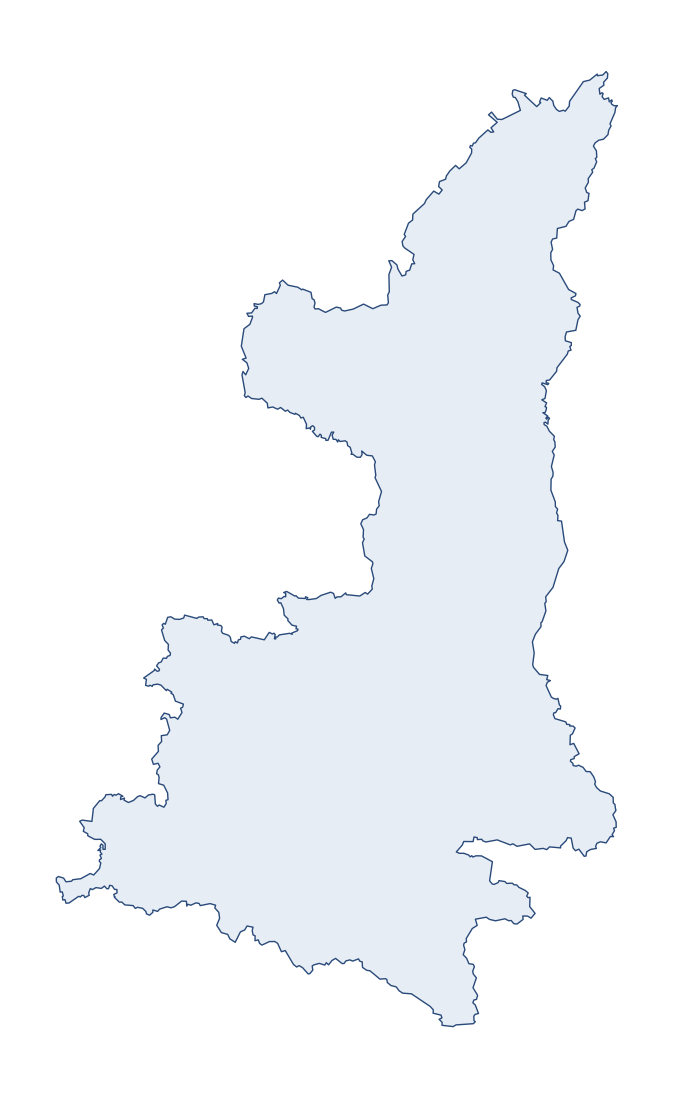
270 Major Historical and Cultural Sites Protected at the National Level in Shaanxi (batches 1–8, named by the State Council 1961–2019; 2 of them cross provincial borders, such as the Great Wall and the Grand Canal). Dots are coloured by category. See also Shaanxi and all provinces.
Liste:


Weinan (60)
- Grab und Schrein des Sima Qian 司马迁墓和祠Alte Gräber · 2. Liste (1982)Tomb of the Western Han historian Sima Qian and the shrine later built for him.
- Xiyue-Tempel 西岳庙Alte Bauwerke · 3. Liste (1988)Also called the Huayue Temple, a place for worshipping the Western Peak, Mount Hua; moved to its present site in the Eastern Han, with present buildings of the Ming and Qing.
- Qiaoling-Mausoleum 桥陵Alte Gräber · 3. Liste (1988)Tomb of Emperor Ruizong of Tang, Li Dan, with Feng Mountain as the tomb, an underground palace cut into the mountainside and a surrounding enclosure wall.
- Stätte der Wei-Mauer 魏长城遗址Alte Fundstätten · 4. Liste (1996)Great Wall built by the Wei state in the Warring States period, first built in the 19th year of King Hui of Wei (358 BC) and used to defend against Qin attacks.
- Yongling-Mausoleum 永陵Alte Gräber · 4. Liste (1996)Joint cemetery of Yuan Baoju, Emperor Wen of Western Wei, and Empress Yifu, with a round mound and one stone carving surviving before the tomb.
- Dayu-Tempel in Hancheng 韩城大禹庙Alte Bauwerke · 4. Liste (1996)Tempel für den Großen Yu aus der Yuan-Zeit.
- Fundstätte Tianshuigou 甜水沟遗址Alte Fundstätten · 5. Liste (2001)Altsteinzeitliche Fundstätte.
- Fundstätte Yuanjunmiao–Quanhucun 元君庙—泉护村遗址Alte Fundstätten · 5. Liste (2001)Vorgeschichtliche jungsteinzeitliche Fundstätte.
- Fundstätte Jingshicang 京师仓遗址Alte Fundstätten · 5. Liste (2001)Also called Huacang, a large Western Han granary site near the confluence of the Yellow River and the Wei River.
- Fundstätte Liangzhou 良周遗址Alte Fundstätten · 5. Liste (2001)Alte Fundstätte der Qin- und Han-Zeit.
- Grab und Tempel des Cang Jie 仓颉墓与庙Alte Bauwerke · 5. Liste (2001)The tomb and temple commemorating Cang Jie, a figure of the legendary age, with the temple in front and the tomb behind, repaired many times in the Ming and Qing.
- Puzhao-Tempel in Hancheng 韩城普照寺Alte Bauwerke · 5. Liste (2001)Tempelbau aus der Yuan-Zeit.
- Konfuziustempel Hancheng 韩城文庙Alte Bauwerke · 5. Liste (2001)A Ming dynasty building, the most complete surviving Confucian temple in Shaanxi.
- Stadtgott-Tempel Hancheng 韩城城隍庙Alte Bauwerke · 5. Liste (2001)A City God temple whose main buildings were built in the Ming.
- Alter Gebäudekomplex im Dorf Dangjia 党家村古建筑群Alte Bauwerke · 5. Liste (2001)A village founded 670 years ago whose courtyard houses are typical of Hancheng dwellings; farming and commerce were equally important in the Qing, giving it the name "Little Hancheng".
- Geisterturm des Stadtgott-Tempels Chengcheng 澄城城隍庙神楼Alte Bauwerke · 5. Liste (2001)Only the spirit tower of the City God temple survives, commonly called the Music Tower, rebuilt in the 10th year of Wanli of the Ming (1582), made up of a central tower and east and west towers.
- Fundstätte Hengzhen 横阵遗址Alte Fundstätten · 6. Liste (2006)Alte jungsteinzeitliche Fundstätte.
- Fundstätte Liangdaicun 梁带村遗址Alte Fundstätten · 6. Liste (2006)Alte Fundstätte der Westlichen Zhou.
- Pagode des Jingjin-Tempels 精进寺塔Alte Bauwerke · 6. Liste (2006)A pavilion-style hollow brick pagoda begun in the reign of Emperor Suzong of the Tang and repaired in the 7th year of Qingli of the Northern Song (1047); only the pagoda remains after the temple was destroyed.
- Pagode des Shousheng-Tempels in Bailiang 百良寿圣寺塔Alte Bauwerke · 6. Liste (2006)Also called the Bailiang Pagoda, a square close-eaved brick pagoda of thirteen stories with a remaining height of about 32 meters.
- Fawang-Tempel 法王庙Alte Bauwerke · 6. Liste (2006)Tempelkomplex aus der Song- bis Qing-Zeit.
- Beiying-Tempel 北营庙Alte Bauwerke · 6. Liste (2006)A Guandi Temple begun in the Jin and named for its proximity to the Beiying barracks; one of the five camp temples of the ancient city of Hancheng.
- Tempel des Jadekaisers und der Houtu 玉皇后土庙Alte Bauwerke · 6. Liste (2006)A temple enshrining the Jade Emperor and the earth goddess Houtu.
- Blausteinhalle des Xuanwu-Tempels 玄武庙青石殿Alte Bauwerke · 6. Liste (2006)Halle aus Blaustein aus der Ming-Zeit.
- Pagode des Qing'an-Tempels 庆安寺塔Alte Bauwerke · 6. Liste (2006)Also called the Laihua Pagoda, begun in the Tang, repaired in the Northern Song and rebuilt in the 37th year of the Ming Jiajing reign (1558); a nine-story hollow brick pavilion-style pagoda 30 meters high.
- Fengtu-Wohlfahrtsspeicher 丰图义仓Alte Bauwerke · 6. Liste (2006)Speichergebäude aus der Qing-Zeit.
- Stätte des Weihua-Aufstands 渭华起义旧址Stätten der neueren Geschichte · 6. Liste (2006)Includes the Weihua Uprising command post, the CPC East Shaanxi Special Committee and the revolutionary activity sites of Liu Zhidan; the uprising was led by the Communist Party in east Shaanxi in 1927.
- Fundstätte Nansha 南沙遗址Alte Fundstätten · 7. Liste (2013)Alte Fundstätte von der Jungsteinzeit bis zur Shang-Zeit.
- Fundstätte Xiaheixi 下河西遗址Alte Fundstätten · 7. Liste (2013)Alte Fundstätte der Jungsteinzeit und der Han-Zeit.
- Signalturmstätte Shi'er Liancheng 十二连城烽火台遗址Alte Fundstätten · 7. Liste (2013)Stätte eines Signalturms von der Östlichen Zhou bis zur Ming-Zeit.
- Stätte des Zhengyi-Kanal-Getreidespeichers 徵邑漕仓遗址Alte Fundstätten · 7. Liste (2013)Canal granary site from the Spring and Autumn period to the Western Han.
- Altstadt Tongguan 潼关故城Alte Fundstätten · 7. Liste (2013)Ruinen einer alten Stadt der Tang- bis Ming-Zeit.
- Brennofenstätte Yaotou 尧头窑遗址Alte Fundstätten · 7. Liste (2013)Alte Brennofenstätte, seit der Tang-Zeit in Betrieb.
- Yongyuanling 永垣陵Alte Gräber · 7. Liste (2013)Tomb related to the Former Zhao of the Sixteen Kingdoms; the occupant is unknown and may be the father of Liu Yao, emperor of the Former Zhao.
- Chengling-Mausoleum der Nördlichen Zhou 北周成陵Alte Gräber · 7. Liste (2013)Tomb of Yuwen Tai, posthumously honored as emperor of the Northern Zhou; it has a round mound and, in front, a Song stele and a Qing stele.
- Grab des Li Chongjun 李重俊墓Alte Gräber · 7. Liste (2013)Grab des Li Chongjun aus der Tang-Zeit.
- Tang-Mausoleum Huiling 唐惠陵Alte Gräber · 7. Liste (2013)Also called the Tomb of the Yielding Emperor, tomb of Li Xian, eldest son of Emperor Ruizong of Tang and elder brother of Emperor Xuanzong.
- Friedhof der Familie Li 李氏家族墓地Alte Gräber · 7. Liste (2013)Familienfriedhof aus der Qing-Zeit.
- Pagode des Fayuan-Tempels 法源寺塔Alte Bauwerke · 7. Liste (2013)The only surviving Tang dynasty multi-storied brick pagoda of Fayuan Temple, hollow and octagonal with seven stories, 27.3 meters high.
- Südpagode des Huiche-Tempels 慧彻寺南塔Alte Bauwerke · 7. Liste (2013)Built in the 1st year of the Zhenguan reign of the Tang (627), originally eleven stories; the top two stories collapsed in the great Jiajing earthquake of the Ming; the temple is gone and only this pagoda remains.
- Pagode des Luoshan-Tempels 罗山寺塔Alte Bauwerke · 7. Liste (2013)Also called Daibao Pagoda, a multi-storied hollow brick pagoda on the east peak of Ruluo Mountain; the temple no longer exists.
- Pagode des Chongshou-Tempels 崇寿寺塔Alte Bauwerke · 7. Liste (2013)Also called the North Temple Pagoda, built in the 3rd year of the Shaosheng reign of the Northern Song (1096), a square dense-eaved brick pagoda of thirteen stories, 45 meters high.
- Pagode des Daxiang-Tempels 大象寺塔Alte Bauwerke · 7. Liste (2013)Also called the Longwang Temple Pagoda, a Song dynasty solid square dense-eaved brick pagoda; the temple was destroyed during the War of Resistance against Japan.
- Jiulang-Tempel in Hancheng 韩城九郎庙Alte Bauwerke · 7. Liste (2013)Commonly called Jiulang Temple, a Yuan dynasty temple honoring Zhao Wu, Cheng Ying and Gongsun Chujiu.
- Große Buddhahalle des Qingshan-Tempels 庆善寺大佛殿Alte Bauwerke · 7. Liste (2013)The Yuan-dynasty Great Buddha Hall in Qingshan Temple, popularly called East Temple, in the middle of Jincheng Avenue.
- Sanqing-Halle des Ziyun-Tempels 紫云观三清殿Alte Bauwerke · 7. Liste (2013)The Sanqing Hall of a Yuan dynasty Daoist temple, moved to its present site in 2001.
- Konfuziustempel Heyang 合阳文庙Alte Bauwerke · 7. Liste (2013)Only Dacheng Hall, Minglun Hall and Zunjing Pavilion survive; Dacheng Hall was rebuilt in the 2nd year of the Hongwu reign of the Ming (1369).
- Pagode des Huizhao-Tempels 慧照寺塔Alte Bauwerke · 7. Liste (2013)Commonly called Xiagui Pagoda, said to have been begun in the Jin, repaired in the Song, destroyed in the great Jiajing earthquake of the Ming and repaired in the 9th year of the Wanli reign (1581).
- Brücke auf der Brücke 桥上桥Alte Bauwerke · 7. Liste (2013)A two-tier stone arch bridge over the Chishui River; the lower bridge was built in the 6th year of the Kangxi reign of the Qing (1667), and another bridge was added on top in the 12th year of the Daoguang reign (1832).
- Yuxiu-Brücke 毓秀桥Alte Bauwerke · 7. Liste (2013)Commonly called South Bridge, a ten-span stone arch bridge over the Chan River, built in the Qing dynasty.
- Ehemaliger Wohnsitz von Yang Hucheng 杨虎城旧居Stätten der neueren Geschichte · 7. Liste (2013)Ehemaliger Wohnsitz von Yang Hucheng, 1934 fertiggestellt.
- Fundstätte Liujiawa 刘家洼遗址Alte Fundstätten · 8. Liste (2019)An Eastern Zhou site discovered in 2016, identified as the capital site and cemetery of the later period of the ancient Rui state, covering about 3 square kilometers.
- Friedhof der Familie Yang aus Hongnong 弘农杨氏家族墓地Alte Gräber · 8. Liste (2019)Cemetery of the Yang family from the Han to the Northern Wei.
- Familienfriedhof des Yang Zhen 杨震家族墓地Alte Gräber · 8. Liste (2019)Friedhof der Familie des Yang Zhen aus der Östlichen Han.
- Pagode des Wanhu-Tempels in Fuping 富平万斛寺塔Alte Bauwerke · 8. Liste (2019)Pagode aus der Tang-Zeit.
- Pagode des Haiyuan-Tempels in Pucheng 蒲城海源寺塔Alte Bauwerke · 8. Liste (2019)Pagode aus der Jin-Zeit.
- Qianjin-Pagode in Heyang 合阳千金塔Alte Bauwerke · 8. Liste (2019)Pagode aus der Ming-Zeit.
- Guandi-Tempel in Liuzhi 柳枝关帝庙Alte Bauwerke · 8. Liste (2019)Guandi-Tempel aus der Ming- und Qing-Zeit.
- Huayan-Tempel in Mazhuang 马庄华严寺Alte Bauwerke · 8. Liste (2019)Tempel aus der Ming- bis Republikzeit.
- Prüfungshalle Pucheng 蒲城考院Alte Bauwerke · 8. Liste (2019)A Qing-dynasty examination hall building for the imperial examinations.
Xi'an (57)
- Große Wildganspagode 大雁塔Alte Bauwerke · 1. Liste (1961)Built under the direction of Xuanzang in the third year of the Yonghui reign of the Tang (652) to keep the scriptures he brought from India; now a seven-story square brick pagoda.
- Kleine Wildganspagode 小雁塔Alte Bauwerke · 1. Liste (1961)Also called the Jianfu Temple Pagoda, a dense-eave brick pagoda first built in the Jinglong years of the Tang; originally fifteen stories, it has thirteen after an earthquake damaged its top in the Ming, and is about 43.3 meters tall.
- Xingjiao Temple Pagodas (including other buildings of Xingjiao Temple) 兴教寺塔(包括兴教寺其他建筑物)Alte Bauwerke · 1. Liste (1961)Han Buddhist temple built around the Tang-dynasty Xingjiao Temple pagodas; its halls were destroyed by war in the Qing and rebuilt in the Republican period.
- Stadtmauer Xi'an 西安城墙Alte Bauwerke · 1. Liste (1961)City wall around the Ming and Qing city of Xi'an, mainly built in the Hongwu years of the Ming, about 13.74 kilometers around, made up of the wall, gates, barbicans, watchtowers, corner towers and a moat.
- Beilin (Stelenwald) Xi'an 西安碑林Grotten und Steinschnitzereien · 1. Liste (1961)Stele museum on the former site of the Xi'an Prefecture Confucian temple, holding many ancient steles, epitaphs and stone carvings.
- Fundstätte Banpo 半坡遗址Alte Fundstätten · 1. Liste (1961)Yangshao-culture village site six to seven thousand years old, a typical Neolithic village site in the Yellow River basin.
- Fundstätte Fenghao 丰镐遗址Alte Fundstätten · 1. Liste (1961)Collective name for the Western Zhou capitals Fengjing and Haojing, Fengjing built by King Wen of Zhou and Haojing by King Wu, facing each other across the Feng River.
- Stätte des Epang-Palasts 阿房宫遗址Alte Fundstätten · 1. Liste (1961)Unfinished palace first built in the 35th year of the First Emperor of Qin (212 BC); a group of rammed-earth foundations is now identified as the site.
- Stätte der Han-zeitlichen Stadt Chang'an 汉长安城遗址Alte Fundstätten · 1. Liste (1961)Capital site of the Western Han, with a city circuit of 63 li and an area of about 36 square kilometers, containing the palace areas of Changle Palace, Weiyang Palace and others.
- Stätte des Daming-Palasts 大明宫遗址Alte Fundstätten · 1. Liste (1961)Palace city in the northeast of Tang Chang'an, first built in the eighth year of the Zhenguan reign (634); the largest of the three palace complexes of Tang Chang'an, where Tang emperors long conducted court affairs.
- Mausoleum des ersten Qin-Kaisers 秦始皇陵Alte Gräber · 1. Liste (1961)Tomb of the First Emperor of Qin, with inner and outer enclosure walls and accompanying tombs and pits; the Terracotta Army pits to the east were discovered in 1974, and the underground palace has not been excavated.
- Stätten des Xi'an-Zwischenfalls 西安事变旧址Stätten der neueren Geschichte · 2. Liste (1982)Memorial sites of the Xi'an Incident, comprising eight buildings including Zhang Xueliang's residence, Yang Hucheng's Zhiyuan villa, the Xincheng Yellow Building and the Wujian Hall.
- Fundstätte des Lantian-Menschen 蓝田猿人遗址Alte Fundstätten · 2. Liste (1982)Place where fossils of the Lantian subspecies of Homo erectus were found, dating to the middle Pleistocene and the early Paleolithic.
- Stätte des Xi'an-Büros der Achten Route-Armee 八路军西安办事处旧址Stätten der neueren Geschichte · 3. Liste (1988)Office of the Eighth Route Army in Xi'an from 1937 to 1946, the earliest established and longest lasting of the Eighth Route Army and New Fourth Army offices nationwide, now a memorial hall.
- Große Moschee Xi'an 西安清真寺Alte Bauwerke · 3. Liste (1988)Also called the Huajue Lane Great Mosque, with five courtyards along an east-west axis and the prayer hall at the far west; traditionally first built in the first year of the Tianbao reign of the Tang (742), with the present layout from the Ming and Qing.
- Duling-Mausoleum 杜陵Alte Gräber · 3. Liste (1988)Tomb of Emperor Xuan of Han, Liu Xun, on Honggu Plateau, looking south toward the Zhongnan Mountains.
- Fundstätte Jiangzhai 姜寨遗址Alte Fundstätten · 4. Liste (1996)Neolithic settlement site about 6,000 years old, mainly of the Banpo and Miaodigou types of the Yangshao culture.
- Sui Daxing and Tang Chang'an City Site (including Qinglong Temple Site) 隋大兴唐长安城遗址(包括青龙寺遗址)Alte Fundstätten · 4. Liste (1996)Site of Sui Daxing and Tang Chang'an, the capitals of the Sui and Tang and then the largest city in the world.
- Fundstätte Baqiao 灞桥遗址Alte Fundstätten · 4. Liste (1996)Site of an ancient bridge over the Ba River, a key route from ancient Chang'an to the east.
- Stätte des Huaqing-Palasts 华清宫遗址Alte Fundstätten · 4. Liste (1996)Site of a Tang imperial detached palace, with palaces, bath pools and gardens built using the hot springs of Mount Li; named Huaqing Palace in the sixth year of the Tianbao reign (747).
- Fawang-Pagode des Xianyou-Tempels 仙游寺法王塔Alte Bauwerke · 4. Liste (1996)Brick pagoda first built in the first year of the Renshou reign of the Sui (601), the only Sui-dynasty brick pagoda surviving in China.
- Glockenturm und Trommelturm Xi'an 西安钟楼、鼓楼Alte Bauwerke · 4. Liste (1996)Time-keeping and alarm structures of the Ming Xi'an prefectural city; the Bell Tower was first built in the 17th year of the Hongwu reign (1384) and moved to its present site in the tenth year of the Wanli reign.
- Shuilu-Kloster 水陆庵Alte Bauwerke · 4. Liste (1996)Ming-dynasty convent expanded from the Shuilu Hall of Wuzhen Temple, with over 3,700 statues in its halls.
- Fundstätte Kangjia 康家遗址Alte Fundstätten · 5. Liste (2001)A Neolithic Longshan culture site; the surviving remains measure about 420 m east-west and 460 m north-south.
- Fundstätte Laoniupo 老牛坡遗址Alte Fundstätten · 5. Liste (2001)A large site with mainly Shang culture deposits, also containing Yangshao and Shaanxi Longshan remains.
- Stadtruine Yueyang 栎阳城遗址Alte Fundstätten · 5. Liste (2001)An important city site from the Warring States to the Han, with the Shichuan River flowing through the northern and central parts of the old city.
- Stätte der Ost-Wei-Brücke 东渭桥遗址Alte Fundstätten · 5. Liste (2001)The site of an ancient bridge over the Wei River, said to have been built by Emperor Gaozu of Han to link Chang'an and Yueyang, an ancient transport facility leading north.
- Kumarajiva-Reliquienpagode 鸠摩罗什舍利塔Alte Bauwerke · 5. Liste (2001)The reliquary pagoda of the Later Qin eminent monk Kumarajiva, a Tang building, a stone-carved octagonal pavilion-style pagoda imitating wood.
- Gongshu-Halle 公输堂Alte Bauwerke · 5. Liste (2001)Built in the Yongle reign of the Ming, originally called Yuanyuan Hall, only the main hall survives; it was built to commemorate Lu Ban.
- Shandao-Pagode des Xiangji-Tempels 香积寺善导塔Alte Bauwerke · 5. Liste (2001)Xiangji Temple is the birthplace of Pure Land Buddhism; the Shandao Pagoda is the larger of the two Tang brick pagodas in the temple, a square multi-story brick pagoda.
- Stadtgott-Tempel Xi'an 西安城隍庙Alte Bauwerke · 5. Liste (2001)The largest City God temple in Shaanxi and the northwest, governing the City Gods of the northwestern provinces; its main hall is the only hip-roofed building in Shaanxi.
- Bayun-Pagode 八云塔Alte Bauwerke · 5. Liste (2001)Also called Ruiguang Pagoda, a brick-and-wood dense-eaved pagoda first built in the 2nd year of Jinglong of the Tang (708), originally thirteen stories and now eleven, 36 m high.
- Stelenwald Zu’an des Chongyang-Palasts 重阳宫祖庵碑林Grotten und Steinschnitzereien · 5. Liste (2001)The stele forest in Zhongyang Palace, one of the three ancestral courts of Quanzhen Taoism, where its founder Wang Zhongyang practiced and was reburied.
- Östliche Qin-Mausoleen 秦东陵Alte Gräber · 6. Liste (2006)The royal mausoleum area of the Qin state in the Warring States, found in 1986, on the western foot of Mount Li, covering about 24 square kilometers in all.
- Ming-zeitliche Gräber der Prinzen von Qin 明秦王墓Alte Gräber · 6. Liste (2006)The tombs of Zhu Shuang, Prince of Qin, second son of the Ming founder, and of 13 later princes, with tombs of heirs, consorts and commandery princes.
- Pagode des Shengshou-Tempels in Chang'an 长安圣寿寺塔Alte Bauwerke · 6. Liste (2006)A relic pagoda in Shengshou Temple on South Wutai Mountain; the temple was begun in the Sui and rebuilt in the Northern Song, while the pagoda was built in the Tang.
- Pagoden des Huayan-Tempels in Chang'an 长安华严寺塔Alte Bauwerke · 6. Liste (2006)Two Tang pavilion-style brick pagodas on Shaoling Plateau: the pagoda of Chan master Du Shun, first patriarch of the Huayan school, and that of the National Master Qingliang, the fourth patriarch.
- Zhaohui-Pagode 昭慧塔Alte Bauwerke · 6. Liste (2006)Also called the Gaoling Pagoda or Sanyang Pagoda, a Tang pagoda named for the Tang-dynasty Zhaohui Cloister.
- Pagode des Daqin-Tempels 大秦寺塔Alte Bauwerke · 6. Liste (2006)An octagonal seven-story pavilion-style pagoda nearly 50 meters high, the earliest surviving remains of a Daqin Temple (Nestorian church) in China.
- Yisushe-Theater 易俗社剧场Stätten der neueren Geschichte · 6. Liste (2006)The theater used by the Yisushe, founded in 1912, one of the earlier modern-style theaters surviving in China.
- Fundstätte Yangguanzhai 杨官寨遗址Alte Fundstätten · 7. Liste (2013)Large central settlement site of the middle-late Yangshao culture in the Guanzhong region, covering about 800,000 square meters.
- Fundstätte Yuhuazhai 鱼化寨遗址Alte Fundstätten · 7. Liste (2013)Prehistoric settlement site with mainly Yangshao culture remains, covering about 75,000 square meters.
- Fundstätte Xiyu 西峪遗址Alte Fundstätten · 7. Liste (2013)Ancient site of the Neolithic and Qin-Han periods, on a loess terrace on the northern foot of the Qinling Mountains; it has been archaeologically excavated twice.
- Stätte des Jianzhang-Palasts 建章宫遗址Alte Fundstätten · 7. Liste (2013)Detached palace built by Emperor Wu of Han southwest of Chang'an city; foundations of several palace halls and the Taiye Pool site remain.
- Stätte des Yuanqiu-Altars 圜丘遗址Alte Fundstätten · 7. Liste (2013)Also called the Tang Altar of Heaven, first built in the Sui dynasty as the place where Sui and Tang emperors sacrificed to Heaven; the altar remains survive.
- Grab der Kaiserin Dou 窦皇后陵Alte Gräber · 7. Liste (2013)The tomb of Empress Dou of the Western Han, on Bailu Plateau in Baqiao District, next to Emperor Wen of Han's Baling; listed as a national key cultural relics protection unit in 2013.
- Westhan-zeitlicher Familienfriedhof auf dem Fengqi-Plateau 凤栖原西汉家族墓地Alte Gräber · 7. Liste (2013)A large family cemetery from the mid-to-late Western Han to the Wang Mang period, identified as the family tomb of Zhang Anshi, a senior minister under Emperor Xuan of Han; it is the only Han marquis-level family cemetery fully excavated to date.
- Grab der Kaiserinwitwe Bo 薄太后陵Alte Gräber · 7. Liste (2013)Also called Hannanling, the tomb of Empress Dowager Bo, mother of Emperor Wen of Han, named for lying south of Emperor Wen's Baling.
- Friedhof der Familie Lü in Lantian 蓝田吕氏家族墓地Alte Gräber · 7. Liste (2013)Tomb group of the Lü family of the mid-late Northern Song, burying the Neo-Confucian Lü Dalin and others; the cemetery has an ancestral hall, spirit way and stone carvings.
- Jingde-Pagode 敬德塔Alte Bauwerke · 7. Liste (2013)Also called the Baolin Temple Pagoda, a Song dynasty multi-storied brick pagoda on the site of Baolin Temple; the temple was destroyed in the 1st year of the Tongzhi reign of the Qing.
- Moschee in der Daxuexi-Gasse 大学习巷清真寺Alte Bauwerke · 7. Liste (2013)Second in size only to the Great Mosque of Huajue Lane and known with it as the east and west great mosques, said by its stele record to have been founded in 705.
- Fundstätte Dongmafang 东马坊遗址Alte Fundstätten · 8. Liste (2019)An ancient site from the Warring States period to the Western Han.
- Stätte der Mittleren Wei-Brücke 中渭桥遗址Alte Fundstätten · 8. Liste (2019)Stätte einer alten Brücke von der Qin- bis zur Tang-Zeit.
- Erlong-Pagode in Xi'an 西安二龙塔Alte Bauwerke · 8. Liste (2019)A square Tang-dynasty brick pagoda commonly called the feng shui pagoda; its temple is unknown, the upper part was demolished in the 1960s and it was reinforced in 2006.
- Dongyue-Opferhalle des Huayang-Tempels in Huxian 户县化羊庙东岳献殿Alte Bauwerke · 8. Liste (2019)Opferhalle eines Tempels aus der Yuan- bis Qing-Zeit.
- Revolutionspark 革命公园Stätten der neueren Geschichte · 8. Liste (2019)Built in 1927 to commemorate the soldiers and civilians who died in the defense of Chang'an (the "Two Tigers Defending Chang'an"); one of the oldest parks in Xi'an.
- Former Headquarters of the Red 25th Army at Gepai Town 葛牌镇红25军军部旧址Stätten der neueren Geschichte · 8. Liste (2019)Ehemaliges Hauptquartier der 25. Roten Armee 1935.
Xianyang (36)
- Maoling-Mausoleum 茂陵Alte Gräber · 1. Liste (1961)Tomb of Emperor Wu of Han and the largest Western Han imperial mausoleum, with a flat-topped square pyramid mound; the tomb of Huo Qubing is one of its satellite tombs.
- Grab des Huo Qubing 霍去病墓Alte Gräber · 1. Liste (1961)Tomb of the Western Han general Huo Qubing, east of Maoling; an earth mound with a large group of stone carvings before it.
- Zhaoling-Mausoleum 昭陵Alte Gräber · 1. Liste (1961)Tomb of Emperor Taizong of Tang, Li Shimin, built against Jiuzong Mountain; the largest of the eighteen Tang mausoleums of the Guanzhong region.
- Qianling-Mausoleum 乾陵Alte Gräber · 1. Liste (1961)Joint tomb of Emperor Gaozong of Tang, Li Zhi, and Wu Zetian, built against Liang Mountain.
- Shunling-Mausoleum 顺陵Alte Gräber · 1. Liste (1961)Tomb of Lady Yang of Rong, mother of Wu Zetian, who was posthumously honored as Empress Dowager Zhongxiao in the Wu Zhou period and the tomb renamed Mingyi Mausoleum.
- Dafosi-Grotten 大佛寺石窟Grotten und Steinschnitzereien · 3. Liste (1988)Tang-dynasty grottoes now part of the World Cultural Heritage site "Silk Roads: the Routes Network of Chang'an-Tianshan Corridor," the first World Cultural Heritage site in Xianyang.
- Haupthalle des Zhaoren-Tempels 昭仁寺大殿Alte Bauwerke · 3. Liste (1988)Main hall of a temple built in the Zhenguan years of the Tang to commemorate soldiers killed in the war against Xue Ju and Xue Renguo.
- Stätte der Qin-zeitlichen Stadt Xianyang 秦咸阳城遗址Alte Fundstätten · 3. Liste (1988)Capital site from the Warring States to the Qin, to which Duke Xiao of Qin moved the capital in 350 BC; remains such as Xianyang Palace No. 1 have been excavated.
- Changling-Mausoleum 长陵Alte Gräber · 3. Liste (1988)Joint cemetery of Emperor Gaozu of Han, Liu Bang, and Empress Lü in separate tombs of one enclosure, square in plan, both tombs shaped like inverted bowls.
- Kopfwerk des Zhengguo-Kanals 郑国渠首遗址Alte Fundstätten · 4. Liste (1996)Head of an irrigation canal in Guanzhong begun in the first year of King Zheng of Qin (246 BC) at the end of the Warring States, dug under the direction of the Han hydraulic engineer Zheng Guo; the canal was over 300 li long.
- Stätte des Ganquan-Palasts 甘泉宫遗址Alte Fundstätten · 4. Liste (1996)Qin-dynasty detached palace, repeatedly enlarged by Emperor Wu of Han, an important Han summer retreat and travel palace for governing.
- Tailing-Mausoleum 泰陵Alte Gräber · 4. Liste (1996)Joint cemetery of Yang Jian, Emperor Wen of Sui, and Empress Dugu.
- Stadtgott-Tempel Sanyuan 三原城隍庙Alte Bauwerke · 5. Liste (2001)First built in the 8th year of Hongwu of the Ming (1375), the best preserved City God temple in Shaanxi.
- Tai-Pagode 泰塔Alte Bauwerke · 5. Liste (2001)A multi-story brick pagoda imitating wood construction, first built in the 4th year of Jiayou of the Northern Song (1059), octagonal and seven stories, 53 m high.
- Chongwen-Pagode in Jingyang 泾阳崇文塔Alte Bauwerke · 5. Liste (2001)Commonly called the Tiefosi Pagoda, first built in the 19th year of Wanli of the Ming (1591), a multi-story brick pagoda, octagonal with thirteen stories, 87.2 m high.
- Pagode des Kaiyuan-Tempels in Binxian 彬县开元寺塔Alte Bauwerke · 5. Liste (2001)Also called the Binxian Pagoda, a brick-and-wood multi-story pagoda first built in the 5th year of Huangyou of the Northern Song (1053), octagonal with seven stories, 47 m high.
- Pagode des Wuling-Tempels 武陵寺塔Alte Bauwerke · 6. Liste (2006)The only surviving Song-dynasty octagonal pavilion-style brick pagoda of Wuling Temple, which was begun in the Northern Wei.
- Konfuziustempel Xianyang 咸阳文庙Alte Bauwerke · 6. Liste (2006)Also called the Xianyang Kong Temple, begun in the 4th year of the Ming Hongwu reign (1371), now the Xianyang Museum.
- Fundstätte Nianzipo 碾子坡遗址Alte Fundstätten · 7. Liste (2013)Alte Fundstätte von der Jungsteinzeit bis zur Westlichen Zhou.
- Fundstätte des alten Staates Tai 古邰国遗址Alte Fundstätten · 7. Liste (2013)Found in 1956 on the second terrace of the north bank of the Wei River, with a total area of about 750,000 sq m; identified as the site of the ancient Tai state in 1988.
- Fundstätte Zhengjiapo 郑家坡遗址Alte Fundstätten · 7. Liste (2013)Alte Fundstätte der Shang-Zeit.
- Stätte des Ausgangspunkts der Geraden Straße der Qin 秦直道起点遗址Alte Fundstätten · 7. Liste (2013)Stätte des Ausgangspunkts der Qin-zeitlichen Geraden Straße.
- Stätte der alten Shahe-Brücke 沙河古桥遗址Alte Fundstätten · 7. Liste (2013)Stätte einer alten Brücke der Qin- und Han-Zeit.
- Porzellan-Brennofenstätte Anren 安仁瓷窑遗址Alte Fundstätten · 7. Liste (2013)Porzellan-Brennofenstätte der Song- bis Yuan-Zeit.
- Hanyunling 汉云陵Alte Gräber · 7. Liste (2013)Also called Yunling, the tomb of Consort Zhao (Lady Gouyi), mother of Emperor Zhao of Han, south of Ganquan Palace.
- Xingningling 兴宁陵Alte Gräber · 7. Liste (2013)Grab aus der Tang-Zeit.
- Yongkangling 永康陵Alte Gräber · 7. Liste (2013)Grab des Li Hu, Großvater des Tang-Kaisers Gaozu.
- Pagode des Qingfan-Tempels 清梵寺塔Alte Bauwerke · 7. Liste (2013)Commonly called the Xingping North Pagoda, a Tang multi-storied hollow brick pagoda; Qingfan Temple was begun in the 1st year of the Zhenguan reign of the Tang, and only the pagoda survives.
- Pagode des Baoben-Tempels 报本寺塔Alte Bauwerke · 7. Liste (2013)Commonly called Wugong Pagoda, a Song dynasty Buddhist pagoda; the temple was converted by Emperor Taizong of the Tang from his mother's villa.
- Stadtgott-Tempel Wugong 武功城隍庙Alte Bauwerke · 7. Liste (2013)A City God temple built in the Ming and repaired many times in the Qing and modern times; the complex covers 8.5 mu.
- Eiserne Pagode Beidu 北杜铁塔Alte Bauwerke · 7. Liste (2013)Also called the Thousand Buddha Iron Pagoda or Fuchang Temple Iron Pagoda, cast in the Wanli reign of the Ming; Fuchang Temple is gone and only the iron pagoda remains.
- Revolutionary Site of the Anwubao Wartime Youth Training Class 安吴堡战时青年训练班革命旧址Stätten der neueren Geschichte · 7. Liste (2013)Site of a school established by the Communist Party of China during the War of Resistance to train young cadres.
- Hongdao-Akademie 宏道书院Stätten der neueren Geschichte · 7. Liste (2013)The site of an academy, on Beicheng Shuyuan Lane, Chengguan Subdistrict, Sanyuan County town.
- Gräber der Könige von Qin in Xianyang 咸阳秦王陵Alte Gräber · 8. Liste (2019)Gräber der Könige von Qin aus der Zeit der Streitenden Reiche.
- Jinchuanwan-Grotten 金川湾石窟Grotten und Steinschnitzereien · 8. Liste (2019)Tang-dynasty grottoes carved with Three Stages sect scriptures; because few Three Stages texts survive, their academic value is high.
- Revolutionsstätte Malan 马栏革命旧址Stätten der neueren Geschichte · 8. Liste (2019)Revolutionsstätte von 1939–1949.
Baoji (27)
- Fundstätte Zhouyuan 周原遗址Alte Fundstätten · 2. Liste (1982)Cradle of the Zhou people, with Mount Qi to the north and the Wei River to the south; for a long time in the Western Zhou it was a political and religious center.
- Fundstätte Qin Yongcheng 秦雍城遗址Alte Fundstätten · 3. Liste (1988)Site of the capital of the Qin state from the Spring and Autumn to the mid-Warring States period; Duke De of Qin moved the capital here in 677 BC, and it remained the capital for over two hundred years.
- Stätte des Renshou-Palasts (Sui) und Jiucheng-Palasts (Tang) 隋仁寿宫唐九成宫遗址Alte Fundstätten · 4. Liste (1996)Detached palace ordered built by Emperor Wen of Sui in the 13th year of the Kaihuang reign (593), renamed Jiucheng Palace in the Tang.
- Grotten des Cishan-Tempels 慈善寺石窟Grotten und Steinschnitzereien · 5. Liste (2001)Buddhist grottoes first carved in the Renshou reign of the Sui, mostly carved in the Sui and Tang, with twelve caves and six niches on the cliff.
- Fundstätte Beishouling 北首岭遗址Alte Fundstätten · 6. Liste (2006)A Neolithic tribal site of 5100 to 3790 BC, covering about 60,000 square meters.
- Fundstätte Fenghuangshan 凤凰山遗址Alte Fundstätten · 6. Liste (2006)Also known as the Zhougong Temple site, which yielded over 11,000 Western Zhou oracle bones and is tentatively identified as the cemetery of the Duke of Zhou's family.
- Fundstätte Yangjiacun 杨家村遗址Alte Fundstätten · 6. Liste (2006)Alte Fundstätte der Westlichen Zhou.
- Stätte des Famen-Tempels 法门寺遗址Alte Fundstätten · 6. Liste (2006)Also called Ashoka Temple, with a pagoda built to enshrine a Buddha finger-bone relic and the temple built because of the pagoda, called the "ancestor of pagodas and temples in Guanzhong"; some hold that it was first built in the late Eastern Han.
- Pagode des Taiping-Tempels 太平寺塔Alte Bauwerke · 6. Liste (2006)A timber-imitating pavilion-style Buddhist pagoda built in the 3rd year of Yuanyou of the Northern Song (1088), octagonal with nine stories and 28 meters high.
- Tempel des Herzogs von Zhou 周公庙Alte Bauwerke · 6. Liste (2006)Alter Gebäudekomplex aus der Ming- und Qing-Zeit.
- Stadtgott-Tempel Fufeng 扶风城隍庙Alte Bauwerke · 6. Liste (2006)Begun in the 3rd year of the Ming Hongwu reign (1370) and enlarged and repaired several times in the Ming and Qing; now the Fufeng County Museum.
- Yang-Xun-Stele 杨珣碑Grotten und Steinschnitzereien · 6. Liste (2006)Stele aus der Tang-Zeit.
- Fundstätte Shuigou 水沟遗址Alte Fundstätten · 7. Liste (2013)Ancient site from the Neolithic to the Warring States period.
- Fundstätte Yijiapu 益家堡遗址Alte Fundstätten · 7. Liste (2013)Alte Fundstätte der Jungsteinzeit und der Shang-Zeit.
- Fundstätte Qiaozhen 桥镇遗址Alte Fundstätten · 7. Liste (2013)Alte Fundstätte der Jungsteinzeit und der Westlichen Zhou.
- Fundstätte Zhaojiatai 赵家台遗址Alte Fundstätten · 7. Liste (2013)Alte Fundstätte der Shang- und Westlichen Zhou-Zeit.
- Fundstätte Rujiazhuang 茹家庄遗址Alte Fundstätten · 7. Liste (2013)Alte Fundstätte der Westlichen Zhou.
- Stätte des Chengshan-Palasts 成山宫遗址Alte Fundstätten · 7. Liste (2013)Palaststätte der Qin- und Han-Zeit.
- Grab des Li Maozhen 李茂贞墓Alte Gräber · 7. Liste (2013)Grab des Li Maozhen aus der Zeit der Fünf Dynastien.
- Pagode des Jingguang-Tempels 净光寺塔Alte Bauwerke · 7. Liste (2013)A pagoda begun in the 12th year of the Yuanhe reign of the Tang (816); the temple is gone, and one pagoda and one scripture pillar survive.
- Jintai-Tempel 金台观Alte Bauwerke · 7. Liste (2013)Built in the late Yuan and early Ming and famous for the Wudang school founder Zhang Sanfeng having practiced Daoism here, a well-preserved Daoist building complex.
- Fundstätte Xuechi 血池遗址Alte Fundstätten · 8. Liste (2019)Alte Fundstätte der Qin- und Han-Zeit.
- Speicherstätte Sunjia Nantou 孙家南头仓储遗址Alte Fundstätten · 8. Liste (2019)Speicherstätte der Westlichen Han.
- Stadtruine Liuxiang 柳巷城遗址Alte Fundstätten · 8. Liste (2019)Stadtruine der Han- und Wei-Zeit.
- Friedhof Shigushan 石鼓山墓地Alte Gräber · 8. Liste (2019)Friedhof der Westlichen Zhou.
- Grab des Herzogs von Qin in Taigongmiao 太公庙秦公墓Alte Gräber · 8. Liste (2019)Grab eines Herzogs von Qin aus der Frühlings- und Herbstperiode.
- Ehemalige Baumwollspinnerei Shenxin in Baoji 宝鸡申新纱厂旧址Stätten der neueren Geschichte · 8. Liste (2019)Stätte einer Baumwollspinnerei von 1941–1943.
Yan'an (26)
- Revolutionsstätten Yan'an 延安革命遗址Stätten der neueren Geschichte · 1. Liste (1961)Revolutionary sites including Phoenix Mountain, Yangjialing, Zaoyuan and Wangjiaping, relics of the CPC Central Committee's base from 1937 to 1947.
- Mausoleum des Gelben Kaisers 黄帝陵Alte Gräber · 1. Liste (1961)Said to be the clothes-and-cap tomb of the Yellow Emperor; temple sacrifices began in the fifth year of the Dali reign of the Tang (770), and it has been the place where emperors and notable people through the ages honored the Yellow Emperor.
- Revolutionsstätte Wayaobao 瓦窑堡革命旧址Stätten der neueren Geschichte · 3. Liste (1988)Revolutionary site at Wayaobao where the CPC Central Committee was based in 1935.
- Zhongshan-Grotten 钟山石窟Grotten und Steinschnitzereien · 3. Liste (1988)Caves first cut in the fourth year of the Zhiping reign of the Northern Song (1067); five caves survive, with Cave 4 the main one, holding 16 Buddha statues in the round.
- Stätte des Yanyi-Brunnens 延一井旧址Sonstiges · 4. Liste (1996)Stätte einer Ölquelle aus der Qing-Zeit.
- Stätte der Luochuan-Konferenz 洛川会议旧址Stätten der neueren Geschichte · 5. Liste (2001)The site where the Central Committee of the Chinese Communist Party held the Luochuan Conference in 1937.
- Grotten des Shihong-Tempels 石泓寺石窟Grotten und Steinschnitzereien · 6. Liste (2006)Höhlentempel aus der Sui- bis Ming-Zeit.
- Chanyuan-Grotten in Wan'an 万安禅院石窟Grotten und Steinschnitzereien · 6. Liste (2006)Höhlentempel aus der Song-Zeit.
- Revolutionsstätte Wuqi 吴旗革命旧址Stätten der neueren Geschichte · 6. Liste (2006)The site where in October 1935 the CPC Central Committee led the Shaanxi-Gansu Detachment of the Red Army to Wuqi Town on the Long March and entered the northwest Soviet area.
- Revolutionsstätte Bao'an 保安革命旧址Stätten der neueren Geschichte · 6. Liste (2006)The residence of the CPC Central Committee from July 1936 to January 1937, now in Zhidan County.
- Fundstätte Longwangchan 龙王辿遗址Alte Fundstätten · 7. Liste (2013)Alte altsteinzeitliche Fundstätte.
- Fundstätte Yangjiafenshan 杨家坟山遗址Alte Fundstätten · 7. Liste (2013)Alte altsteinzeitliche Fundstätte.
- Stätte der Qin-Geraden Straße, Abschnitt Yan'an 秦直道遗址延安段Alte Fundstätten · 7. Liste (2013)Section of the Qin-dynasty Straight Road within Yan'an, passing through Huangling, Fu County, Ganquan, Zhidan and other counties.
- Fundstätte Tiebiancheng 铁边城遗址Alte Fundstätten · 7. Liste (2013)Ruinen einer alten Stadt der Nördlichen Song.
- Pagode des Kaiyuan-Tempels 开元寺塔Alte Bauwerke · 7. Liste (2013)Buddhistische Pagode aus der Tang-Zeit.
- Pagode des Baishan-Tempels 柏山寺塔Alte Bauwerke · 7. Liste (2013)Commonly called Zhiluo Pagoda, an early Northern Song octagonal dense-eaved brick pagoda of eleven stories, 43.3 meters high.
- Fuyan-Yuan-Pagode 福严院塔Alte Bauwerke · 7. Liste (2013)Commonly called Dongcun Pagoda, a Song dynasty octagonal multi-storied brick pagoda of thirteen stories, 30.2 meters high.
- Wanfeng-Pagode 万凤塔Alte Bauwerke · 7. Liste (2013)Also called the Xingguo Temple Pagoda, a Song dynasty octagonal multi-storied brick pagoda, repaired in the Ming; the temple is gone.
- Qingliang Mountain Wanfo Cave Grottoes and Glazed Pagoda 清凉山万佛洞石窟及琉璃塔Grotten und Steinschnitzereien · 7. Liste (2013)Grottoes and a glazed pagoda of the Song, Yuan and Ming periods.
- Fundstätte Lushanmao 芦山峁遗址Alte Fundstätten · 8. Liste (2019)A very large prehistoric settlement site of the Longshan period, shaped like the character "山", with a distribution area of over 2 million square meters.
- Chengtai-Grotten 城台石窟Grotten und Steinschnitzereien · 8. Liste (2019)Grotten der Song- und Jin-Zeit.
- Former Headquarters of the Eighth Route Army 359th Brigade at Jinpenwan 金盆湾八路军三五九旅旅部旧址Stätten der neueren Geschichte · 8. Liste (2019)Former headquarters of the Eighth Route Army 359th Brigade, 1941-1944.
- Ehemaliges Oberstes Gericht des Grenzgebiets Shaan-Gan-Ning 陕甘宁边区高等法院旧址Stätten der neueren Geschichte · 8. Liste (2019)Former site of the Shaan-Gan-Ning Border Region High Court, 1941-1949.
- Former Shaan-Gan-Ning and Jin-Sui Joint Defense Army Headquarters in Yan'an 延安陕甘宁晋绥联防军司令部旧址Stätten der neueren Geschichte · 8. Liste (2019)Former headquarters of the Shaan-Gan-Ning and Jin-Sui Joint Defense Army, 1942-1947.
- Former Residence of the US Army Observation Group in Yan'an 美军驻延安观察组驻地旧址Stätten der neueren Geschichte · 8. Liste (2019)Former residence of the US Army Observation Group in Yan'an, 1944-1947.
- Gedenkstätte für Zhang Side 张思德牺牲纪念地Stätten der neueren Geschichte · 8. Liste (2019)Gedenkstätte am Ort, an dem Zhang Side 1944 starb.
Yulin (21)
- Stadtruine Tongwan 统万城遗址Alte Fundstätten · 4. Liste (1996)Capital site of the Great Xia state in the early 5th century, also called Baichengzi; the only capital city site left in China by the Xiongnu.
- Stadt Fuzhou 府州城Alte Bauwerke · 4. Liste (1996)Ancient city in Fugu County built on a small hill beside the Yellow River, its walls following the terrain in a boot shape with a circumference of 2,320 meters, dating from the Five Dynasties to the Qing.
- Baiyunshan-Tempel 白云山庙Alte Bauwerke · 5. Liste (2001)On Baiyun Mountain on the west bank of the Yellow River, first built in the 33rd year of Wanli of the Ming (1605) and rebuilt and enlarged in the 2nd year of Yongzheng of the Qing; fifty-six ancient buildings survive.
- Revolutionsstätte Yangjiagou 杨家沟革命旧址Stätten der neueren Geschichte · 5. Liste (2001)A revolutionary site where the Central Committee of the Chinese Communist Party was stationed in 1947 to 1948.
- Fundstätte Shimao 石峁遗址Alte Fundstätten · 6. Liste (2006)A Neolithic site built around 2300 BC and abandoned around 1800 BC, containing inner and outer cities and other remains.
- Fundstätte Shiluoluoshan 石摞摞山遗址Alte Fundstätten · 6. Liste (2006)Alte jungsteinzeitliche Fundstätte.
- Stadtruine Lijiaya 李家崖城址Alte Fundstätten · 6. Liste (2006)An ancient city site of the Shang to Zhou periods, in Qingjian County.
- Alte Stadt Linzhou 麟州故城Alte Fundstätten · 6. Liste (2006)Also called Yangjia City, the seat of ancient Linzhou on Yangchengshan, dating from the Tang to the Ming.
- Steinstadt Wubu 吴堡石城Alte Bauwerke · 6. Liste (2006)Steinerne ummauerte Siedlung aus der Ming- bis Qing-Zeit.
- Garnisonsstadt Yulin 榆林卫城Alte Bauwerke · 6. Liste (2006)A walled city of a Ming frontier garrison, dating from the Ming to the Qing.
- Alter Gebäudekomplex Panlongshan 盘龙山古建筑群Alte Bauwerke · 6. Liste (2006)Alter Gebäudekomplex aus der Ming-Zeit.
- Anwesen der Familie Jiang 姜氏庄园Alte Bauwerke · 6. Liste (2006)Herrenhaus aus der Qing-Zeit.
- Alte Stadt Yinzhou 银州故城Alte Fundstätten · 7. Liste (2013)Ruinen einer alten Stadt der Qin-, Han- und Tang-Zeit.
- Stadtruine Dailaicheng 代来城城址Alte Fundstätten · 7. Liste (2013)Stadtruine der Song-, Ming- und Qing-Zeit.
- Han-Gräber Zoumaliang 走马梁汉墓群Alte Gräber · 7. Liste (2013)Gräbergruppe der Han-Zeit.
- Han-zeitliche Stadtruine und Gräberfeld Yangqiaopan 杨桥畔汉代城址与墓地Alte Gräber · 7. Liste (2013)Han-dynasty city site and cemetery; the city site is thought possibly to be the ancient city of Yangzhou.
- Pagode des Hongmen-Tempels 鸿门寺塔Alte Bauwerke · 7. Liste (2013)Also called the Xiangling (Ringing Bell) Pagoda, a dense-eaved brick pagoda built in the Taiding reign of the Yuan (1324-1328); the temple is gone.
- Qixing-Tempel 七星庙Alte Bauwerke · 7. Liste (2013)Also called Haotian Palace, an all-brick building made up of a front court and a main hall with a hip-and-gable roof.
- Anwesen der Familie Dang in Suide 绥德党氏庄园Alte Bauwerke · 7. Liste (2013)Herrenhaus aus der Qing- bis Republikzeit.
- Anwesen der Familie Chang in Mizhi 米脂常氏庄园Alte Bauwerke · 8. Liste (2019)A manor building of the Qing to the Republic of China period.
- Stätte der Xiaohe-Konferenz 小河会议旧址Stätten der neueren Geschichte · 8. Liste (2019)Stätte der Xiaohe-Konferenz von 1947.
Hanzhong (20)
- Shimen Gate of the Baoxie Road and Its Cliff Inscriptions 褒斜道石门及其摩崖石刻Alte Bauwerke · 1. Liste (1961)Composed of the Baoxie Road remains, the Shimen site and the Shimen inscriptions; the original site was submerged after the Shimen Reservoir was built, and the "Thirteen Inscriptions of Shimen" and other carvings were moved to the Hanzhong Museum.
- Grab des Marquis Wu 武侯墓Alte Gräber · 4. Liste (1996)Tomb of Zhuge Liang at the foot of Dingjun Mountain; he was posthumously titled Loyal and Martial Marquis, hence the name.
- Fundstätte Longgangsi 龙岗寺遗址Alte Fundstätten · 6. Liste (2006)A comprehensive cultural site on the south bank of the Han River, containing Paleolithic and Neolithic cultures, a Han tomb group and temple buildings.
- Fundstätte Lijiacun 李家村遗址Alte Fundstätten · 6. Liste (2006)An early Neolithic site more than 7,000 years old, whose culture may be a forerunner of the Yangshao culture.
- Grab des Zhang Qian 张骞墓Alte Gräber · 6. Liste (2006)The tomb of Zhang Qian, Marquis of Bowang of the Western Han, confirmed by excavation in 1938 to 1939 and inscribed in 2014 as a related site of the "Silk Road" World Heritage property.
- Grab und Schrein des Cai Lun 蔡伦墓和祠Alte Gräber · 6. Liste (2006)The tomb and shrine of Cai Lun of the Eastern Han; the tomb mound is in the north and the shrine to its south, with Qing-dynasty buildings in the shrine area, in Longting Town, Yang County.
- Pagode des Kaiming-Tempels 开明寺塔Alte Bauwerke · 6. Liste (2006)Built in the Kaiyuan era of the Tang and repaired in the 1st year of Qingyuan of the Song, 27 meters high with 13 stories, the oldest ancient brick pagoda in southern Shaanxi.
- Wumen-Wehr 五门堰Alte Bauwerke · 6. Liste (2006)Alte Wasserbauanlage aus der Yuan-Zeit.
- Zhang-Liang-Tempel 张良庙Alte Bauwerke · 6. Liste (2006)Alter Gebäudekomplex aus der Ming- bis Qing-Zeit.
- Felsinschriften des Lingyan-Tempels 灵岩寺摩崖Grotten und Steinschnitzereien · 6. Liste (2006)Felsinschriften von der Han-Zeit bis zur Republikzeit.
- Fundstätte Hejiawan 何家湾遗址Alte Fundstätten · 7. Liste (2013)Alte jungsteinzeitliche Fundstätte.
- Fundstätte Baoshan 宝山遗址Alte Fundstätten · 7. Liste (2013)Alte Fundstätte der Jungsteinzeit und der Shang-Zeit.
- Friedhof der Qiang in Ningqiang 宁强羌人墓地Alte Gräber · 7. Liste (2013)Friedhof der Qiang aus der Song- bis Qing-Zeit.
- Ostpagode Hanzhong 汉中东塔Alte Bauwerke · 7. Liste (2013)A Southern Song brick pagoda, originally on the site of Jingming Temple; an iron lion found on the top bears the inscription "4th year of Qingyuan".
- Juehuang-Halle des Liangma-Tempels 良马寺觉皇殿Alte Bauwerke · 7. Liste (2013)A brick-and-wood hall built in the 2nd year of the Zhongtong reign of the Yuan (1261), five bays wide with a hip-and-gable roof.
- Zhiguo-Tempel 智果寺Alte Bauwerke · 7. Liste (2013)Tempel aus der Yuan-, Ming- und Qing-Zeit.
- Wuhou-Tempel in Mianxian (mit dem Wuhou-Grab) 勉县武侯祠(包括武侯墓)Alte Bauwerke · 7. Liste (2013)A shrine to Zhuge Liang with his tomb, near the battlefield of the Shu Han and Cao Wei campaign for Hanzhong.
- Gebäudekomplex der Alten Straße Qingmuchuan 青木川老街建筑群Stätten der neueren Geschichte · 7. Liste (2013)Gruppe alter Straßenbauten, in der Qing-Zeit entstanden.
- Anwesen der Familie Wei in Qingmuchuan 青木川魏氏庄园Stätten der neueren Geschichte · 7. Liste (2013)Herrenhausanlage, zwischen 1927 und 1934 erbaut.
- Stätte der Nationalen Vereinigten Nordwest-Universität 国立西北联合大学旧址Stätten der neueren Geschichte · 8. Liste (2019)A university formed during the War of Resistance by reorganizing National Xi'an Temporary University, set up in April 1938 and later split several times; its site is in Chenggu County.
Tongchuan (10)
- Steinskulpturen am Yaowangshan 药王山石刻Grotten und Steinschnitzereien · 1. Liste (1961)The place in China with the most Northern Dynasties, Sui and Tang votive steles preserved; in the Ming the medical books of Sun Simiao were carved on five steles on the mountain, which gave it the name Yaowangshan (Medicine King Mountain).
- Yaozhou-Brennofenstätte Huangbu 黄堡镇耀州窑遗址Alte Fundstätten · 3. Liste (1988)Celadon kiln site of the Tang to Yuan, begun in the Tang and flourishing in the Song, representative of northern celadon.
- Stätte des Yuhua-Palasts 玉华宫遗址Alte Fundstätten · 5. Liste (2001)An early Tang detached palace, first built in the seventh year of Wude (624) as Renzhi Palace and enlarged in the Zhenguan reign.
- Konfuziustempel Yaoxian 耀县文庙Alte Bauwerke · 5. Liste (2001)First built in the Jiayou reign of the Northern Song and repaired in the Yanyou reign of the Yuan; the Lingxing Gate, Ji Gate and Dacheng Hall survive, on 5,700 square meters.
- Pagode des Shende-Tempels 神德寺塔Alte Bauwerke · 6. Liste (2006)Also called the Yaoxian Pagoda, below Bushou Plateau; the original temple was Longhua Temple in the Northern Wei, renamed Shende Temple in the Tang, destroyed by war at the end of the Northern Song and rebuilt in the Jin.
- Stätte des Duiyu-Palasts 祋祤宫遗址Alte Fundstätten · 7. Liste (2013)Palaststätte der Qin- bis Westlichen Han-Zeit.
- Pagode des Chongxing-Tempels 重兴寺塔Alte Bauwerke · 7. Liste (2013)Commonly called Tongchuan Pagoda, a Northern Song hexagonal dense-eaved brick pagoda of seven stories; the temple is gone.
- Pagode des Yanchang-Tempels 延昌寺塔Alte Bauwerke · 7. Liste (2013)Buddhistische Pagode aus der Song-Zeit.
- Yijun-Grotten 宜君石窟群Grotten und Steinschnitzereien · 7. Liste (2013)A group of grottoes from the Northern and Southern Dynasties to the Tang.
- Zhaojin Revolutionary Base Site on the Shaanxi-Gansu Border 陕甘边照金革命根据地旧址Stätten der neueren Geschichte · 7. Liste (2013)Site of the Shaanxi-Gansu border revolutionary base established in 1932.
Shangluo (6)
- Fundstätte Huashilang 花石浪遗址Alte Fundstätten · 5. Liste (2001)Gruppe altsteinzeitlicher Fundorte im Luonan-Becken.
- Fundstätte Donglongshan 东龙山遗址Alte Fundstätten · 6. Liste (2006)Alte Fundstätte von der Jungsteinzeit bis zur Han-Zeit.
- Altsteinzeitliche Fundstätten im Luonan-Becken 洛南盆地旧石器地点群Alte Fundstätten · 7. Liste (2013)Gruppe altsteinzeitlicher Fundstätten im Luonan-Becken.
- Fundstätte Zijing 紫荆遗址Alte Fundstätten · 7. Liste (2013)Alte Fundstätte von der Jungsteinzeit bis zur Westlichen Zhou.
- Felsgräber Shangluo 商洛崖墓群Alte Gräber · 7. Liste (2013)Cliff tomb groups of the Han to Qing dynasties, spread across the counties and districts of Shangluo.
- Luobang-Gildehalle 骡帮会馆Alte Bauwerke · 7. Liste (2013)Kaufmannsgildenhalle aus der Qing-Zeit.
Ankang (3)
- Fundstätte Liujiaying 刘家营遗址Alte Fundstätten · 7. Liste (2013)Ancient site from the Warring States period to the Qin and Han.
- Gildehallen-Komplex Wafangdian 瓦房店会馆群Alte Bauwerke · 7. Liste (2013)Komplex von Gildenhallen aus der Qing-Zeit.
- Fengyan-Terrassen 凤堰梯田Sonstiges · 8. Liste (2019)Terraced agricultural heritage dating from the Qing dynasty onward.
Mehrere Städte (2)
- Kaisergräber der Westlichen Han 西汉帝陵Alte Gräber · 5. Liste (2001)The collective name for eleven Western Han emperors' tombs in Xi'an and Xianyang; Baling and Duling are in Xi'an and the other nine are on the Xianyang Plateau.
- Kaisergräber der Tang 唐代帝陵Alte Gräber · 5. Liste (2001)The collective name for 18 Tang imperial tombs north of the Wei River, spread around Qianxian, Liquan, Jingyang, Sanyuan, Fuping and Pucheng.
Provinzübergreifend (2)
- Große Mauer 长城Alte Bauwerke · 5. Liste (2001)A combined listing of Great Wall sections from the Spring and Autumn period to the Ming dynasty, across Beijing, Hebei, Shanxi, Inner Mongolia, Shaanxi, Shandong, Ningxia, Liaoning and other provinces and regions; the Beijing section is mainly Ming Great Wall.
- Stätte der Qin-Geraden Straße 秦直道遗址Alte Fundstätten · 6. Liste (2006)A trunk road begun in the 35th year of the First Emperor of Qin (212 BC), passing through Inner Mongolia, Shaanxi and Gansu, and used until before the Qing after its completion.