
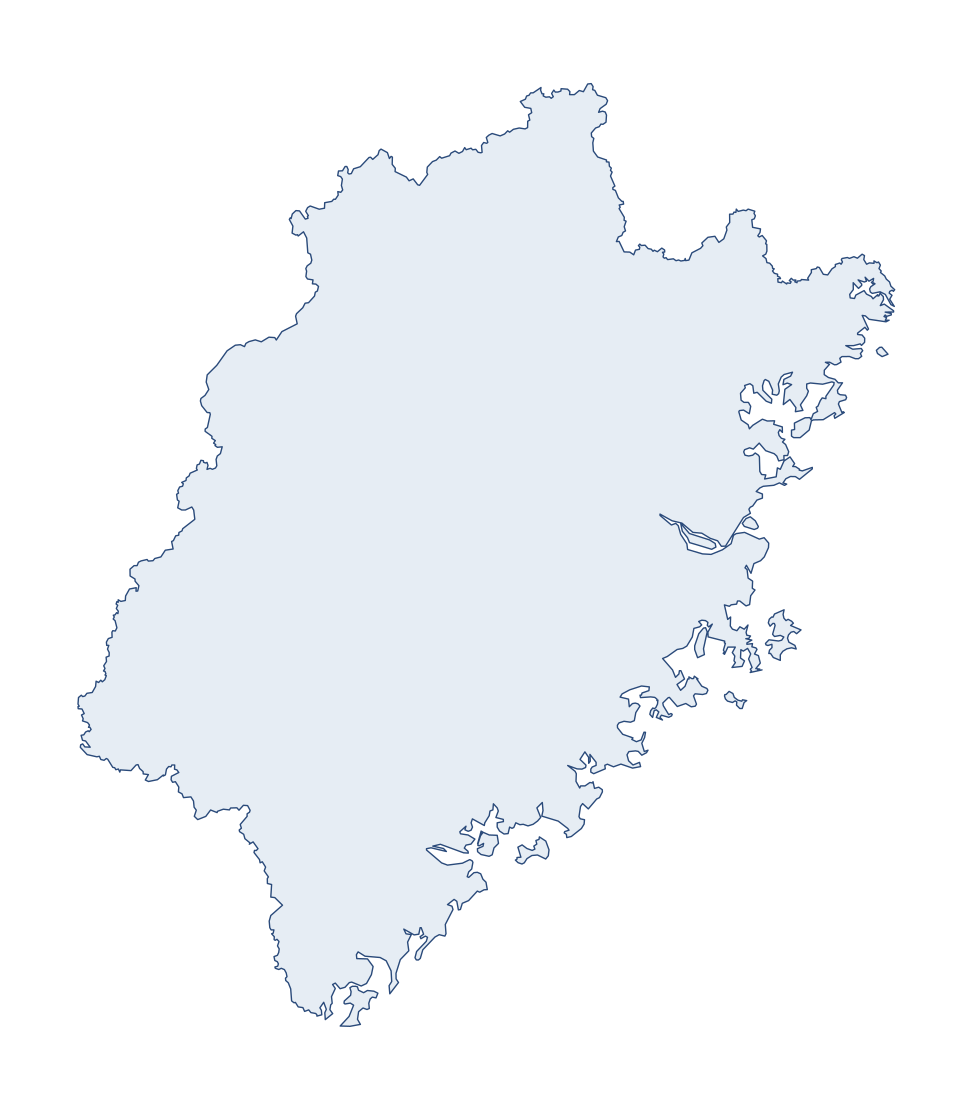
169 Major Historical and Cultural Sites Protected at the National Level in Fujian (batches 1–8, named by the State Council 1961–2019; 1 of them cross provincial borders, such as the Great Wall and the Grand Canal). Dots are coloured by category. See also Fujian and all provinces.
차수:

취안저우(44)
- 안평교 安平桥고건축 · 제1차(1961)Also called the Five-Li Bridge, it spans the sea between Jinjiang and Nan'an and is known as the longest bridge of ancient China.
- 칭징사 清净寺고건축 · 제1차(1961)Also called the Ashab Mosque or Shengyou Mosque, an Islamic mosque in Quanzhou on Tumen Street.
- 카이위안사 开元寺고건축 · 제2차(1982)Han Buddhist temple first built in the Tang on West Street, a nationally key temple of Buddhism in Han areas.
- 정성공 묘 郑成功墓고분 · 제2차(1982)Tomb holding the coffins of Zheng Chenggong, his son Zheng Jing, his father Zheng Zhilong and his wife, at Shuitou Town, Nan'an.
- 충우 성벽 崇武城墙고건축 · 제3차(1988)Also called Chongwu Garrison Thousand-Household City, the most complete granite coastal stone city in China, with a wall 783 zhang in circumference.
- 낙양교 洛阳桥고건축 · 제3차(1988)Also called Wan'an Bridge, first built in the Huangyou years of the Northern Song; the first sea-crossing stone bridge in China, called one of the "four famous ancient bridges of China."
- 취안저우 톈허우궁 泉州天后宫고건축 · 제3차(1988)Temple for worshipping the goddess Mazu, on Tianhou Road at Nanmen in Licheng District.
- 라오쥔옌 석상 老君岩造像석굴사·석각 · 제3차(1988)Song and Yuan stone statues on Qingyuan Mountain, nine statues at seven places, both Daoist and Buddhist.
- 주르산 마애석각 九日山摩崖石刻석굴사·석각 · 제3차(1988)Cliff inscriptions on Jiuri Mountain in Nan'an, mostly of the Song.
- Qudougong Dehua Kiln Site (including Xunzhong, Gaide and Sanban) 屈斗宫德化窑遗址(包括浔中、盖德、三班)고유적 · 제3차(1988)A representative kiln site of the Song and Yuan Dehua kilns; a compartmented dragon kiln with 17 chambers was excavated in 1976, and its products are noted for milky-white porcelain.
- 이슬람교 성묘 伊斯兰教圣墓고분 · 제3차(1988)Two tombs side by side at the southern foot of Lingshan, traditionally said to be those of the 'Three Sages' and 'Four Sages' who came to Quanzhou to preach in the Tang dynasty; the corridor holds a Yuan Zhizhi 2 Arabic-inscribed stele and Zheng He's incense-offering stele.
- 차오안 석각 草庵石刻석굴사·석각 · 제4차(1996)The only Manichaean temple surviving in the world, first built in the Southern Song and rebuilt in stone in the Yuan, named because it was originally a thatched hermitage.
- 차이씨 고민가 건축군 蔡氏古民居建筑群고건축 · 제5차(2001)A group of ancient residences built by Cai Qichang, an overseas Chinese returned from the Philippines, and his son Cai Zishen.
- 취안저우 부문묘 泉州府文庙고건축 · 제5차(2001)A Confucian temple first built in the Tang, moved to its present site in the Taiping Xingguo reign of the Northern Song and rebuilt in the 7th year of Shaoxing of the Southern Song (1137); inscribed as part of the Quanzhou World Heritage site in 2021.
- 츠짜오 가마터 磁灶窑址고유적 · 제6차(2006)송~원대의 츠짜오 가마터다.
- 더지먼 유적 德济门遗址고유적 · 제6차(2006)The site of a city gate of ancient Quanzhou from the Song to the Ming, south of the Tianhou Temple.
- 취안저우항 고건축 泉州港古建筑고건축 · 제6차(2006)Remains of the ancient Maritime Silk Road at Quanzhou Port, including the Zhenwu Temple, Wanshou Pagoda, Liusheng Pagoda and Jiangkou Wharf.
- 천다이 딩씨 종사 陈埭丁氏宗祠고건축 · 제6차(2006)An ancestral hall begun in the Yongle era of the Ming; the distant ancestors of the Ding family were Arabs who settled here in the early Ming.
- 안시 문묘 安溪文庙고건축 · 제6차(2006)A Confucian temple complex with Fengshan Mountain behind and Longjin to its front, one of the most complete surviving ancient building groups of its kind in Jiangnan.
- 시랑 저택·사당·묘 施琅宅、祠和墓고건축 · 제6차(2006)Includes Shi Lang's old residence, the Marquis Jinghai's mansion, the Shi clan's grand ancestral hall, Shi Lang's tomb and spirit-way stele, around Quanzhou.
- 안산 사구 유적 庵山沙丘遗址고유적 · 제7차(2013)Bronze Age sand-dune settlement site, originally 200,000 square meters and now 20,000 square meters; first excavated in 2007.
- 우타옌 석탑 五塔岩石塔고건축 · 제7차(2013)룽수이산에 있는 송대 석탑이다.
- 후이안 칭산궁 惠安青山宫고건축 · 제7차(2013)A temple of the mountain god and Wangye beliefs, mainly worshiping Lord Qingshan Ling'an.
- 안하이 룽산사 安海龙山寺고건축 · 제7차(2013)A temple complex of the Ming and Qing periods, located in Anhai.
- 칭수이옌사 清水岩寺고건축 · 제7차(2013)A Buddhist temple in Penglai Town, Anxi, with sights such as the Penglai Ancestral Hall, the pilgrim steps, the holy spring and the "sky-peering" ancient camphor tree.
- 팅뎬 양씨 민가 亭店杨氏民居고건축 · 제7차(2013)Also called the Yang Amiao Dwelling, a Qing dynasty residential building.
- 난안 임씨 민가 南安林氏民居고건축 · 제7차(2013)A group of dwellings designed and built by the overseas Chinese architect Lin Lu on his return home, completed in 1908; the main part consists of four parallel buildings including an ancestral hall, residence and study.
- 난안 중셴디 南安中宪第고건축 · 제7차(2013)Also called the Ninety-Nine Rooms, a Qing dynasty old dwelling located on Yanping East Road in Shijing Town.
- 이광지 저택과 사당 李光地宅和祠고건축 · 제7차(2013)The former residence and ancestral hall of Li Guangdi (1642-1718), Qing Grand Secretary of Wenyuan Pavilion, including the Old Yamen, New Yamen, Xianliang Shrine and Wenfang Dacuo.
- 시쯔사 석불 조상 西资寺石佛造像석굴사·석각 · 제7차(2013)시쯔사에 있는 송대 석불 조상이다.
- Nantian Temple Stone Buddha Images and Cliff Inscriptions 南天寺石佛造像和摩崖石刻석굴사·석각 · 제7차(2013)Stone Buddha images and cliff inscriptions of the Song and Ming periods on Daifeng Mountain.
- 쿠자이컹 가마 유적 苦寨坑窑遗址고유적 · 제8차(2019)A kiln site of the Xia and Shang periods, in Yongchun County.
- 바이치 궈씨 묘군 百崎郭氏墓群고분 · 제8차(2019)A Ming-dynasty cemetery, in which the tomb of the Hui Guo Zhongyuan was designated a Fujian provincial protected site in 2001.
- 충푸사 잉겅탑 崇福寺应庚塔고건축 · 제8차(2019)A solid stone pavilion-style pagoda imitating timber construction, built in the 1st year of Xining of the Northern Song (1068), 10.9 meters high, with eight sides and seven stories.
- 안시 투러우 安溪土楼고건축 · 제8차(2019)Also called the Xiping Tulou, made up of three buildings, Yingbao, Jusi and Taishan; Yingbao Tower was first built in the 5th year of Hongwu of the Ming (1372) of rammed raw earth.
- 취안강 투컹촌 고건축군 泉港土坑村古建筑群고건축 · 제8차(2019)A historical and cultural site with Yuzaibi Harbor as its main port and clusters of large houses as commercial and residential bases, originating in the Tang dynasty.
- 반푸 옛 가옥 坂埔古厝고건축 · 제8차(2019)Old houses built by the Hong family from the Qianlong era of the Qing, covering over 6,000 square meters, with a floor area of 5,515 square meters.
- 융춘 문묘 永春文庙고건축 · 제8차(2019)A Confucian temple first built in the Qingli era of the Song and rebuilt in the 50th year of Qianlong of the Qing (1785), covering over 3,000 square meters.
- 난안 타오위안궁 다라니 경당 南安桃源宫陀罗尼经幢석굴사·석각 · 제8차(2019)타오위안궁 안에 있는 북송 다라니 경당이다.
- 쿠이싱옌 마애조상 魁星岩摩崖造像석굴사·석각 · 제8차(2019)A Southern Song group of the Three Sages of the West, with Shakyamuni in the center, Manjushri on the left and Samantabhadra on the right, called the Three Sages of Huayan.
- 관산 리씨 민가 观山李氏民居근현대 사적 · 제8차(2019)Residences built between 1890 and 1936 by the Indonesian overseas Chinese Li Gongcang and his eldest son Li Chengqi, including the Fanzai Building, Gongcang House and Chengqi House.
- 안리쉰 도서루 安礼逊图书楼근현대 사적 · 제8차(2019)A library in Peiyuan Middle School, built in 1927 by alumni in memory of Anlixun; a reinforced-concrete structure 24.8 m high, with Western style on the first to fourth floors and a Chinese-pavilion style fifth floor.
- 융춘 푸싱탕 永春福兴堂근현대 사적 · 제8차(2019)A traditional southern Fujian residence completed in 1947, covering 2,100 square meters.
- 징성 별장 景胜别墅근현대 사적 · 제8차(2019)A building of mixed Chinese and Western style completed in 1948, covering 1,565 square meters.
푸저우(26)
- 화린사 대전 华林寺大殿고건축 · 제2차(1982)The temple was built in the 2nd year of Qiande of the Northern Song (964); its existing main hall is a Song-dynasty survival and the oldest surviving timber structure south of the Yangtze River.
- 임칙서 묘 林则徐墓근현대 사적 · 제3차(1988)The tomb of Lin Zexu (1785-1850), a native of Houguan in Fuzhou who oversaw the destruction of opium at Humen.
- 루이옌 미륵 조상 瑞岩弥勒造像석굴사·석각 · 제4차(1996)The largest Yuan-dynasty Maitreya statue in China, at the eastern foot of Ruiyan Mountain.
- Mawei Naval Battle Forts, Martyrs' Tombs and Zhaozhong Shrine 马江海战炮台、烈士墓及昭忠祠근현대 사적 · 제4차(1996)Shrine commemorating the officers and men killed in the 1884 Sino-French naval battle at Mawei, announced together with the forts and martyrs' tombs, at Maxian Mountain.
- 탄스산 유적 昙石山遗址고유적 · 제5차(2001)A cultural site from the middle-late Neolithic to the Bronze Age, on the north bank of the lower Min River, discovered in 1954.
- 천타이웨이궁 陈太尉宫고건축 · 제5차(2001)Ranked with the main hall of Hualin Temple and the Sanqing Hall of Yuanmiao Temple as Fujian's three great Song dynasty buildings, it combines Five Dynasties, Song, Ming and Qing features and was built without a single nail.
- 충먀오 바오성 젠라오탑 崇妙保圣坚牢塔고건축 · 제5차(2001)A granite pagoda built by Wang Yanxi of the Min kingdom in the Five Dynasties, slightly blackened by weathering and popularly called the Black Pagoda, at the eastern foot of Wushan.
- 구산 마애석각 鼓山摩崖石刻석굴사·석각 · 제5차(2001)A group of cliff inscriptions on Gushan from the Song to modern times.
- 푸젠 선정 건축 福建船政建筑근현대 사적 · 제5차(2001)The Fuzhou Shipyard school and related buildings set up at Mawei in 1866 by the Qing shipping commissioner Shen Baozhen, at first called the Qiushitang Arts Bureau.
- 밍산스 名山室고건축 · 제6차(2006)A temple begun in the 1st year of Wende of the Tang (888), originally named Gaogai Mingshan Cloister; Song and Yuan buildings survive.
- 성서우 보탑 圣寿宝塔고건축 · 제6차(2006)Also called Sanfeng Temple Pagoda, a stone Buddhist pagoda imitating timber pavilion style, begun in 1096 and completed in 1117, 27.4 meters high and seven stories.
- 싼팡 치샹과 주쯔팡 건축군 三坊七巷和朱紫坊建筑群고건축 · 제6차(2006)The largest surviving historic and cultural district in a city center in China, arranged on the axis of Nanhou Street with the "Three Fang" to the west and the "Seven Xiang" to the east; announced together with Zhuzifang.
- 푸저우 문묘 福州文庙고건축 · 제6차(2006)Also called the Xianshi Temple and Shengren Temple, a Confucian temple on Shengmiao Road, Gulou District.
- 치윈둥 조상 栖云洞造像석굴사·석각 · 제6차(2006)Eighteen luohan stone statues displayed in Qiyun Cave of Shengshui Temple, sixteen of them carved in the 8th year of Chunyou of the Southern Song (1248).
- 셴잉궁 소조상 显应宫泥塑석굴사·석각 · 제6차(2006)A Mazu temple popularly called the Butterfly Temple, first built in 1138 (Southern Song Shaoxing 8), buried by wind-blown sand in the Qing Guangxu reign and uncovered in 1992, when more than fifty clay sculptures were recovered.
- 링지 궁비 灵济宫碑석굴사·석각 · 제6차(2006)Fully titled the "Imperially Composed Stele of Hong'en Lingji Palace," a Ming stele inside Lingji Palace, which is said to have been begun in the 2nd year of Kaiyun of the Later Jin (945).
- 엄복 고택과 묘 严复故居和墓근현대 사적 · 제6차(2006)The Yan Fu ancestral house was built in the late Ming to early Qing with two courtyards, covering 745 square meters; announced together with Yan Fu's tomb.
- 하이탄 해협 수중 유적 海坛海峡水下遗址고유적 · 제7차(2013)Shipwreck remains on the seabed of the Haitan Strait, including Wanjiao No. 1 and Song, Yuan and Qing shipwrecks, from which large quantities of porcelain have been recovered.
- 용강교 龙江桥고건축 · 제7차(2013)Commonly called "Haikou Bridge", built between the 3rd year of the Zhenghe reign (1113) and the 6th year of the Xuanhe reign (1124) of the Northern Song, spanning the Long River.
- 뤄싱탑 罗星塔고건축 · 제7차(2013)Commonly called Moxin Pagoda, a Ming dynasty multi-storied stone pagoda on Luoxing Hill on the north bank of the Min River; tradition says it was first built by Liu Qiniang of the Song to pray for her deceased husband.
- 주터우마 민가 九头马民居고건축 · 제7차(2013)A Qing dynasty group of dwellings, 120 meters on each side east-west and north-south, with five rows of houses enclosed by a 6-meter-high wall.
- Cliff Inscriptions and Statues of Wushishan and Yushan 乌石山、于山摩崖石刻及造像석굴사·석각 · 제7차(2013)Cliff inscriptions and statues on Wushi Mountain and Yu Mountain in Fuzhou; Wushi Mountain has over 200 inscriptions from the Tang to the Qing, including Li Yangbing's seal-script 'Record of Banruo Terrace'.
- 팅장 포대 亭江炮台근현대 사적 · 제7차(2013)A Qing dynasty fort in Nanban, Tingtou Village, Tingjiang Town.
- 임칙서 저택과 사당 林则徐宅与祠근현대 사적 · 제7차(2013)The birthplace and former residence of Lin Zexu, and the Lin Wenzhong Gong Shrine completed in 1905, now the Lin Zexu Memorial Museum.
- 커추터우 유적군 壳丘头遗址群고유적 · 제8차(2019)A group of sites from the Neolithic to the Shang dynasty, dating from 7,500 to 3,000 years ago, first discovered in 1958.
- 융타이 장채 건축군 永泰庄寨建筑群고건축 · 제8차(2019)A collective name for five Qing-dynasty fortified manors in Yongtai County, including Renhe Manor, Shengping Manor, Jishan Hall, Shao'an Manor and Zhongpu Fort, all timber-framed.
장저우(25)
- 둥산 관제묘 东山关帝庙고건축 · 제4차(1996)Also called the Tongling Guandi Temple, the mother temple from which many Guandi temples in Taiwan were established by incense division, at the eastern foot of Gulou Mountain.
- 장저우 석패방 漳州石牌坊고건축 · 제4차(1996)Four stone archways of the Ming and Qing, on Hong Kong Road and Xinhua East Road in Xiangcheng District.
- 얼이러우 二宜楼고건축 · 제4차(1996)화안현에 있는 청대 민가 건축이다.
- Dacheng Hall of Zhangzhou Prefecture Confucian Temple 漳州府文庙大成殿고건축 · 제5차(2001)A Confucian temple first built in the 9th year of Shaoxing of the Southern Song (1139) and rebuilt in the 18th year of Chenghua of the Ming (1482); the Dacheng Hall is a Ming building.
- 강동교 江东桥고건축 · 제5차(2001)Also called Hudu Bridge or Tongji Bridge, first built in the 1st year of Shaoxi of the Southern Song (1190), on the lower reaches of the North Stream of the Jiulong River.
- 자오자바오–이안바오 赵家堡—诒安堡고건축 · 제5차(2001)A defensive fortress built in 1600 (Ming Wanli 28) by Zhao Fan, a descendant of the Southern Song imperial family, about 1 km from Yi'an Fort; his son Zhao Yi enlarged it in the 7th year of Chongzhen.
- 난성 가마터 南胜窑址고유적 · 제6차(2006)명~청대의 난성 가마터다.
- 난산궁 南山宫고건축 · 제6차(2006)A temple worshipping the "Sage Ancestor Immortal" and "Dutong Sheren," founded in the 1st year of Deyou of the Southern Song (1275).
- 장저우 린씨 종사 漳州林氏宗祠고건축 · 제6차(2006)The grand ancestral hall jointly built by the Lin clans of seven counties of Zhangzhou; the Lin honor Bi Gan as their founding ancestor, so it is also called the Bi Gan Temple.
- 장푸 문묘 다청전 漳浦文庙大成殿고건축 · 제6차(2006)The Confucian temple in Zhangpu County town; its Dacheng Hall is a Ming building.
- 더위안탕 德远堂고건축 · 제6차(2006)Also called the Zhang Family Temple, a Qing building on the eastern hillside of Taxia Village.
- 린씨 의장 林氏义庄고건축 · 제6차(2006)A charitable institution built by Lin Pinghou in the Qing dynasty, built from 1819 to 1821 (Jiaqing 24 to Daoguang 1).
- 톈이 총국 옛터 天一总局旧址근현대 사적 · 제6차(2006)The site of the Republic-era Tianyi General Bureau; "Tianyi" is taken from Dong Zhongshu's phrase "Heaven and man are joined into one."
- Site of the Eastern Route Army Leadership of the Chinese Workers' and Peasants' Red Army 中国工农红军东路军领导机关旧址근현대 사적 · 제6차(2006)Originally the American trustee's building of Xunyuan Middle School run by the American Reformed Church, a three-story brick-and-stone Western building, and in 1932 the headquarters of the Red Army's Eastern Route Army.
- 롄화츠산 유적 莲花池山遗址고유적 · 제7차(2013)The earliest Paleolithic site found in Fujian, discovered in 1989 and given a salvage excavation in 2005-2006, yielding over 200 stone artifacts.
- 진정묘와 진원광묘 陈政墓和陈元光墓고분 · 제7차(2013)Tombs of the Tang generals Chen Zheng and his son Chen Yuanguang, who opened up Zhangzhou; Chen Yuanguang was Zhangzhou's first prefect and is honored by later generations as the Sage King Who Opened Zhang.
- 전하이위 성터 镇海卫城址고건축 · 제7차(2013)A garrison town begun in the 20th year of the Hongwu reign of the Ming (1387), gradually abandoned after the early Qing coastal evacuation and restored in 1681 (20th year of the Kangxi reign) as a defense post; its walls are of rough stone, 873 zhang around.
- 핑허 청황먀오 平和城隍庙고건축 · 제7차(2013)주펑진에 있는 청대 청황먀오다.
- 란팅전 저택 蓝廷珍府第고건축 · 제7차(2013)The mansion of the Qing general Lan Tingzhen, located in Dingtan Village, Huxi She Ethnic Township.
- 셴쯔탄 마애석각 仙字潭摩崖石刻석굴사·석각 · 제7차(2013)Cliff inscriptions from the Neolithic to the Zhou, in Tainei Village, Shajian Town.
- 우겅랴오 토법 고로군 五更寮土高炉群근현대 사적 · 제7차(2013)A group of earthen blast furnaces left over from the 1958 mass steelmaking campaign, in Shangtian Village, Shuyang Town.
- 둥시 가마 유적 东溪窑遗址고유적 · 제8차(2019)A kiln site begun in the Ming dynasty and flourishing from the late Ming to the mid-Qing; the kilns are all brick-built and the products mainly blue-and-white porcelain.
- 황도주 강학처 黄道周讲学处고건축 · 제8차(2019)Lecture site of the Ming scholar Huang Daozhou, in Shizhai Village, Sui'an Town, Zhangpu County.
- 둥메이 쩡씨 판짜이러우 东美曾氏番仔楼근현대 사적 · 제8차(2019)A fanzai-lou ("foreigner's house") built in 1911 in a mixed Chinese and Western style, with five columns and three rows, covering over 5,300 square meters.
- Former Wushan Guerrilla Command Post of the Fujian-Guangdong Border Area at Waizuizhai 歪嘴寨闽粤边区乌山游击队指挥部旧址근현대 사적 · 제8차(2019)Former command post of the Wushan Guerrilla of the Fujian-Guangdong border area, 1929-1937, in Zhao'an County.
난핑(16)
- 청춘 한 성 유적 城村汉城遗址고유적 · 제4차(1996)Han-dynasty city site whose builders are disputed among scholars, sometimes called the city site of the king of Minyue.
- 젠요 유적 建窑遗址고유적 · 제5차(2001)An ancient kiln site active from the Tang dynasty and at its peak in the Song and Yuan; its tea bowls, known as Jianzhan, have thin bodies and a lustrous, dark, light-black glaze.
- 바오산사 대전 宝山寺大殿고건축 · 제5차(2001)A stone main hall imitating timber construction, with an inscription on the ridge purlin dated 1363 (Yuan Zhizheng 23), the year the temple was first built; it was repeatedly repaired in the Ming and Qing.
- 베이위안 황실 차 배소 유적 北苑御焙遗址고유적 · 제6차(2006)The site of the official tea-roasting workshops for Song-dynasty Beiyuan tribute tea; Beiyuan tea was a court tribute, shipped to the capital in batches each year.
- 우이산 애묘군 武夷山崖墓群고분 · 제6차(2006)A group of Bronze Age cliff tombs spread across cliff caves and fissures on both banks of the Jiuqu Stream and in the Beishan scenic area.
- 주희묘 朱熹墓고분 · 제6차(2006)The tomb of Zhu Xi, the Southern Song Neo-Confucian philosopher.
- 바오옌사 대전 宝严寺大殿고건축 · 제6차(2006)A temple founded in the Tang and originally named Xinghui Temple, renamed several times in the Five Dynasties; its main hall is a Ming building.
- 젠어우 둥웨묘 建瓯东岳庙고건축 · 제6차(2006)A Qing-dynasty Dongyue Temple outside the East Gate in Jian'an Subdistrict.
- 츠후 유적 池湖遗址고유적 · 제7차(2013)Site of the Neolithic and Shang and Zhou periods, in Chihu Village, Chongren Township, Guangze County.
- 마오얼산 유적 猫耳山遗址고유적 · 제7차(2013)Bronze Age tombs and kiln site, excavated in 2005 and 2006, with 9 early pottery kilns and 2 Neolithic tombs found.
- 푸청 토돈묘군 浦城土墩墓群고분 · 제7차(2013)Mound tomb group of the Western Zhou to the Spring and Autumn period; 34 mounds west of Guanjiu Village were excavated in a rescue excavation, the first mound tombs found in Fujian.
- 윈펑사 대전 云峰寺大殿고건축 · 제7차(2013)A temple begun in the Zhenguan reign of the Tang; the main hall was rebuilt in the 18th year of the Chenghua reign of the Ming (1482) and has a double-eaved hip-and-gable roof.
- 젠어우 문묘 建瓯文庙고건축 · 제7차(2013)The former Confucian temple of Jianning Prefecture school, now the home of the Jian'ou Museum.
- 우이산 푸젠–장시 옛 역도 武夷山闽赣古驿道고유적 · 제8차(2019)An ancient post road first built in the Tang and Five Dynasties period, at the border between Fujian and Jiangxi.
- 젠어우 치경교 建瓯值庆桥고건축 · 제8차(2019)A timber covered bridge first built in the Hongzhi era of the Ming and repaired in the 45th year of Kangxi (1706) and the 52nd year of Qianlong (1787).
- 장산터우 홍군 묘군 张山头红军墓群근현대 사적 · 제8차(2019)A cemetery of Red Army tombs from 1928 to 1935, covering about 19 hectares, with 1,343 tombs found.
룽옌(14)
- 구톈 회의 옛터 古田会议会址근현대 사적 · 제1차(1961)Site of the Ninth Party Congress of the Fourth Red Army of the Communist Party of China (the Gutian Conference) in December 1929, which adopted the Gutian Conference Resolution.
- 창팅 혁명 옛터 长汀革命旧址근현대 사적 · 제3차(1988)Important group of sites of the Central Revolutionary Base during the revolutionary war period; six sites including the Central Red Hospital were listed as national key cultural relics protection units in 1988.
- 쓰바오 서방 건축 四堡书坊建筑기타 · 제5차(2001)Ancient bookshop buildings in Sibao Township, Liancheng County, the most complete remains of the ancient woodblock printing industry in China.
- 페이톈촌 고건축군 培田村古建筑群고건축 · 제6차(2006)A Hakka ancient village whose residents are mostly surnamed Wu, listed as a Famous Historical and Cultural Village in 2005.
- 시베이 톈허우궁 西陂天后宫고건축 · 제6차(2006)A Tianhou Palace mainly worshipping Mazu, in Xibei Village, Gaobei Township.
- 치허둥 유적 奇和洞遗址고유적 · 제7차(2013)Prehistoric habitation site from the Paleolithic to the Neolithic, discovered during the Third National Survey of Cultural Relics in 2008.
- 팅저우 성벽 汀州城墙고건축 · 제7차(2013)The city wall of the former Tingzhou Prefecture, begun in the Tang; the existing wall is mainly from the Ming and Qing with modern reconstruction, nearly 3,000 meters long.
- 관톈 리씨 대종사 官田李氏大宗祠고건축 · 제7차(2013)Also called Dunxu Hall or Huode Gong Ancestral Hall, the ancestral hall of Li Huode, the founding ancestor of the Li clan in Fujian, begun in the 16th year of the Daoguang reign of the Qing (1836).
- 린장러우 临江楼근현대 사적 · 제7차(2013)The residence where Mao Zedong lived for over 20 days in 1929 during the revolutionary war period, a brick-and-wood structure facing the Ting River to the south.
- Site of the Western Fujian Workers' and Peasants' Bank 闽西工农银行旧址근현대 사적 · 제7차(2013)The site of a bank founded in 1930 by the Western Fujian Soviet government to break the economic blockade.
- Sites of Mao Zedong's Caixi Township Investigation 毛泽东才溪乡调查旧址群근현대 사적 · 제7차(2013)A group of sites of Mao Zedong's 1933 investigation in Caixi Township, including the site of the Caixi District Soviet, the trade union site (Lenin Hall), Glory Pavilion and Lenin Terrace.
- Starting Point of the Long March of the Red Ninth Army Corps 红九军团长征出发地근현대 사적 · 제7차(2013)Guanshou Ancestral Hall, built in the early Qing, a brick-and-wood hall-style building from which the Red Ninth Army Corps set off on the Long March in 1934.
- 즈시 종사 건축 芷溪宗祠建筑고건축 · 제8차(2019)Seventy-four ancestral hall buildings in Zhixi Village, mostly combining hall and dwelling, chiefly in the "nine halls and eighteen wells" form.
- 차이가이공 사당 采陔公祠고건축 · 제8차(2019)A Hakka ancestral hall first built in the late Qing, chiefly honoring Jiang Caigai, the 14th ancestor of the Jiang family, covering 4,865 square meters.
푸톈(12)
- 무란피(보) 木兰陂고건축 · 제3차(1988)Northern Song hydraulic work on the Mulan Stream, serving to store water, irrigate, drain floods, block tides and support water transport.
- 석가문불탑 释迦文佛塔고건축 · 제3차(1988)Also called the Guanghua Temple Pagoda, a five-story octagonal pavilion-style stone pagoda built before the first year of the Qiandao reign of the Southern Song (1165).
- 위안먀오관 삼청전 元妙观三清殿고건축 · 제4차(1996)Daoist temple first built in the second year of the Zhenguan reign of the Tang (628), whose Sanqing Hall is a rare Song timber structure in southern China.
- 완서우탑 天中万寿塔고건축 · 제5차(2001)Also called Qingluo Pagoda, a Baoqieyin-style pagoda built in the 4th year of Jiayou of the Northern Song (1059) of granite slabs.
- 전하이 제방 镇海堤고건축 · 제6차(2006)A sea embankment of the Tang to Qing periods on the beach of five villages in Huangshi Town.
- 우천탑 无尘塔고건축 · 제6차(2006)An octagonal five-story pagoda begun in the 6th year of Xiantong of the Tang (865) and rebuilt in the early Song.
- 마쭈묘 妈祖庙고건축 · 제6차(2006)Originally called the Shennü Shrine and Lin Xiaonü Shrine, on Meizhou Island; since 1983 called the Meizhou Mazu Ancestral Temple.
- 룽화 쌍탑 龙华双塔고건축 · 제7차(2013)Twin pagodas of the Song and Qing periods, located in Dengta Village, Longhua Town.
- 영해교 宁海桥고건축 · 제7차(2013)A Yuan dynasty bridge located in Qiaodou Village, Huangshi Town.
- 핑하이 톈허우궁 平海天后宫고건축 · 제7차(2013)A Qing dynasty Tianhou Palace located in Pinghai Village, Pinghai Town.
- 셴유 문묘 仙游文庙고건축 · 제7차(2013)A Confucian temple begun in the Tang and moved to its present site in the Northern Song; most existing buildings date from the Ming and Qing.
- 리청 바오언사탑 荔城报恩寺塔고건축 · 제8차(2019)A pagoda built in the Shaosheng era of the Northern Song, three stories and octagonal, 13 meters high, inside Bao'en Temple on Dongyan Mountain.
싼밍(12)
- 타이닝 상서제 泰宁尚书第고건축 · 제3차(1988)Ming-dynasty building complex made up of the Shangshu Mansion and Shide Hall dwellings, on Shangshu Street in Taining County.
- 완서우옌 유적 万寿岩遗址고유적 · 제5차(2001)Site of Paleolithic human activity on Wanshouyan, a small limestone peak.
- 안전바오 安贞堡고건축 · 제5차(2001)Also called Chiguan City, an earthen fort built by the Chi family in the 11th year of Guangxu of the Qing (1885) for defense against bandits.
- 정순묘 正顺庙고건축 · 제6차(2006)The earliest-founded and best-preserved timber building in Sanming, in which the local deity Xie You is worshipped.
- Site of the Red First Front Army Leadership in Jianning 建宁红一方面军领导机关旧址근현대 사적 · 제6차(2006)The site of the Red First Front Army leadership from 1931 to 1933, in Jianning County.
- 난산 유적 南山遗址고유적 · 제7차(2013)Site from the Neolithic to the Shang and Zhou periods, in Shangfang Village, Xuefeng Town, Mingxi County.
- 중춘 가마 유적 中村窑遗址고유적 · 제7차(2013)Kiln site founded in the early-middle Northern Song, flourishing from the late Southern Song to the early Yuan and declining from the late Yuan to early Ming; key sites include Caoliaohoushan and Shetoushan.
- 다톈 토보군 大田土堡群고건축 · 제7차(2013)A group of Ming and Qing earthen forts including seven such as Anliang Fort, Fanglian Fort and Guangyu Fort.
- 위징팡 정씨 다춰 玉井坊郑氏大厝고건축 · 제7차(2013)A large Qing dynasty residence located in Houfeng Village, Xibin Town.
- 융안 항일전쟁 옛터군 永安抗战旧址群근현대 사적 · 제7차(2013)A group of sites from the War of Resistance against Japan, including the Yong'an Confucian Temple, the office of the Fujian provincial National Government, and the site of the health department.
- 옌쯔둥 유적 岩仔洞遗址고유적 · 제8차(2019)장러현에 있는 신석기 시대 동굴 유적이다.
- 수이메이 토보군 水美土堡群고건축 · 제8차(2019)A group of Qing-dynasty earthen forts made up of three forts: Shuangji, Shuangxing and Shuangyuan.
닝더(10)
- 스펑사 狮峰寺고건축 · 제6차(2006)A Buddhist temple originally named Xifeng Cloister, of high architectural and scientific value, and once an activity base of the CPC East Fujian Special Committee.
- 관인팅 채 观音亭寨고건축 · 제7차(2013)Commonly called Guanlu Pavilion or Banling Pavilion, made up of an upper and a lower hall, the Guanyin Hall and the Mahavira Hall, with a flush gable roof and column-and-tie timber frame, covering 640 square meters.
- 임공 충평왕 조전 林公忠平王祖殿고건축 · 제7차(2013)Also called Lingong Palace, begun in the 8th year of the Zhengde reign of the Ming (1513), mainly worshiping Lin Gong Zhongping Wang, Lin Zugen.
- 구톈 린수이궁 古田临水宫고건축 · 제7차(2013)Also called Linshui Shunyi Temple, mainly worshiping Lady Linshui; begun in the Tang, the existing buildings date from the Ming and Qing.
- 지샤 건축군 漈下建筑群고건축 · 제7차(2013)A group of buildings along the stream in Jixia Village, Gantang Township, Pingnan, with a Ming-dynasty gate tower, wayside pavilions, wells, temples, ancestral halls and an old bridge; the village is the ancestral home of the Qing general Gan Guobao.
- 펑치 우씨 대택 凤岐吴氏大宅고건축 · 제7차(2013)An old dwelling of the Qianlong and Jiaqing reigns of the Qing, the largest in Zherong County, forming a "one village, one house" layout.
- 바오펑 은광 유적 宝丰银矿遗址고유적 · 제8차(2019)A silver mine site of the Song to Ming dynasties, spanning five administrative villages in Lidun and Puyuan towns, around Shengyinlou Mountain.
- 바이허링 푸저우–원저우 옛길 白鹤岭福温古道고유적 · 제8차(2019)An ancient official road between Fuzhou and Wenzhou, used from the Southern Song to the Qing dynasty and connecting with Luoyuan County.
- 푸안 황씨 사당 福安黄氏祠堂고건축 · 제8차(2019)An ancestral hall first built in the late Song and rebuilt in the 33rd year of Kangxi of the Qing (1694), covering 2,516 square meters, with a semicircular pool, screen wall and stage.
- 훠퉁 관개 시설 霍童灌溉工程기타 · 제8차(2019)Also called the Huang Ju Irrigation System, established by the Sui official Huang Ju and still in use; made up of the Longyao canal system and the Pipadong canal system.
샤먼(6)
- 천자겅 묘 陈嘉庚墓근현대 사적 · 제3차(1988)Tomb of Tan Kah Kee, overseas Chinese leader, industrialist and educator, south of the Jimei Liberation Monument in Aoyuan at Jimei, first built in 1955.
- 후리산 포대 胡里山炮台근현대 사적 · 제4차(1996)Fort built in the 20th year of the Guangxu reign of the Qing (1894), holding a 280-mm coastal gun made by Krupp of Germany.
- 천화청묘 陈化成墓근현대 사적 · 제6차(2006)The tomb of Chen Huacheng, a Qing general who fought the British; it lies at the northern foot of Jinbang Mountain, covers about 683 sq m and is shaped like the character 'feng'.
- 구랑위 근대 건축군 鼓浪屿近代建筑群근현대 사적 · 제6차(2006)A group of modern buildings on Gulangyu Island, called an "exhibition of international architecture," covering southern Fujian old houses to 20th-century eclectic architecture.
- Jimei School Village and Early Buildings of Xiamen University 集美学村和厦门大学早期建筑근현대 사적 · 제6차(2006)The Jimei School Village and early buildings of Xiamen University built under Tan Kah Kee in the 1920s to 1950s, 31 buildings in all.
- 샤먼 파옥 투쟁 옛터 厦门破狱斗争旧址근현대 사적 · 제6차(2006)The place of the Xiamen jailbreak incident, where three Republic-era cells and a torture room survive; the novel Spring in a Small City was written from this incident.
여러 시에 걸침(3)
- 칭자오·바이자오 츠지궁 青、白礁慈济宫고건축 · 제4차(1996)Two Ciji Palaces at Qingjiao (Haicang, Xiamen) and Baijiao (Longhai), about 3 km apart, first built in the Shaoxing reign of the Southern Song and rebuilt in the Qing; they are the ancestral palaces of all Ciji Palaces elsewhere.
- 푸젠 동북부 회랑교 闽东北廊桥고건축 · 제6차(2006)Representative covered bridges of northeast Fujian, including Wan'an Bridge in Pingnan, Luanfeng Bridge in Shouning and Yuqing Bridge in Wuyishan; closely linked with the covered bridges of southwest Zhejiang and often called together the Zhejiang-Fujian covered bridges.
- 푸젠 타이완 수비 장병 묘군 福建戍守台湾将士墓群근현대 사적 · 제7차(2013)Tombs of Qing soldiers who followed Shen Baozhen to reinforce Taiwan and died in battle or of illness during the 1874 Mudan Incident; one at Hutou Mountain, Mawei, buries 135 soldiers.