 Park of China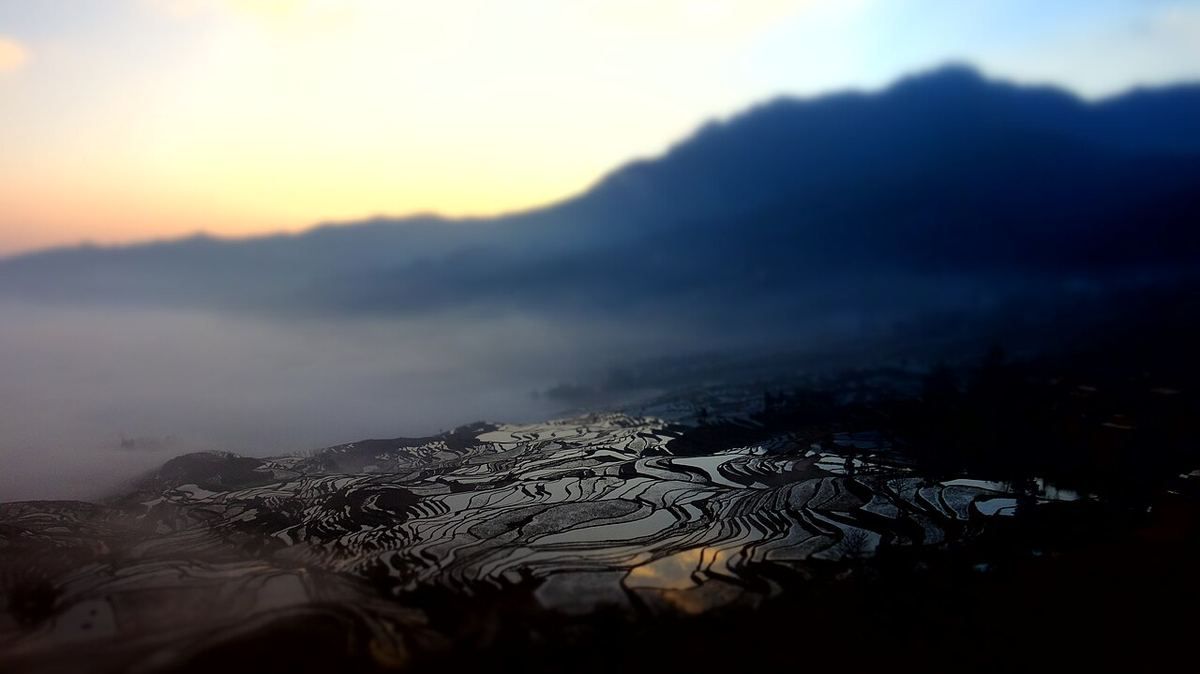
Overview
| Designation | UNESCO World Heritage (cultural, 2013) |
| Name | Cultural Landscape of Honghe Hani Rice Terraces |
| Country | China |
| Nearby cities | Kunming |
| Nearby sites | Jianshui Scenic Area 58km, Chengjiang Fossil Site 176km, Puzhehei 179km, Dianchi Lake, Kunming 200km Search nearby |
| Mountains | Ailao Mountains |
| Latitude, longitude | 23.09, 102.78 Google Maps |
| Themes | Culture, Forest, Ethnic cultures, Old villages & vernacular houses |
About
Cultural Landscape of Honghe Hani Rice Terraces (红河哈尼梯田文化景观) was inscribed on the UNESCO World Heritage List in 2013 as a cultural site.
Why it was inscribed
A unique testimony to a cultural tradition or civilisation; an example of traditional settlement and land use.
The Honghe Hani rice terraces, around Yuanyang in Yunnan’s Honghe prefecture, cover 16,603 ha and step down the slopes of the Ailao Mountains to the river valleys. The Hani have farmed here for more than 1,300 years: forests are kept on the summits to hold water, channels carry spring water to the terraces, and red rice is grown alongside ducks and fish. Villages sit between forest and terraces, forming one system of forest, village, terrace and water.
Travel tips
Location: The site lies in Honghe Prefecture in southern Yunnan. Its core is in Yuanyang County, and it also takes in parts of Honghe, Jinping and Lüchun counties. The main terrace viewpoints are Duoyishu, Bada and Laohuzui, and there is the Jingkou folk village.
Getting there: Go first to Kunming, then travel by road through Honghe Prefecture to Yuanyang. The county government is at Nansha town, while Xinjie, the former county seat, is the usual base for the terraces.
Around the site: Mountain roads link the viewpoints, and most visitors hire a car or share one. Duoyishu, Bada and Laohuzui are the main cluster, usually split between sunrise and sunset.
Time: Allow at least one night to have a chance at one sunrise and one sunset. Cloud is frequent, so an extra day is safer.
Season: The terraces are flooded in winter and spring, when the water mirrors the sky, which is the main season for photography. In summer the fields turn green and in autumn the rice ripens to yellow. Rain falls mostly from May to September, with mist on the mountain roads.
Villages: The heritage area contains 82 Hani villages with traditional mushroom-shaped houses, which can be visited along the mountain roads. The irrigation channels and the forests above that feed them can also be seen.
Nearby: Jianshui old town, also in Honghe Prefecture, can be combined with the terraces.
Where to stay: There are guesthouses in Xinjie and in villages near the viewpoints; staying close to a sunrise viewpoint avoids a dark early drive.
Note: Altitude varies greatly, mornings and evenings are cool, mist is common, and roads are slippery in rain.
Photo credits: Hani rice terraces at sunrise, Yuanyang, Yunnan: Chiu Ho-yang (CC BY-SA 2.0, Wikimedia Commons)
Nearby
| World Heritage | Chengjiang Fossil Site 176km, Stone Forest of Lunan 201km |
| National parks | Jianshui Scenic Area 58km, Puzhehei 179km, Alu Caves 191km, Dianchi Lake, Kunming 200km |
| AAAA attractions | Honghe Yuanyang Hani Terraces Scenic Area <1km, Laoyin Mountain 50km, Jianshui Confucian Temple 58km, Zhu Family Garden 59km |
| UNESCO Global Geoparks | Stone Forest UNESCO Global Geopark 197km |
| Historical sites | Honghe Hani Rice Terraces <1km, Nalou Chieftain's Office 24km |
| Nature reserves | Daweishan National Nature Reserve 97km, Yuanjiang National Nature Reserve 98km |